The Apparent Failure of Crackdowns on Southeast Asian Scam Compounds as Satellite Imagery Reveals Rapid Expansion in Myanmar

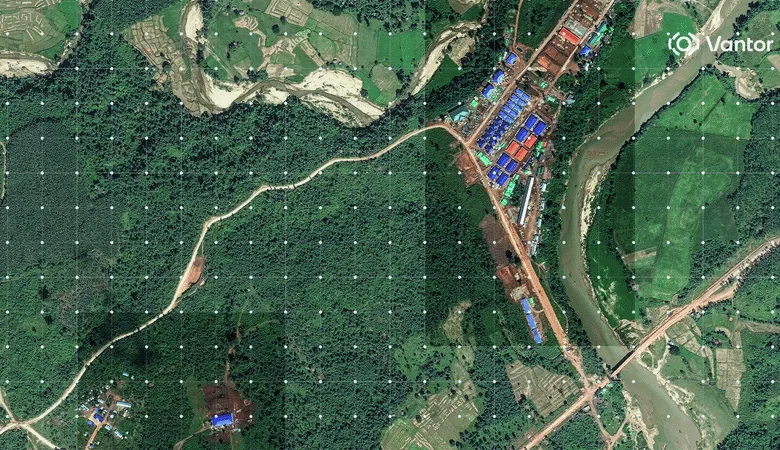
New satellite imagery and geospatial analysis have revealed a significant and rapid expansion of suspected scam compounds in the border regions of Myanmar, suggesting that high-profile law enforcement crackdowns conducted last year were largely performative or insufficient. According to data reviewed by the International Justice Mission (IJM) and other anti-trafficking organizations, more than two dozen new or significantly expanded sites have emerged in the past six months alone. This resurgence highlights the resilience of a multi-billion-dollar criminal industry that leverages human trafficking, sophisticated technology, and the chaos of Myanmar’s ongoing civil war to target victims globally.
Since the beginning of 2024, at least 25 suspected scamming sites have appeared in the Myawaddy region of Myanmar, situated along the country’s porous border with Thailand. Analysis provided by IJM indicates that these developments are not merely minor additions but industrial-scale operations. Satellite photos capture a systematic process of environmental destruction: vast swaths of forest are razed, and land is flattened to make way for dozens of high-capacity buildings and the specialized infrastructure required to facilitate large-scale cyber-fraud operations.
The findings challenge the narrative put forth by Myanmar’s military junta, which in late 2023 claimed to be aggressively dismantling these criminal hubs. Eric Heintz, a global analyst at IJM who specializes in the impact of scam compounds, noted that while the 2023 crackdowns caused temporary disruptions, the pace of current construction suggests the industry is in a phase of aggressive growth. Heintz observed that some sites transitioned from empty fields to fully operational compounds in just a few months, demonstrating a level of coordination and capital investment that belies the notion of a dying industry.
The Infrastructure of Digital Slavery
The scam compounds of Southeast Asia, particularly those in Myanmar, Cambodia, and Laos, represent a unique and harrowing intersection of organized crime, technological exploitation, and human rights abuses. These sites are frequently operated by Chinese organized crime syndicates that have moved their operations offshore to escape domestic law enforcement. The business model relies on "pig butchering" (Sha Zhu Pan) scams—a long-term fraud where perpetrators build romantic or platonic trust with victims online before convincing them to invest in fraudulent cryptocurrency platforms.
The day-to-day operations of these scams are carried out by victims of human trafficking. Tens of thousands of individuals from more than 60 countries—including China, Vietnam, the Philippines, and as far away as Kenya and Brazil—have been lured to the region under the guise of high-paying tech or customer service jobs. Upon arrival, their passports are confiscated, and they are imprisoned within gated compounds guarded by armed militias.
The conditions inside these sites are reportedly brutal. Trafficking survivors have recounted being forced to work 16 to 18 hours a day, contacting thousands of potential victims across social media platforms. Those who fail to meet "sales" quotas or who attempt to escape face severe physical punishment, including beatings, electric shocks, and prolonged isolation. The new satellite imagery shows clusters of large residential buildings that experts believe serve as high-density housing for this captive workforce, designed to keep victims contained and under constant surveillance.
A Failed Crackdown and the Geopolitical Reality
The surge in construction follows a series of raids initiated by the Myanmar military junta in October 2023. At the time, the junta made a public spectacle of its efforts, releasing footage of buildings being demolished and piles of confiscated electronics being crushed by steamrollers. These actions were largely seen as a response to intense pressure from the Chinese government, which has grown increasingly frustrated by the number of Chinese nationals being both trafficked into these compounds and targeted by the scams.
However, the reality on the ground appears far more complex. Myanmar is currently embroiled in a brutal civil war between the military junta and various ethnic armed organizations (EAOs) and People’s Defense Forces (PDFs). In the Myawaddy region, much of the territory is controlled by the Border Guard Forces (BGF), which are nominally aligned with the junta but operate with a high degree of autonomy. Analysts suggest that the scam compounds provide a critical revenue stream for these local militias, making them reluctant to shut down the operations permanently.
Mechelle B. Moore, CEO of Global Alms Incorporated, an anti-trafficking nonprofit based on the Thai-Myanmar border, confirmed that her organization has identified at least a dozen new sites that were either built or repopulated following the supposed crackdowns. Moore noted that while some sites remained empty for a short period, many others saw construction projects continue unabated throughout the height of the police actions. "Nothing has changed," Moore stated. "It’s just growing."
Technological Persistence and the Role of Starlink
One of the most persistent challenges in dismantling these operations is their use of advanced technology to bypass local infrastructure. A significant portion of these compounds relies on satellite internet services to maintain connectivity with the outside world, allowing them to operate even in remote, war-torn areas where traditional internet service is unreliable or monitored.
Investigation and data analysis have repeatedly linked the use of SpaceX’s Starlink terminals to these compounds. Despite efforts by the U.S. Department of Justice (DOJ) to issue seizure warrants for Starlink terminals used in criminal activities, and SpaceX’s own claims of deactivating thousands of devices, the technology remains prevalent. According to IJM, at least half of the newly identified locations appear to be using Starlink terminals, identified by their unique rooftop signatures in satellite imagery and associated IP address data.
The persistence of these connections highlights a significant loophole in the regulation of global satellite internet. While Starlink has stated it does not operate in Myanmar and has taken steps to cut connections to devices linked to scam operations, the units are often smuggled across borders and registered in neighboring countries like Thailand or Malaysia. The ability of criminal syndicates to maintain high-speed, encrypted internet access is a primary factor in their ability to scale operations and evade detection.
Chronology of the Scam Compound Crisis
The evolution of the scam industry in Myanmar follows a specific timeline of geopolitical and economic shifts:
- 2017–2019: Organized crime groups begin moving from Cambodia to Myanmar following a crackdown on illegal gambling in Sihanoukville. The Shwe Kokko Special Economic Zone in Myanmar becomes a primary hub.
- 2021: The military coup in Myanmar creates a security vacuum and economic instability, allowing criminal enterprises to flourish under the protection of local militias.
- 2022: Reports of "pig butchering" scams go viral globally, prompting international human rights organizations to sound the alarm on "digital slavery" in Southeast Asia.
- Late 2023: Under pressure from Beijing, the Myanmar junta and regional allies launch "Operation 1027," leading to the handover of thousands of scam workers to Chinese authorities. High-profile raids occur in Myawaddy and the Kokang region.
- January 2024 – Present: Satellite imagery confirms a "rebound" effect. Construction begins on at least 25 new sites in the Myawaddy region, with operations becoming more clandestine and remote.
Economic and Global Impact
The scale of the financial theft associated with these compounds is staggering. Estimates from the United Nations Office on Drugs and Crime (UNODC) and various cybersecurity firms suggest that billions of dollars are siphoned from victims annually. In 2023 alone, the FBI’s Internet Crime Complaint Center (IC3) reported that investment fraud, much of it linked to pig butchering, was the costliest type of cybercrime in the United States, with losses exceeding $4.5 billion.
The implications extend beyond financial loss. The industry has corrupted local economies and governance structures in Southeast Asia, creating a "shadow economy" that fuels conflict and undermines the rule of law. The demand for forced labor has also created a secondary market for human trafficking, where victims are "sold" between compounds for prices ranging from $5,000 to $30,000 depending on their language skills and technical proficiency.
Analysis of Future Implications
The rapid expansion of scam compounds in early 2024 suggests that the international community’s current strategy—relying on sanctions and local law enforcement cooperation—is failing to keep pace with the adaptability of organized crime. As long as Myanmar remains in a state of civil war, the military junta and its affiliated militias will likely continue to view scam compounds as a necessary evil for economic survival and political leverage.
Furthermore, the technological aspect of the crisis presents a growing challenge for Western tech companies. The ease with which criminal groups can acquire and deploy satellite internet and cryptocurrency tools means that traditional border controls are increasingly ineffective.
Experts argue that a more robust, coordinated international response is required. This would include not only targeted sanctions against the individuals profiting from these sites but also increased pressure on satellite service providers to implement more rigorous geofencing and "know your customer" (KYC) protocols for hardware sales. Without a significant shift in strategy, the forests of Myanmar will likely continue to be cleared to make room for the infrastructure of a global crime wave that shows no signs of receding.