The Intelligence and Automation Revolution Forcing Transformation at Marketing Agencies

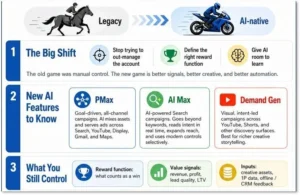
The global marketing agency landscape is currently undergoing a structural upheaval as the rapid integration of artificial intelligence and automated platforms forces a total recalibration of service-level agreements and compensation models. Industry analysts and strategic consultants are projecting a seismic shift in how brands interact with their agency partners, moving away from legacy "work-for-hire" models toward an intelligence-driven paradigm. By July 2026, experts anticipate that the traditional Statement of Work (SOW) will look unrecognizable, with standard execution fees potentially dropping by as much as 75% while strategic, high-value consulting fees see a corresponding rise.
This transformation is not merely a technological upgrade but a fundamental shift in the economic incentives that have governed the advertising industry for decades. For years, the primary driver of agency revenue has been the "Percent of Media Spend" model, a structure that critics argue creates a conflict of interest by rewarding agencies for higher spending and manual labor rather than efficiency or business outcomes. As platform-level AI—such as Google’s Performance Max and Meta’s Advantage+—takes over the granular tasks of bidding, targeting, and creative optimization, the manual "man-hours" that once justified high retainers are rapidly evaporating.
The Economic Realignment: A Dual-Track Fee Adjustment
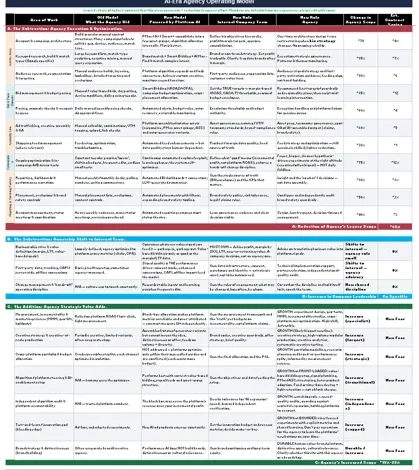
The shift toward an automated marketing ecosystem is expected to manifest in a two-pronged financial adjustment for brands and their agencies. According to current industry projections, work currently listed in standard Agency SOWs will likely translate into a 25% to 75% savings in agency fees by the third quarter of 2026. This reduction applies across the spectrum of agency types, including media, creative, performance, brand, measurement, and CRM.
However, these savings are not intended to simply pad corporate bottom lines. A significant portion of the recovered capital is expected to be reinvested into new work streams that are currently underpowered or entirely absent from existing contracts. These new areas of focus—which include advanced data engineering, agentic AI governance, and high-level creative strategy—are projected to increase specialized agency fees by 15% to 25%. The net result is a more efficient allocation of capital that prioritizes business outcomes over administrative motion.
In the performance marketing sector, the impact will be most acute. Contracts focused primarily on execution are expected to shrink by 75% to 80% as automation absorbs the bulk of the workload. Conversely, brand marketing contracts may see a 25% to 40% reduction in execution costs, but overall budgets in this category are likely to increase as brands seek to differentiate themselves in a sea of AI-generated content.
Chronology of the Automation Shift
The journey toward this "Agentic" era of marketing has moved through several distinct phases:
- The Manual Era (Pre-2018): Agencies relied on large teams of junior analysts to manually adjust keyword bids, manage audience segments, and traffic creative assets.
- The Algorithmic Introduction (2018–2022): Ad platforms introduced basic machine learning tools. Agencies began to use "smart bidding," but still maintained heavy manual oversight and reporting structures.
- The Generative Explosion (2023–2024): The rise of Large Language Models (LLMs) and generative AI began to automate creative variations and copy, reducing the time required for asset production.
- The Agentic Revolution (2025–2026): Full-scale automation becomes the default. Platforms now handle the "explore-exploit" cycles of testing and optimization autonomously, rendering daily manual tweaks counterproductive.
Deconstructing the "Subtractions": Five Clusters of Disruption
To understand where the 75% savings will originate, one must examine the five core areas of agency activity that are being absorbed by platform-level intelligence.
1. The Activity Army
Historically, agencies charged significant fees for account architecture, keyword research, and audience segmentation. In the new model, algorithms read intent and user behavior in real-time, using tens of thousands of data points that exceed human capacity. The agency’s role is shifting from "building" to "deciding"—setting the reward functions and brand safety redlines rather than manually slicing campaigns. This area represents roughly 22% of current contract costs and is ripe for a 78% reduction in human effort.
2. The Bid and Pace Dancers
Manual budget adjustments, day-parting, and "hygiene" checks once occupied hours of agency time. Today, value-based bidding and automated alerts perform these tasks with greater precision. Evidence suggests that "over-touching" an account—manually intervening in an AI’s learning cycle—actually degrades performance. Consequently, this 14% cost weight is expected to see a 73% reduction as agencies move to the rhythm of the AI’s learning cycle.
3. The Assembly Line
Trafficking, tagging, and creative variation production are being revolutionized by generative AI. Ad platforms can now assemble creative bits, text, and audio in the best version for each specific user. While human oversight remains necessary for asset preparation and taxonomy, the "babysitting" of creative feeds is being automated, leading to a projected 45% reduction in work for this 12% cost segment.
4. Optimization Theater
The "Optimization Theater"—the daily ritual of pausing "losers" and shifting small percentages of budget by "feel"—is perhaps the most destructive legacy practice. Modern platforms run continuous experiments at scales humans cannot replicate. Agencies are being forced to move away from micro-optimization toward macro-experimentation, focusing on concept-level testing rather than execution tweaks. This represents a 75% reduction in effort for a category that typically accounts for 16% of fees.
5. The Reporting and Servicing Factory
The manual creation of weekly decks and update emails is being replaced by automated data lakes and natural language processing interfaces. Brands no longer need to be held hostage by 17-tab spreadsheets when they can query their own data in real-time. This area, which often accounts for 30% of an agency contract, is expected to see a 60% reduction in hours as the focus shifts from "reporting what happened" to "strategizing what’s next."
The New Operating Model: Retainers and Incentives
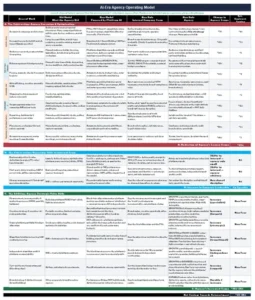
For agencies to survive this transition, the industry is moving toward a three-tiered compensation structure designed to align incentives with client growth rather than media volume.
First, a Lean Base Retainer (representing 40%-50% of the total) will cover essential governance, steering, and data engineering. This ensures the agency remains a stable partner for long-term strategy.
Second, Project-Based Fees (30%-40%) will be applied to high-value creative concepts, pre-testing, and complex strategic analytics. Unlike "measurement" (which looks backward), strategic analytics looks forward, solving for portfolio strategy and market shifts.
Third, an Outcome Incentive (15%-25%) will be tied directly to incremental profit or verified revenue lift. Crucially, industry experts advise against tying these incentives to "platform ROAS" (Return on Ad Spend), which can be easily manipulated by algorithms, and instead focus on incrementality—the actual business growth that would not have occurred without the marketing intervention.
Industry Reactions and Broader Implications
The reaction from the agency world has been a mix of trepidation and cautious optimism. While the "hamster wheel" of low-value manual work is disappearing, it opens the door for a new class of "Modern Agencies." These firms are structured to be outcomes-centered strategic partners, hiring experienced individuals at higher pay scales to perform $500-to-$1,000-per-hour strategic work rather than charging $50 per hour for junior-level execution.
"The agency of the future doesn’t sell motion; it sells judgment," says one industry strategist. This sentiment is echoed by procurement departments at major global brands, who are increasingly looking to move away from "Percent of Media" contracts. By decoupling agency pay from media spend, brands can ensure their partners are incentivized to embrace AI and automation rather than fight it to protect billable hours.
However, a significant caution remains regarding data ownership. As automation takes hold, it becomes imperative for brands to own their ad accounts, pixels, and data pipelines. The "Agentic" era requires a high degree of data transparency; if an agency "owns" the data or the platform account, the brand becomes a hostage to its partner, unable to fully leverage the power of independent AI tools.
Conclusion: A Pivot Toward Strategic Value
The intelligence and automation revolution is effectively ending the era of the "execution army." For marketing agencies, the path forward involves a radical pivot upstream. The value of an agency is migrating toward cross-platform consumer behavior strategy, value signal hunting, and the governance of AI agents.
As we approach the 2026 milestone, the distinction between successful and failing agencies will be defined by their willingness to cannibalize their own manual service lines in favor of automated efficiency. For clients, the opportunity is clear: renegotiate contracts not just to save money, but to buy a different operating model—one that rewards intelligence over activity and outcomes over spend. The "new tomorrow" of marketing is one where humans provide the vision, and machines provide the scale.