Unlocking Digital Dominance: The Topical Authority Pyramid in an AI-Driven Search Landscape.

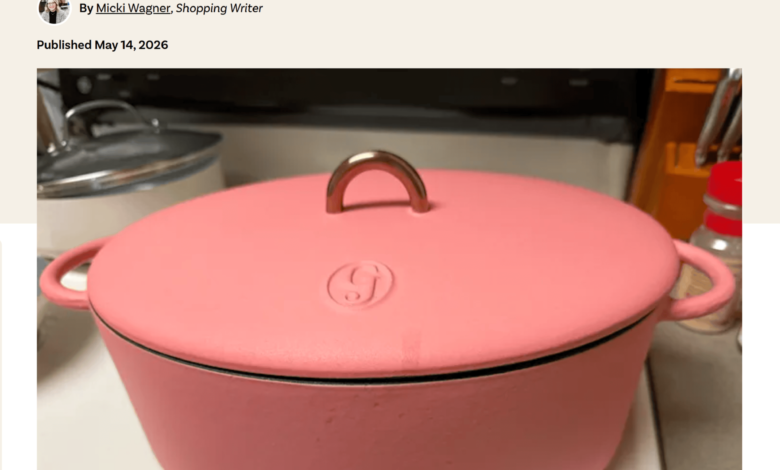
The modern digital arena presents a paradox for even the most well-regarded brands: possessing a strong identity, publishing high-quality content, and garnering widespread acclaim can still fall short of establishing "topical authority." This critical gap means that despite significant investment in branding and content, a company may remain invisible to the very audiences it seeks to reach through search engines and advanced AI models. The experience of Great Jones, a prominent kitchenware company, serves as a compelling illustration of this challenge.
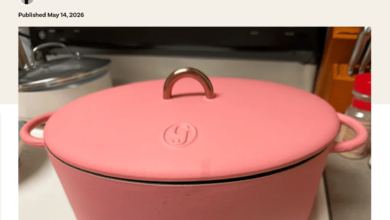
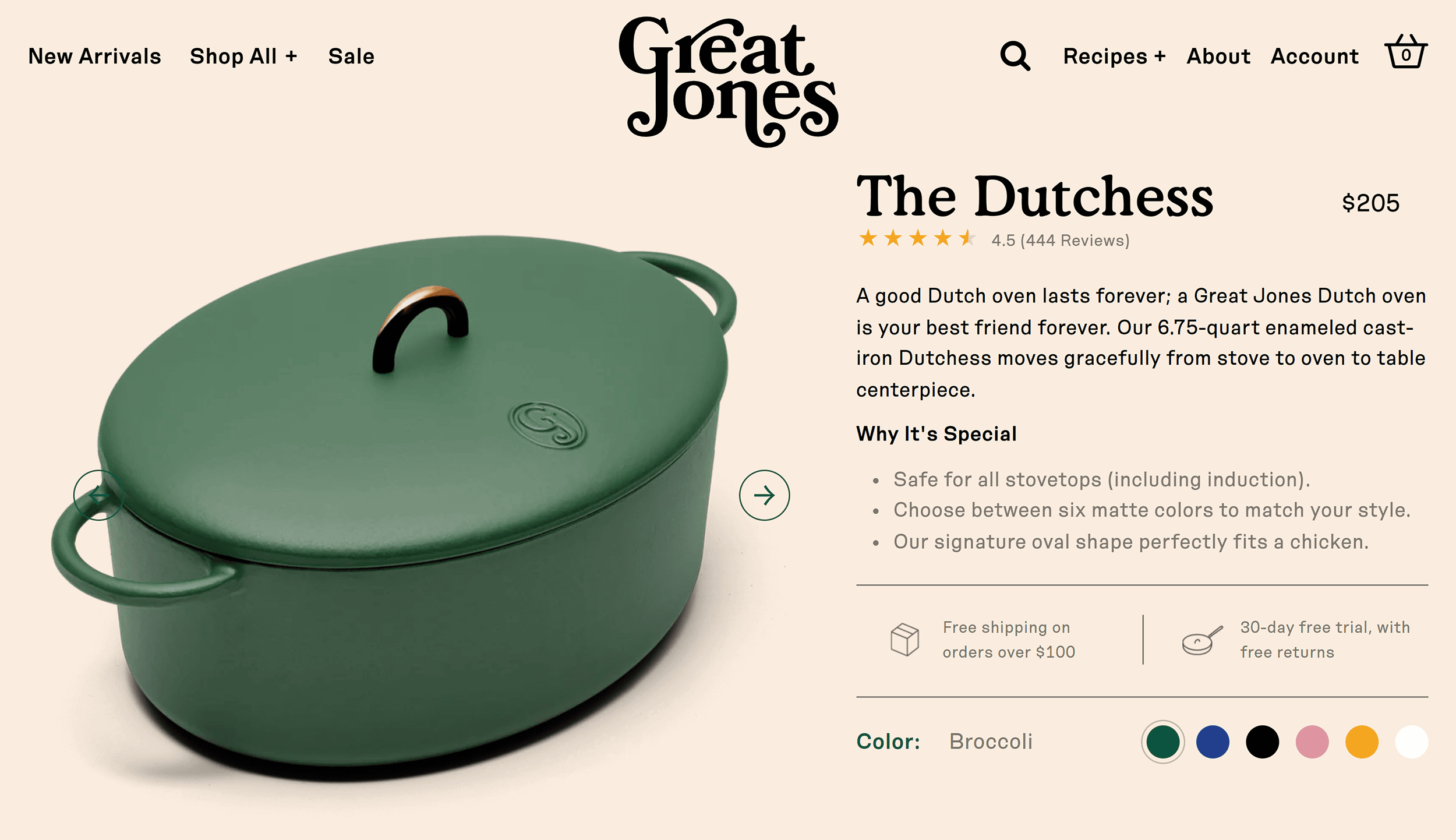
Great Jones’s signature product, "The Dutchess" Dutch oven, is a testament to design and quality. It consistently receives glowing reviews and has been prominently featured in prestigious lifestyle and culinary publications such as Vogue, The New York Times, Bon Appétit, and The Kitchn. Such endorsements typically signal robust brand recognition and product desirability. However, when a potential buyer queries a search engine like Google or an advanced Large Language Model (LLM) for "best Dutch ovens," Great Jones rarely appears in the top recommendations. This discrepancy highlights a fundamental shift in how digital authority is perceived and built.

The issue isn’t a lack of content or positive press for Great Jones. Instead, it points to the absence of a cohesive and consistently reinforced pattern—a "positive framing" that unequivocally links the brand to "Dutch ovens" across both its proprietary digital channels and third-party platforms. Without this consistent signal, search engines and LLMs struggle to confidently establish the brand’s expertise and relevance within that specific topic, defaulting instead to brands that have cultivated stronger, more unambiguous associations. This challenge, affecting many brands to varying degrees, has only been amplified by the rise of AI in search, making the need for a deliberate strategy more urgent than ever. The good news is that this pattern can be intentionally constructed and nurtured.
This guide introduces the Topical Authority Pyramid, a comprehensive framework designed to transform a brand into the definitive authority within its niche. Developed through extensive experience in brand positioning across diverse sectors like e-commerce, SaaS, and finance, and incorporating insights from industry experts such as Amanda Milligan, Content and Growth Manager at Semrush, this framework offers a strategic pathway to overcome the modern visibility gap.
The Shifting Sands of Digital Visibility: What is Topical Authority?
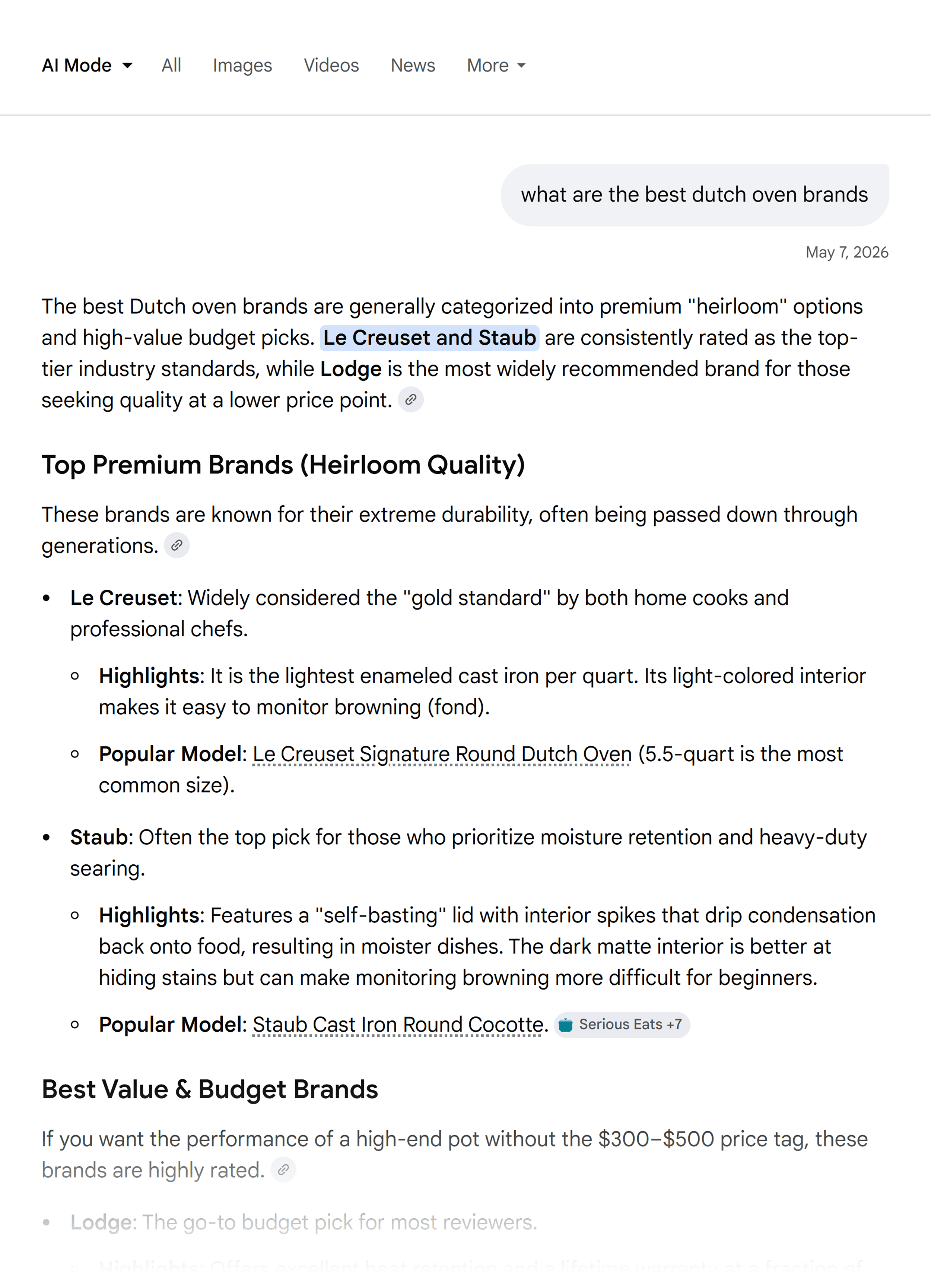
Topical authority refers to a website’s earned reputation as an expert on a specific subject. It emerges when a brand and its core topic are repeatedly and consistently presented together across the diverse sources that consumers, search engines, and LLMs deem credible. Consider iconic brands: Patagonia instantly evokes "outdoor gear," Adobe is synonymous with "creative software," and HubSpot represents "inbound marketing." These associations aren’t accidental; they are the result of sustained, coherent messaging.
Historically, topical authority was largely defined by the sheer volume and breadth of content a site published on a given subject. The belief was that comprehensive coverage alone would establish dominance. However, this traditional approach is no longer sufficient. As Amanda Milligan of Semrush notes, "Today, search engines and LLMs look for more than coverage. They look for a clear position on the topic and external evidence that supports it." This marks a significant evolution, driven by the increasing sophistication of algorithms that don’t just match keywords but understand semantic relationships, user intent, and the aggregate perception of a brand across the digital ecosystem. The advent of generative AI in search has further accelerated this trend, demanding a more nuanced and holistic approach to authority building.
The Topical Authority Pyramid: A Blueprint for Brand Recognition
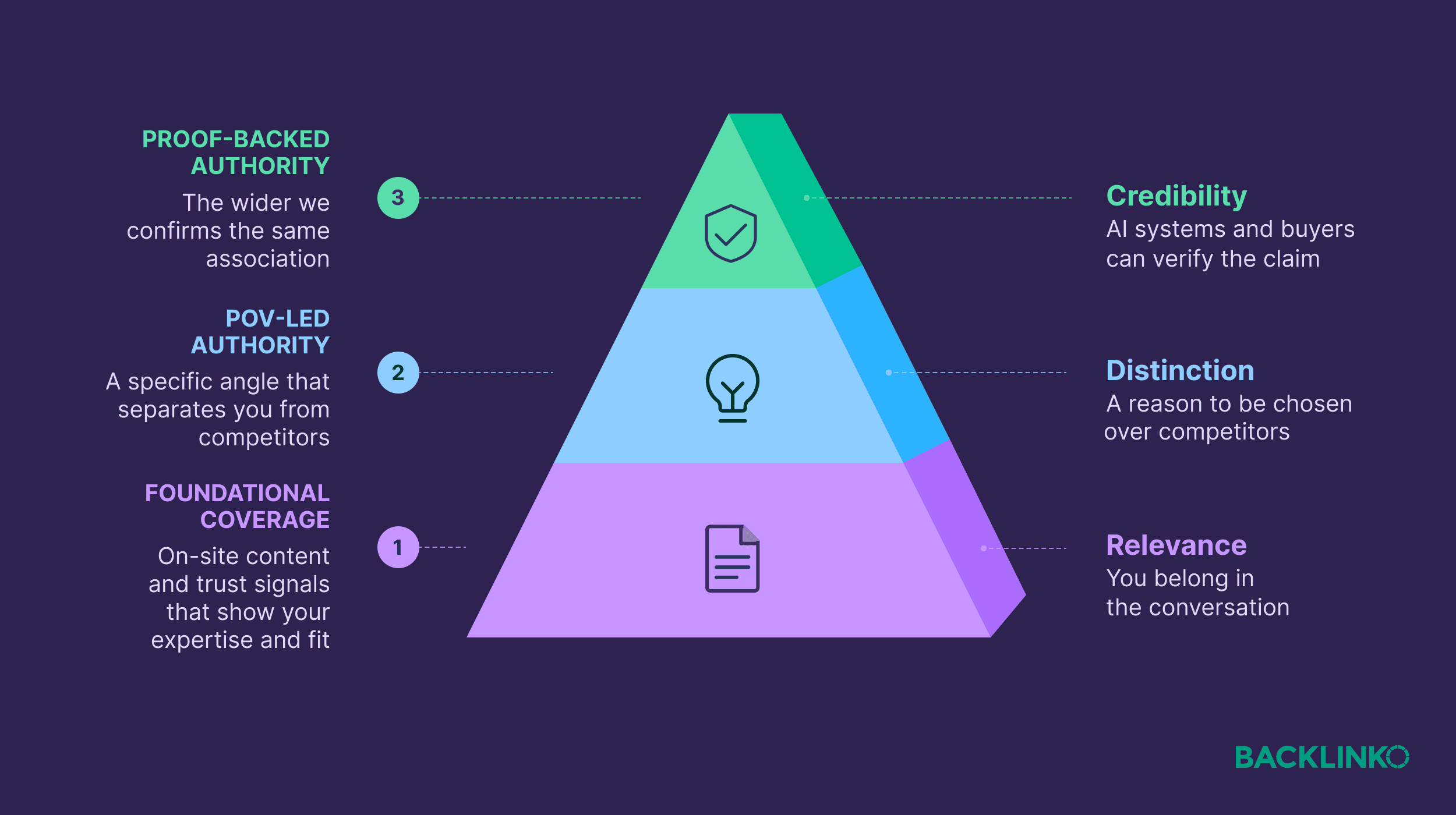
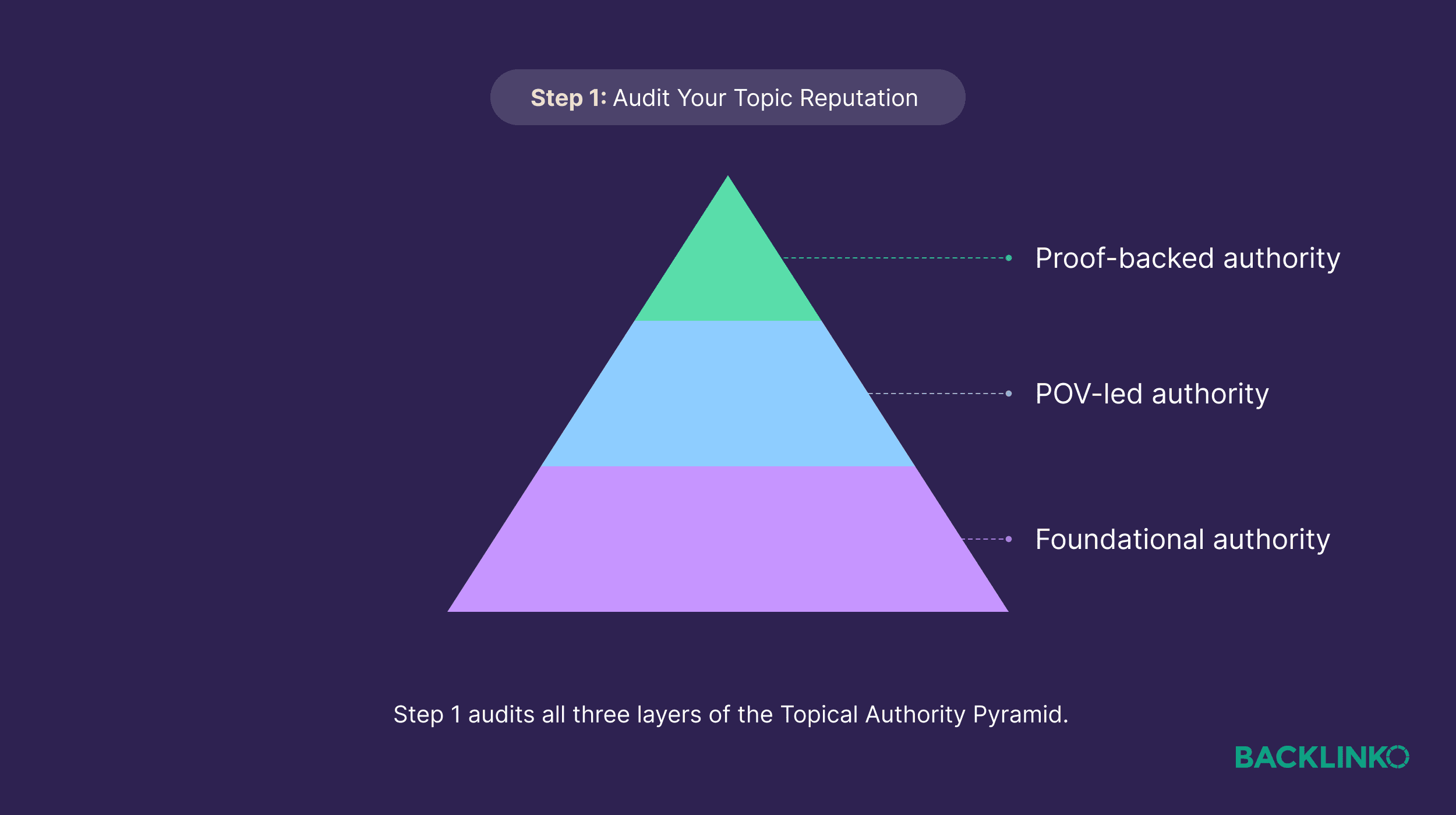
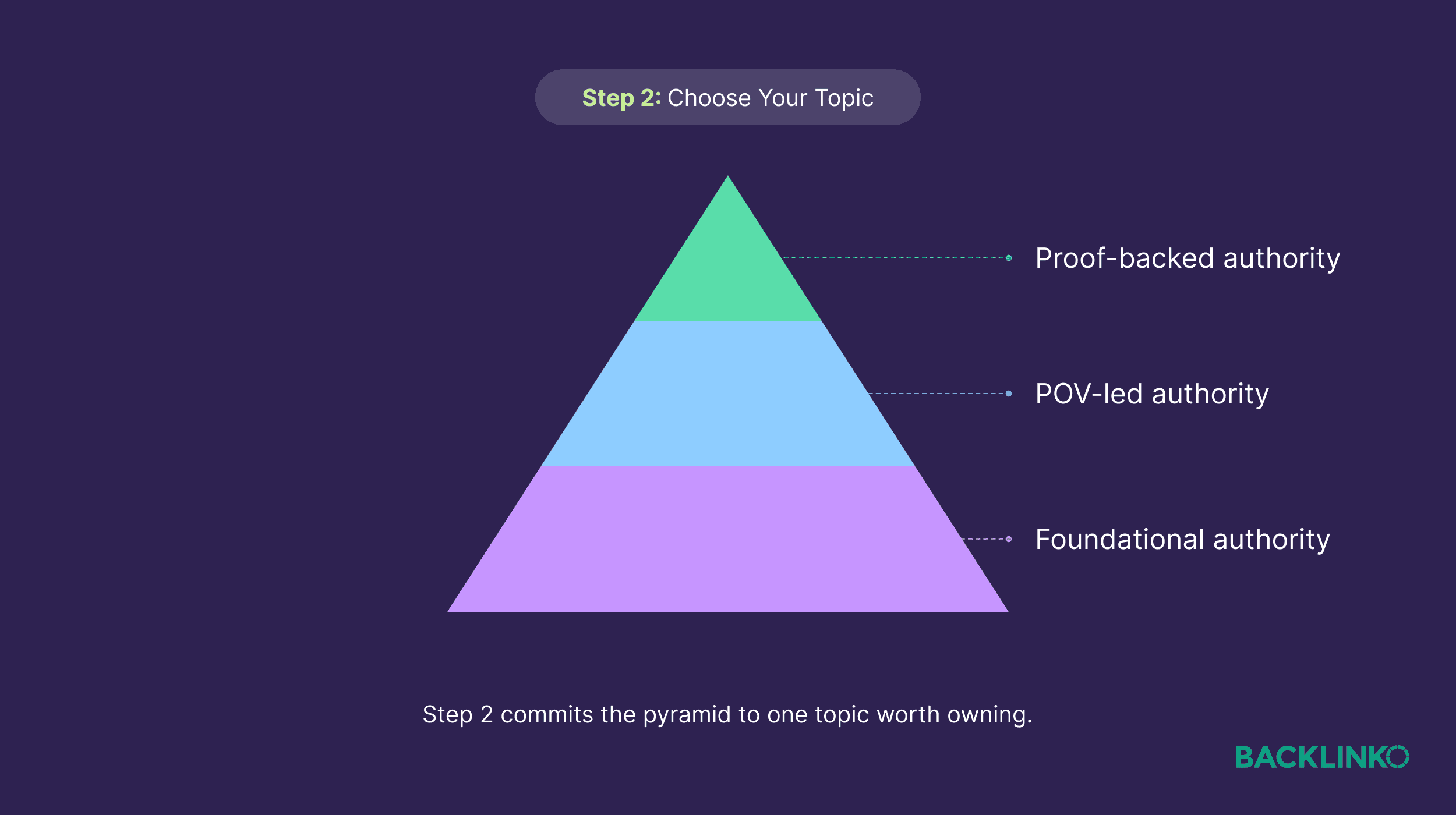
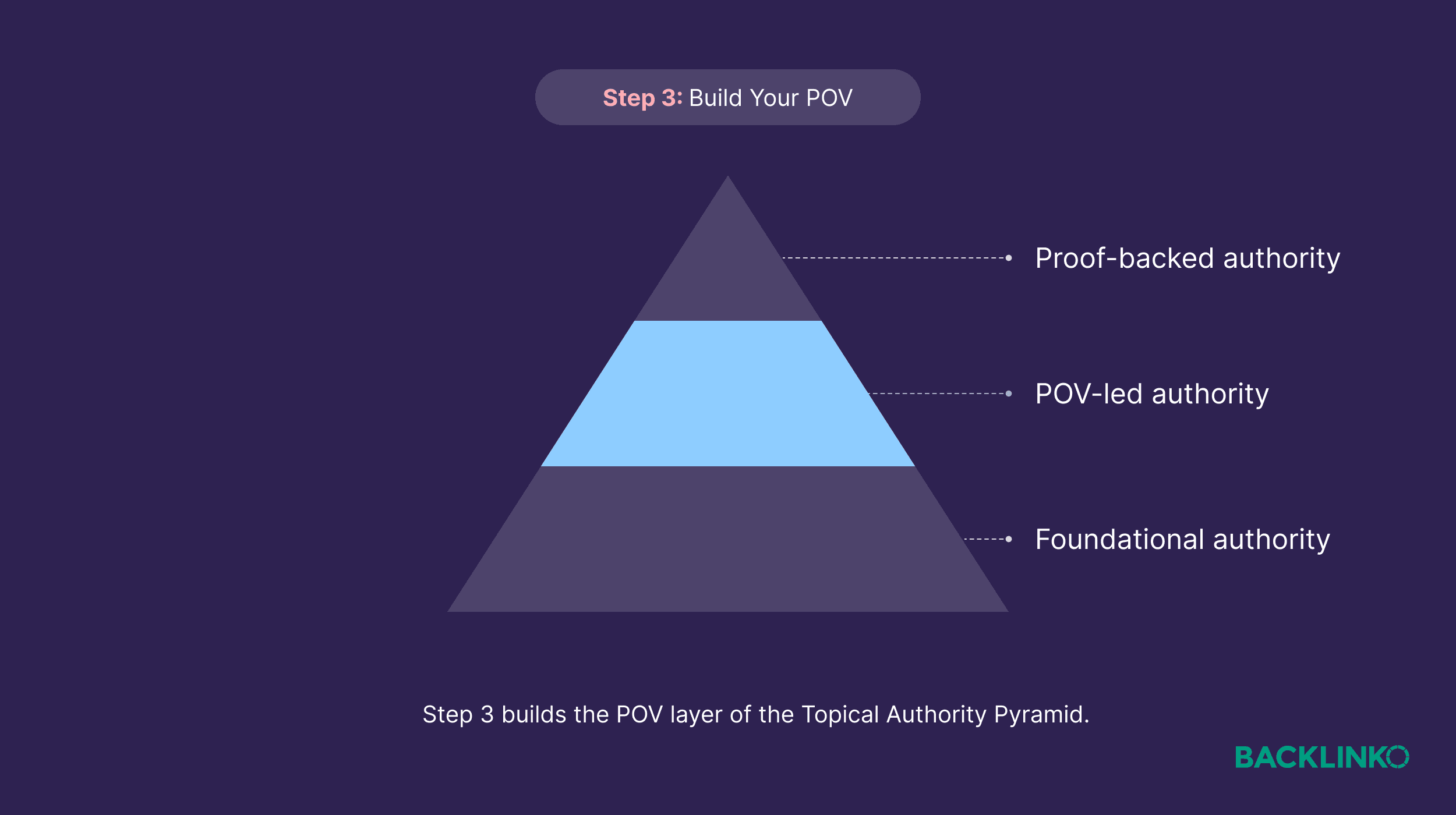
To address this evolved landscape, the Topical Authority Pyramid provides a structured methodology, breaking down topical authority into three interdependent layers:
- Foundational Authority: The base layer, ensuring comprehensive and accurate coverage of the topic on your own platform.
- Point of View (POV) Authority: The middle layer, defining your unique stance or angle within the broader topic.
- Proof Authority: The top layer, validating your POV through external, third-party endorsements and signals.
Each layer plays a crucial role, working in concert to establish the brand’s expertise and enhance its visibility across search engines and LLMs. Many brands, like Great Jones, may possess strong foundational authority (e.g., product quality, basic content) and some scattered proof (e.g., press mentions), but often lack a consistent POV that unifies these elements and communicates a clear, distinct message to the wider digital world. The following steps detail how to systematically build all three layers.
Step 1: Unearthing Your Current Topic Reputation through Comprehensive Auditing
Before embarking on a strategy to build topical authority, it is imperative to understand your brand’s existing reputation, whether intentionally cultivated or not. An initial audit often reveals a significant disparity between a brand’s self-perception and its actual digital footprint. Amanda Milligan highlights that "the gap between what you publish and what you want to be known for may be wider than you expect."
Research Your Current On-Site Associations
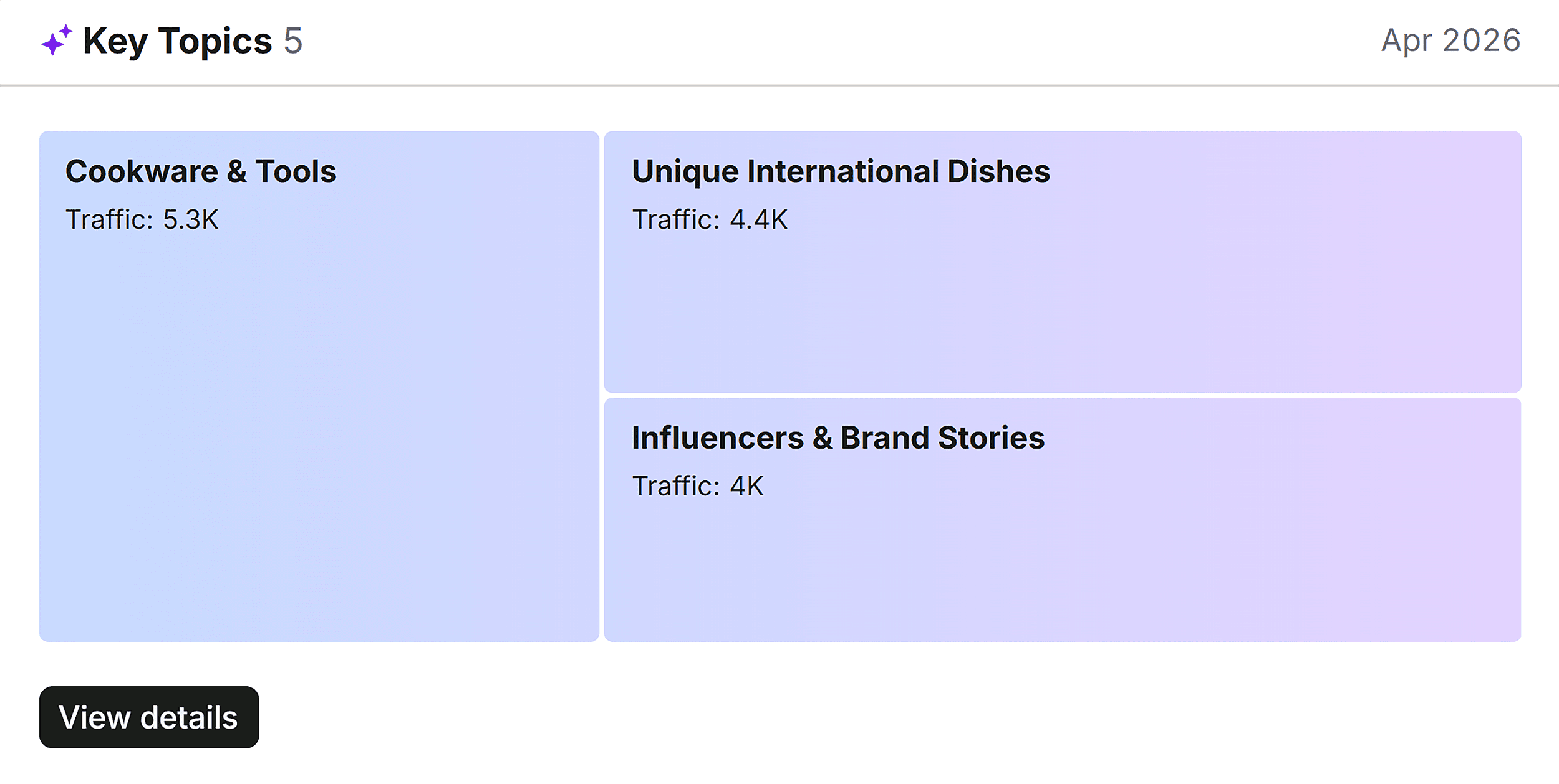
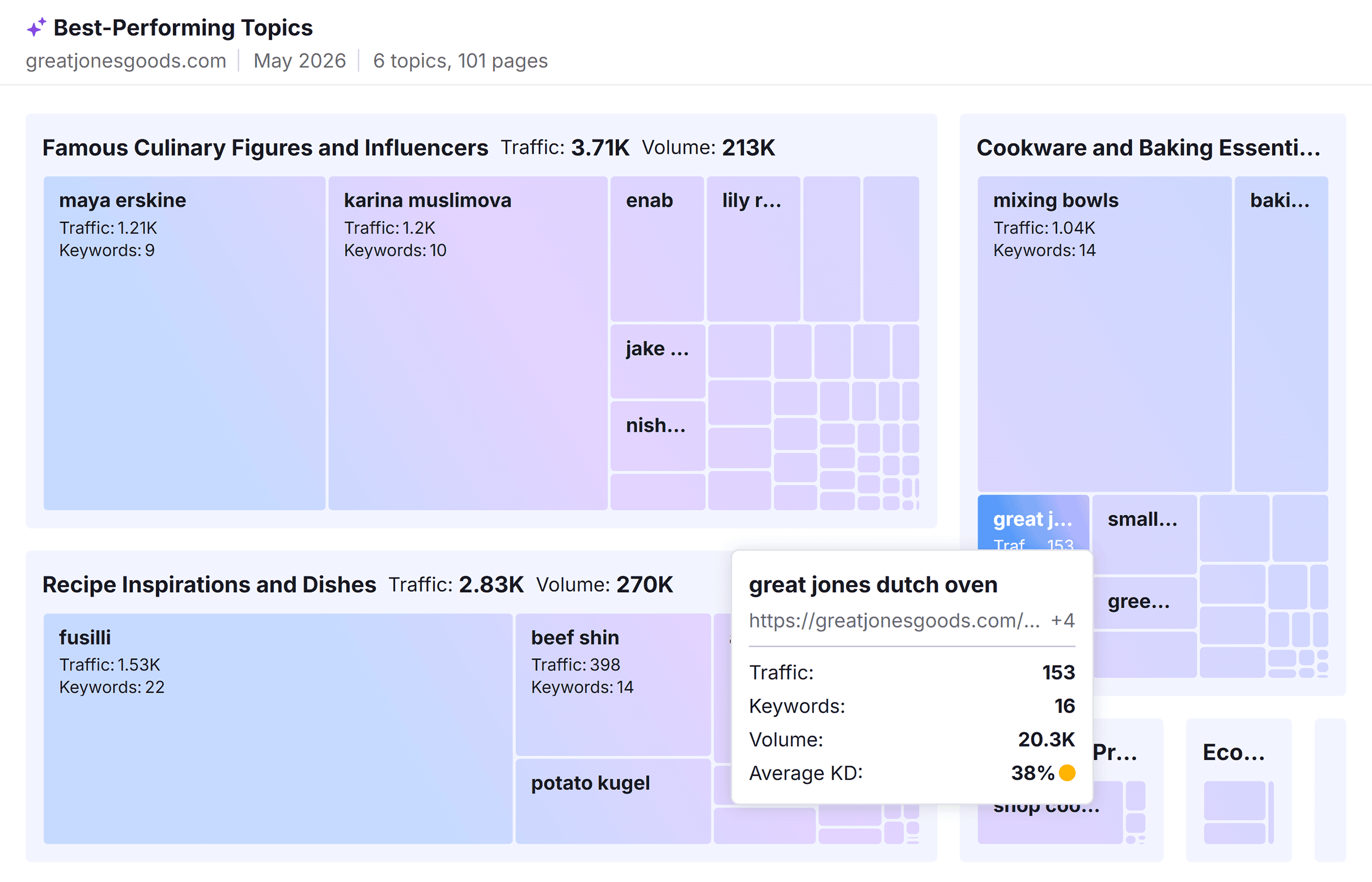
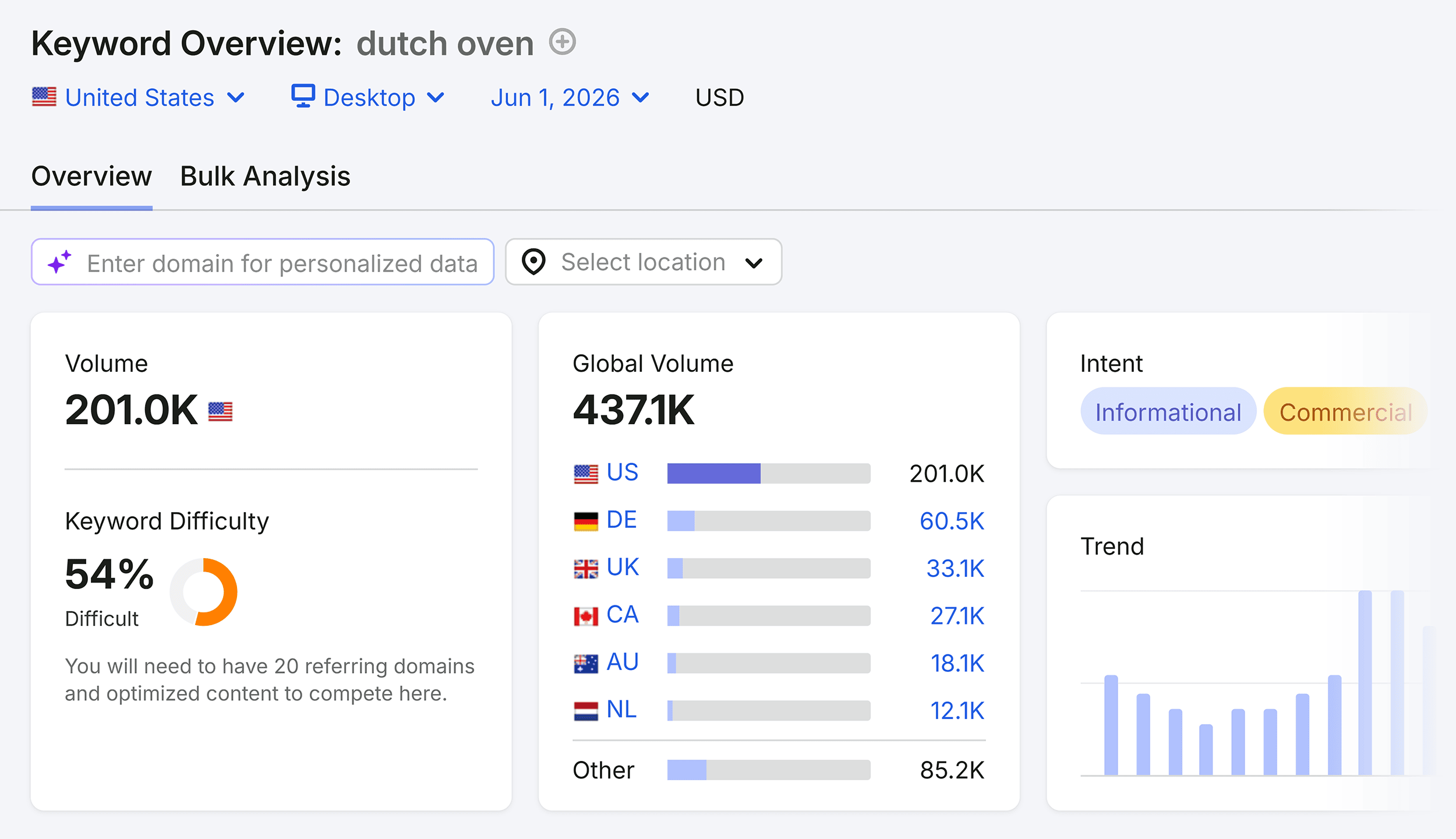
The quickest way to assess your brand’s current topical associations on its own site is through analytical tools. Semrush’s Organic Rankings tool, for instance, allows you to enter your domain and automatically identify the topics for which your brand is currently gaining visibility. For Great Jones, this audit revealed that their strongest on-site associations were surprisingly "recipes" and "celebrity chefs," while "Dutch ovens"—their primary product category—barely registered in their top-ranking topics. This is a missed opportunity, especially considering that "Dutch oven" alone garners over 200,000 monthly Google searches. This data indicates that while Great Jones may be creating engaging content around culinary themes, it isn’t effectively channeling that content to reinforce its core product offering in the eyes of search algorithms.
Additional areas to examine include:
- Google Search Console: Analyze which queries your pages are already ranking for, even if at lower positions. This provides a baseline of existing associations.
- Internal Site Search Data: What terms are users searching for directly on your website? This reveals their expectations and how they perceive your offerings.
- On-site Content Audit: Systematically review your product pages, blog posts, and informational articles to see how frequently and prominently your target topic is mentioned and linked.
Audit Your Off-Site Presence
Beyond your own website, a crucial aspect of topical authority lies in your third-party coverage. This includes mentions, reviews, product roundups, and editorial features. This is often where the most significant "gap" exists for many brands, and it’s the area that AI systems appear to weigh most heavily in their assessments of expertise and trustworthiness.
Perform the following checks:
- Google Search for "Best [Topic]": Search for terms like "best Dutch ovens." Note which brands consistently appear in top results and are cited by reputable sources.
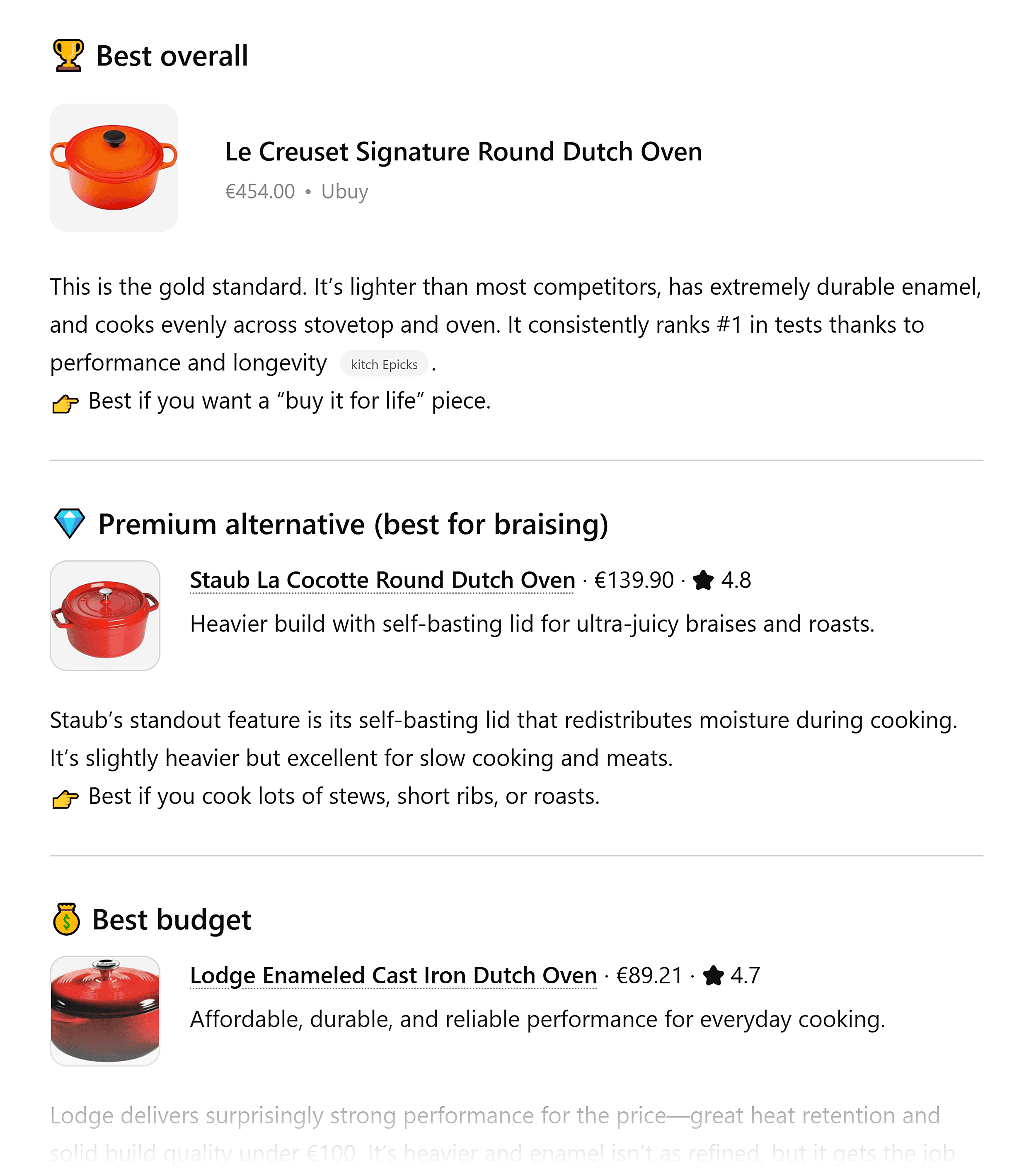
- LLM Queries: Ask AI models (e.g., ChatGPT, Gemini) for recommendations related to your topic. Observe which brands are mentioned and how they are described.
- Niche Community Mentions: Explore forums (e.g., Reddit’s r/cooking), social media groups, and specialized review sites to see if your brand is being discussed in relation to your target topic.
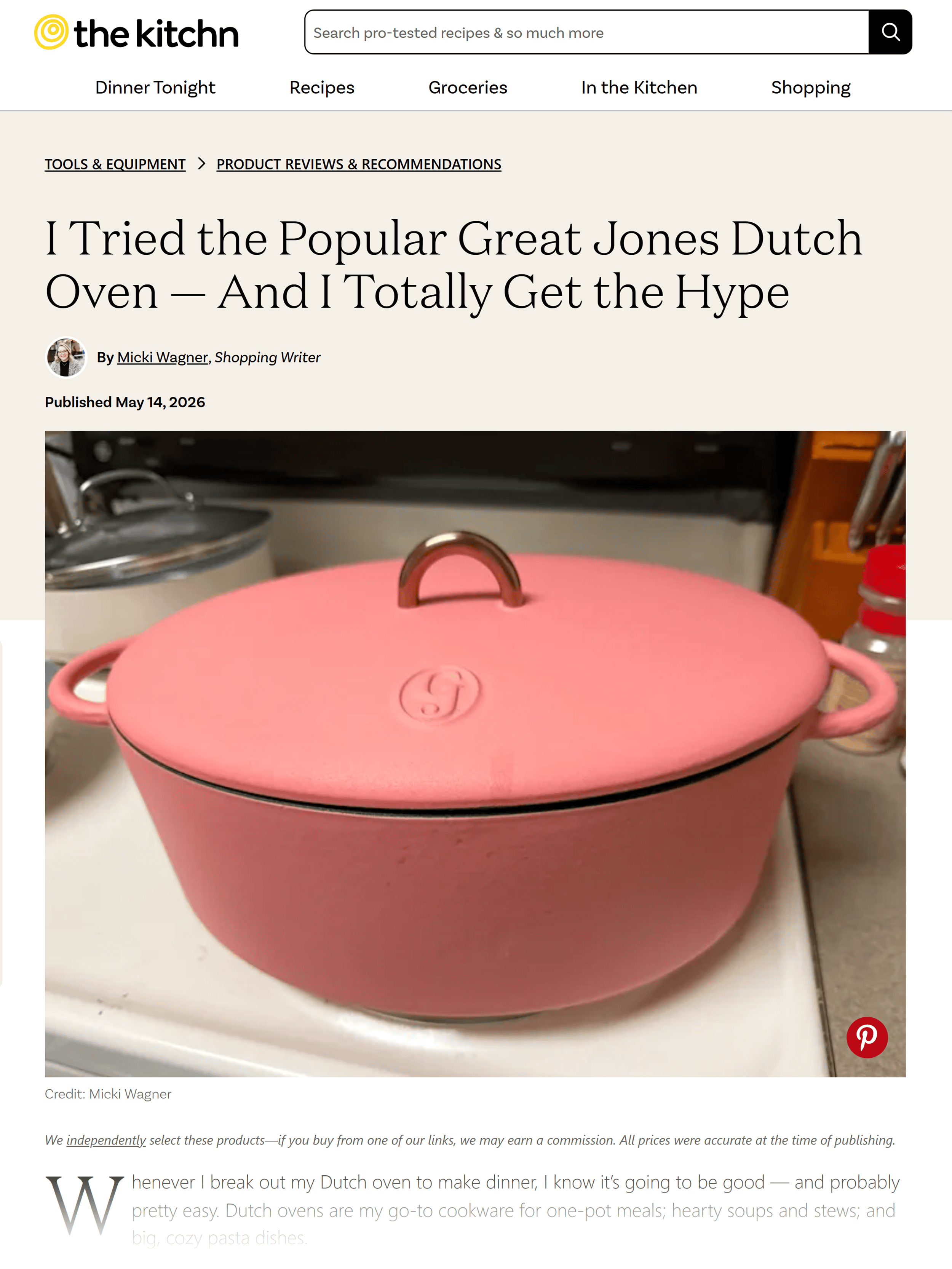
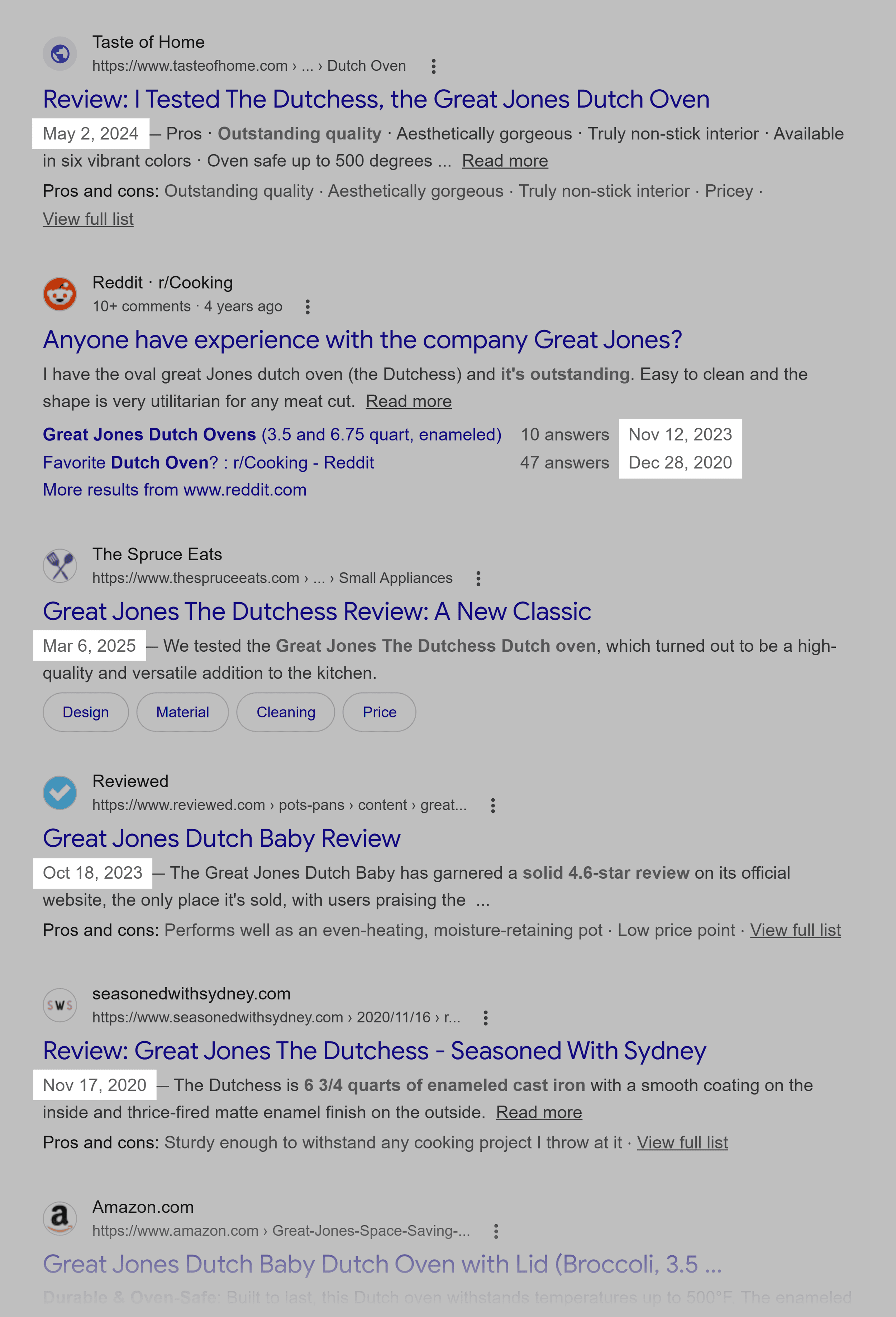
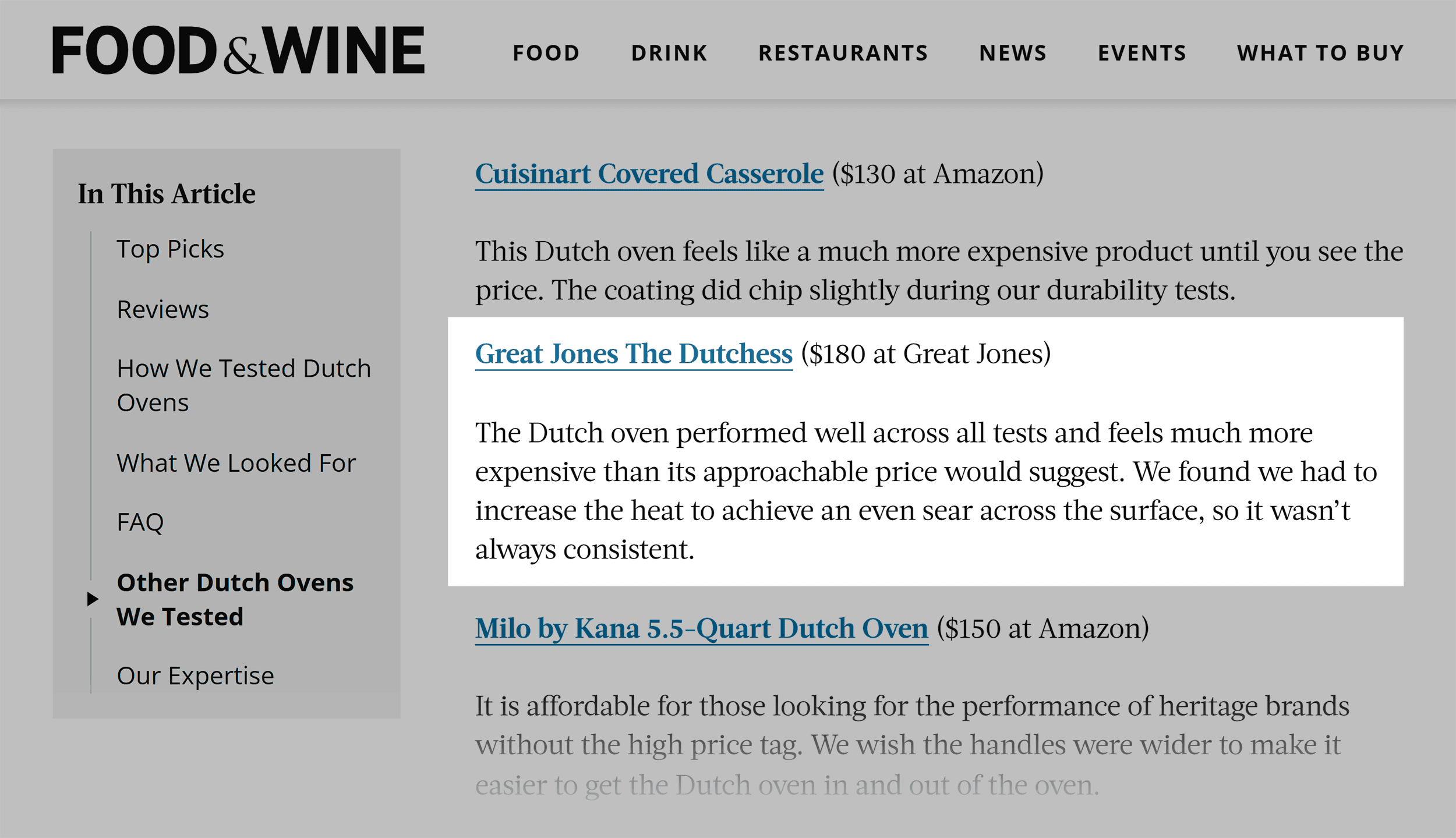
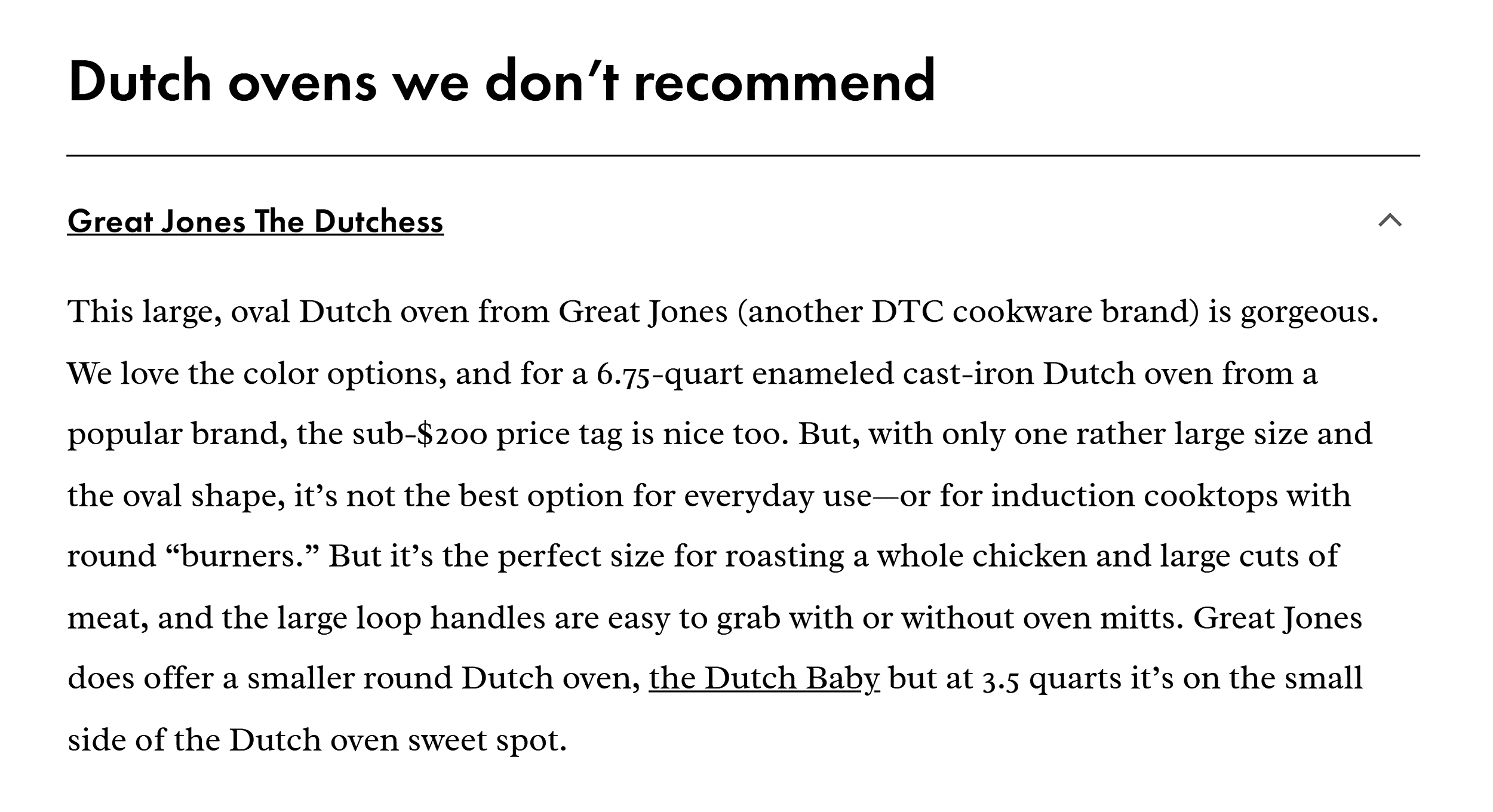
For Great Jones, a quick off-site audit reveals a mix of enviable coverage and significant topical gaps. While they’ve secured features in major lifestyle publications and partnered with prominent chefs, specific mentions of "Dutch ovens" are often outdated or carry inconsistent sentiment. For example, some articles might feature The Dutchess but categorize it under "Other" rather than "Top Picks," sometimes citing heating issues. More critically, some influential roundups, like those from Bon Appétit, have even placed Great Jones under "Dutch ovens we don’t recommend." Furthermore, in active online discussions where consumers seek Dutch oven recommendations, Great Jones is rarely mentioned spontaneously, and existing threads are often years old. This fragmented and sometimes negative external framing prevents search engines and LLMs from confidently associating Great Jones with high-quality Dutch ovens, despite internal reviews praising the product.
In summary, Great Jones possesses significant brand equity but currently lacks a consistent, positive, and current reputation specifically for Dutch ovens. Identifying these precise gaps is the first vital step toward rectifying them.
Step 2: Strategic Topic Selection for Targeted Authority Building
You cannot build authority on every conceivable topic simultaneously. This step is about strategically narrowing your focus to a single, high-potential topic based on crucial factors, ensuring your efforts are concentrated and impactful.
Build and Prioritize Your Topic List
Begin by brainstorming a comprehensive list of topics you aspire for buyers, search engines, and LLMs to associate with your brand. Start with the most obvious candidates—your core products, primary categories, common use cases, and the problems your offerings solve. Then, expand this list to include adjacent topics that your target audience already cares about. For Great Jones, this could extend beyond "Dutch ovens" to include "slow cooking," "one-pot meals," "kitchen gifting," or "cookware care."
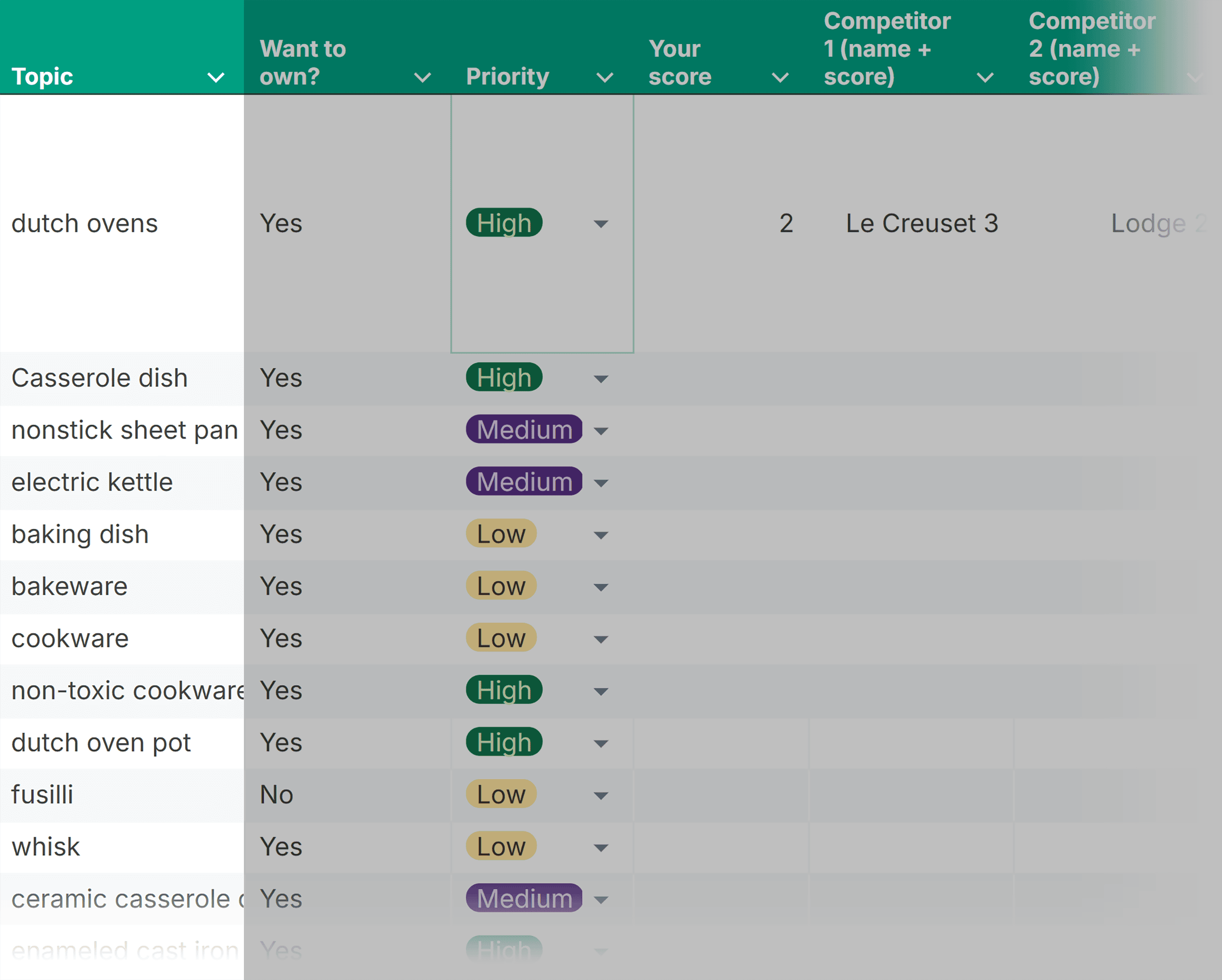
Crucially, look for topics where your brand already has some traction, where competitors exhibit weaknesses, or where your brand should be associated but currently isn’t. Once you’ve identified 10 to 15 potential topics, record them in a "Topic Audit & Scoring" spreadsheet.
Next, refine this list by asking two critical questions for each topic:
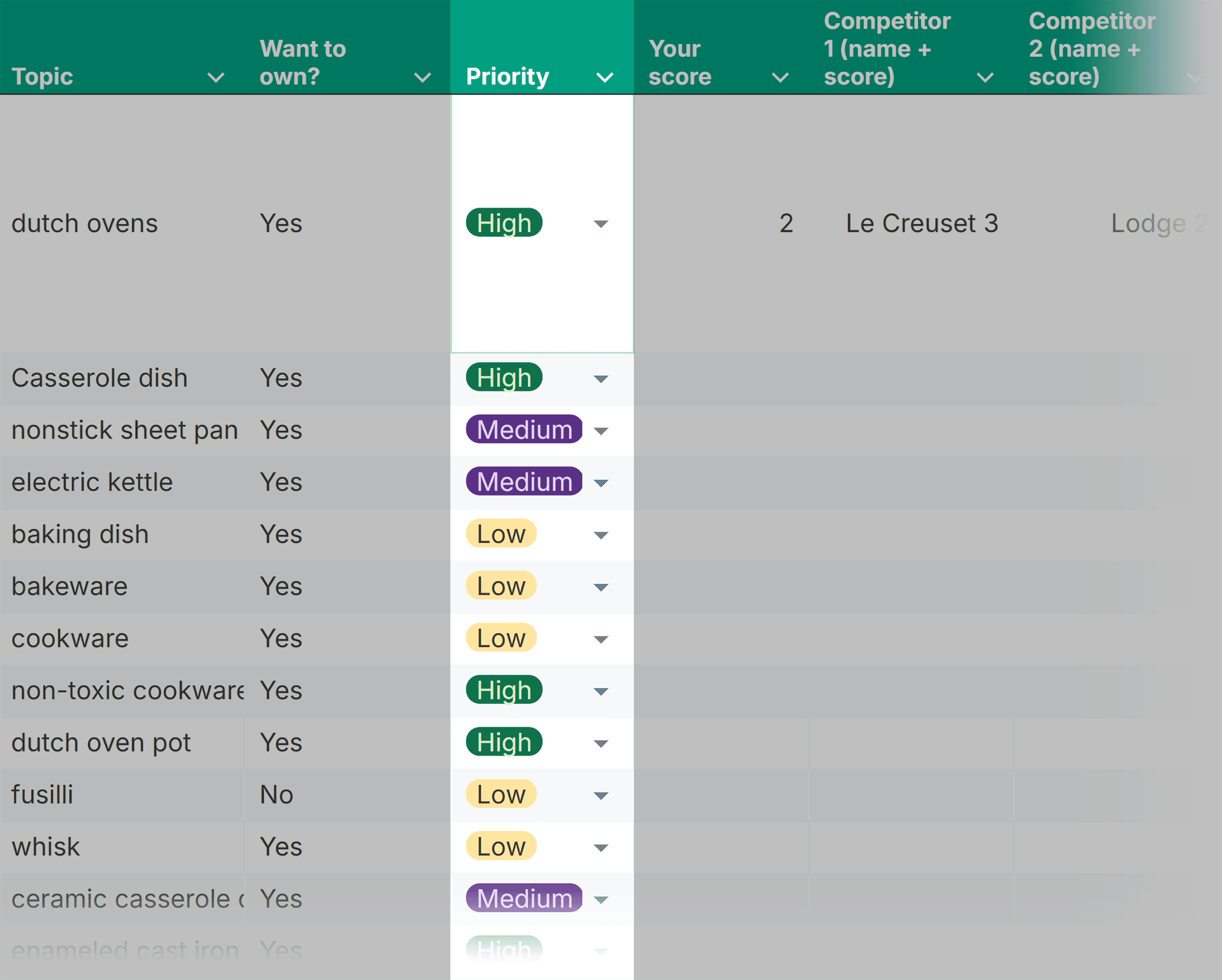
- Do you want to own it? Does this topic directly contribute to revenue, support a core product, or build a brand reputation that actively attracts your ideal buyers?
- How urgent is it? Is there significant existing search demand? Is the competitive landscape relatively open, or are there established giants? Are there emerging trends that make this topic particularly timely?
By applying these filters, you should narrow your focus to three to five high-priority topics worthy of deeper investigation.
Run a Query Audit
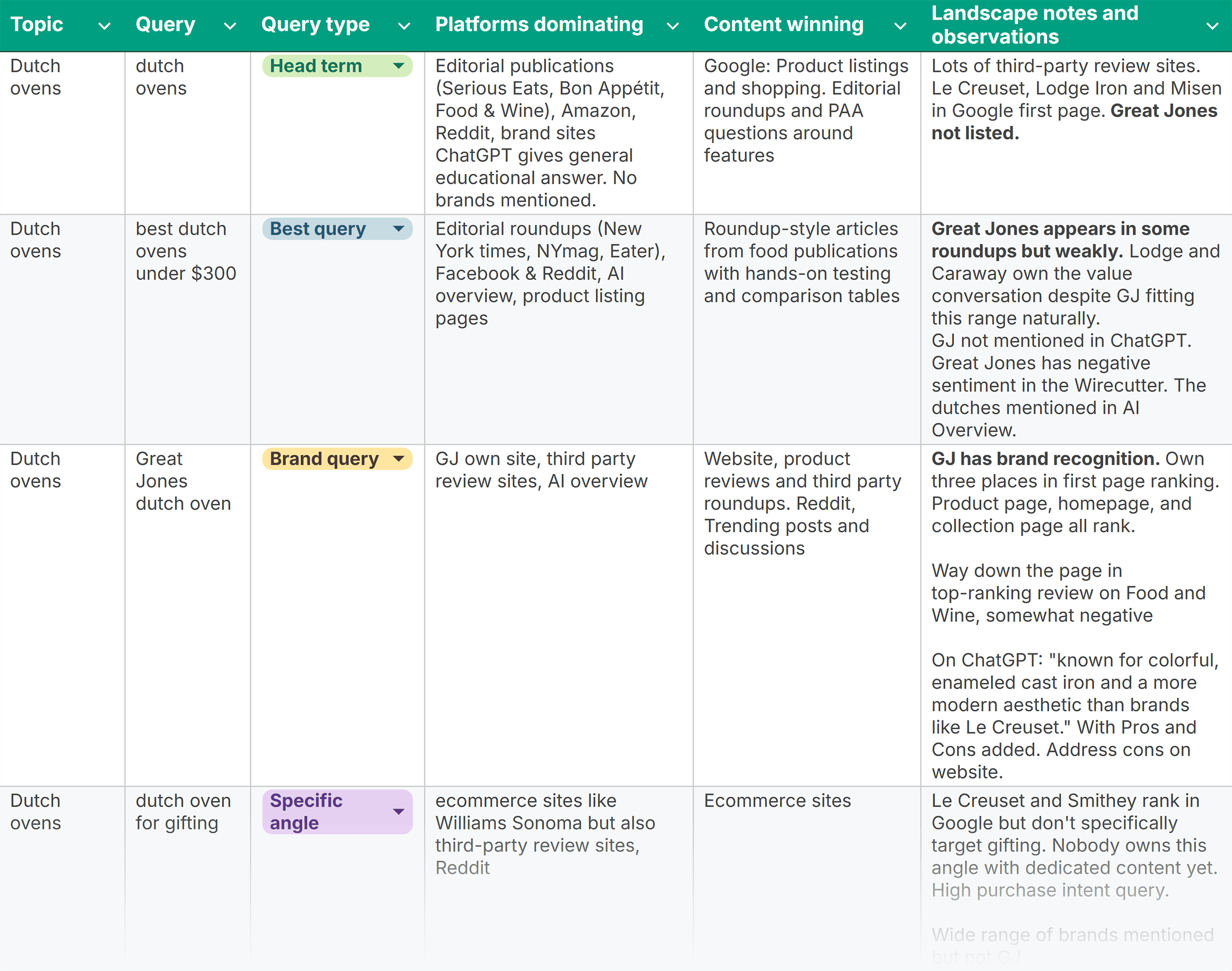
For each shortlisted topic, conduct a focused query audit using both Google and various LLMs. This will reveal the current landscape, who dominates it, and where your brand might carve out a distinct position.
Run four types of queries:
- Head Term: Search the topic as-is (e.g., "Dutch ovens"). This reveals the dominant brands and how AI models initially frame the topic.
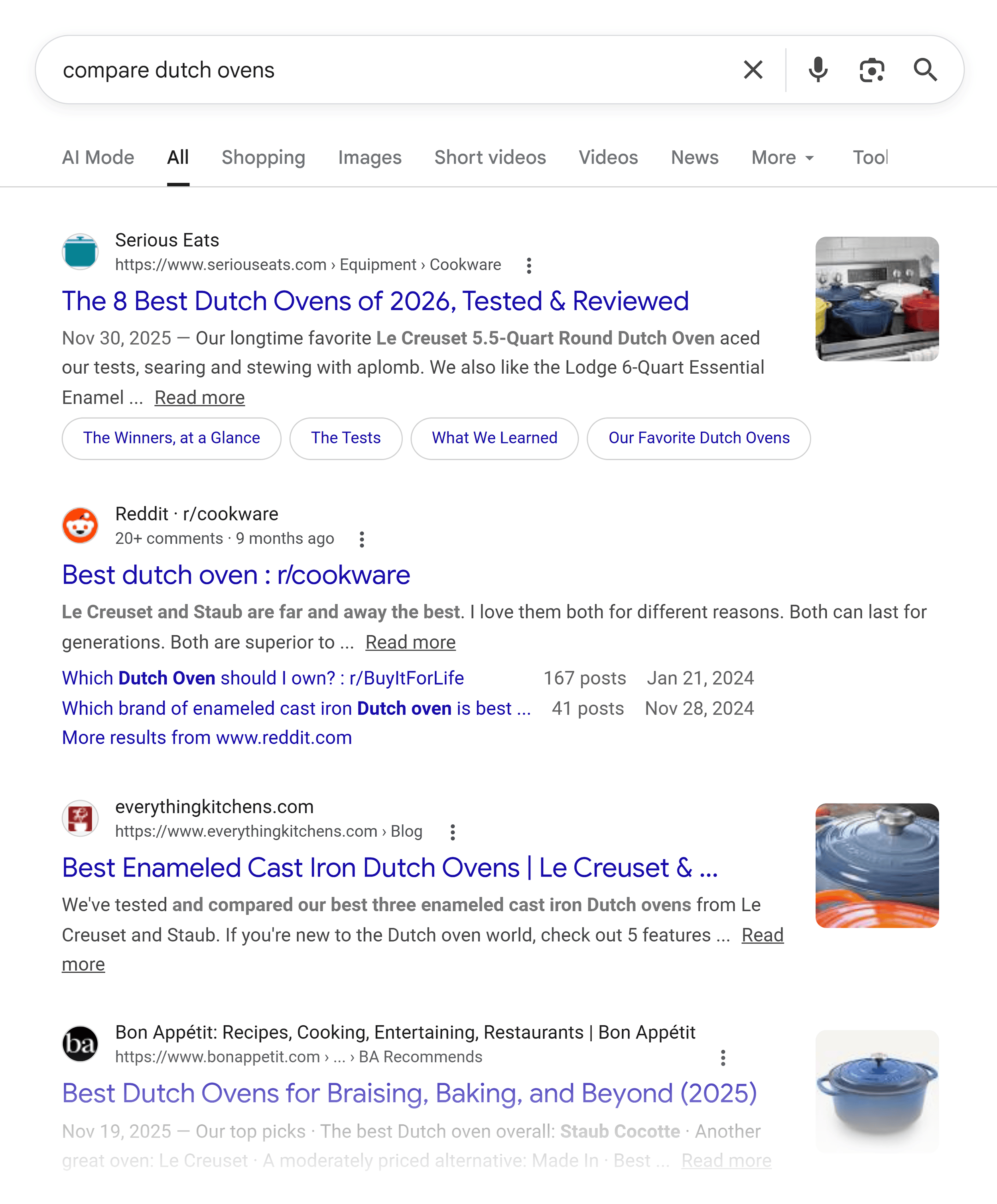
- Best Query: Add qualifiers like "best" or specific criteria (e.g., "best Dutch ovens under $200"). This uncovers buyer intent and which brands AI actively recommends for purchase decisions.
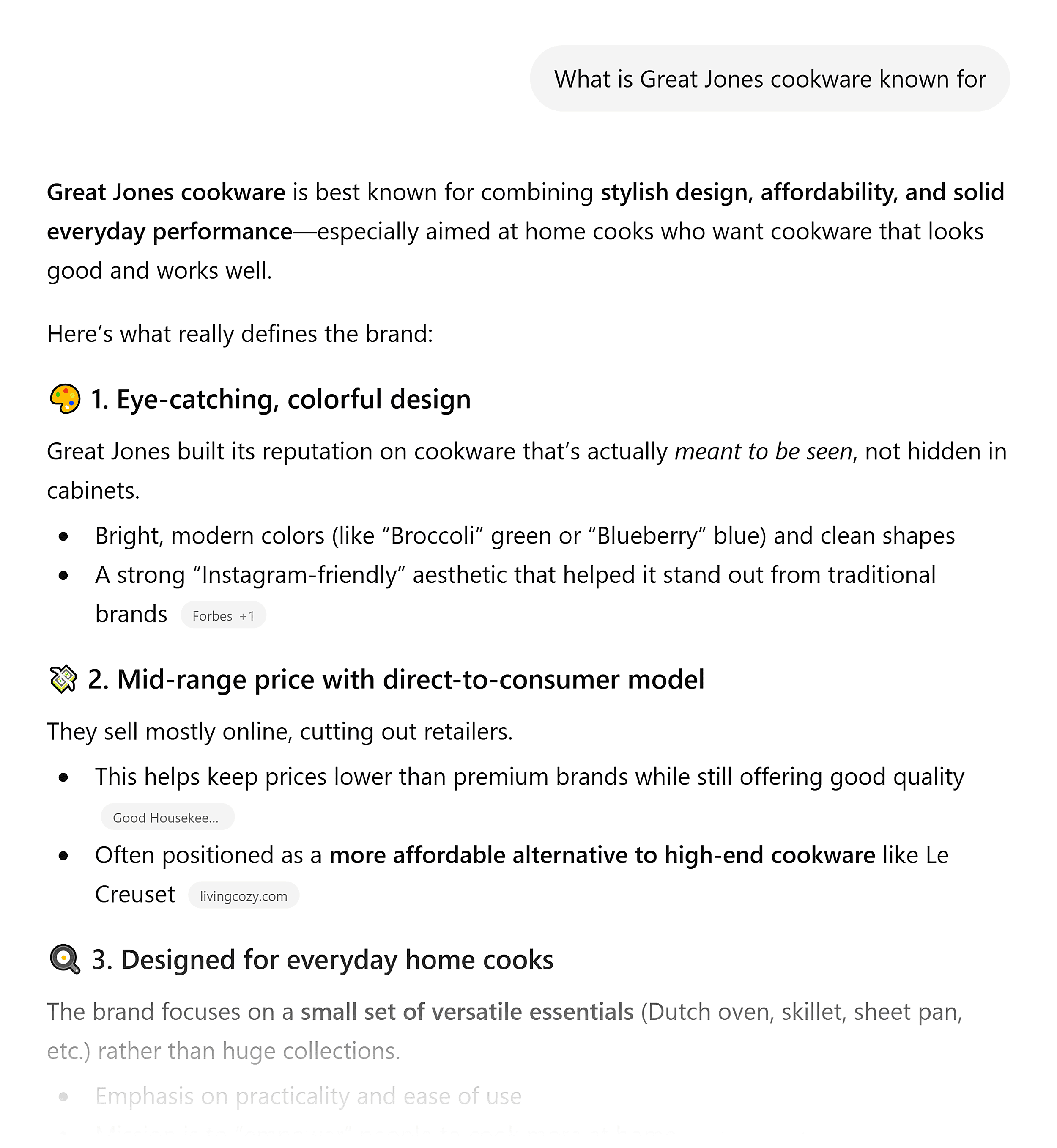
- Brand Query: Combine your brand with the topic (e.g., "Great Jones Dutch oven"). This assesses your current standing and how AI describes your specific offering.
- Specific Angle Query: Search for a niche association you might want to own (e.g., "Dutch oven for gifting"). This helps identify untapped market segments and opportunities.
As you perform these searches, meticulously note:
- Which brands consistently appear in the top 10 search results and AI answers.
- The overall sentiment and framing around your brand and competitors.
- Any surprising omissions or unexpected associations.
For Great Jones, "Dutch ovens" and "best Dutch ovens" consistently feature brands like Le Creuset, Staub, Lodge, and Caraway, with Great Jones largely absent. However, a query like "Dutch oven for gifting" might reveal a less saturated landscape, indicating an opportunity. ChatGPT, for example, might not mention Great Jones at all for general "best Dutch ovens" but might be influenced by specific, targeted content if it existed for "gifting." The absence of a clear leader in a query with buying intent signals a prime topical authority opportunity.
Score by Association Strength
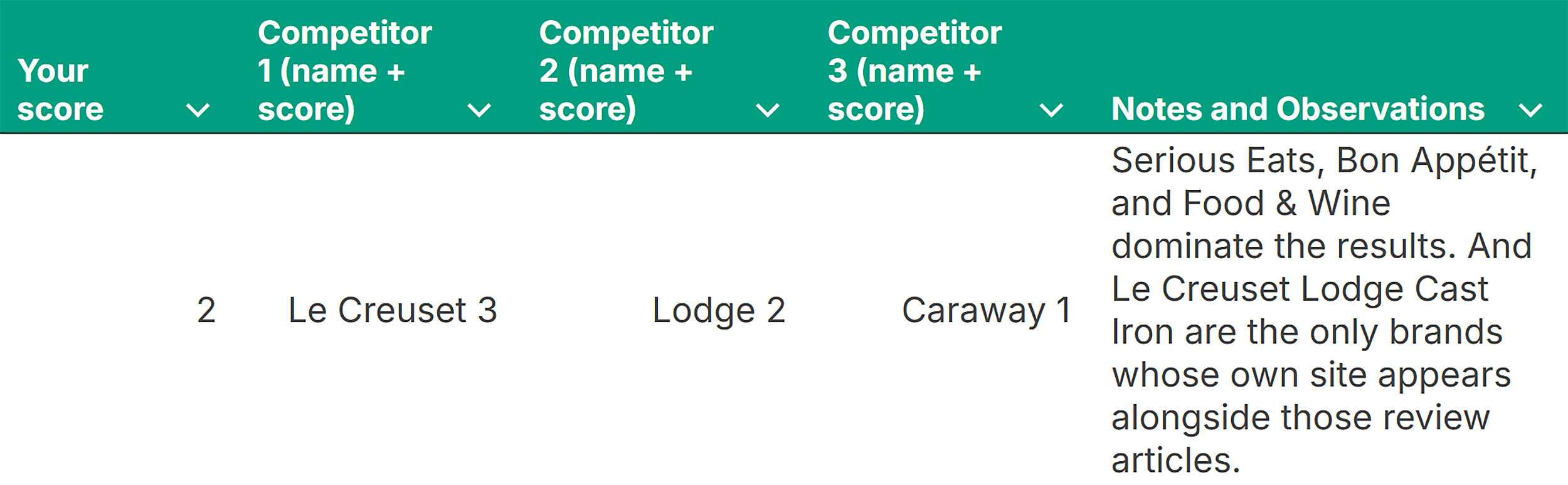
Following the query audit, score your brand’s presence for each shortlisted topic against three key competitors using a 0 to 3-point scale. This score reflects your brand’s combined strength across foundational content, POV clarity, and external proof.
- 0: Not present anywhere for this topic.
- 1: Present but weak, inconsistent, or even negative in sentiment.
- 2: Present and generally positive, but lacks consistency or distinctiveness.
- 3: Consistently prominent across high-authority sources and AI, with a clear and positive association.
Score your brand first, then your competitors. Look for high-priority topics where your brand scores 1 or 2, and at least one competitor scores 0 or 1. These represent "winnable positions" – areas with real buyer demand where your brand has some existing footing, and no competitor has yet established dominant authority. For Great Jones, "Dutch ovens for gifting" fits this profile: it’s a high-priority area with existing buyer interest, some inherent brand strengths (design), and a relatively open competitive field.
Ultimately, this rigorous process should lead you to select one primary topic to focus your initial authority-building efforts on.
Step 3: Forging a Unique Point of View (POV) within Your Chosen Niche
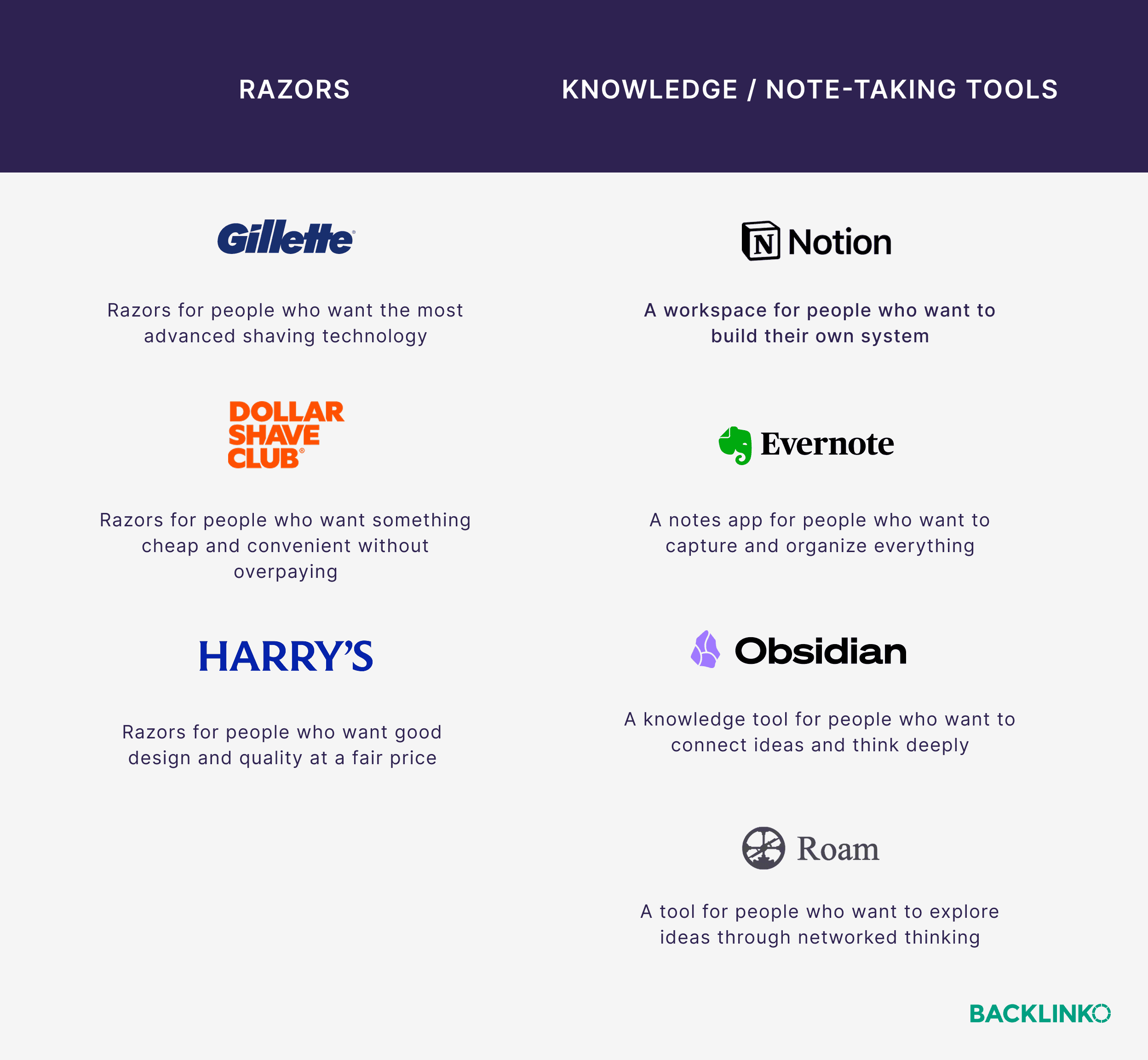
Having identified a viable topic, the next crucial step is to define the specific reputation you intend to build around it. Your Point of View (POV) is the distinct angle you will own within that broader topic, making your brand uniquely identifiable to buyers, search engines, and AI systems. Consider the topic of "razors": Gillette might own "precision," while Harry’s or Dollar Shave Club occupy the "convenience and value" POV. The core product is the same, but the brand associations are entirely different.
Research What’s Already Owned
Before crafting your unique POV, it’s essential to map out the existing POVs held by dominant brands in your space. These are the territories to avoid, as directly competing for them means challenging years of established brand building. Start by revisiting your notes from the Query Audit (Step 2); the patterns observed there offer significant clues about competitor strengths.
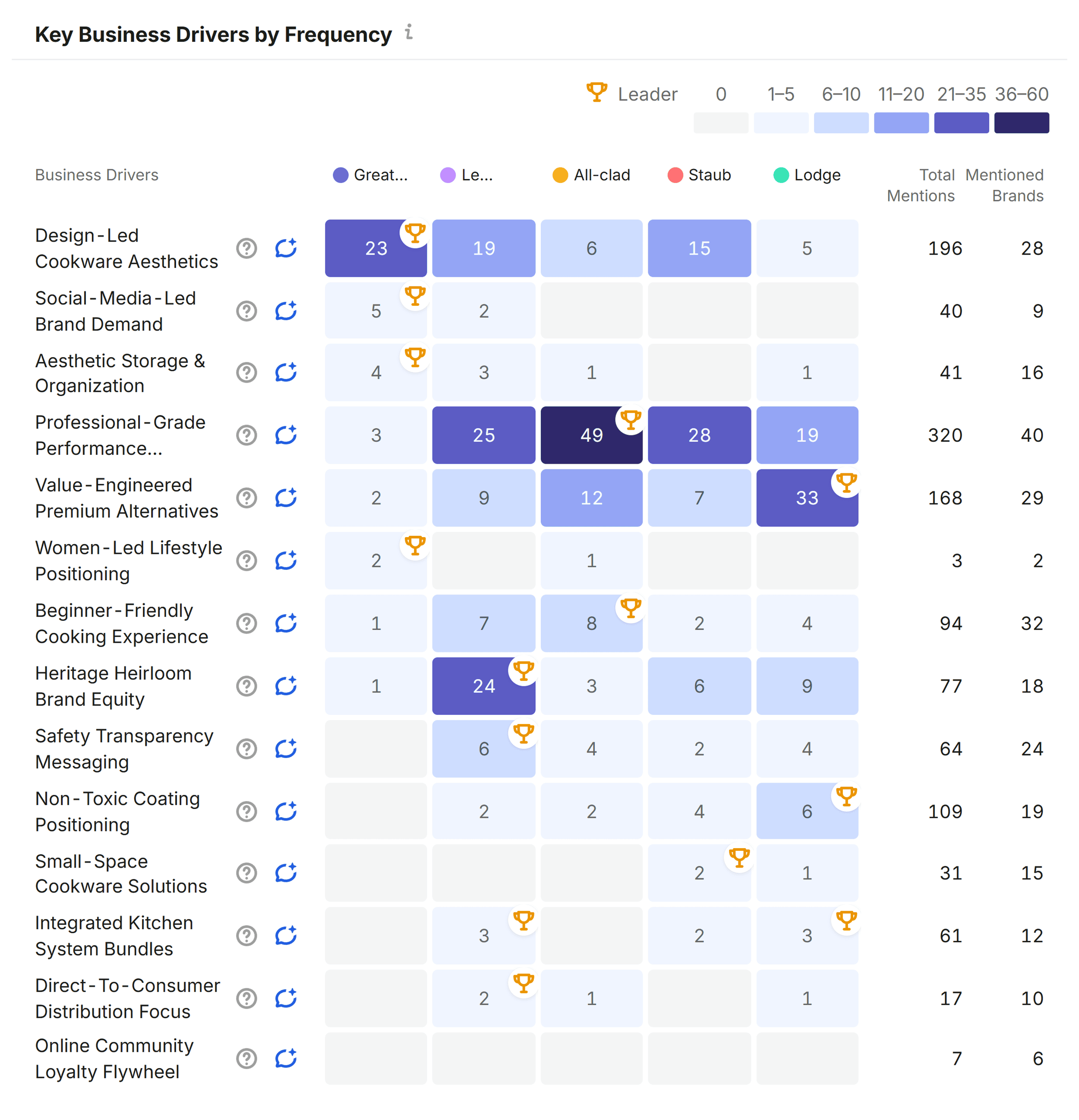
To delve deeper, utilize tools like the Semrush AI Visibility Toolkit. Its Brand Performance tool can reveal the specific associations competitors are winning in AI-generated answers, providing a benchmark for your own brand. For Great Jones in the Dutch oven market, a quick analysis would show:
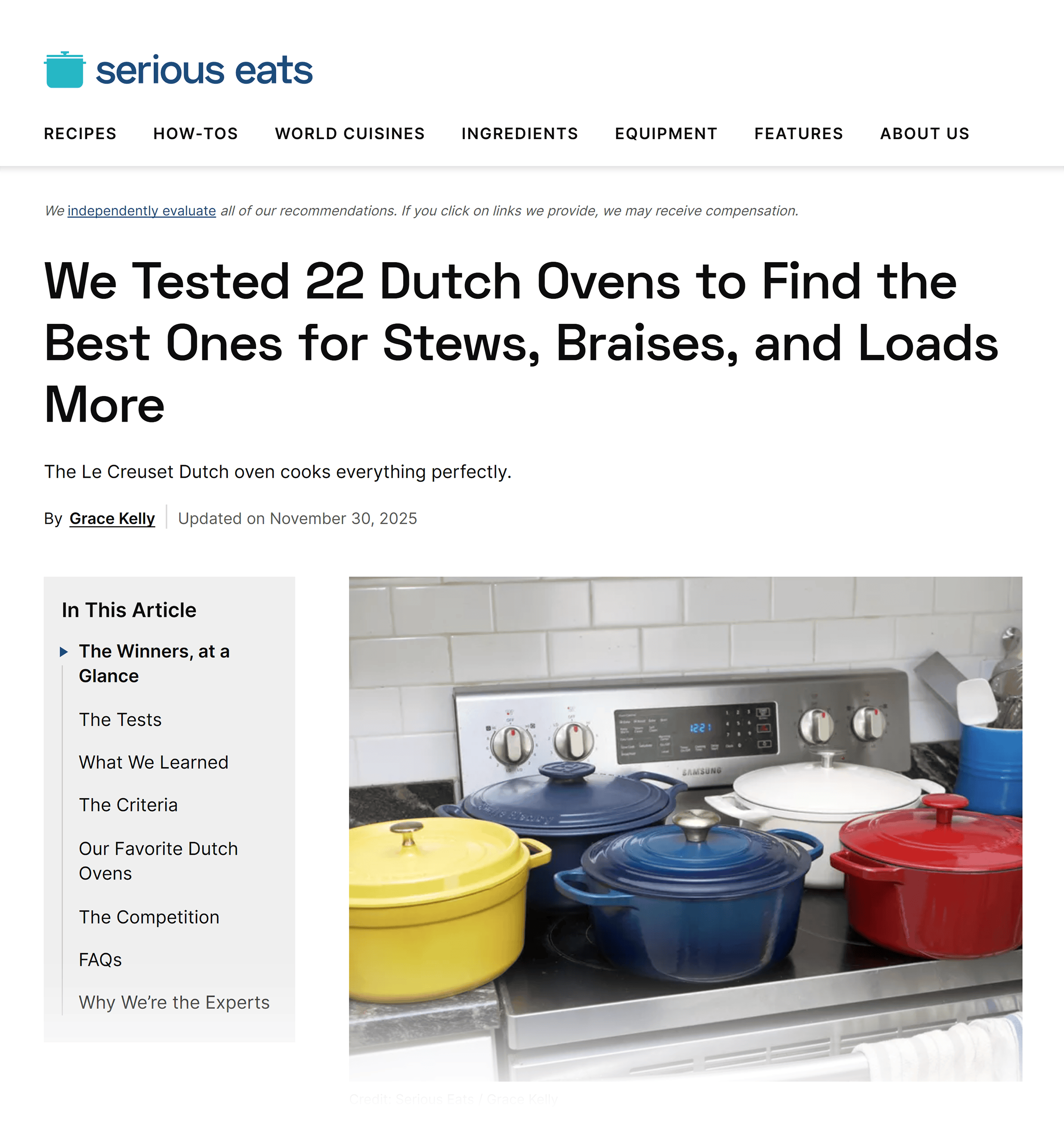
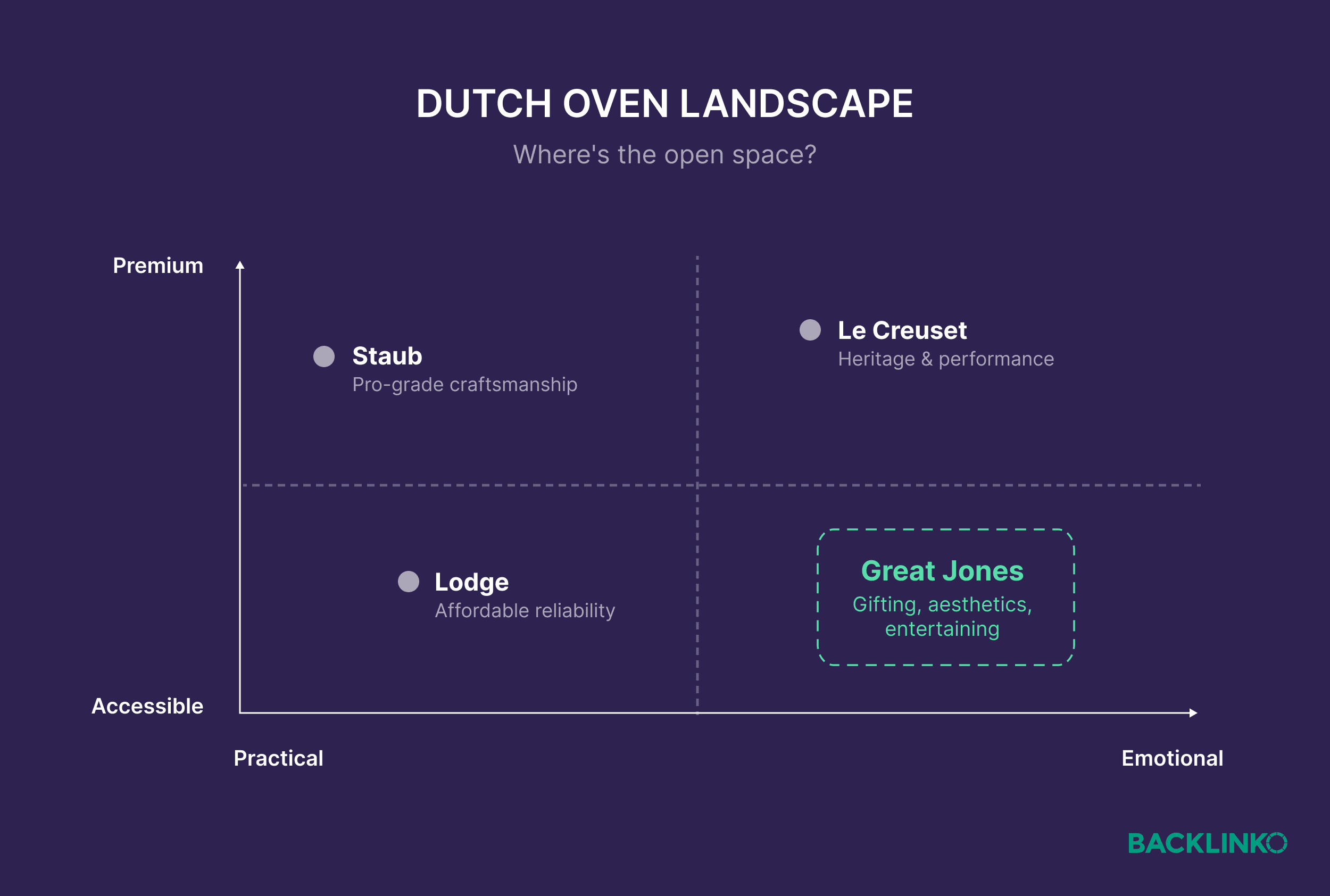
- Le Creuset: Dominates "luxury," "heritage," and "premium performance."
- Staub: Known for "durability," "heirloom quality," and "serious cooking."
- Lodge: Owns the "affordability" and "cast iron value" space.
- Caraway: Positioned around "non-toxic," "healthy cooking," and "modern aesthetics."
While these territories are clearly claimed, the audit might reveal open spaces. For Great Jones, areas like "gifting Dutch ovens," "visual appeal/kitchen decor," or "Dutch ovens for beginner cooks" might be relatively unclaimed. (Semrush might even indicate Great Jones already has a lead on "design," offering a natural starting point for a visual appeal POV). These unowned niches are where your unique POV can flourish.
Choose Your POV
Before committing to a POV, rigorously test its viability against three essential questions:
- Is it authentic to your brand? Does it genuinely reflect your product’s strengths, your brand’s values, and your company’s mission?
- Is it defensible? Can you consistently provide unique evidence and data to support this claim over time? Can competitors easily copy it?
- Is there buyer demand for it? Are customers actively searching for this specific angle or expressing related needs?
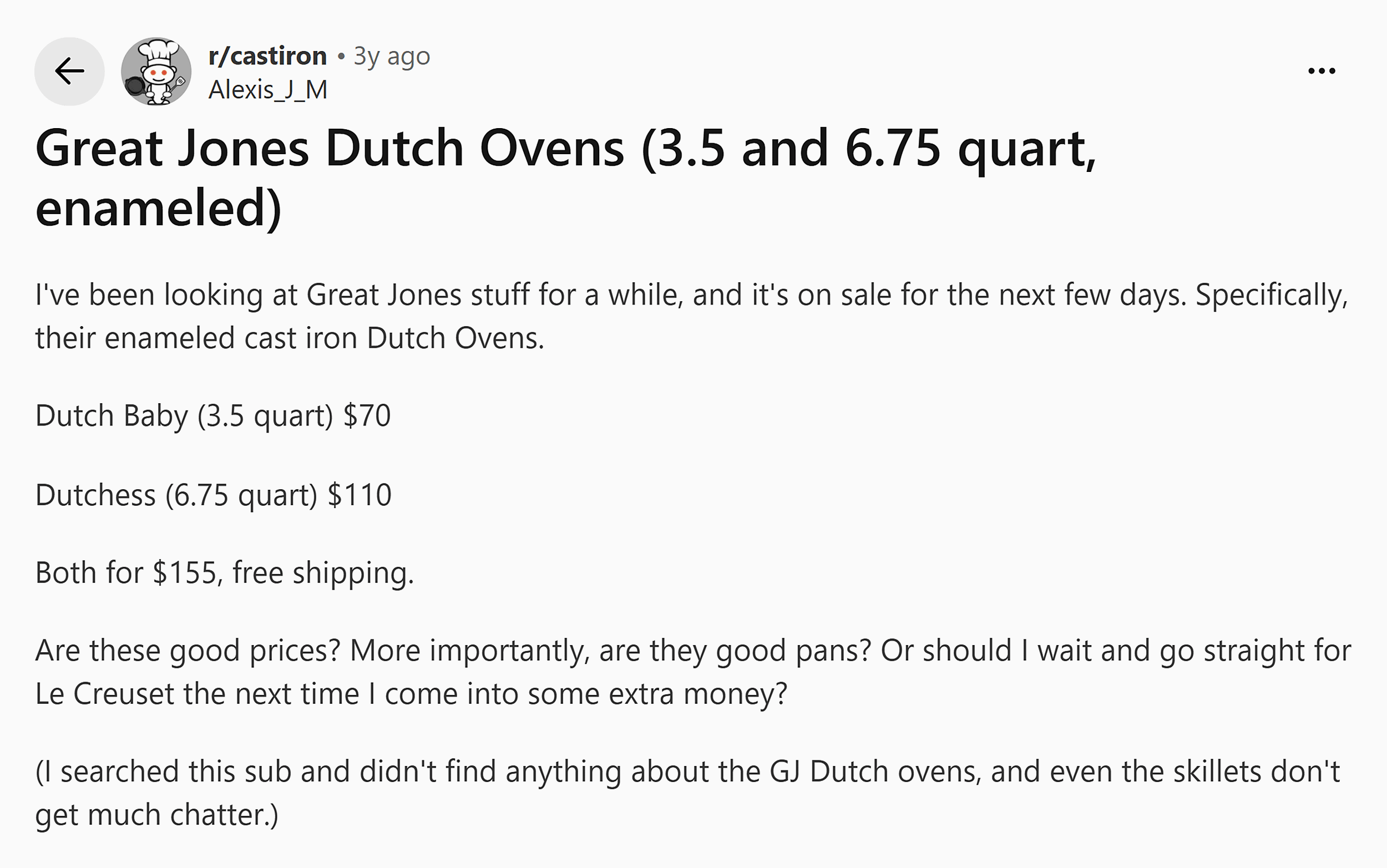
If a candidate POV fails any of these questions, it’s likely not robust enough to build sustained authority. For Great Jones, the POV "Dutch ovens for gifting" passes all three tests. There’s clear buyer demand for Dutch ovens as gifts, as evidenced by Reddit threads discussing "Dutch oven gift" ideas. The Dutchess’s existing customer reviews frequently highlight its "super attractive," "modern," and "beautiful" design, perfectly aligning with a gifting narrative. Critically, no competitor has unequivocally claimed "gifting" as their primary association for Dutch ovens.
Write Your POV as One Sentence
A strong POV is easily understood and repeatable. The ultimate test is to articulate it as a single, concise sentence. If you struggle to do so, the POV likely needs further refinement.
For Great Jones, potential POVs could be:
- "Great Jones Dutch ovens are the perfect gift for stylish home cooks." (Focus on gifting and aesthetics)
- "Great Jones Dutch ovens are the essential tool for effortless one-pot meals." (Focus on beginner cooks/ease of use)
Each of these statements targets a distinct buyer segment and offers a clear reason to choose Great Jones over alternatives. This clarity is vital for guiding all subsequent content and marketing efforts.
Step 4: Architecting a Robust Proof System Across the Buyer Journey
A compelling Point of View (POV) is merely a claim until it is supported by concrete, verifiable evidence. This step focuses on planning your "proof architecture"—the strategic collection and deployment of evidence that validates your POV across your own digital properties and the broader web. The goal is to build credibility by demonstrating two key things: that your brand belongs in the chosen category, and that it is the definitive "go-to" name for the specific POV you’ve claimed.
Audit Your Proof Across the Buyer Journey
Effective proof isn’t a one-size-fits-all solution; it must resonate with buyers at every stage of their decision-making process. Each stage requires different types of evidence to address specific beliefs and overcome objections.
| Buyer Stage | What they need to believe | Proof Assets That Help |
|---|---|---|
| Awareness | This type of solution solves my problem | Research data, industry studies, customer statistics, trend reports |
| Consideration | This has the qualities I care about | Third-party reviews, expert endorsements, certifications, detailed performance data |
| Comparison | This is the better choice over alternatives | Independent test results, awards, analyst rankings, head-to-head comparisons |
| Active Evaluation | This will work for my specific situation | Case studies, usage data, implementation examples, success metrics, user-generated content |
| Decision | Other people already trust this | Customer numbers, retention rates, repeat purchase data, verified reviews, testimonials |
To conduct your audit, systematically review each belief and identify the proof assets you currently possess and those that are missing. Use a "POV Proof Planner" spreadsheet to document your findings.
For Great Jones, adopting a "gifting" POV for Dutch ovens, a quick proof audit might reveal:
- Existing assets: Positive customer reviews praising design and aesthetics (Consideration/Decision), some mentions in general gift guides (Awareness).
- Missing assets:
- Awareness: Research data on cookware gifting trends, statistics on Dutch ovens as popular gifts.
- Consideration: Expert endorsements specifically recommending The Dutchess as a gift, certifications for gift-readiness or packaging.
- Comparison: Independent analyses comparing The Dutchess as a gift against other kitchen items or Dutch ovens, awards for "best giftable cookware."
- Active Evaluation: User stories or examples of the Dutchess being given and appreciated, recipes specifically for new owners.
- Decision: High repeat purchase rates for gifting, testimonials from gift recipients.
The "Comparison" stage stands out as a clear gap for Great Jones. To truly convince buyers that The Dutchess is a superior gift, they need dedicated comparative content, backed by external validation.
Step 5: Laying the On-Site Foundation for Topical Authority
Before search engines and LLMs can reliably associate your brand with your chosen POV, you must first firmly establish this connection on your own website. This step involves building the foundational content—a central hub page and supporting pages—where your topic, POV, and initial proof signals converge and are clearly articulated.
Create a Hub Page for Your POV
Your hub page serves as the authoritative central document for your POV. It should define the topic, explain its significance, and strategically guide users to more detailed supporting pages. For Great Jones, pursuing the "gifting" POV, an ideal hub page could be titled "The Ultimate Guide to Gifting a Dutch Oven" or "Why a Great Jones Dutch Oven is the Perfect Gift."
This hub page would clearly articulate why Dutch ovens, and specifically The Dutchess, make exceptional gifts. It would then internally link to:
- The main Dutch oven product page (The Dutchess).
- Supporting content such as "Dutch Oven Gift Basket Ideas," a "Gifting FAQ," or a report on "Cookware Gifting Trends" (if available).
If your brand has been publishing content for some time, you might already have a page that can be repurposed as a hub, such as an existing category page, a subcategory page, or an industry-specific landing page that can be optimized and expanded to serve this purpose. Use a "Foundation Planner" in your template to map out this central page and its primary content goals.
Build Supporting Pages
Supporting pages delve deeper into specific aspects of your POV, providing detailed information and proof at various stages of the buyer journey. Refer back to the proof assets you identified in Step 4; these will dictate precisely what needs to be proven and at which stage.
For Great Jones, the "Comparison" stage was a notable weakness for the gifting POV. To address this, they would need dedicated supporting pages comparing The Dutchess as a gift option against alternatives. This could include:
- Comparison articles: "Great Jones Dutchess vs. Le Creuset: The Gifting Perspective," highlighting design, unboxing experience, and perceived value as a gift.
- Endorsement pages: Featuring awards for design or gift-worthiness, or testimonials from public figures who have gifted The Dutchess.
- Practical guides: "First-Time Dutch Oven Owner’s Guide," positioned as a valuable resource for gift recipients.
- Themed gift guides: "Wedding Gifts for the Modern Kitchen," "Housewarming Gifts That Impress."
Identify all necessary supporting pages and complete the "On-Site Foundation Planner" in your template, ensuring each page has a clear purpose tied to your POV and the buyer journey.
Structure Each Page for Readers and Machines
To maximize both user experience and algorithmic understanding, structure your content using the "inverted pyramid" approach: present the most crucial information first, followed by progressively less critical details. This makes pages easily scannable for human readers and more readily interpretable by AI systems.
Ensure each page incorporates:
- Semantic HTML: Utilize appropriate headings (H1 for main topic, H2s for subtopics, H3s for detailed points) to create a clear content hierarchy. Employ lists (ul/ol), tables, and bold text for readability.
- Schema Markup: Implement structured data (e.g., Product, Review, How-To, FAQ schema) to explicitly tell search engines and LLMs what your content is about and its specific attributes. This is vital for AI to understand the context and intent behind your content.
- Visuals: Use high-quality images and videos with descriptive alt text and captions to break up text and enhance engagement. For a gifting POV, visuals of beautifully packaged products or gift sets are particularly impactful.
Link Your Pages
Individual hub and supporting pages are powerful, but their true strength emerges when they are interconnected, forming a cohesive "proof system." Strategic internal linking enhances navigability for users and signals to search engines the relationships and hierarchical importance of your content.
Follow these internal linking best practices:
- Contextual Links: Embed links naturally within the body text, using anchor text that accurately describes the destination page’s content. Avoid vague phrases like "click here."
- Descriptive Anchor Text: Ensure your anchor text is keyword-rich and indicative of the linked page’s topic (e.g., "our award-winning Dutchess Dutch oven for gifting" instead of just "Dutch oven").
- Relevance: Only link to pages that genuinely add value and deepen understanding for the reader.
- Hub-and-Spoke Model: The hub page should link to all supporting pages, and supporting pages should link back to the hub, reinforcing the central theme.
By meticulously building and linking this on-site foundation, Great Jones can clearly communicate its expertise and POV on "Dutch ovens for gifting" to both human audiences and intelligent algorithms.
Step 6: Cultivating an Off-Site Proof System for Widespread Validation
A compelling Point of View (POV) and a robust on-site foundation are indispensable, but they won’t fully translate into visibility within AI-driven search results if your brand’s authority is confined solely to its own domain. As Amanda Milligan emphasizes, "This is one of the biggest shifts in how topical authority works. AI systems rely heavily on third-party signals and how others describe your brand." This step focuses on strategically reinforcing your POV across external platforms and trusted sources that influence both consumer perception and AI algorithms.
Start with One Signature Proof Point
A "signature proof point" is an original, highly specific