Digital PR Emerges as the Forefront Strategy for Dominating AI Search Visibility

The landscape of online information discovery is undergoing a seismic shift, with artificial intelligence (AI) search rapidly redefining how users access and trust information. In this evolving environment, traditional self-promotional tactics are being superseded by a more nuanced approach, one where third-party validation, or Digital PR, is proving to be the single most important strategy for brands seeking to establish prominence and authority in AI-powered search results.
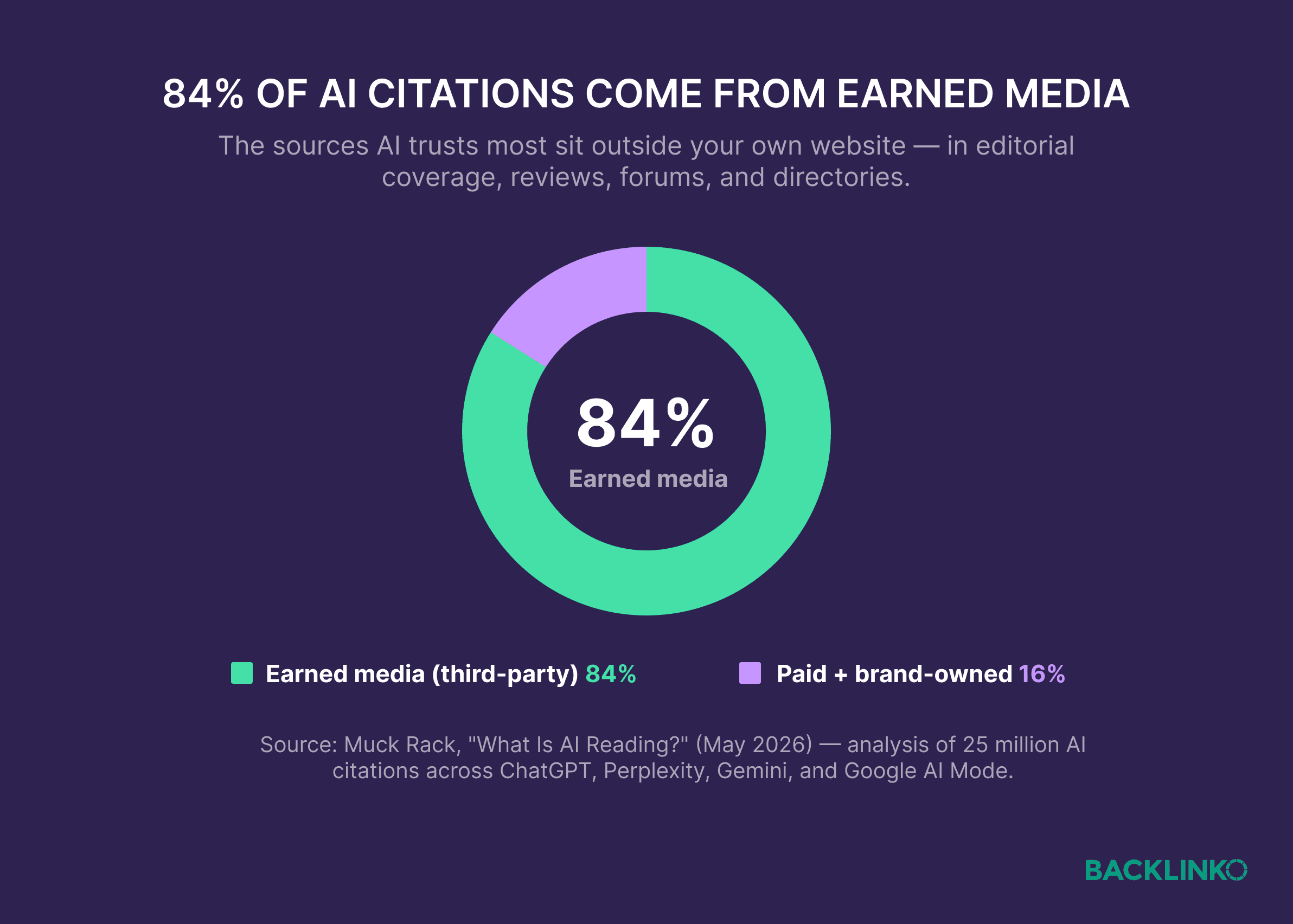
A groundbreaking study conducted by Muck Rack has illuminated this paradigm shift, revealing that a remarkable 84% of AI citations originate from earned media. This category encompasses a broad spectrum of independent, third-party sources, including editorial coverage in reputable publications, authentic customer reviews, and engaging discussions within online forums. This statistic underscores a fundamental change in how information gains credibility and visibility in the age of generative AI, moving beyond direct website content to a more distributed and validated online presence.
The Evolving Dynamics of AI Search and Trust
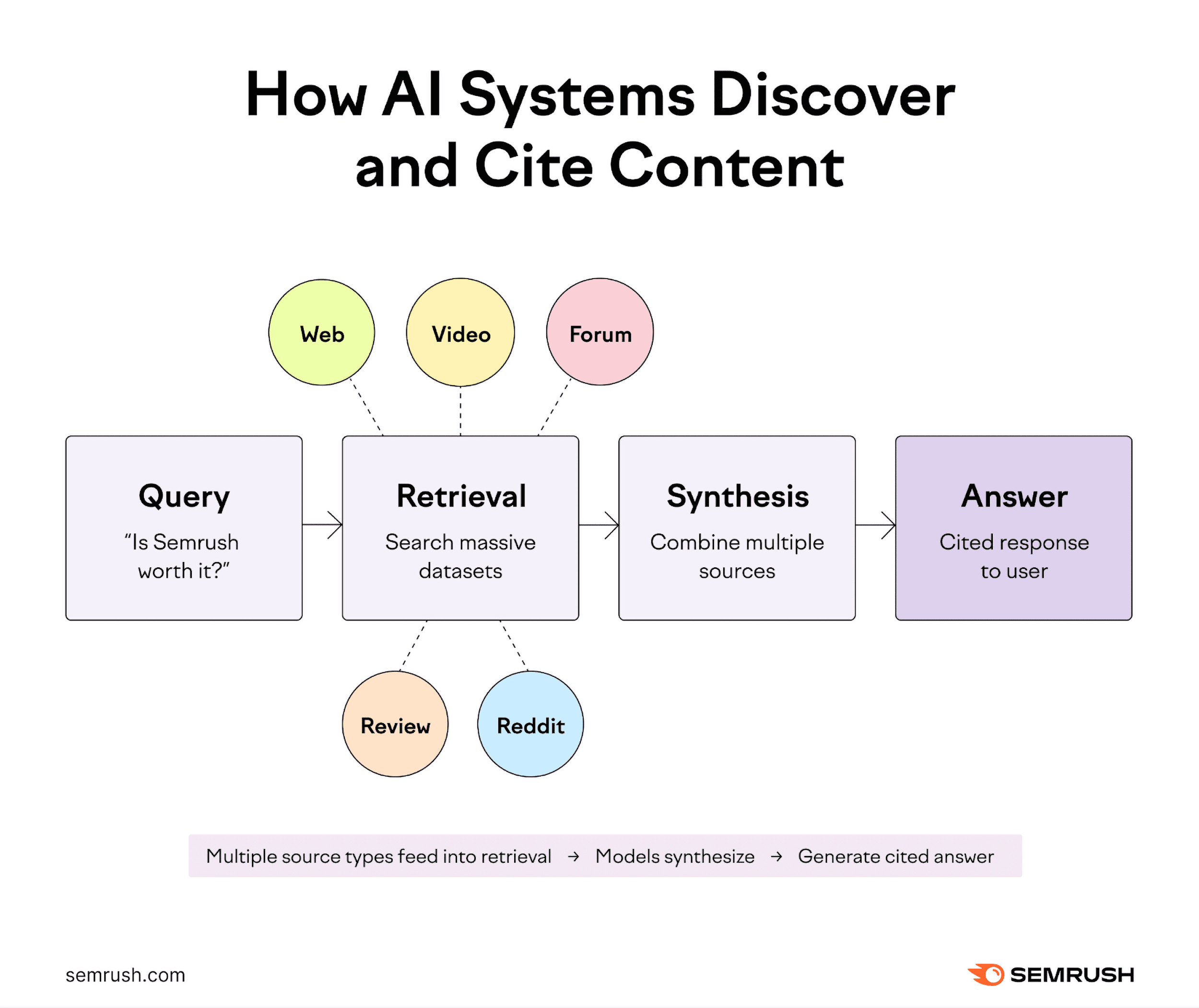
The advent of large language models (LLMs) and their integration into search engines has ushered in an era where AI systems don’t merely index web pages; they synthesize information from diverse sources to generate comprehensive, conversational answers. This synthesis process inherently prioritizes credibility and external validation. Unlike traditional search engines that often ranked pages based on direct relevance and onsite SEO signals, AI models are designed to emulate human understanding and trust, drawing heavily on what external, unbiased sources say about a brand or topic.
This distinction means that while publishing high-quality onsite content remains a foundational element of any digital strategy, a brand’s AI visibility is increasingly shaped by its offsite reputation and mentions. The more frequently and positively a brand name appears across a multitude of credible web properties, the more likely LLMs are to recognize, trust, and subsequently recommend that brand in their AI-generated responses. This emphasis on external signals aligns closely with concepts like Google’s E-E-A-T guidelines (Experience, Expertise, Authoritativeness, Trustworthiness), which have long been crucial for human search evaluators and are now implicitly or explicitly factored into AI’s assessment of information quality.
AI systems operate far beyond the confines of a single website. They are programmed to pull information from dozens, if not hundreds, of sources across the web, consolidating these disparate data points into a coherent, single answer. Consequently, the brands that achieve success in AI search are those that demonstrate consistent and widespread presence across these varied information channels. This is precisely where a robust Digital PR strategy becomes indispensable, enabling brands to secure features and mentions in the very publications and platforms that AI systems are actively reading and referencing. Such widespread, validated exposure fosters familiarity and trust in the eyes of these powerful models.
Several empirical studies further substantiate the critical role of Digital PR in the AI era:
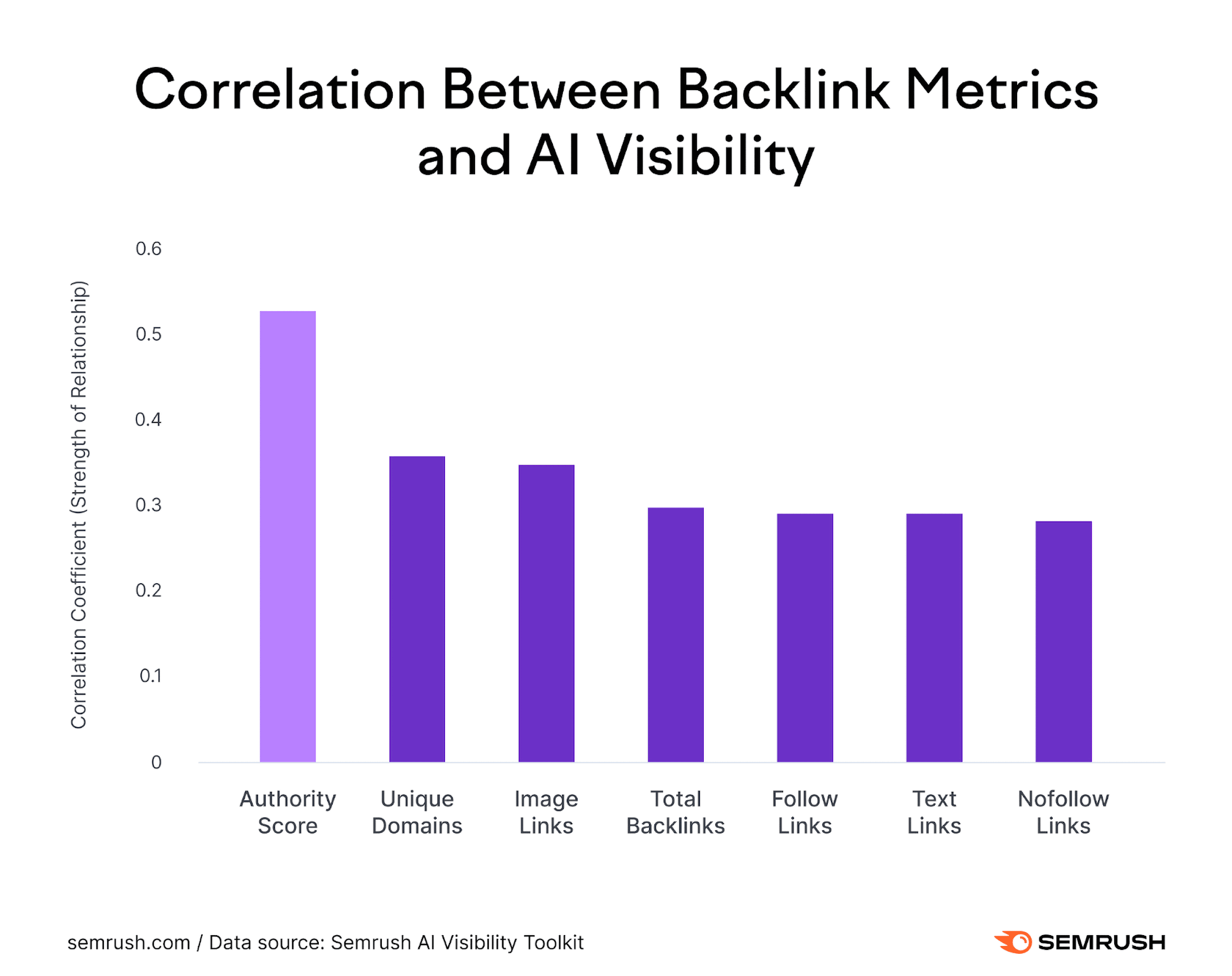
- Backlink Authority: A comprehensive study by Semrush, analyzing 1,000 domains, found a direct correlation between a brand’s backlink authority and its likelihood of appearing in AI-generated answers. This reinforces the long-standing value of backlinks, not just for traditional SEO, but as a key trust signal for AI.
- Domain Authority and Quality Backlinks: Echoing these findings, a study by Seer Interactive identified domain authority and high-quality backlinks (specifically from sites with a Domain Authority of 60 or higher) as the top two metrics influencing AI visibility. This indicates that the source of the third-party validation matters significantly.
- Expert Validation: An AI SEO study revealed that content featuring expert quotes received an average of 4.1 citations in ChatGPT, compared to just 2.4 citations for pages without such expert contributions. This highlights AI’s preference for content enriched by recognized expertise.
- Community Trust: Perhaps most strikingly, another AI visibility study by Semrush demonstrated that LLMs frequently cite Reddit threads about Microsoft products more often than Microsoft’s own official blog. This profound insight underscores the immense trust AI places in neutral, community-driven discussions.
- Review Platforms: Seer Interactive’s analysis of 800,000 AI responses showed a dramatic impact of review profiles on AI citation rates. Brands with no Trustpilot profile had a median AI citation rate of only 1%, which soared to 53.5% for brands with even a minimal presence of 1 to 13 reviews. This confirms that genuine user feedback on independent platforms is a powerful AI trust signal.
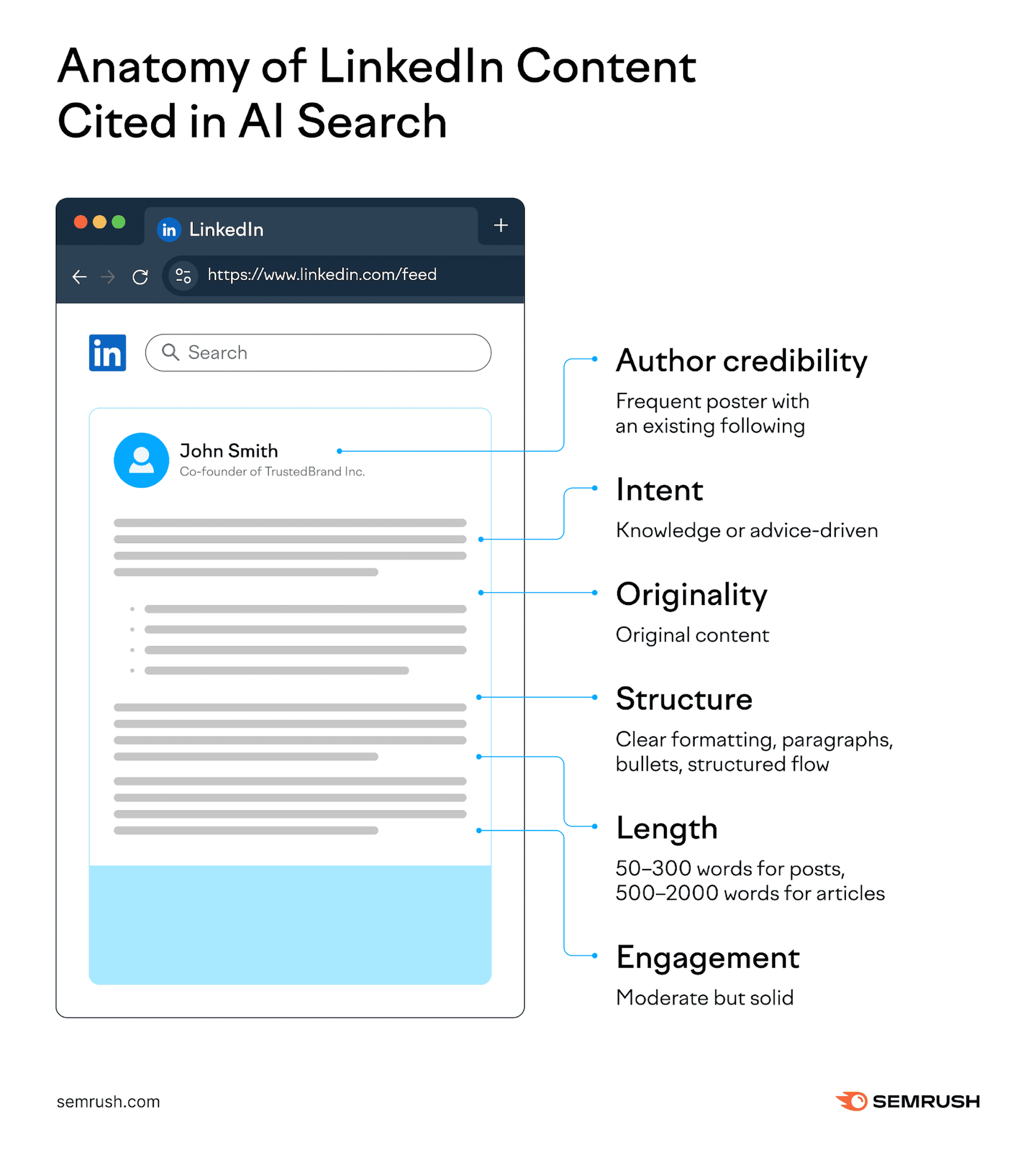
- LinkedIn’s Prominence: Semrush’s study also identified LinkedIn as the second-most-cited domain across ChatGPT, AI Mode, and Perplexity, emphasizing its role as a key source of professional insights and thought leadership for AI.
These findings collectively illustrate that in the AI-driven search environment, the narrative about your brand is largely being written by external entities. To actively shape this narrative and achieve optimal AI visibility, brands must strategically engage in proactive Digital PR. Here are six proven strategies to earn more backlinks, secure valuable brand mentions, strengthen offsite authority, and significantly increase visibility in AI-generated answers.
1. Data-Led PR: The Foundation of Credibility
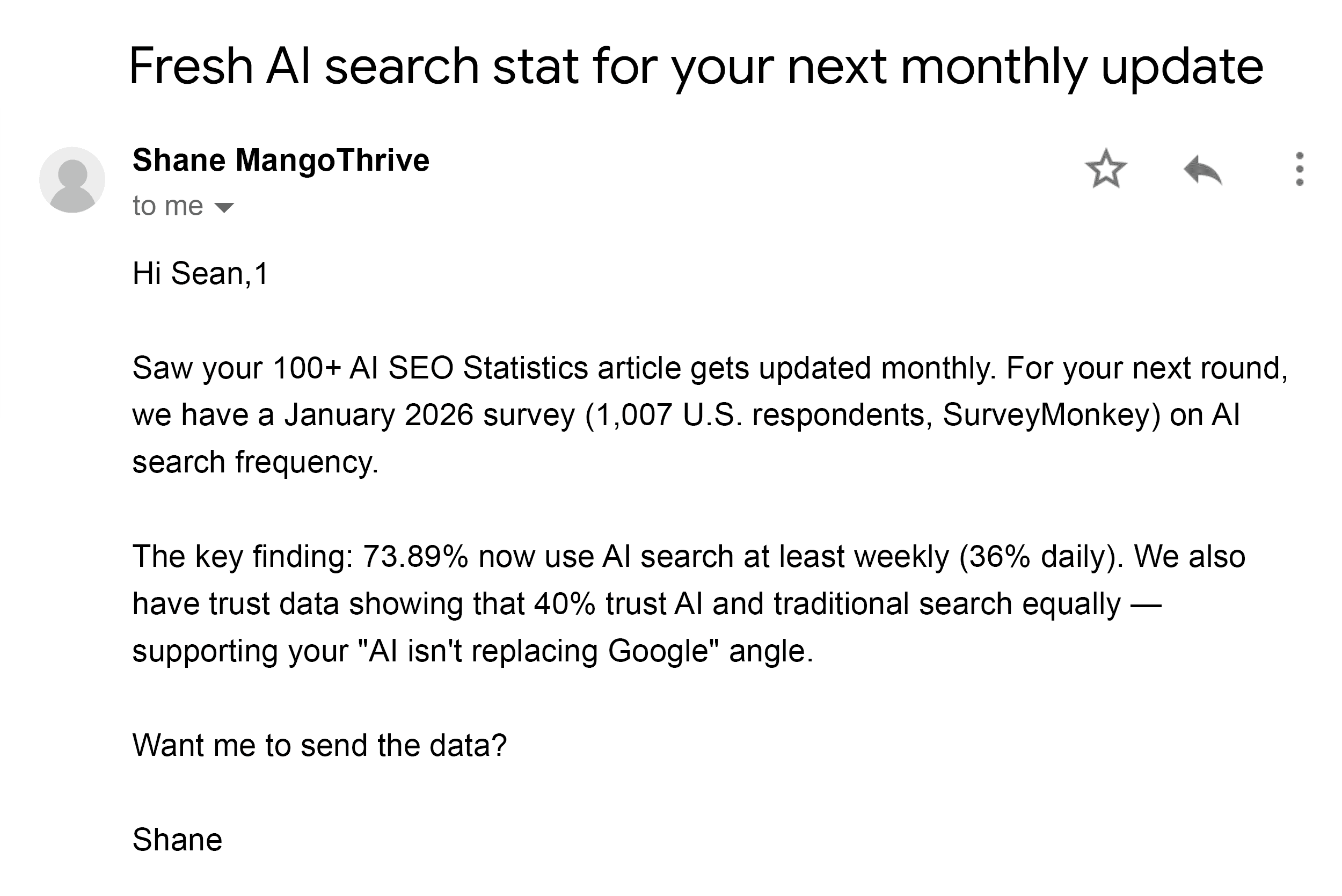
Data-led PR centers on the creation and distribution of original research, proprietary studies, and comprehensive statistical roundups. This strategy is exceptionally effective for building high-quality backlinks because journalists, bloggers, and marketers are perpetually seeking credible, fresh data to support and enrich their content.
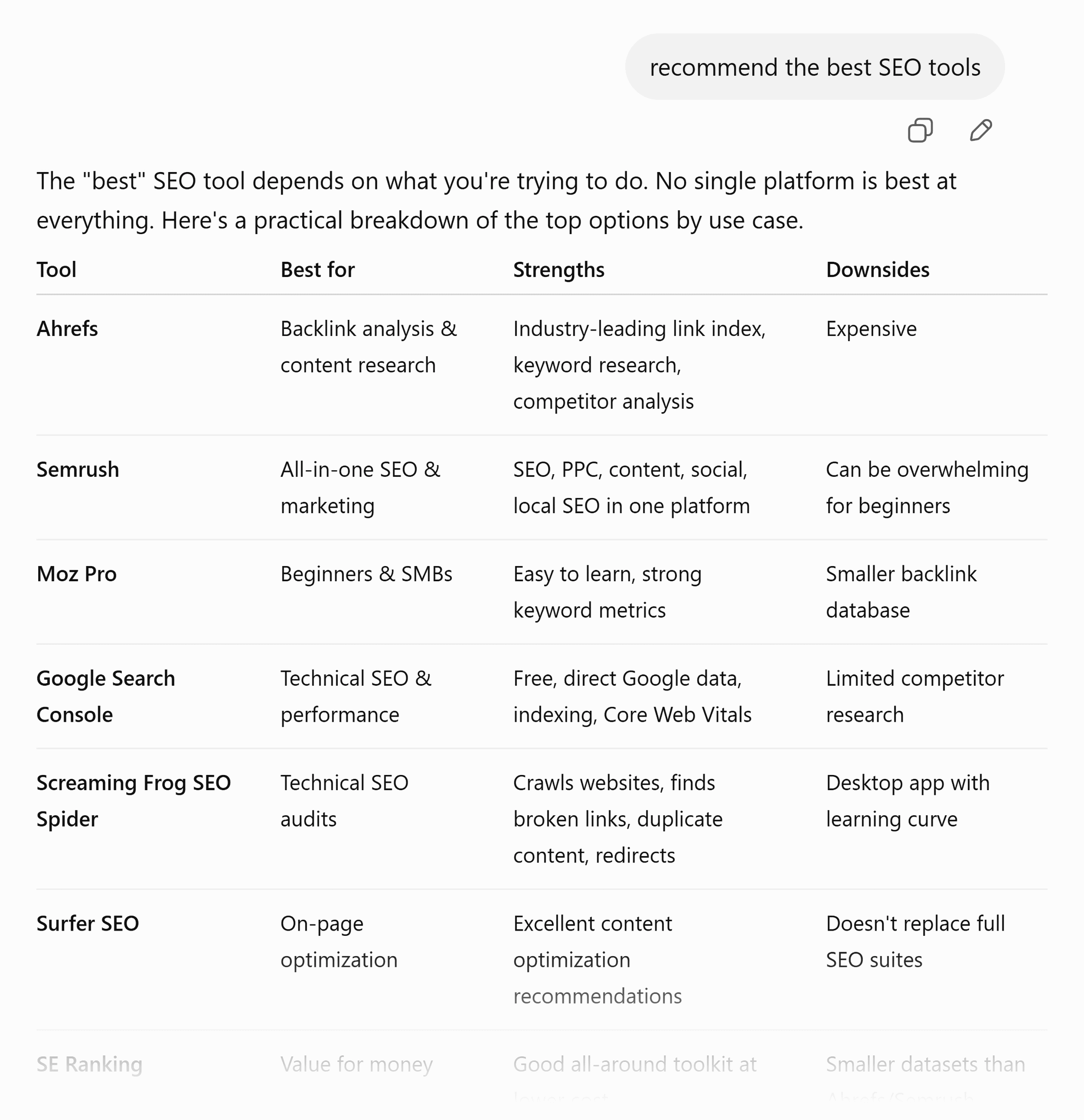
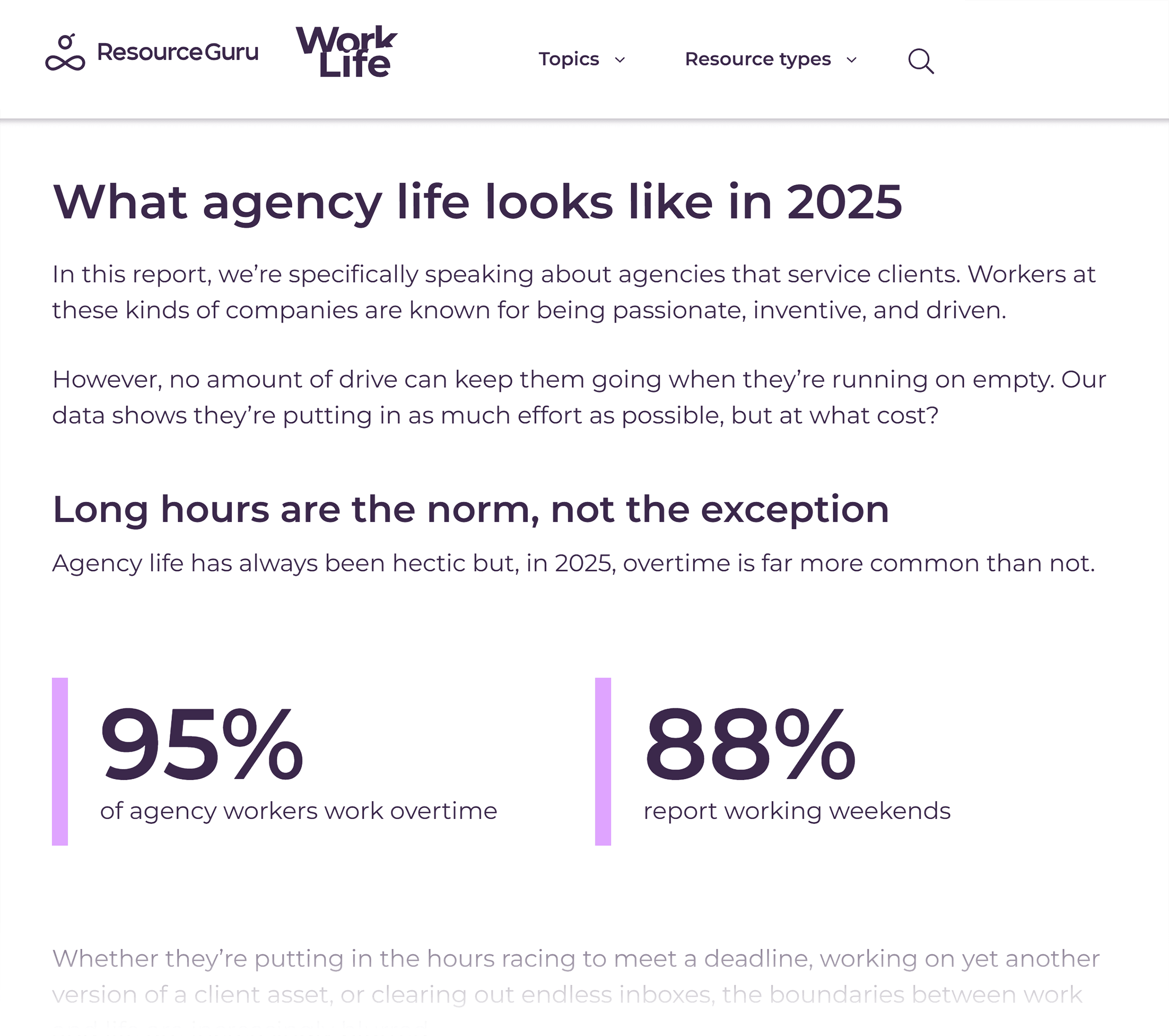
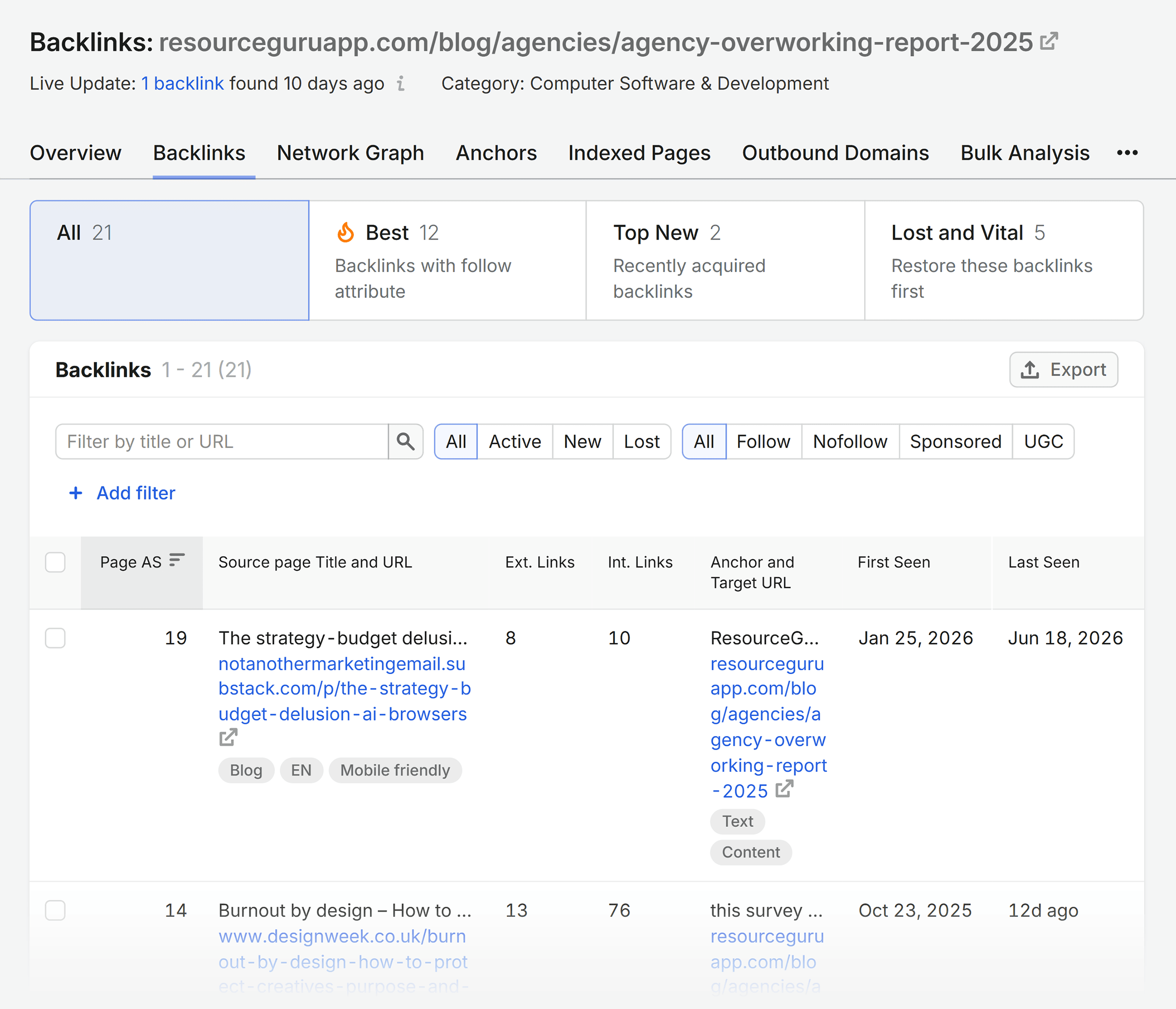
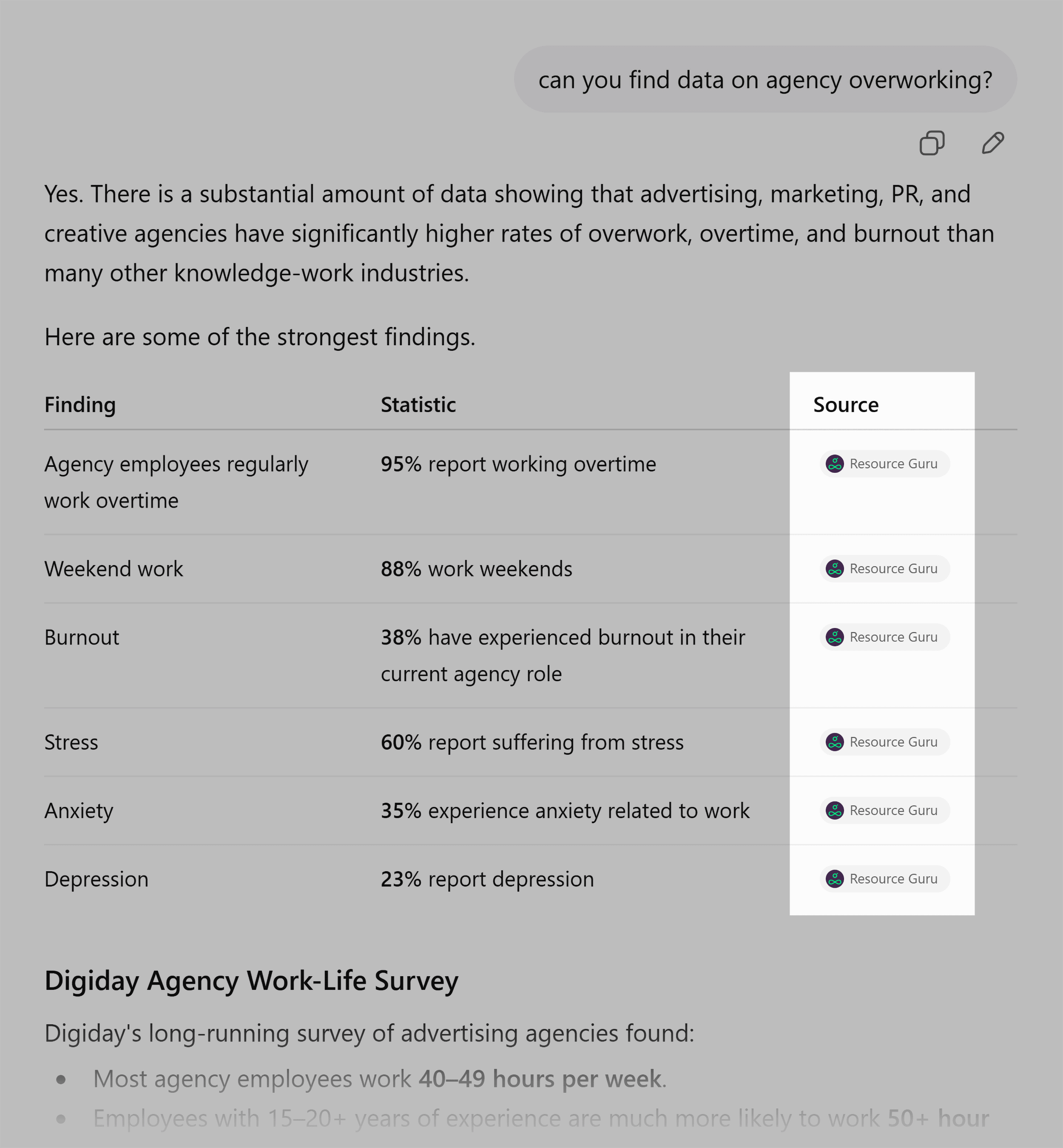
- How It Boosts AI Visibility: By publishing unique data, brands become primary sources of information. When other authoritative sites cite this data, they link back, enhancing the brand’s backlink profile and domain authority. As demonstrated by the Semrush and Seer Interactive studies, strong backlink authority is a direct predictor of AI visibility. AI models value original research as a high form of expertise and trustworthiness. For instance, Resource Guru’s "Agency Overworking Report 2025" not only garnered 21 natural backlinks, including a mention in Forbes, but also saw consistent citations in AI answers, validating its impact.
- Implementation Tactics:
- Content Creation: Conduct original surveys, analyze proprietary datasets, or compile existing statistics into a novel, insightful report. Present findings clearly with compelling visuals and concise takeaways.
- Distribution: Identify relevant publications, industry blogs, and news outlets. Proactively pitch your data to authors who frequently cover related topics or reference outdated statistics. Offer your fresh data as a valuable, up-to-date replacement.
- Example Pitch Elements: A successful pitch should highlight the novelty and relevance of the data, offer a clear link to the research, and explain why it’s beneficial for the recipient’s audience. Providing an easily digestible summary or key findings can significantly improve uptake.
2. AI Citation Outreach: Targeting the AI’s Reading List
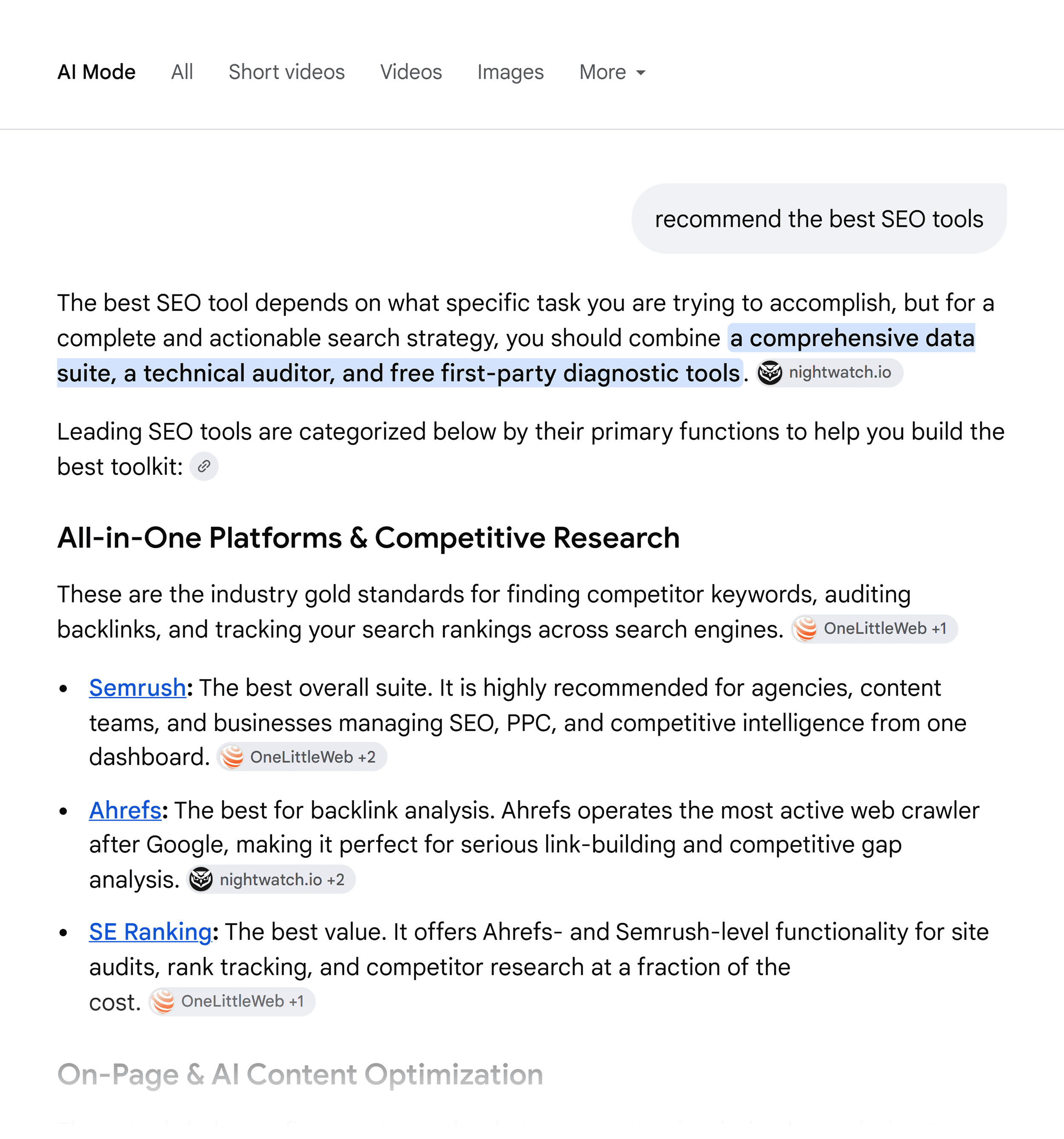
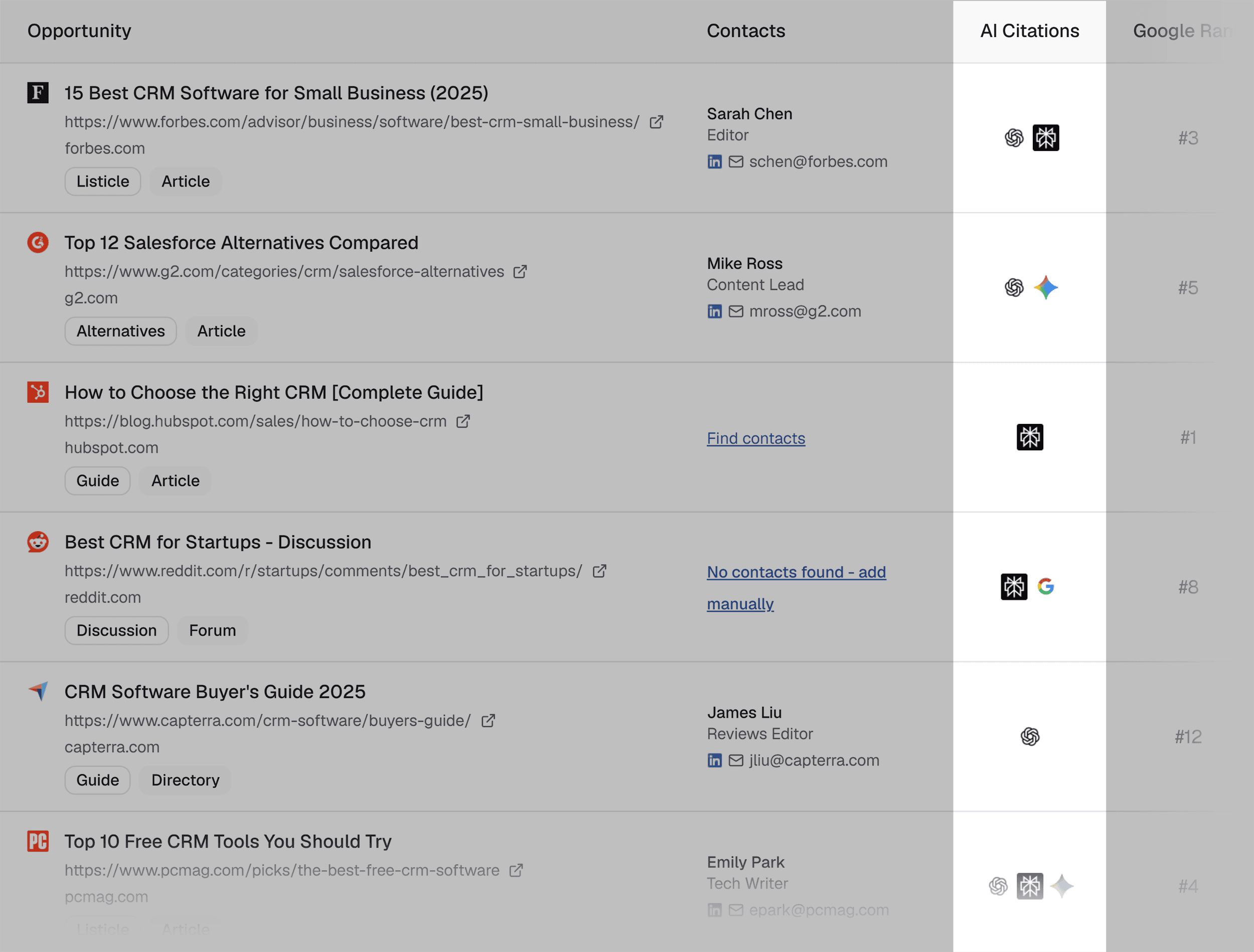
AI citation outreach involves strategically securing placements within the specific sources that AI models already reference. This is often the most direct and quickest route to earning brand mentions in AI responses.
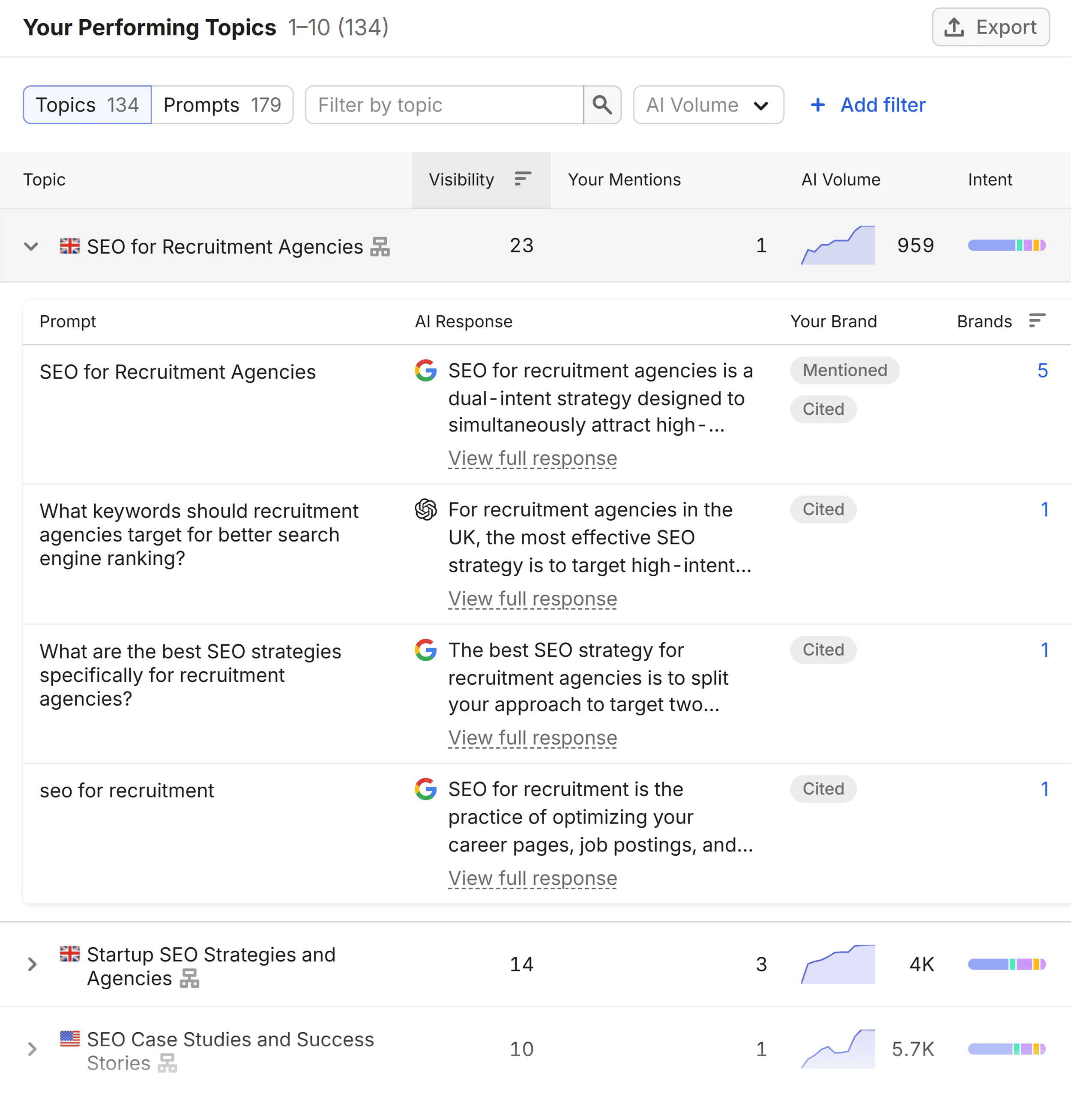
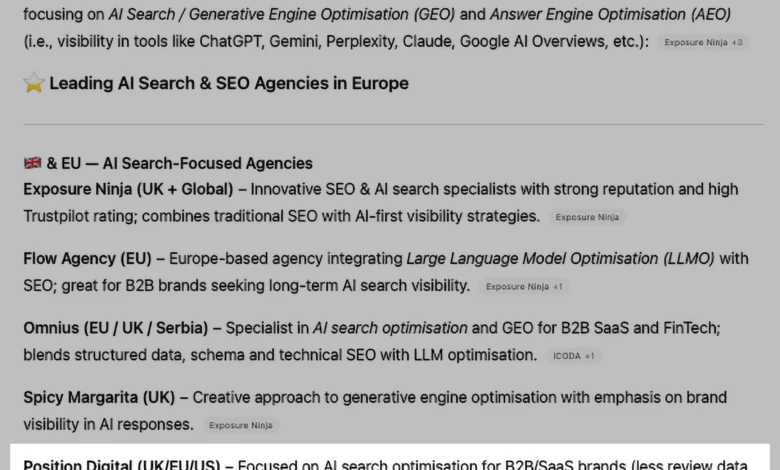
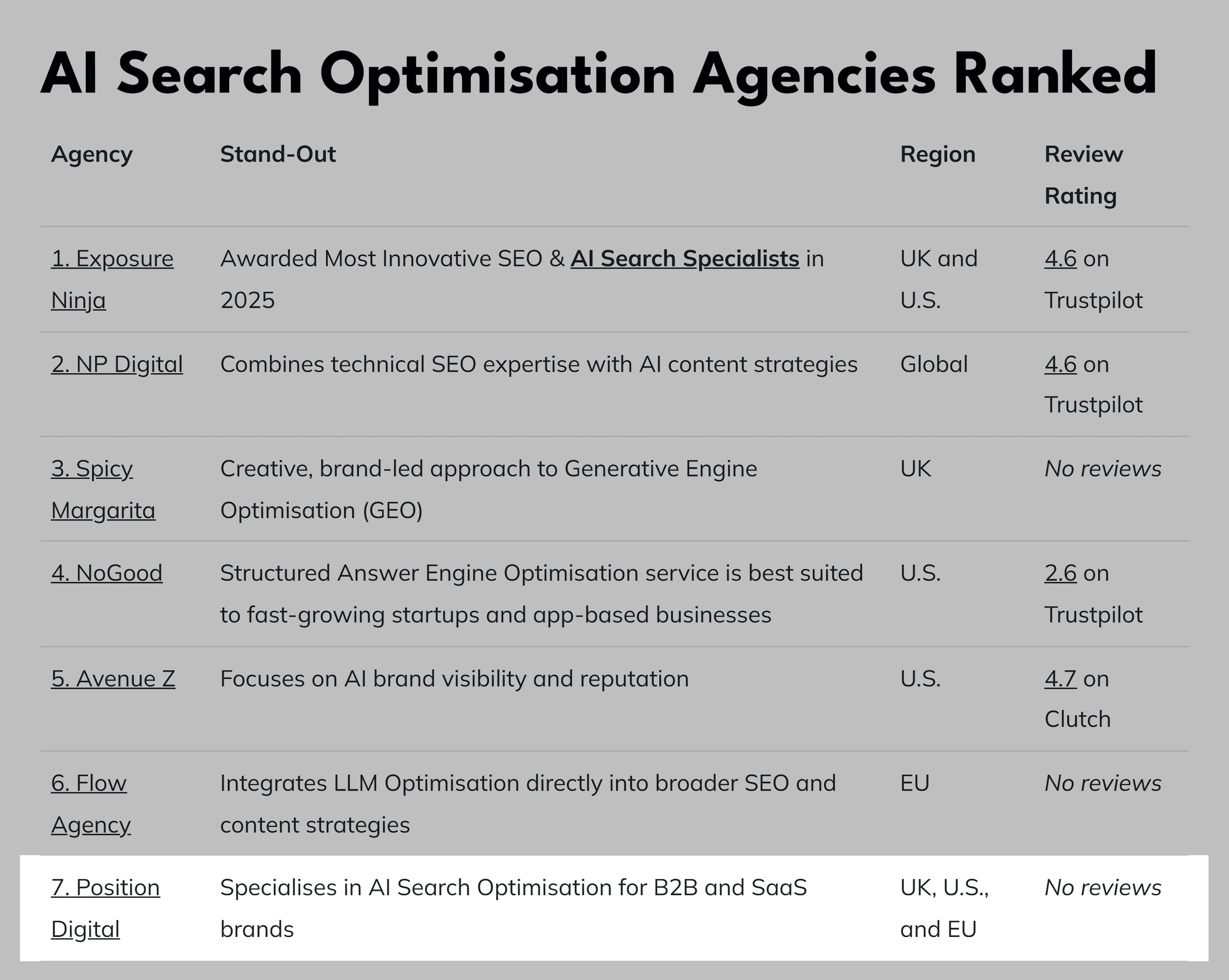
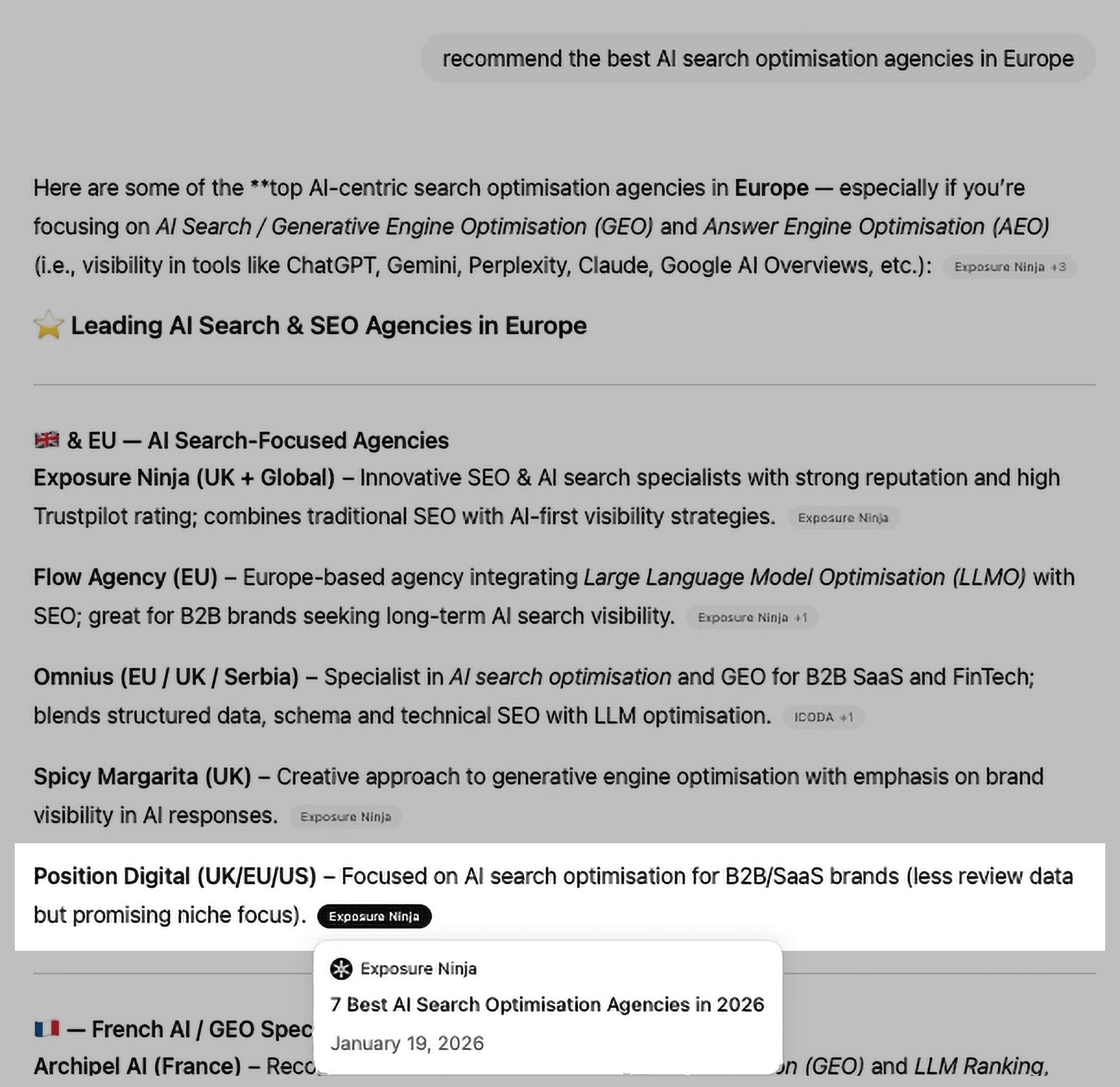
- How It Boosts AI Visibility: If your brand can penetrate the content ecosystem that AI frequently cites, you directly influence the answers AI generates. For example, Position Digital’s inclusion in Exposure Ninja’s "Best AI Search Optimisation Agencies in 2026" listicle led directly to its recommendation in ChatGPT’s responses to related queries. This illustrates that being part of AI’s trusted "reading list" is paramount.
- Implementation Tactics:
- Prompt Research: Given that AI companies don’t provide direct prompt data, marketers must make educated guesses. Leverage internal sales call notes (exact language prospects use), Google Search Console (long-tail queries), "People Also Ask" sections in SERPs (common questions), and keyword tools (filtering for question-based queries). Advanced tools like Semrush’s AI Visibility Toolkit can directly reveal audience prompts and associated sources. ListBrew is also valuable for identifying "best X" listicles already cited by AI.
- Source Monitoring: Manually test target prompts across different AI models (ChatGPT, AI Mode, Perplexity) to identify frequently cited pages. This allows for a tailored outreach strategy for each AI.
- Contact Identification: Use professional networking tools like Hunter.io or Apollo.io to find contact information for authors, editors, or webmasters of the identified high-citation sources.
- Personalized Pitches: Craft concise, highly personalized pitches. Clearly state why your brand or content is a valuable addition. Offer incentives such as sharing the updated content, social media promotion, or offering exclusive insights. Crucially, provide a pre-written, easy-to-copy blurb about your brand for seamless integration into their content.
3. Reactive PR: Capitalizing on the News Cycle
Unlike long-term campaigns, Reactive PR demands agility and speed, focusing on being among the first to respond to breaking news, viral trends, and emerging topics.
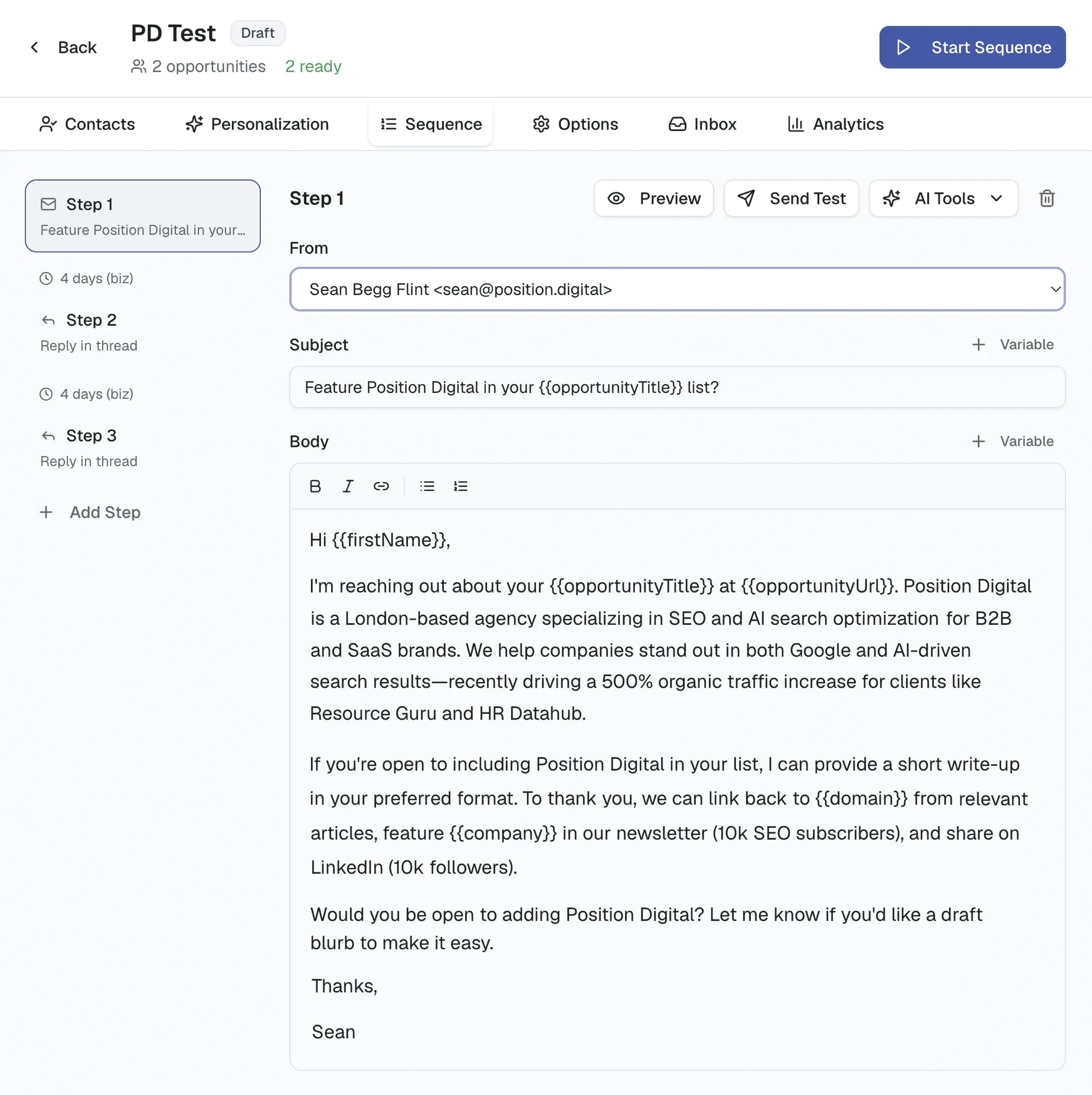
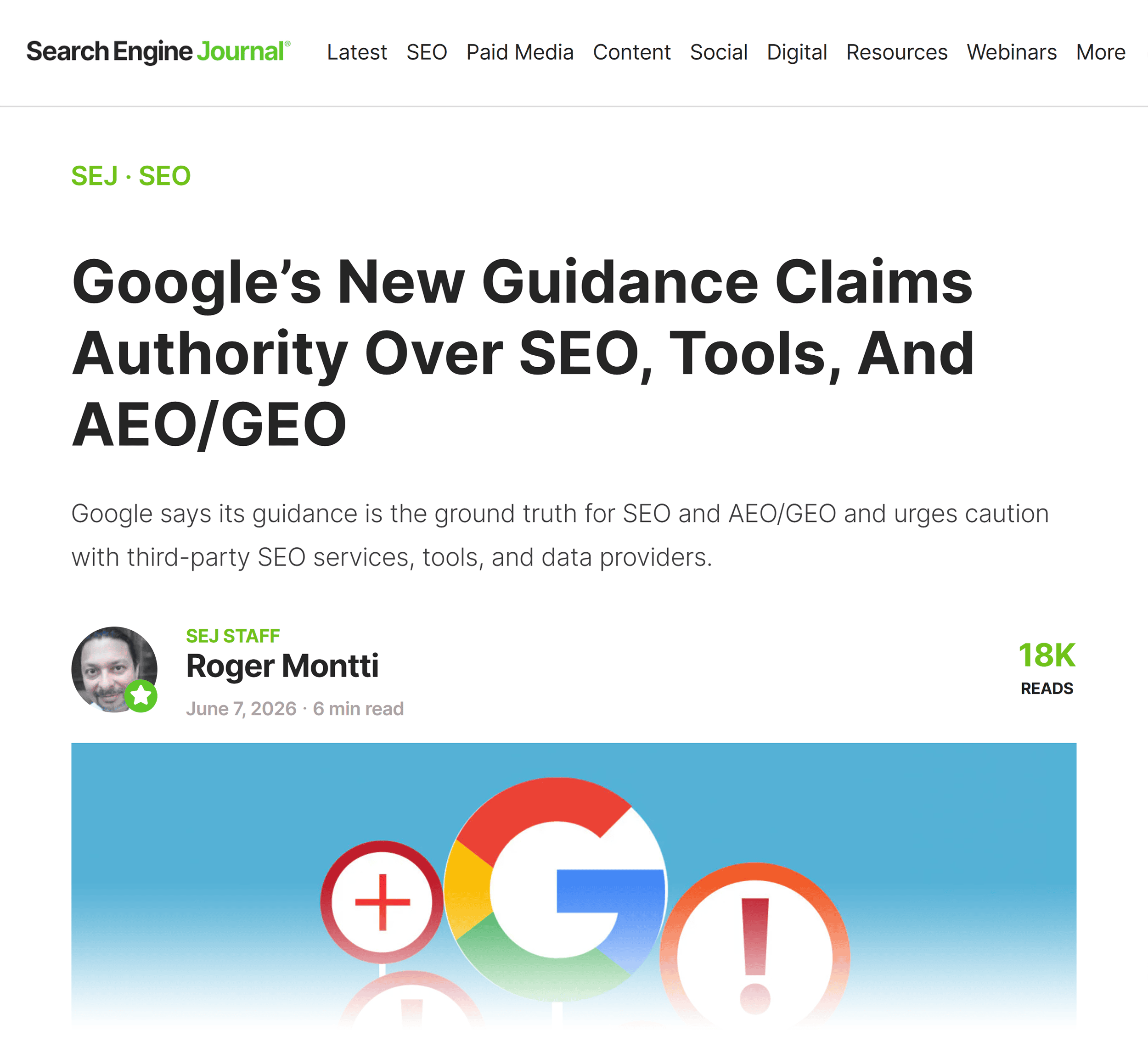
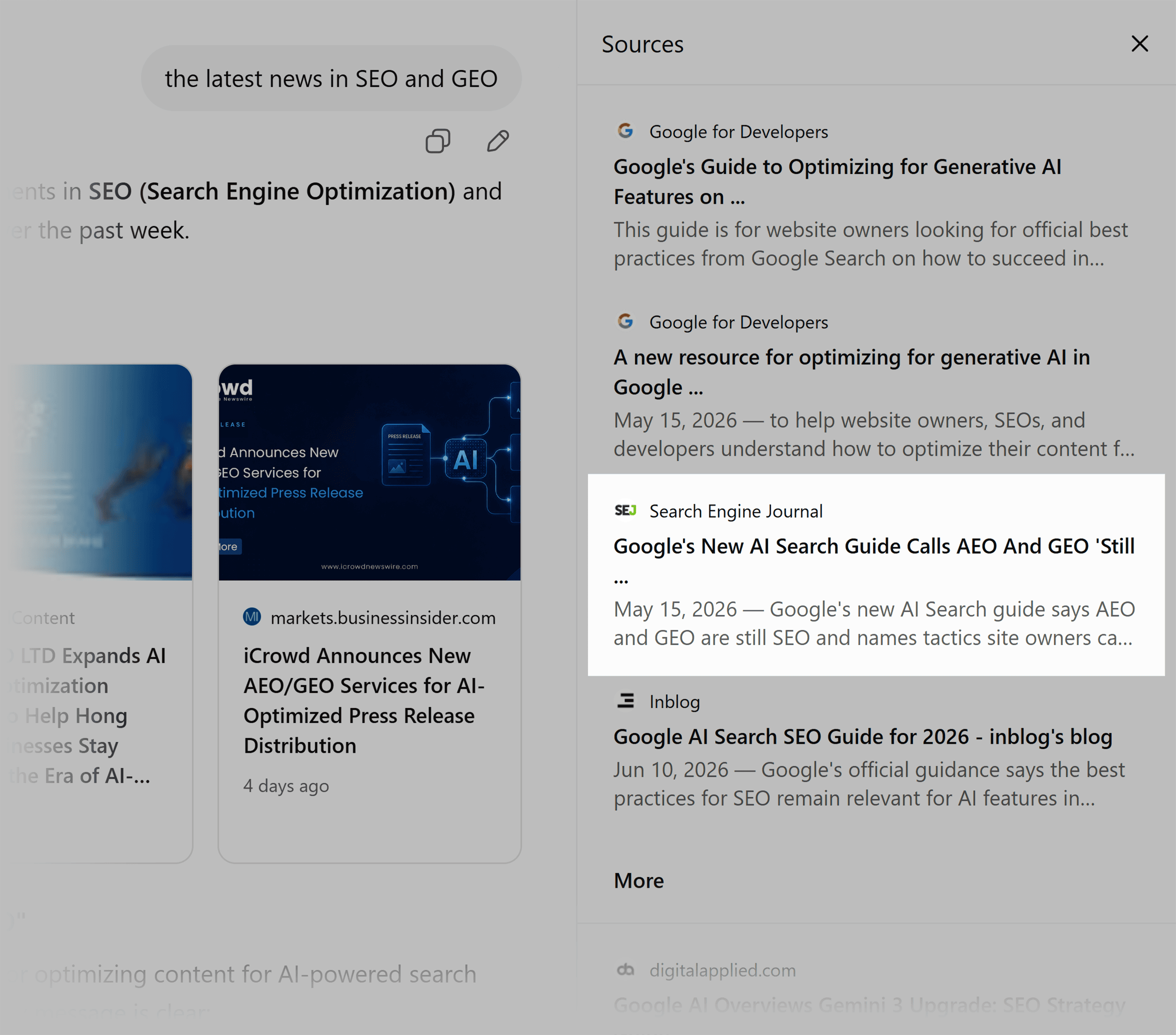
- How It Boosts AI Visibility: AI models have a data cutoff date, meaning they cannot rely on pre-trained knowledge for current events. When a new story breaks, AI systems actively crawl the web for fresh, credible sources. This creates a critical window of opportunity. Brands that quickly publish insightful commentary, expert analysis, or original reporting on nascent trends significantly increase their chances of being surfaced and cited by AI. Search Engine Journal’s prompt reporting on Google’s new SEO guidelines, for example, quickly accumulated over 16,000 readers, 500 backlinks, and multiple AI citations.
- Implementation Tactics:
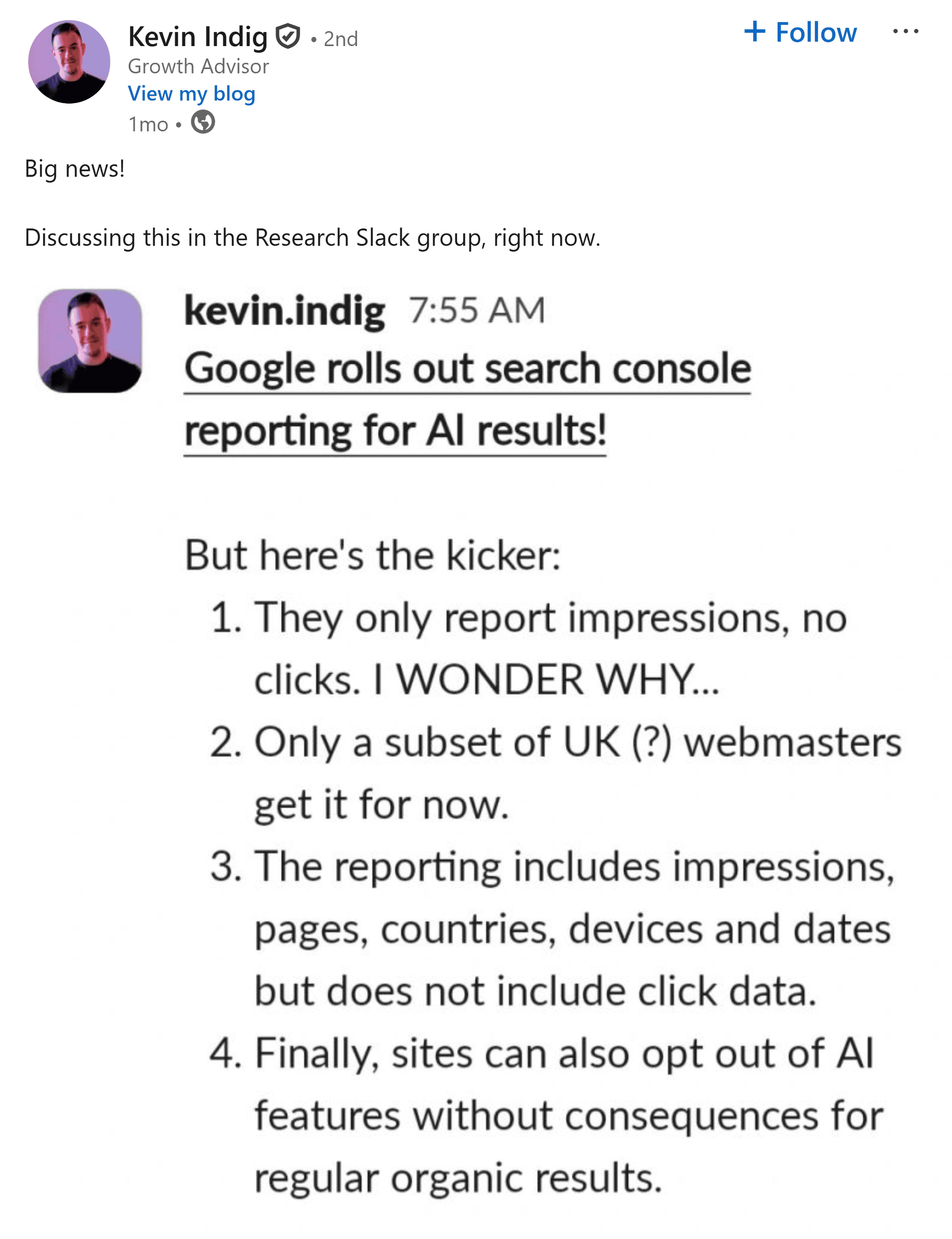
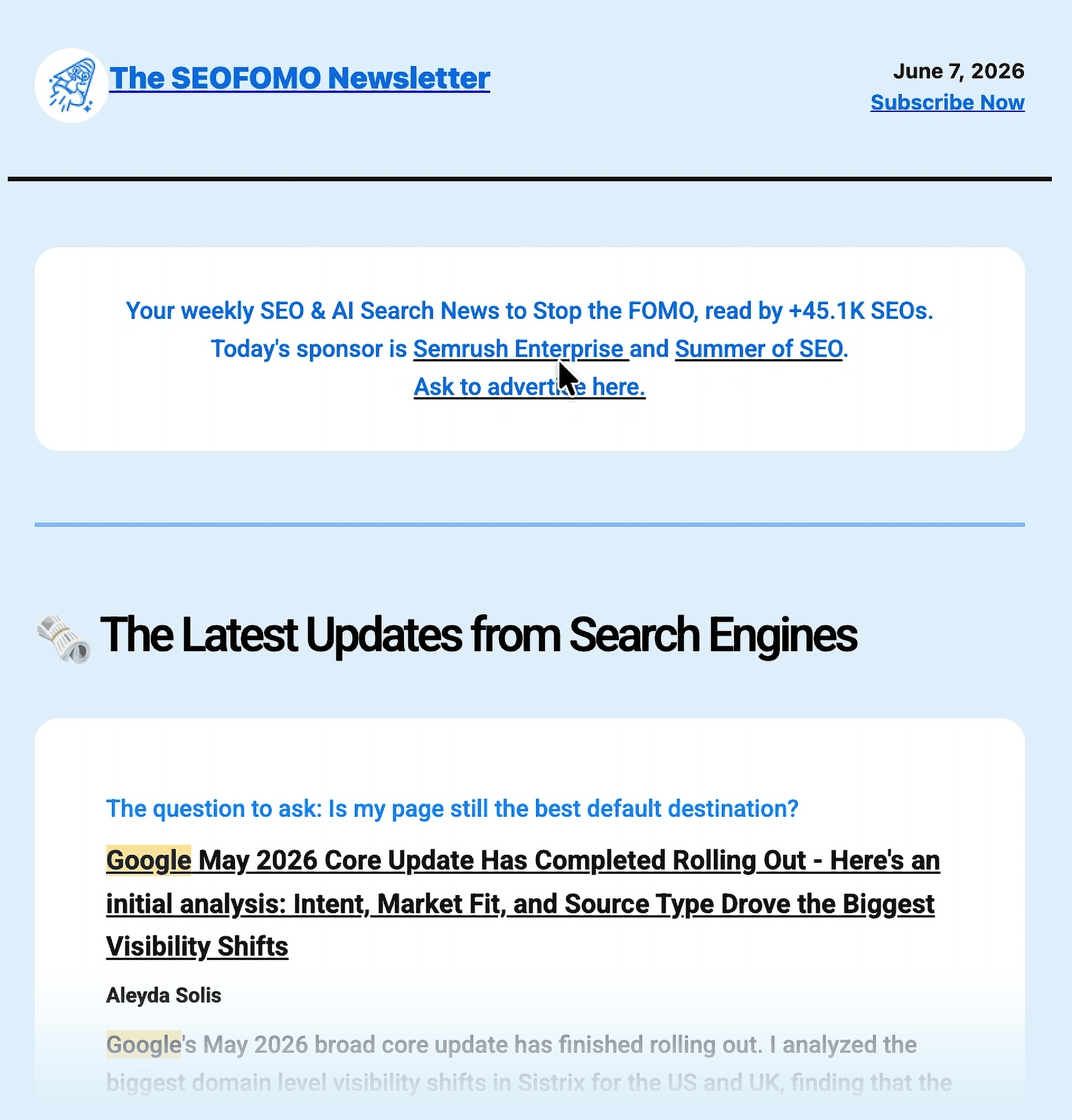
- Early Trend Identification: Monitor social media (especially Twitter/X, LinkedIn), industry news aggregators, niche blogs, expert forums, and specialized newsletters (e.g., SEOFOMO for SEO news) to spot stories gaining traction before they hit mainstream media.
- Expert Networks: Engage with industry leaders and influencers who often share early insights or rumors.
- Rapid Content Creation: Once an opportunity is identified, quickly produce high-quality, authoritative content (blog posts, social media commentary, press releases) offering unique perspectives or immediate analysis.
- Proactive Outreach: Pitch your content to major news outlets and relevant publications in your field, emphasizing the timeliness and unique angle of your contribution.
4. Ego Bait: Leveraging Influencer Credibility
Ego bait involves creating content that prominently features industry experts and influencers, designed to appeal to their sense of professional accomplishment and encourage them to share, mention, or link back to your content.
- How It Boosts AI Visibility:
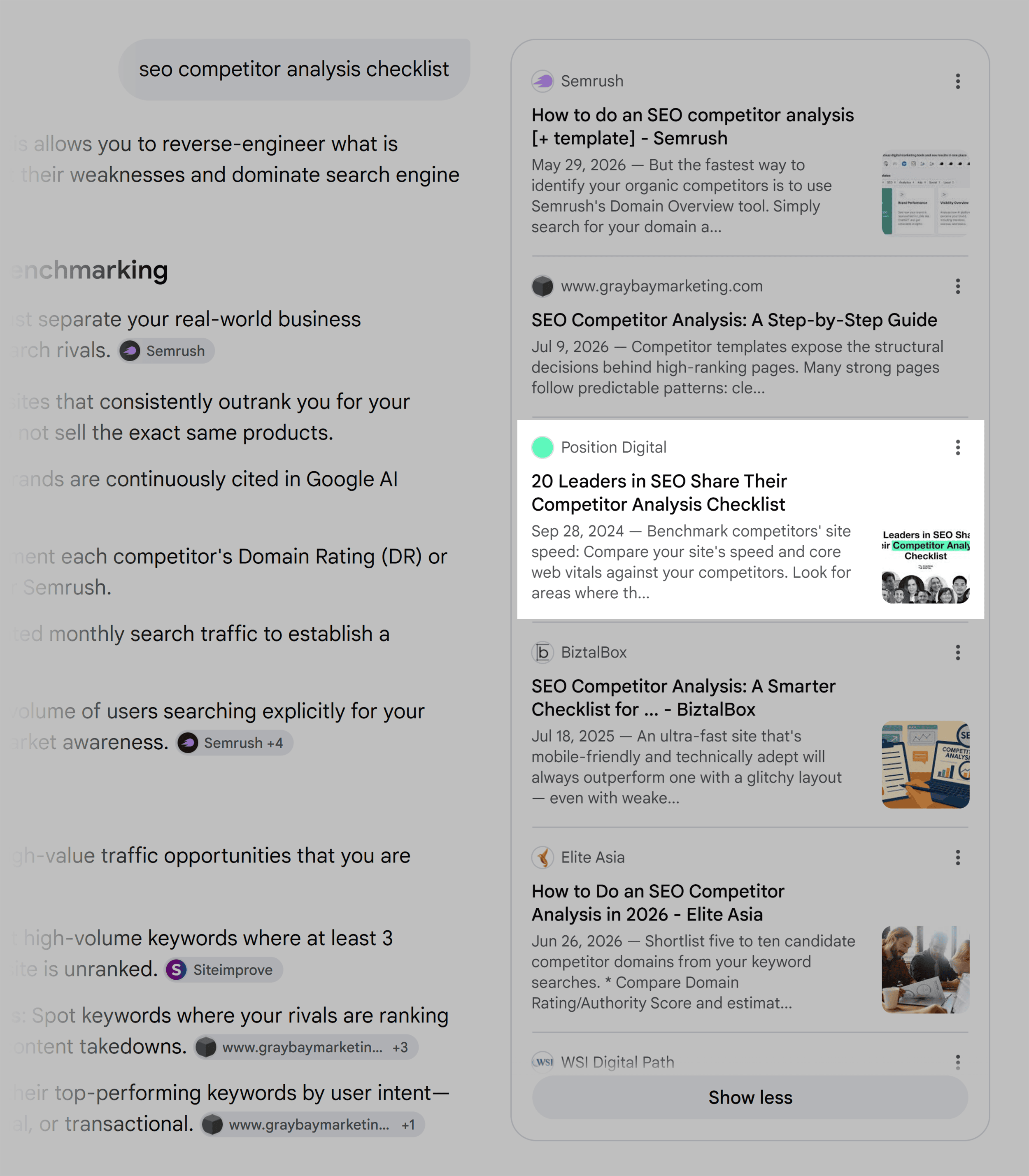
- Enhanced Credibility: Featuring recognized experts inherently elevates the authority and trustworthiness of your content. As seen in the AI SEO study, pages with expert quotes receive significantly more AI citations. AI models interpret expert contributions as strong signals of E-E-A-T. Our article on SEO competitor analysis, featuring insights from 20 experts, is a prime example, cited by both Google’s AI Overviews and AI Mode.
- Amplified Distribution: When experts are featured, they are often motivated to share the content with their own networks, leading to a cascade of social mentions, website links, and newsletter inclusions. This widespread exposure increases overall brand visibility, which directly translates to stronger LLM visibility.
- Implementation Tactics:
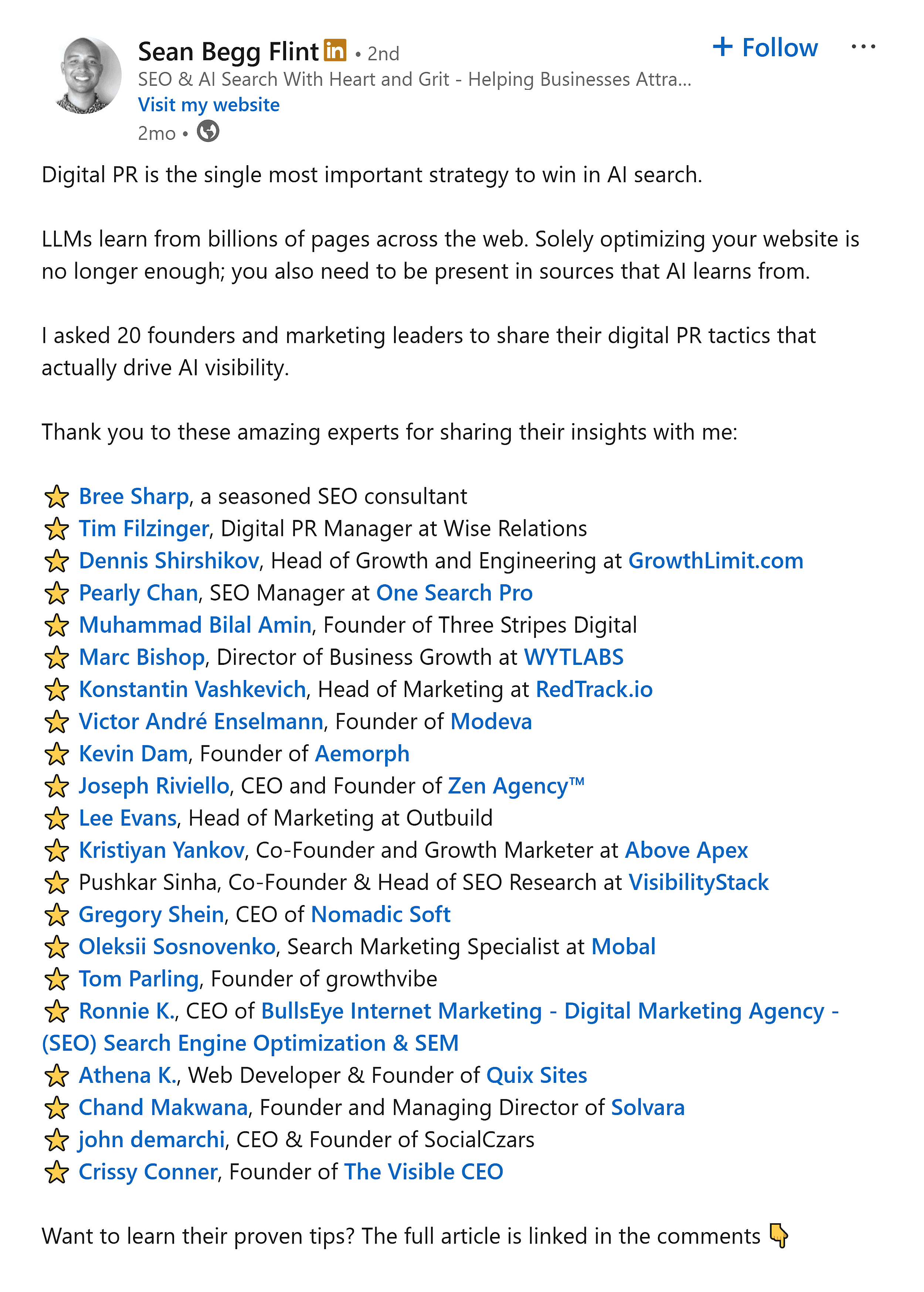
- Expert Roundups: Use journalist outreach platforms (MentionMatch, Featured.com, Qwoted) to solicit quotes or insights from experts on a specific topic. Curate the best contributions into a blog post. Post on LinkedIn, tagging all contributors to encourage shares and engagement.
- Case Studies/Success Stories: Develop detailed case studies or success stories highlighting the achievements of customers, partners, or collaborators. This not only flatters the featured party but also provides them with valuable content to share, while adding a layer of authentic credibility.
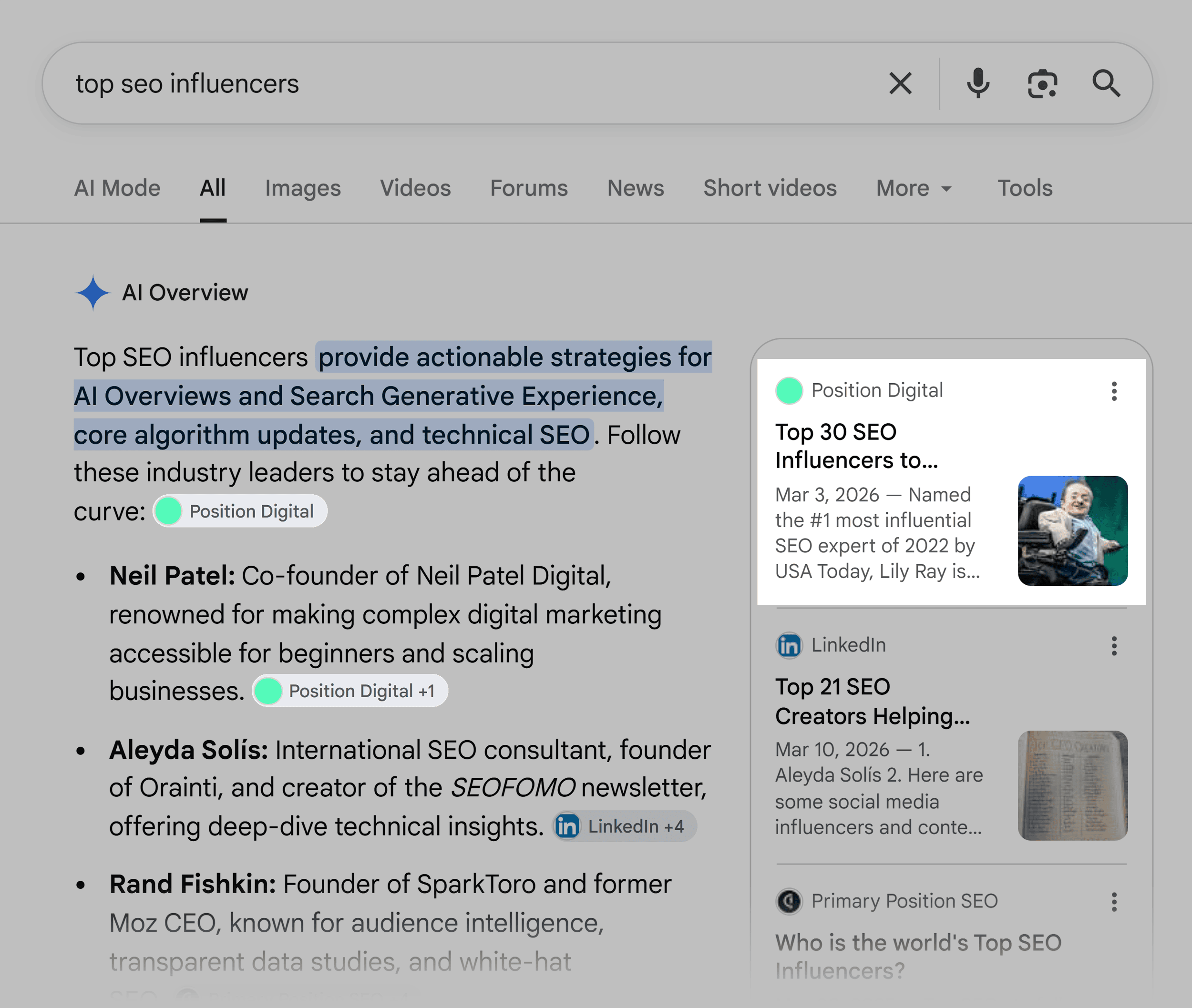
- Curated Lists: Compile "top experts," "leading companies," or "influential voices" lists within your industry. Inclusion in such a credible list is a strong incentive for individuals to promote it, generating organic shares and mentions that AI systems pick up.
5. Thought Leadership: Shaping the Industry Narrative
Thought leadership content aims to establish a brand or individual as a recognizable, authoritative voice in their industry, going beyond mere SEO ranking to provoke thought and discussion.
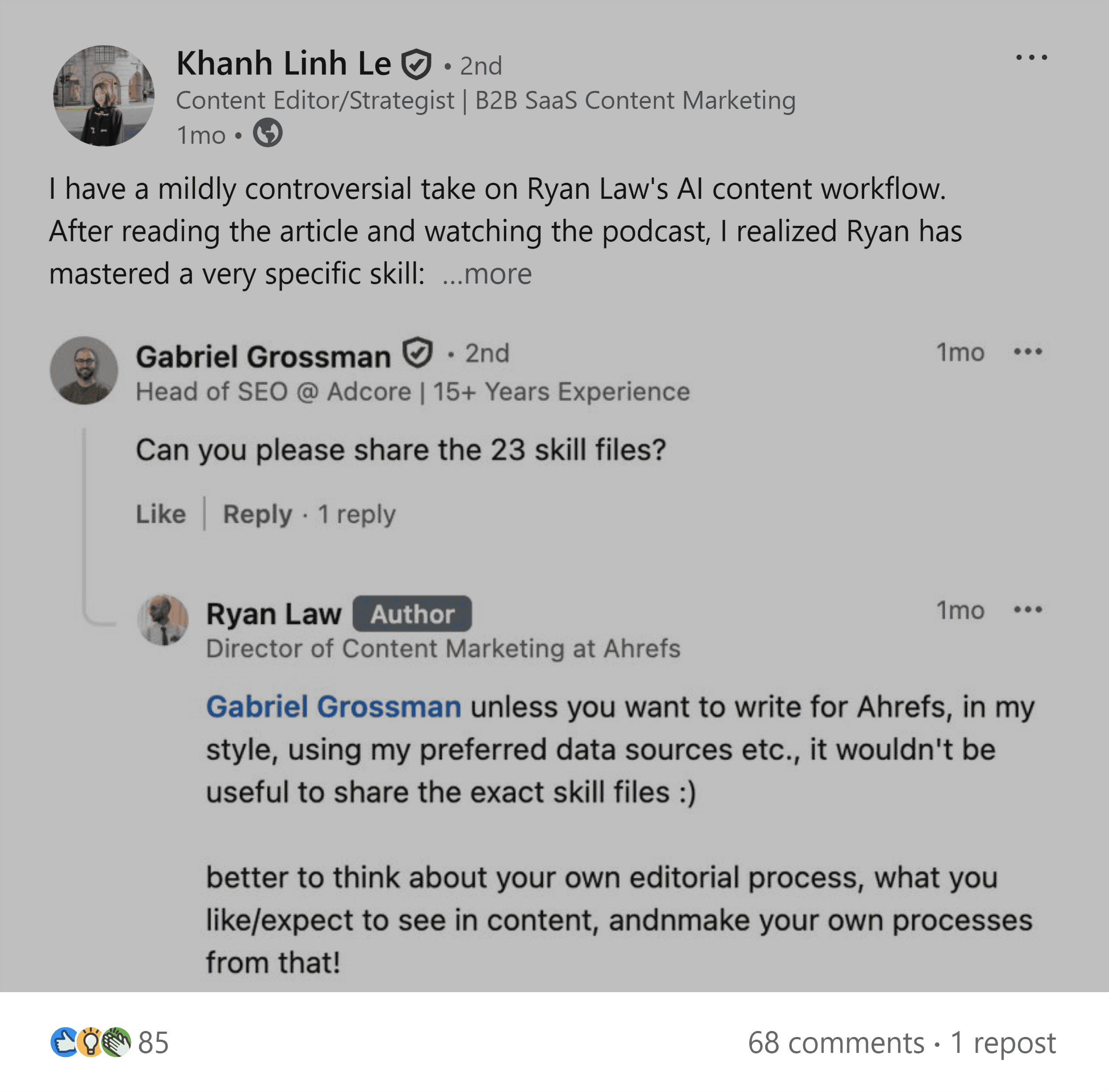
- How It Boosts AI Visibility: Thought-provoking content, by its nature, challenges assumptions, introduces new perspectives, and sparks debate, leading to high engagement. This engagement drives shares, mentions across various platforms (blogs, forums, social media), and ultimately, increased brand visibility that AI systems notice. Khanh Linh Le’s LinkedIn post, for example, generated disproportionately high comments because it sparked debate. When many reputable sources discuss and reference your insights, AI models begin to recognize you as a go-to authority.
- Implementation Tactics:
- LinkedIn Presence: Develop a strong, active presence on LinkedIn. Share original insights, engage in discussions, and respond thoughtfully to comments. LinkedIn’s high citation rate in AI models makes it a critical platform for thought leadership. Focus on delivering value, posing questions, and sharing unique perspectives.
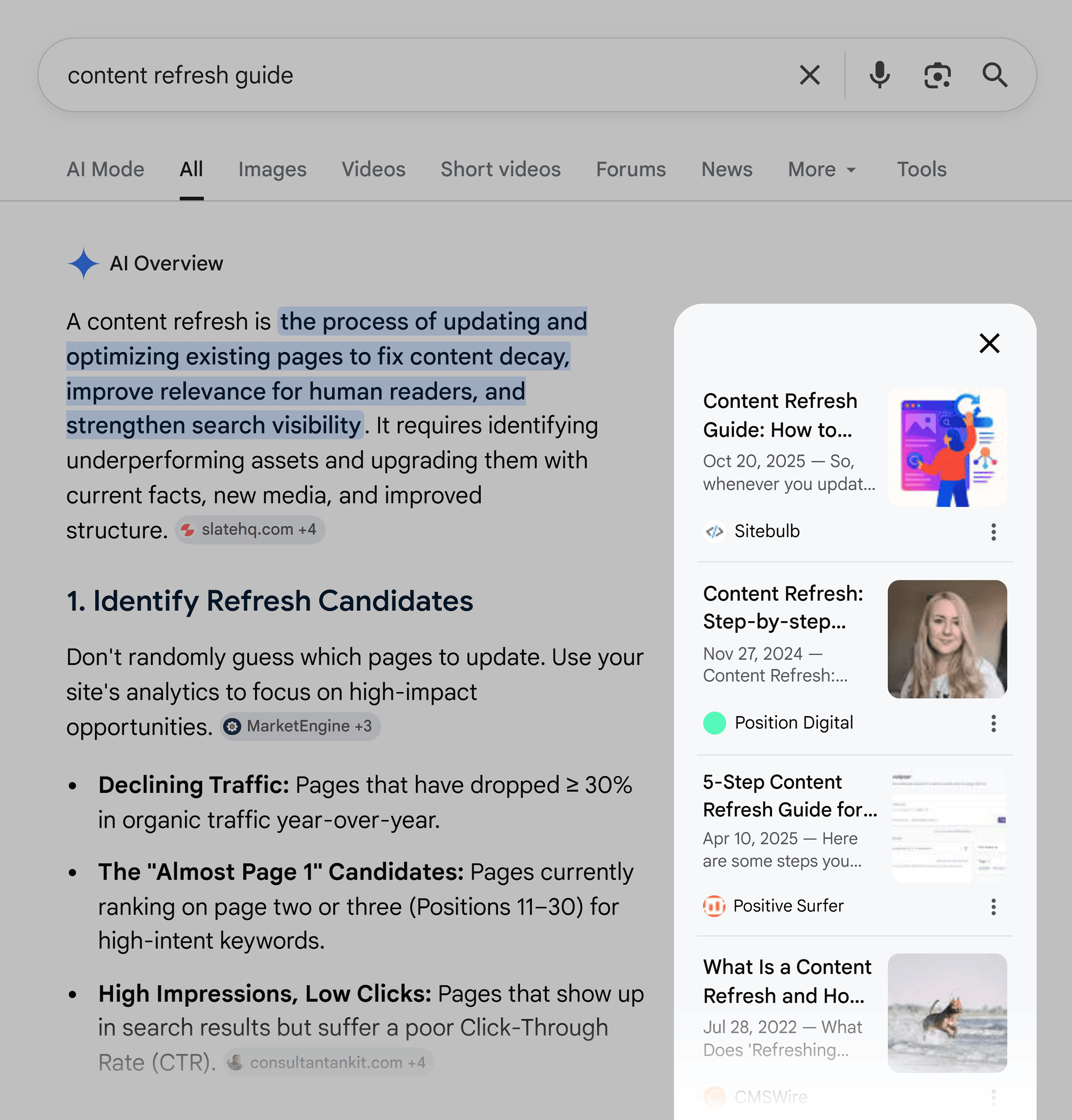
- Guest Posting on Major Publications: Guest blogging remains a powerful method to distribute your ideas and showcase expertise on high-authority platforms. The "Guest Post (GP) Engine" framework, where a core blog post is varied and republished on other authoritative sites (e.g., Position Digital’s "Content Refreshes" appearing on Sitebulb and Surfer SEO), can lead to multiple AI citations for the same core idea, establishing widespread authority.
- Podcast Appearances: Becoming a guest on podcasts is an often-underestimated channel for thought leadership. A single appearance can generate brand mentions, links to your website, social shares, and direct exposure to a targeted audience. Start with smaller, niche-specific podcasts to build a portfolio and relationships, as their content is still indexed and cited by AI. As your reputation grows, larger opportunities will follow.
6. Community Building: The Power of Independent Validation
Community building focuses on establishing a brand’s presence and reputation within third-party forums, review sites, and customer rating platforms. These platforms are increasingly treated by AI models as trusted, independent sources of validation.
- How It Boosts AI Visibility: AI models inherently trust neutral, community-driven sources more than brand-owned marketing. The Semrush study revealing AI’s preference for Reddit over Microsoft’s blog for product information is a stark illustration. Similarly, the Seer Interactive study on Trustpilot profiles demonstrates that authentic user reviews significantly boost AI citation rates. This highlights that what others say about your brand on independent platforms holds immense weight with AI.
- Implementation Tactics:
- Q&A Platform Contribution: Actively contribute insights on platforms like Reddit and Quora. These communities are heavily scraped and frequently cited by AI. The key is to participate genuinely as a helpful contributor, not a marketer. Be transparent about your affiliation but prioritize offering value. Mention your brand only when truly relevant and value-adding. A consistent approach of 3-5 meaningful contributions per week can build credibility. Hosting an "Ask Me Anything" (AMA) session is another effective way to share expertise and build brand awareness.
- Optimized Review Profiles: Create and optimize profiles on relevant review platforms such as Trustpilot, G2, Capterra, Yelp, and industry-specific review sites. Actively encourage satisfied customers to leave positive reviews and ratings. Responding professionally to all reviews, positive or negative, demonstrates engagement and customer care, further enhancing trust signals for AI.
- Medium Content: Utilize Medium as an additional platform for content distribution. Republish condensed versions of your best blog content or share original perspectives. Medium’s high citation rate in AI search, as per the Semrush study, makes it an excellent channel for amplifying your ideas and increasing the likelihood of AI citation.
The Broader Implications for Marketing and PR
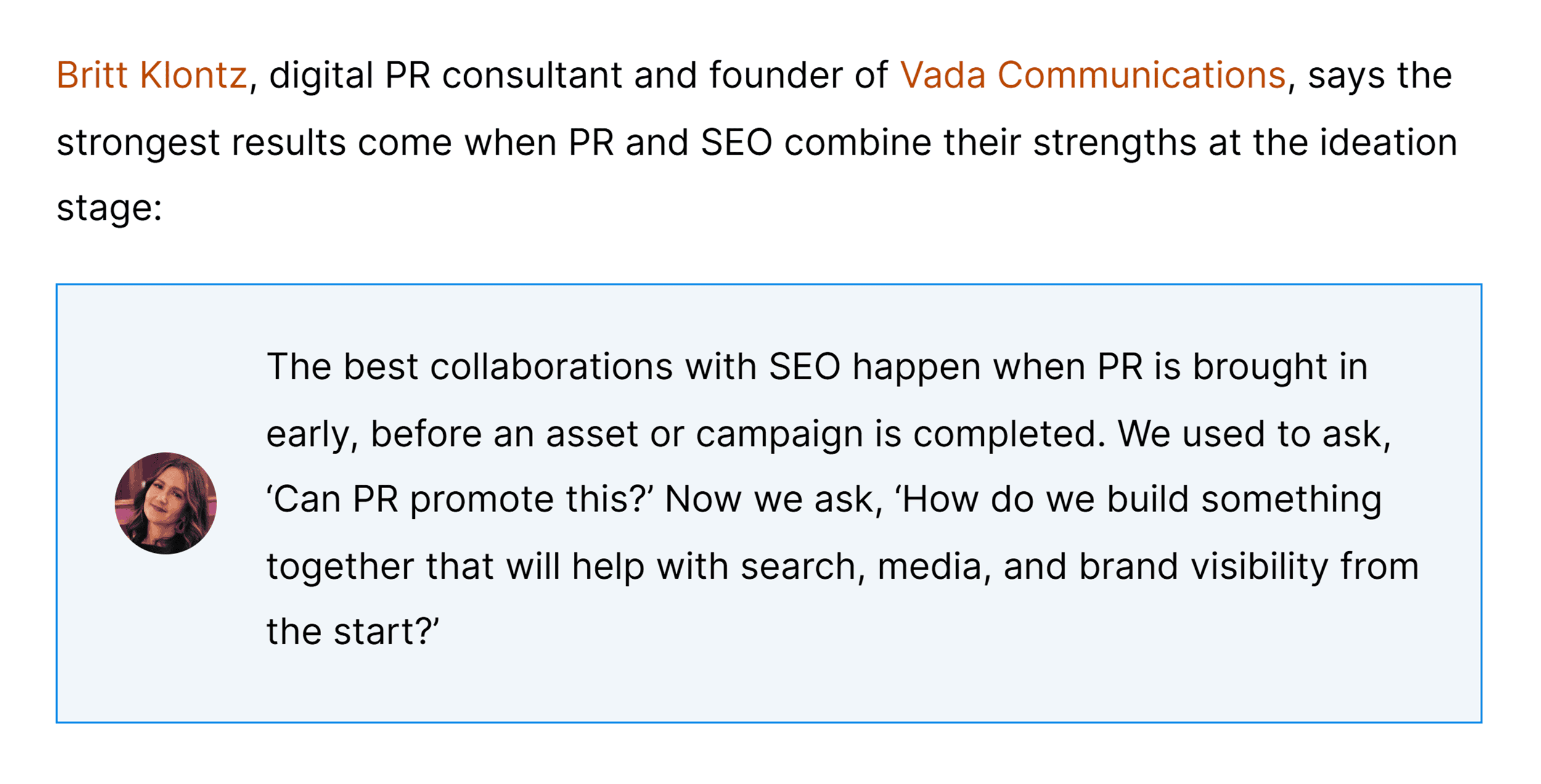
The rise of AI search fundamentally redefines the role of Digital PR. It’s no longer a supplementary activity but a central pillar of an integrated digital marketing strategy. This shift necessitates closer collaboration between PR, SEO, and content teams, as the lines between "earned media" and "search visibility" blur. Marketers must develop new metrics and methodologies to effectively measure AI visibility and the direct impact of their Digital PR efforts on AI citations and brand recommendations.
Looking ahead, the evolution of AI will continue to shape how information is consumed. Brands that prioritize building genuine trust and authority through widespread, third-party validation will be best positioned to thrive. The emphasis will remain on creating valuable content that resonates with human audiences and, by extension, with the AI systems learning from their interactions and preferences.
Conclusion: Show Up Where AI is Already Looking
In the age of AI search, the quickest and most effective path to securing AI citations and recommendations is to strategically position your brand within the ecosystem of pages and platforms that AI models already trust. By leveraging tools like Semrush’s AI Visibility Toolkit, brands can pinpoint the specific prompts their target audience uses with AI chatbots. Subsequently, analyzing the sources cited by each AI platform for those prompts allows for a hyper-targeted Digital PR strategy.
The imperative is clear: invest in Digital PR strategies that foster authentic third-party validation, expert endorsement, community engagement, and rapid response to relevant industry trends. This comprehensive approach will ensure your brand is not just present online, but genuinely influential in the AI-driven future of search. To delve deeper into optimizing for citations and influencing AI answers, exploring guides on LLM seeding offers further strategic insights.