Microsoft Unveils Vision for an AI-First Internet, Reshaping Digital Marketing Beyond Human Audiences

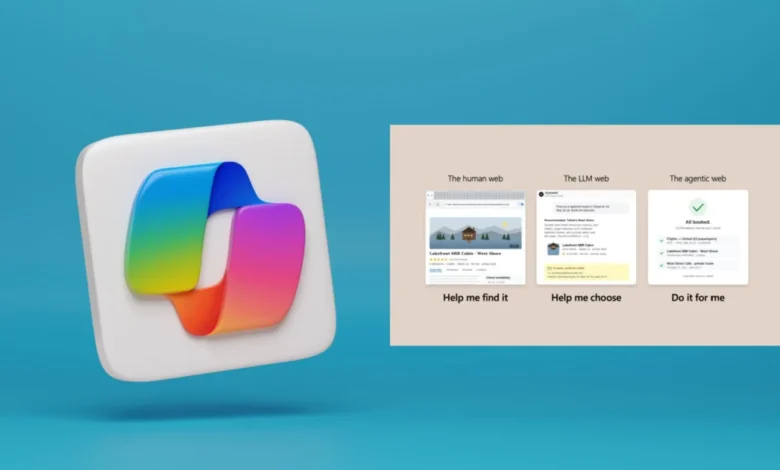
Redmond, WA – Microsoft has recently announced a sweeping series of artificial intelligence updates across its advertising and commerce platforms, signaling a strategic pivot that extends far beyond conventional ad enhancements. While new targeting options, advanced diagnostics, commerce tools, Copilot integrations, and campaign features are set to dominate immediate headlines, the underlying message from Microsoft outlines a much broader, transformative vision for the internet itself – one where businesses must cater not only to human consumers but also to an increasingly influential audience of AI systems.
This paradigm shift, articulated during the recent announcements, posits that AI agents are rapidly becoming the fastest-growing demographic in the digital realm. Microsoft’s data highlights this unprecedented acceleration: automated traffic is reportedly growing eight times faster than human traffic, AI-driven sessions nearly tripled in 2025, and agentic browser traffic has surged by approximately 8,000% year-over-year. Unlike human users who browse and ponder, these AI visitors evaluate, select, and act with remarkable efficiency. Consequently, brands with weak, incomplete, or untrusted data risk being overlooked by these automated decision-makers, a scenario with profound implications for modern performance marketing.
The Evolving Digital Landscape: A New Era of Discovery
The digital advertising landscape has always been dynamic, but the advent of generative AI marks an inflection point comparable to the rise of mobile or social media. For decades, performance marketing has largely revolved around the click – a clear, measurable moment of user intent. Advertisers meticulously optimized for search queries, click-through rates, and conversion paths initiated by human interaction. However, Microsoft’s new framework suggests that customer journeys are becoming less linear, with significant influence exerted before a traditional search or click ever occurs.
This evolution is set against a backdrop of intense competition in the AI space, particularly between tech giants like Microsoft and Google. While Google continues to roll out robust AI updates across bidding, creative generation, search experiences, and campaign management, Microsoft’s approach carves out a distinct path. Instead of solely focusing on faster automation or more efficient ad delivery, Microsoft is compelling marketers to grapple with a fundamental shift in buying behavior, where the "audience" now encompasses intelligent systems facilitating human decisions.
Microsoft’s Vision: Competing for the AI Audience
Microsoft’s announcements are underpinned by a framework that acknowledges three parallel realities converging in the digital space. This multi-faceted approach recognizes that if an AI assistant narrows a shortlist of options before a human search, a brand has already either gained or lost ground. Similarly, if a shopping assistant can instantaneously compare shipping speeds, loyalty perks, and product availability, the purchasing decision might be shaped long before a consumer lands on a product page. In a future where AI agents directly complete more transactions, structured data and transaction readiness become integral components of media performance, moving beyond mere media settings.
This expanded view necessitates a re-evaluation of what constitutes modern performance marketing. Visibility within AI answers, robust product data, enhanced measurement capabilities, rapid diagnostics, audience precision, and granular control over automation are no longer optional but increasingly critical. The core question for paid per click (PPC) teams shifts dramatically: how do you effectively compete when the next most valuable audience may not always be human?
Key Innovations Driving Microsoft’s AI-First Future
Microsoft’s vision is not merely theoretical; it is being translated into tangible tools designed to empower advertisers in this new AI era. Several key updates stand out:
-
AI Visibility in Microsoft Clarity: This feature is arguably one of the most significant for marketers. Traditional performance reporting is built around trackable clicks, visits, and conversions. However, as AI tools increasingly summarize answers, cite brands, and influence decisions pre-site visit, this model becomes incomplete. Microsoft Clarity now offers insights into how AI systems discover, cite, and surface a brand’s content. This addresses a critical blind spot, allowing SEO teams, content creators, e-commerce leaders, and paid media specialists to understand their brand’s appearance and influence in AI-driven experiences. This proactive approach distinguishes Microsoft, providing actionable metrics where other platforms may still be developing similar capabilities.
-
Audience Generation: Moving beyond mere time-saving, this AI-powered assistant allows advertisers to describe an ideal customer using natural language and receive recommended targeting settings. These recommendations encompass demographics, locations, in-market signals, and dynamically generated audiences. The true value here lies in its capacity to improve strategic thinking. While advertisers often know their obvious target demographics, Audience Generation can uncover adjacent areas where consumers spend time, identify neighborhoods with higher purchase intent, reveal seasonal behaviors tied to specific events, or highlight combinations of signals that denote high-value segments. This challenges stale assumptions and fosters more sophisticated targeting plans.
-
Performance Shift Root-Cause Analysis: When campaign results fluctuate, marketers need to understand not just what changed, but why. This new feature within the Microsoft Advertising Platform offers faster diagnostics, saving hours of manual investigation. By providing clear explanations for performance shifts, it enables teams to act with greater confidence and make informed strategic pivots rather than reactive adjustments. This mirrors efforts by Google, which offers its Ads Advisor experience to help advertisers surface insights and understand account performance more quickly. The goal for marketers is not to choose one tool over another, but to leverage both to minimize analysis time and maximize time spent on strategic decision-making.
-
Robust Guardrails and Controls: Microsoft has emphasized the importance of brand exclusions, term exclusions, and messaging constraints for AI-powered products like AI Max. This aligns with Google’s direction, which also offers extensive advertiser controls across automated products. These guardrails are crucial for adoption, particularly in regulated industries or for brands with stringent standards, legal reviews, and internal risk tolerances. Control features, often overlooked, are foundational to enabling the safe and effective integration of new AI tools into existing marketing ecosystems.
-
Product Data as a Growth Imperative: A consistent message from both Microsoft and Google is the expanding importance of product data beyond traditional Shopping campaigns. Clean titles, accurate availability, consistent pricing, strong attributes, detailed shipping information, and trustworthy structured data now influence how products are surfaced across diverse discovery environments. This includes search experiences, AI recommendations, comparison journeys, and agent-assisted buying flows. Feed health is no longer a mere operational concern but a critical growth driver. While Google emphasizes Merchant Center and commerce surfaces, Microsoft highlights agentic commerce, Copilot experiences, and AI visibility, collectively underscoring that robust product data is essential for platforms to understand inventory, evaluate relevance, and optimize visibility in an AI-driven world.
Industry Reactions and Expert Perspectives
The announcements have resonated widely within the digital marketing community, drawing significant commentary from industry leaders. Navah Hopkins, Microsoft Ads Liaison, underscored the value of diagnostics and clearer explanations, emphasizing the marketer’s role in deciding what to "own," "share" with AI, and "delegate." This pragmatic framing reflects the reality of enterprise adoption, where trust is built incrementally, and full delegation is rare from the outset. Hopkins also highlighted Microsoft Clarity as an increasingly vital source of behavioral insights in a world dominated by AI-driven experiences.
Mark Creusen, a prominent voice in the field, echoed this sentiment, noting that "the owning and sharing bit always pops for me. Way easier to chill about AI when you just mark out what’s ‘yours’ and what you’re happy to throw to the bots instead of trying to wrangle it all. Otherwise teams just end up dragging each other to burnout mountain." This perspective speaks to the practical challenges of integrating AI, suggesting that strategic delegation can prevent overwhelm and optimize team efficiency.
Frederick Vallaeys, another respected industry analyst, focused on the critical risk of "invisibility" for businesses unprepared for AI-driven discovery. He cited Microsoft’s discussions regarding websites still blocking AI agents via robots.txt, a practice that could render brands entirely absent from future AI-mediated interactions. Vallaeys also pointed to strong early commerce statistics shared at Microsoft’s partner event, including higher purchase likelihood after Copilot interactions and significant conversion lifts tied to Brand Agents, reinforcing the commercial viability of engaging with AI as an audience.
Broader Implications for Marketing Strategy and Teams
The overarching lesson from Microsoft’s updates is that campaign performance will increasingly be shaped by factors extending beyond the traditional campaign build. This demands a fundamental shift from a siloed "channel mindset" to a "connected systems" approach. The quality of product data, the cleanliness of measurement setups, the accuracy of audience definitions reflecting real buying behavior, and a brand’s visibility in AI-assisted discovery moments—even before a search click—will all become paramount.
This necessitates enhanced cross-functional collaboration. Teams historically operating in silos—such as Search, SEO, CRM data, and Analytics—will need to integrate their efforts seamlessly. The role of PPC managers will evolve from solely optimizing campaign settings to identifying external constraints, fostering inter-departmental collaboration, and driving improvements in the "inputs" that feed into marketing platforms. Strong practitioners will still require core campaign skills, but their competitive advantage will increasingly stem from their ability to orchestrate holistic brand presence across human and AI audiences. This shift anticipates a future where campaign management and optimization are highly automated, placing a premium on strategic oversight and data integrity.
Microsoft’s Strategic Edge and Future Outlook
Microsoft’s greatest advantage in this evolving landscape may not be in directly "out-Googling Google," but rather in leveraging its existing strengths to forge a distinct path. Continued investment in advertiser workflow tools, B2B audience intelligence via LinkedIn, clearer visibility into AI-driven discovery, and commerce experiences tailored for agent-assisted decisions could solidify its position. This unique lane, focusing on intelligent assistance and pre-click influence, could prove exceptionally valuable for marketers who adapt to its demands.
Industry observers will closely watch the coming year to ascertain whether these announcements represent a strong, enduring signal of the platform’s strategic direction or merely another round of product updates. The challenge for marketers, irrespective of the platform, will be to embrace these changes, re-evaluate their fundamental approach to digital presence, and actively experiment with new tools designed for an internet where AI agents are a dominant and influential audience. The question for many now becomes: which of Microsoft’s new AI features, if any, will you seriously consider testing in your own campaigns to stay ahead in this rapidly evolving digital frontier?