Google integrates Meridian into Analytics 360 to bridge the gap between data-driven insights and strategic marketing decisions.

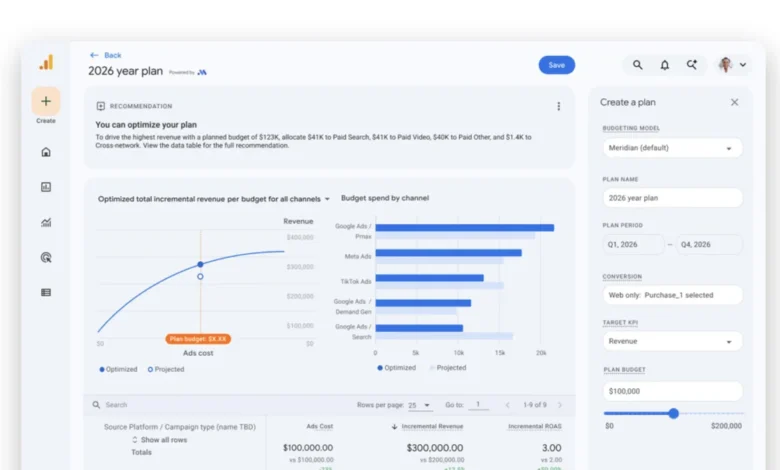
In the rapidly evolving landscape of digital advertising, the ability to transform raw data into actionable business intelligence has become the primary differentiator between market leaders and their competitors. As artificial intelligence continues to reshape the operational framework of global enterprises, the reliance on fragmented measurement tools has become a critical bottleneck for growth. Recognizing this shift, Google has announced a significant expansion of its measurement ecosystem, integrating its open-source Marketing Mix Model (MMM), known as Meridian, directly into Google Analytics 360. This move represents a strategic effort to consolidate performance data into a unified, high-fidelity environment, enabling marketers to move beyond simple attribution and toward holistic investment optimization.
The Evolution of Marketing Measurement
The history of marketing measurement has been characterized by a transition from siloed reporting to integrated analytics. In the early 2000s, businesses relied heavily on last-click attribution models, which provided a convenient, albeit fundamentally flawed, view of how customers interacted with advertisements. As digital touchpoints proliferated, the inadequacy of these models became apparent, leading to the rise of multi-touch attribution (MTA). However, the subsequent decline of third-party cookies and the tightening of privacy regulations—spearheaded by global initiatives such as the General Data Protection Regulation (GDPR)—rendered many traditional tracking methods less effective.
In response, industry leaders turned back to Marketing Mix Modeling, a statistical analysis technique that uses historical data to estimate the impact of various marketing tactics on sales. While effective, traditional MMM was historically cumbersome, expensive, and often disconnected from real-time digital analytics. Google’s development of Meridian was designed to democratize this process by providing an open-source framework that allows brands to maintain control over their data while leveraging sophisticated statistical methodologies. By bringing Meridian into Google Analytics 360, Google is effectively closing the loop, allowing businesses to bridge the gap between long-term strategic modeling and day-to-day tactical execution.
The Role of Qualified Future Conversions
Beyond the integration of Meridian, Google is introducing new predictive capabilities within Google Ads, specifically through the implementation of Qualified Future Conversions (QFCs). Powered by Gemini—Google’s multimodal generative AI model—QFCs are designed to identify the relationship between upper-funnel marketing activities and long-term sales trajectories.
The logic behind QFCs is rooted in the recognition that brand-building exercises, such as awareness campaigns, often fail to generate immediate conversions but significantly influence future purchase intent. By analyzing signals such as brand-related search volume, QFCs provide a quantitative bridge between current ad spend and projected future revenue. This allows marketers to justify investments in top-of-funnel initiatives that might otherwise appear inefficient under a short-term ROI lens.
The integration of these signals into the Meridian framework is perhaps the most significant aspect of this update. By feeding predictive QFC data into the MMM engine, the system becomes self-refining. As the model ingests more data regarding how specific brand signals correlate with future sales, the accuracy of the marketing mix model improves, leading to more precise budget allocation recommendations.
Chronology of Google’s Measurement Strategy
Google’s recent announcements are the culmination of a multi-year effort to overhaul its measurement stack in a privacy-first world.
- 2021-2022: As industry focus shifted toward privacy, Google began prioritizing server-side tracking and the development of the Privacy Sandbox, moving away from reliance on third-party cookies.
- 2023: Google intensified its commitment to open-source measurement tools, culminating in the public release of Meridian, which was designed to offer marketers a transparent, customizable, and privacy-compliant alternative to black-box attribution models.
- Mid-2024: Google introduced enhanced AI-driven reporting features within Google Analytics 360, focusing on cross-platform data stitching.
- Late 2024: The announcement of the Meridian-Analytics 360 integration marks the beginning of the "unified measurement" era, where AI-powered predictive modeling is baked into the standard analytics workflow.
The Business Impact of Unified Data
Industry analysts have long noted that the primary challenge for marketing departments is not the lack of data, but the lack of synthesis. According to a recent report by the Interactive Advertising Bureau (IAB), companies that utilize unified measurement platforms report a 15% to 20% improvement in marketing efficiency. The ability to see both the granular "what" (via Analytics 360) and the strategic "why" (via Meridian) allows stakeholders to make more informed decisions regarding budget shifts across channels.
For example, a retail brand using these tools can now observe a sudden spike in branded search queries following a television or YouTube awareness campaign. With the integration of QFCs, the platform can link this spike to a specific dollar amount in projected revenue for the following quarter. This data allows for more confident re-allocation of funds from lower-performing channels to those that demonstrate a clear, predictive impact on long-term growth.
Implications for Marketing Strategy
The implications of these updates are twofold: technical and organizational. Technically, marketers are being moved away from fragmented, channel-specific dashboards toward a centralized data lake approach. This requires a higher degree of technical literacy, as the implementation of Meridian requires a foundational understanding of data science and statistical modeling.
Organizationally, the shift necessitates a change in how performance is measured and rewarded. By shifting the focus from immediate, short-term conversion metrics to predictive, long-term performance models, organizations can reduce the "short-termism" that often plagues digital marketing departments. It encourages a culture of experimentation where the value of brand building is treated with the same analytical rigor as direct response advertising.
Challenges and Future Outlook
Despite the promise of this integrated approach, the transition is not without challenges. The primary hurdle remains data hygiene. Marketing Mix Models are only as good as the data fed into them. For Meridian to provide accurate insights, businesses must ensure that their historical marketing data is cleaned, normalized, and consistently tracked. Furthermore, the reliance on AI models like Gemini to interpret these signals requires a degree of trust in the "black box" of machine learning, necessitating clear documentation and transparency from Google.
Looking ahead, the next phase of this evolution will likely involve deeper automation. As these tools become more intuitive, the role of the marketing analyst will shift from data collection to strategic interpretation. Google’s focus on integrating predictive signals into its core analytics platform signals a long-term commitment to maintaining its dominant market position by providing tools that can handle the complexity of the modern consumer journey.
As companies continue to navigate the dual challenges of tightening budgets and rising customer acquisition costs, the integration of Meridian into Google Analytics 360 offers a path toward more resilient and data-backed decision-making. By moving from reactive reporting to predictive modeling, enterprises are better positioned to weather market volatility and identify opportunities for sustainable growth. The success of this transition will ultimately depend on the willingness of organizations to invest in the requisite talent and data infrastructure to support these sophisticated measurement frameworks.