YouTube Revenue Growth Moderates in Q3 2026 as Subscriptions and Living Room Streaming Surge

Alphabet Inc., the parent company of Google and YouTube, released its third-quarter financial results for 2026, revealing a slight deceleration in year-over-year advertising revenue growth for its premier video platform. Despite the cooling ad market—which brought in $11.2 billion for the quarter—YouTube is rapidly diversifying its financial streams. The platform is experiencing substantial momentum in subscription models, connected TV integration, e-commerce partnerships, and generative artificial intelligence tools designed to empower its expanding creator ecosystem.
Financial analysts and industry watchers have closely monitored YouTube’s financial health as it navigates a shifting digital media landscape. While traditional advertising remains the company’s primary engine, structural shifts in how audiences consume media—particularly the migration from linear television to living room streaming—are fundamentally reshaping Alphabet’s revenue architecture.
Advertising Growth Slows Amid Diversification Efforts
For the third quarter of 2026, YouTube generated $11.2 billion in advertising revenue. This represents a 9% year-over-year increase, marking a slight slowdown compared to the 13% growth rate reported during the second quarter of the same year. While the tapering growth rate highlights potential saturation or macroeconomic caution among brand advertisers, it coincides with robust gains in non-advertising sectors.
Alphabet’s overall subscription revenue climbed 11% during the quarter, a surge heavily propelled by the sustained popularity of YouTube Music and YouTube Premium. The company announced that its combined paid subscriber base has officially reached 150 million users. This milestone underscores a remarkable trajectory for the platform, which crossed the 100-millionsubscriber threshold in early 2024.
Industry observers attribute the rapid addition of 50 million subscribers to aggressive international marketing, enhanced audio catalog offerings, and a strategic pivot toward connected television (CTV) households. During Alphabet’s Q2 earnings call in July, executives highlighted significant surges in Premium sign-ups among connected TV viewers, many of whom are increasingly treating YouTube as a direct, feature-rich alternative to traditional cable and satellite television packages.
The Living Room Revolution and Connected TV Dominance
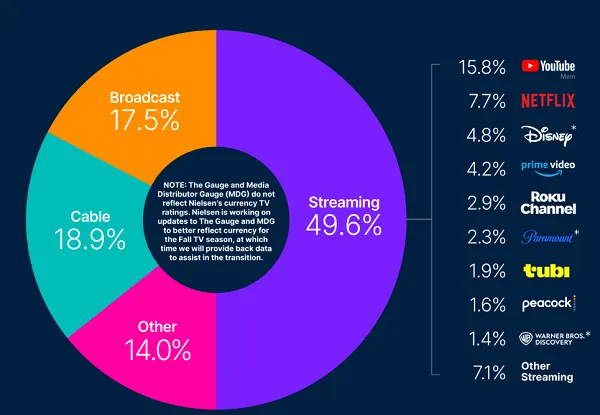
The traditional boundary between television and digital video has dissolved, and YouTube has positioned itself at the epicenter of this transition. According to Nielsen’s closely watched "The Gauge" report published in August 2026, YouTube solidified its standing as the top streaming platform in the United States, capturing the largest share of total television viewing time.
This dominance in the living room is no longer just a victory for user engagement; it is a major financial catalyst. During the accompanying Q3 earnings call, Google Chief Business Officer Philipp Schindler emphasized that the "Living Room" connected TV experience is rapidly expanding its economic footprint beyond direct subscription fees. According to Schindler, connected TV viewing now accounts for more than one-third of total YouTube advertising revenue.
Brands are increasingly recognizing that advertisements served on living room screens command higher attention spans and resemble traditional television commercials, allowing YouTube to command premium ad rates. Furthermore, small and medium-sized businesses (SMBs) have rapidly adopted Google’s Demand Gen products, feeding a steady stream of diversified advertising dollars into the ecosystem.
Expanding the Creator Economy Through E-Commerce and Partnerships

As YouTube’s platform footprint expands, so too does its commitment to the millions of content creators driving its daily traffic. The YouTube Partner Program has surpassed a major milestone, now encompassing more than three million creators worldwide who are eligible to monetize their content.
To further enhance creator earnings and capture the booming social commerce market, YouTube has aggressively integrated e-commerce capabilities into its interface. More than 1.3 million channels are currently enrolled in YouTube’s shopping program. This retail infrastructure received a massive boost with the announcement of a strategic affiliate partnership with Amazon.
The collaboration allows U.S.-based creators to seamlessly tag Amazon products directly within their long-form videos, YouTube Shorts, and livestreams. By bridging the gap between content consumption and transactional retail, YouTube is positioning itself as a formidable competitor to dedicated social shopping apps, offering brands an end-to-end funnel from product discovery to purchase.
Generative AI Integration and Creative Toolsets
Artificial intelligence has become a core pillar of Alphabet’s product development strategy, and YouTube is leveraging generative AI to redefine both content creation and ad targeting. With more than 20 million videos uploaded to the platform daily, managing and stimulating creative output requires sophisticated technological infrastructure.
Google executives noted that new generative AI tools embedded within YouTube Studio are dramatically lowering the barrier to entry for aspiring creators. Features such as conversational editing assistants in Shorts and YouTube Create are streamlining the post-production process. This builds upon earlier rollouts, including the AI-powered "reimagine" option introduced for Shorts in March, which allows viewers to generate alternative video variations based on existing creator clips, alongside experimental features like "Extend with AI" for generating alternative video endings.
These technological investments appear to be finding a receptive audience among creators. A proprietary report published by YouTube revealed that 61% of content creators who have published videos on the app over the past 12 months expressed keen interest in utilizing AI tools to insert themselves directly into video content.
Implications and Future Outlook
The financial disclosures from Alphabet’s Q3 2026 earnings report paint a portrait of a mature platform successfully navigating a transitional phase. While the single-digit deceleration in core advertising growth signals that the era of hyper-rapid ad expansion may be cooling, the simultaneous maturation of subscription models, living room dominance, and retail integrations provides a resilient financial buffer.
However, challenges remain on the horizon. As YouTube deepens its reliance on generative AI, the platform must proactively manage the influx of low-quality or derivative content—colloquially known as "AI slop"—to maintain user trust and content integrity. Furthermore, competition within the connected TV advertising market remains fierce as legacy media conglomerates and rival streaming services vie for the same household eyeballs and advertising budgets.
Nevertheless, by successfully capturing the living room television market, forging strategic commercial alliances with retail giants like Amazon, and equipping its three million partner creators with advanced AI tooling, YouTube has constructed a diversified business model capable of sustaining long-term growth well into the future.