The Ultimate Guide to B2B Procurement Platforms: Navigating Software and Marketplaces for Modern Business

A B2B procurement platform is defined broadly as the digital infrastructure—whether software or an online marketplace—that facilitates the requisitioning, approval, ordering, and payment of goods and services between businesses. However, the term has become increasingly ambiguous in the modern enterprise landscape. It is frequently used to describe two distinct categories: internal procure-to-pay (P2P) software designed to manage company-wide spending workflows, and B2B buying marketplaces that function as consolidated hubs for sourcing goods from multiple suppliers.
The confusion between these two categories carries significant financial weight. It is not uncommon for a small or mid-sized enterprise (SME) to engage in costly, lengthy sales cycles for enterprise-grade software suites—often priced at $50,000 annually or more—when their operational needs could be satisfied by a free Amazon Business account combined with the native purchase order capabilities of a standard accounting suite like QuickBooks Online Plus. This guide examines the structural differences, cost considerations, and strategic implementation of these tools, providing a roadmap for businesses to determine whether their current operational scale justifies the transition to a dedicated procurement system.
Defining the Divide: Software vs. Marketplaces
In the professional procurement sector, when a vendor references a "procurement platform," they are almost invariably speaking about internal workflow software. Conversely, buyers performing web searches for the term are often seeking a marketplace. Understanding the distinction is the first step in optimizing corporate spend.
Procure-to-pay (P2P) and source-to-pay (S2P) systems serve as the digital backbone for internal financial controls. These platforms, such as Procurify, Precoro, Coupa, and SAP Ariba, are designed to enforce compliance. They manage the entire lifecycle of a purchase: from the initial requisition by an employee to the final approval, the issuance of a formal purchase order (PO), and the eventual three-way matching of the PO, the delivery receipt, and the vendor invoice. For mid-market and enterprise organizations, these tools are essential for preventing "maverick spend"—unauthorized or off-contract purchasing that escapes budgetary oversight.
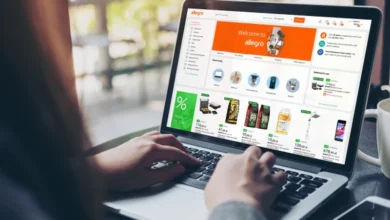
B2B buying marketplaces, by contrast, serve a different function: discovery and fulfillment. Platforms like Amazon Business, Alibaba.com, and Faire act as centralized nodes where a buyer can search thousands of suppliers, compare business-tier pricing, and manage orders through a unified interface. These platforms provide speed and access, offering features like escrow-backed payment protections or wholesale inventory terms that traditional P2P software cannot replicate.
The Mechanism of the Procure-to-Pay Lifecycle
To grasp why P2P software is considered a necessity for growing firms, one must analyze the common pitfalls of manual purchasing. A classic failure in procurement occurs when a simple request drifts: an internal request asks for ten units, a supplier confirms shipment of six, the receiver acknowledges the arrival of five, and the accounting department eventually receives an invoice for six. Without a centralized system, these four data points exist in disparate silos—emails, phone logs, and physical packing slips—making reconciliation nearly impossible.
P2P software standardizes this process through a strict six-step workflow:
- Requisition: The employee initiates the request within the system.
- Approval: The system routes the request to the relevant department head based on pre-defined spending limits.
- Purchase Order (PO): Once approved, the system generates a standardized PO sent to the vendor.
- Receipt: The system records the arrival of the goods, confirming they match the PO.
- Invoice Matching: The software automatically compares the vendor’s invoice against the original PO and the receipt.
- Payment: Upon a successful "three-way match," the payment is triggered or synced to an ERP.
The "three-way match" is the cornerstone of financial integrity in procurement. By verifying that the quantity, price, and terms on the PO, the delivery receipt, and the invoice align, companies prevent overpayment and identify shipping errors before capital leaves the balance sheet. Firms that rely only on two-way matching (comparing the PO to the invoice) often fail to identify when goods were ordered but never delivered.
Bridging the Gap: Punch-Out Catalogs and Connectivity
The integration of these two worlds occurs through "punch-out" catalogs. This technology allows a procurement system to connect directly to a supplier’s website. When a user "punches out," they are redirected to a vendor’s live portal, where their specific contract pricing is automatically applied. Once the user adds items to the cart, the system pulls that data back into the procurement platform as a requisition.
This connectivity is vital for enterprise efficiency. Major systems like Coupa or JAGGAER utilize cXML—an XML-based protocol—to facilitate these interactions. This ensures that even when employees are shopping on a site as large as Amazon Business, the purchase remains within the company’s established approval workflow. For suppliers, maintaining a punch-out catalog is often a prerequisite for doing business with Fortune 500 companies, as these corporations require all transactions to flow through their centralized P2P software.
Data-Driven ROI: The Case for Automation
The financial argument for adopting a procurement platform rests on the cost of processing a single purchase order. According to data from the American Productivity & Quality Center (APQC), the cost to process one PO can range from $14 to over $54, depending on the level of manual intervention.
Consider a firm processing 200 invoices per month. By implementing P2P software that reduces the average processing cost by even a modest margin through automation and centralized approvals, the firm can realize thousands of dollars in annual savings. However, for a small firm processing only 20 invoices a month, the annual subscription cost of a robust P2P suite may exceed the labor savings generated by the software. This is why financial analysts often suggest that smaller teams wait until they hit a specific "complexity threshold"—usually characterized by multiple approvers, high invoice volume, or the necessity for multi-location inventory management—before committing to a paid P2P platform.
Market Landscape and Pricing Models
Procurement software vendors generally employ one of four pricing structures: per-user, flat-tier, usage-based, or custom enterprise quotes. Market transparency varies wildly. Vendors like Procurify and Precoro publish tiered pricing, making it easier for SMEs to budget. Conversely, platforms like Zip, Coupa, and SAP Ariba operate on a quote-only model. These suites are intended for mid-market and enterprise entities, with annual contract values often starting at $50,000 and scaling into the hundreds of thousands based on volume, integrations, and the complexity of the supplier network.
For organizations on the lower end of the complexity spectrum, the "free" marketplace model remains the most viable. Amazon Business offers basic workflow and approval features for free, with paid "Prime Business" tiers for those requiring deeper spend visibility. Alibaba.com, while focused on international sourcing, provides free Trade Assurance services, which hold funds in escrow to mitigate the risks inherent in cross-border trade.
Implementation and Strategic Adoption
The failure of a procurement platform is rarely a failure of technology; it is almost always a failure of adoption. The transition to a new system, which typically spans 4 to 12 weeks for mid-market firms, requires significant organizational change management.
Common bottlenecks during implementation include:
- Supplier Onboarding: Forcing vendors to change how they accept POs and submit invoices can strain existing relationships.
- Data Cleansing: Migrating legacy vendor lists often results in the import of duplicate accounts and outdated pricing, which can cripple the new system’s effectiveness from day one.
- Cultural Resistance: If the system is perceived as a bureaucratic barrier rather than a facilitator, employees will find "workarounds," rendering the platform’s data useless.
Conclusion: Determining the Need
The decision to adopt a dedicated procurement platform should be viewed as a maturity milestone rather than a reflex reaction to high spending. Organizations with fewer than 30 employees and a centralized, simple approval process may find that a combination of accounting software (such as QuickBooks Online) and a marketplace account is sufficient.
However, as the firm grows—defined by the need to manage multiple approvers, address recurring invoice discrepancies, or integrate diverse supplier catalogs—the transition to a P2P platform becomes a strategic necessity. By carefully evaluating whether the business requires the rigorous controls of a P2P suite or the broad access of a B2B marketplace, leaders can avoid the "over-buying" trap and ensure that their procurement infrastructure scales in lockstep with their operations. As the industry moves toward AI-driven intake and automated contract management, the focus remains clear: the goal is not merely to buy, but to buy efficiently, compliantly, and with full visibility into the bottom line.