European E-commerce Growth Decelerates as Eastern Markets Face Stagnation and Regulatory Pressures

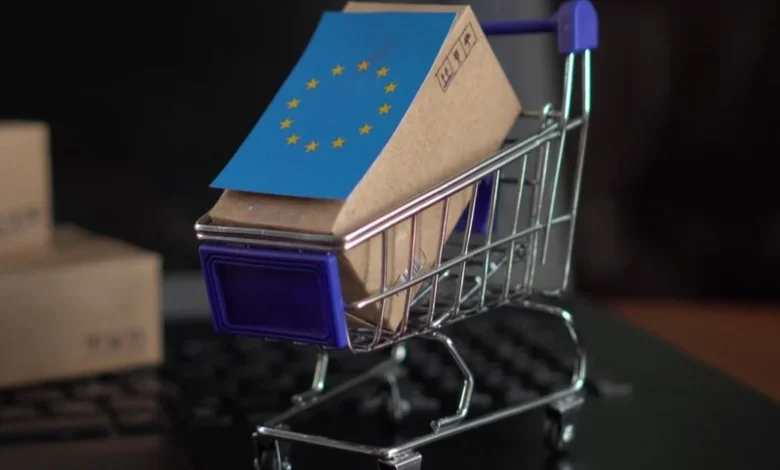
The digital retail landscape across Europe is undergoing a structural recalibration, with recent data from the European E-commerce Report 2026 indicating a definitive cooling of the rapid expansion observed in the post-pandemic era. While the sector remains a vital pillar of the continent’s economy, generating hundreds of billions in annual turnover, the double-digit growth rates once common in emerging regions are giving way to a more moderate, inflation-adjusted reality. For the 2026 fiscal year, industry associations Ecommerce Europe and EuroCommerce have forecasted a nominal growth rate of just 5 percent, a figure that highlights both the maturation of the market and the mounting headwinds facing digital merchants.
A Year of Stagnation: The 2025 Retrospective
In 2025, the European online consumer market reached a total valuation of 911 billion euros. This represented a nominal increase of 7 percent compared to the revised figure of 842 billion euros in 2024. However, when stripping away the impact of persistent inflation, the "real" growth rate was a more modest 4 percent.
This deceleration is not merely a statistical anomaly but a reflection of shifting consumer confidence and spending power. The 2025 growth figure was one percentage point lower than the previous year, suggesting a steady erosion of the rapid-growth trajectory that defined the early 2020s. As household budgets continue to be squeezed by the broader cost-of-living crisis, European consumers are becoming increasingly selective, prioritizing essential goods over discretionary digital purchases.
Regional Divergence: The Eastern Europe Growth Engine Stalls
One of the most concerning findings in the 2026 report is the dramatic shift in regional performance. Historically, Eastern Europe served as the primary growth engine for the continent’s e-commerce sector, fueled by rapid digital adoption and an expanding middle class.
The data indicates that this momentum is grinding to a halt. After recording a robust 18 percent growth in 2024 and 14 percent in 2025, Eastern Europe is projected to see nominal growth plummet to just 5 percent in 2026. More alarmingly, when adjusted for inflation, real e-commerce spending in the region is expected to contract by 1 percent. This downturn marks a significant departure from the trend in Western Europe, which remains the continent’s largest digital marketplace—accounting for 57 percent of total turnover—but which is now growing at a more mature, slower pace of approximately 5 percent.
Central and Northern Europe continue to exhibit resilience, with growth rates of 8 percent and 6 percent respectively, though they are not immune to the cooling effect. Southern Europe, which saw a surge of 11 percent in 2025, is also expected to normalize as the initial digital-first shopping habits solidify into standard consumer behavior.
Chronology of the European Digital Shift
To understand the current state of the market, one must view it through the lens of recent economic history:

- 2020–2022 (The Pandemic Catalyst): Forced lockdowns accelerated the adoption of e-commerce by several years, creating an artificial peak in demand and investment.
- 2023 (The Inflationary Shock): Rising energy and logistics costs began to impact profit margins, forcing companies to increase prices, which masked a decline in actual transaction volume.
- 2024 (The Correction): The market began to stabilize. Growth remained positive but was increasingly driven by price hikes rather than an increase in consumer demand.
- 2025 (The Maturation Phase): The 7 percent nominal growth represented a reality check for investors and retailers alike, as the "easy growth" era concluded.
- 2026 (The Current Outlook): The projected 5 percent nominal growth and 3 percent real growth reflect a focus on operational efficiency and regulatory compliance rather than rapid expansion.
Regulatory Challenges and the Call for a Level Playing Field
The publication of the 2026 report has served as a platform for Ecommerce Europe and EuroCommerce to voice long-standing concerns regarding the legislative environment in Brussels. The industry is currently operating under a complex web of regulations, including the Digital Services Act (DSA) and the Digital Markets Act (DMA).
Industry leaders are now formally calling on policymakers to prioritize the creation of a "level playing field." The crux of their argument is that European-based e-commerce entities are currently at a competitive disadvantage compared to non-European sellers who often bypass local administrative burdens or fail to adhere strictly to the same environmental and consumer protection standards.
The associations have highlighted three specific areas for intervention:
- Administrative Simplification: Reducing the regulatory cost for SMEs that seek to scale across borders within the European Single Market.
- Consistent Enforcement: Ensuring that non-EU marketplaces are held to the same fiscal and safety standards as local retailers to prevent market distortion.
- Cross-Border Harmonization: Further streamlining VAT and customs procedures to prevent the fragmentation of the European digital economy.
Analytical Implications: What Lies Ahead
The data suggests that the "easy" phase of European e-commerce growth has concluded. Retailers can no longer rely on the sheer momentum of digital adoption to drive revenue. Instead, the focus is shifting toward three core areas: artificial intelligence (AI), sustainability, and market consolidation.
AI is increasingly viewed as a necessary tool for survival rather than a luxury. Retailers are deploying advanced algorithms to optimize supply chains and personalize the consumer experience, which is essential for retaining customers in an environment where growth is scarce. Furthermore, sustainability has moved from a marketing buzzword to a regulatory requirement, with the EU’s Green Deal initiatives imposing new reporting and circular economy obligations on digital retailers.
The shift toward slower, more sustainable growth is likely to lead to further market consolidation. Smaller players, unable to cope with the dual pressures of rising administrative costs and shrinking consumer demand, are increasingly being absorbed by larger platforms or forced to exit the market.
Conclusion
As Europe navigates this period of economic transition, the e-commerce sector stands at a crossroads. While the days of explosive, double-digit growth may be behind it, the sector remains a central pillar of the European economy. The success of the next five years will not be defined by the volume of transactions alone, but by the ability of the industry to foster a cohesive, fair, and innovative regulatory environment that allows European businesses to compete effectively on a global stage. The projected 3 percent real growth for 2026 is a signal to stakeholders that while the market is no longer in a hyper-growth phase, it is entering a period of necessary maturation and strategic consolidation.