The Strategic Evolution of Professional Value in the Age of Generative AI

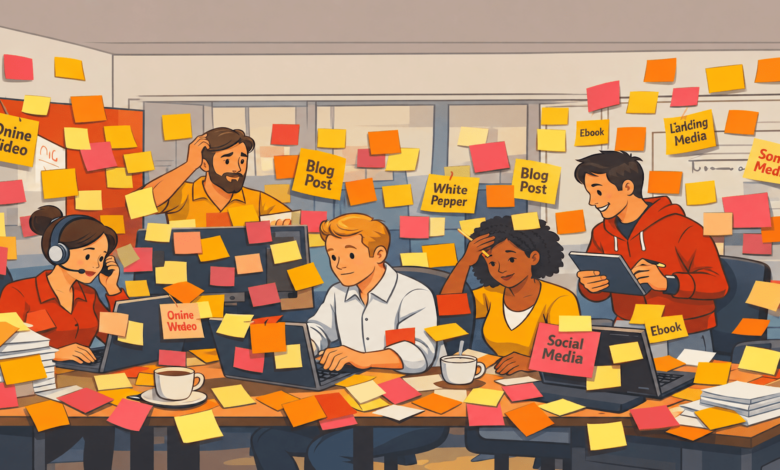
For most of the modern marketing and professional services era, experience has functioned as the primary currency of value. The traditional career trajectory was built on a linear progression: the more time an individual spent in a role, the more institutional knowledge they accumulated, and the more efficiently they could execute complex tasks. However, the rapid integration of generative artificial intelligence (AI) into the workplace has fundamentally disrupted this equation. As AI tools bridge the gap between novice and expert execution, the professional landscape is undergoing a structural transformation that emphasizes outcomes over output and strategic cognition over procedural consistency.
This shift is not a sudden disruption but a gradual metamorphosis that has been unfolding since the public release of large language models in late 2022. During the 2023-2024 period, organizations began testing AI’s capacity to automate routine administrative and creative tasks. By early 2025, data from the Boston Consulting Group (BCG) and the World Economic Forum (WEF) began to quantify the scope of this change, suggesting that while AI significantly accelerates performance on well-defined tasks, it also creates a "competence trap" where over-reliance on technology can lead to diminished results on complex, novel, or nuanced problems.
The Decoupling of Experience and Execution
Historically, hiring managers used years of experience as a reliable proxy for proficiency. A marketer with 15 years of experience was assumed to possess an innate mastery of campaign management that a junior hire lacked. Today, that heuristic is failing. AI tools have democratized access to technical execution. A first-year analyst can now generate research, draft comprehensive campaign strategies, and perform data synthesis at a pace and quality that previously required hours of senior oversight.
This evolution has effectively separated "doing" from "thinking." While the cost of production—drafting, report generation, and campaign setup—has plummeted, the value of strategic decision-making has escalated. The ability to identify the correct problem to solve is now far more valuable than the ability to execute the solution. According to the World Economic Forum’s Future of Jobs Report 2025, an estimated 39% of core workplace skills are expected to shift or become obsolete by 2030. In this environment, the "product" a professional delivers is no longer the hours of labor invested, but the strategic outcome achieved.
Chronology of Corporate Flattening
The internal structure of the modern corporation is responding to these technological shifts with a trend often described as "The Great Flattening." This trend gained momentum in 2024 as organizations realized that AI could handle the coordination and status-reporting roles previously occupied by middle management.
- 2023: Initial corporate experimentation begins. Early adopters focus on productivity gains for individual contributors.
- 2024: Large technology firms initiate structural audits. Gartner predicts that 20% of organizations will use AI to flatten management hierarchies, eliminating over half of traditional middle-management roles.
- 2025: A systemic shift in span-of-control ratios occurs. Gallup data indicates the average manager now oversees 12.1 direct reports, up from 10.9 the previous year, reflecting a move toward leaner, more autonomous teams.
- 2026: Mid-year reports indicate that 41% of surveyed professionals have experienced a reduction in management layers within their organizations, as companies prioritize "builders and sellers" over "coordinators and measurers."
The case of Cloudflare, which underwent a significant restructuring in 2026, serves as a poignant example. Leadership identified "measurers"—individuals primarily responsible for reporting, administrative coordination, and internal auditing—as the primary targets for workforce reduction. The intent was not to eliminate oversight but to remove layers of bureaucracy that AI could manage more efficiently, allowing the company to refocus resources on direct value creation.
The Economic Implications of Outcome-Based Compensation
As the utility of the 40-hour work week diminishes, companies are facing pressure to move away from time-based compensation models. The traditional reliance on hourly billing or fixed salaries based on "utilization" is becoming increasingly difficult to justify when AI can compress a 40-hour project into an eight-hour sprint.
This transition toward outcome-based compensation is forcing a re-evaluation of professional contracts. Firms are increasingly exploring retainers, project-based fees, and performance-linked bonuses. The Upwork Future Workforce Index 2026 reports that 38% of skilled U.S. knowledge workers are now engaged in freelance or contract-based roles, up from 28% just one year prior. This data suggests a migration away from the traditional, long-term full-time employment model, as highly skilled professionals seek to trade their expertise for results rather than selling their time.
The Rise of the Professional Business Partner
For the individual, this transition necessitates a shift in identity. The "specialist" who only understands one discipline is becoming less valuable than the "business partner" who can connect the dots across multiple functions. A modern marketer who understands unit economics, pricing strategies, and analytics, and who can use AI to synthesize these areas, possesses a distinct competitive advantage.
Microsoft’s 2025 and 2026 Work Trend Indices highlight that 83% of organizational leaders believe AI will allow employees to engage in complex, strategic work much earlier in their careers. However, this expectation brings significant risks. If entry-level "grunt work" is fully automated, the traditional apprenticeship model—where juniors learn by doing the repetitive tasks of their superiors—may collapse. Companies are now faced with the challenge of creating new pathways for professional development that do not rely on the manual repetition of tasks that AI can perform instantly.
Navigating the Future: A New Framework for Success
To remain relevant, professionals must abandon the reliance on passive learning. The responsibility for mastering AI tools has shifted from the employer to the individual. In the current labor market, waiting for formal corporate training is a liability; the most effective strategy is the proactive integration of AI into existing workflows.
From an organizational standpoint, the evaluation of talent is undergoing a similar pivot. The traditional job interview, which focuses on a chronological recitation of experience, is being replaced by practical simulations. Successful candidates are now being judged on their ability to navigate ambiguous problems, their critical assessment of AI-generated output, and their capacity to propose solutions that directly impact business performance.
As the middle layer of corporate management continues to shrink, the remaining leadership roles are evolving into "player-coach" positions. These managers are not merely conduits for status updates; they are strategic owners who lead small, high-impact teams. The focus is shifting from "coordinating execution" to "cultivating judgment."
In conclusion, the professional landscape is bifurcating. There remains a demand for manual, physical labor that AI cannot replicate, and there is a burgeoning demand for high-level, strategic cognitive labor. The "middle" of the market—those whose roles consist primarily of low-skill, routine coordination—is rapidly evaporating. The future of work will not be defined by how much time a professional spends at a desk, but by the tangible business problems they are capable of solving in an era where execution is no longer the primary bottleneck. Professionals who focus on building systems, exercising critical judgment, and delivering measurable results will find themselves increasingly indispensable, regardless of the tools they use to achieve those ends.
Related posts: