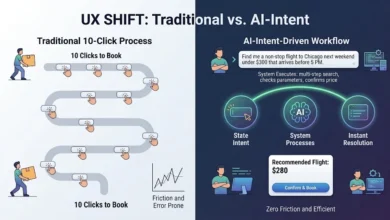
The rapid acceleration of generative artificial intelligence across enterprise software development is forcing a profound structural reckoning within the digital design industry. For decades, product designers have operated within a constrained bureaucratic hierarchy, frequently attributing suboptimal user experiences to structural roadblocks, compressed engineering timelines, and rigid corporate roadmaps. Today, the integration of advanced artificial intelligence tooling is systematically dismantling these traditional production barriers. This technological shift is shrinking the operational distance between conceptual problem identification and tangible code deployment. As tools evolve to permit autonomous prototyping, cross-functional execution, and rapid iteration, industry analysts are sharply divided on the long-term ramifications. The evolving landscape presents two distinct futures for digital designers: an optimistic bull case characterized by unprecedented professional autonomy and direct product influence, and a sobering bear case marked by structural disenfranchisement, workforce contraction, and the proliferation of plausible mediocrity.
Background Context and Evolution of the Designer’s Dilemma
To understand the current disruption, one must examine the historical framework of digital product development over the past twenty years. Traditionally, software creation has relied on a tripartite division of labor: product management frames market problems and business requirements, engineering evaluates technical feasibility and architecture, and design executes usability, interaction patterns, and visual aesthetics. Within this ecosystem, design has chronically suffered from an asymmetrical distribution of power. While practitioners were routinely encouraged to think strategically about user journeys, information architecture, and system health, they rarely possessed the direct means of production required to implement changes independently.
Fixing a broken onboarding funnel, refining a confusing upgrade pathway, or resolving accumulated design debt historically demanded a complex political campaign. Designers were forced to rely on persuasion rather than production. They compiled qualitative research clips, annotated user flows, aggregated customer support tickets, and constructed elaborate Figma prototypes to lobby product managers and engineering leads. In many corporate environments, these well-reasoned proposals were routinely sidelined in favor of quarterly metric-driven feature output. This institutional friction fostered a pervasive industry narrative: that designers could achieve extraordinary outcomes if only the corporate machinery got out of their way.
The Advent of AI-Driven Autonomy: The Bull Case
The emergence of code-generation models, multimodal design assistants, and rapid prototyping agents has fundamentally altered this dynamic. In the optimistic bull case, the primary disruption of artificial intelligence is not merely the acceleration of screen production—an outcome few organizations require—but the drastic reduction of permission dependency.
Modern designers equipped with advanced AI agents can transition fluidly from diagnostic observation to direct remediation. A practitioner can identify a systemic friction point in a product, prototype an alternative flow, generate compliant product copy, write functional interface code, and push the iteration live within a single operational cycle. This capability weakens historical dependencies on product management for problem validation and engineering resources for minor interface adjustments. Consequently, the boundary between design and engineering is becoming increasingly porous.
Industry observers note that this shift favors the evolution of a new archetype: the hybrid product leader. These professionals retain traditional proficiencies in human-computer interaction, visual hierarchy, and brand craft, but they pair these skills with deep commercial awareness, data literacy, and technical competency. By automating routine production tasks—such as component generation, layout scaling, and asset exportation—AI allows top-tier designers to redirect their cognitive bandwidth toward structural problem-solving and strategic trade-offs.
Economic models within this bull case suggest a workforce contraction offset by an exponential increase in individual leverage. While total headcount in design organizations may decrease as operational bloat is eliminated, the remaining practitioners wield significantly greater direct influence over corporate revenue, product architecture, and user retention. For elite designers long frustrated by organizational inertia, this represents the realization of a long-sought professional ambition.
The Bear Case: Exposing Gaps and Empowering Adjacent Functions
Conversely, the bear case outlines a much more perilous trajectory for the profession, driven by the uncomfortable reality that autonomy removes institutional protection. For years, organizational constraints served as a dual-edged sword; while they impeded visionary design execution, they simultaneously shielded mediocre practitioners from rigorous accountability.
A critical vulnerability within the design community is the disparity between critique and execution. Identifying systemic product flaws is cognitively distinct from formulating commercially viable, technically resilient solutions. Historically, abstract design critiques could exist safely in opposition to shipped software without ever surviving contact with complex backend data models, security protocols, or compliance frameworks. As artificial intelligence lowers the barrier to prototyping alternatives, the superficiality of purely theoretical design thinking is exposed. Practitioners who have mastered the nomenclature of user-centricity without owning hard business outcomes face unprecedented professional exposure.
Furthermore, a significant systemic risk arises from the concentration of institutional power within product management and engineering. In most enterprise environments, these departments dictate roadmaps, technical stacks, sprint cycles, and core performance metrics. If generative artificial intelligence succeeds in democratizing baseline design capabilities—enabling product managers to generate plausible user flows and engineers to assemble cohesive interfaces via automated design systems—the strategic necessity of dedicated design teams diminishes rapidly.
This dynamic introduces the danger of plausible mediocrity. Enterprise leadership frequently struggles to differentiate between exceptional design thinking and superficially polished execution. AI-generated interfaces that utilize correct spacing, standard component libraries, and acceptable copy can easily satisfy corporate review boards without solving deep structural user problems. If companies conclude that AI provides a cheaper, faster mechanism for acquiring surface-level polish, traditional design departments risk being structurally marginalized. Rather than shaping core product strategy, remaining design personnel may be relegated to governance roles—maintaining design systems, policing brand compliance, and executing narrow cosmetic updates—effectively shrinking their corporate footprint and inviting steep headcount reductions.
Synthesizing the Future: Strategic Judgment Over Production
As the technology matures, industry consensus suggests that the future of digital design will not resolve neatly into either extreme, but will instead manifest as an uncomfortable synthesis of both paradigms. The fundamental currency of the profession is shifting away from execution speed and artifact generation, both of which have been commoditized by automation.
Analyses of ongoing workforce transformations indicate that successful designers moving forward will be defined by superior product judgment rather than technical output. The differentiator will rest upon an individual’s ability to discern which strategic options are worth pursuing, validate hypotheses rigorously, recognize institutional self-deception, and evaluate when an acceptable technical compromise is quietly eroding business value. Designers must navigate fluidly between customer empathy, commercial pricing structures, brand integrity, and messy infrastructural realities without deflecting responsibility onto adjacent departments.
For decades, the digital design community maintained that institutional bottlenecks were the sole barrier preventing them from maximizing corporate value. Artificial intelligence is now testing that assertion in real time. While elite practitioners are successfully leveraging newfound autonomy to elevate their organizational influence, others are discovering that past organizational constraints provided a protective buffer against rigorous market accountability. Ultimately, the integration of artificial intelligence will reward those who possess the intellectual rigor to govern automated tools, while systematically exposing those who relied entirely on the friction of traditional corporate machinery to justify their professional existence.