Moving Beyond Vanity Metrics: A New Performance-Focused Framework for AI Search Measurement

The rapid evolution of generative AI and Large Language Model (LLM)-driven search has left many digital marketing teams struggling to define success. As brands move from the initial shock of AI integration to a more mature phase of search engine optimization, the reliance on superficial metrics—such as the mere mention of a brand name in a chatbot response or the number of AI citations—is increasingly viewed as a strategic liability. To address this, industry experts are shifting toward a performance-based measurement framework that distinguishes between speculative benchmarking and actionable, first-party data. This transition marks a critical turning point in the SEO industry, where teams are being forced to reconcile traditional search traffic models with the unpredictable, personalized nature of AI-generated answers.
The Problem with Current AI Visibility Benchmarking
For the past eighteen months, the prevailing approach to AI search measurement has been dominated by "visibility tools" that simulate user prompts. These tools track how frequently a specific company appears in the output of platforms like ChatGPT, Perplexity, or Google’s AI Overviews. While these metrics provide a high-level sense of competitive positioning, they possess a fatal flaw: they are snapshots in time. Because AI answers are contextual, personalized, and highly variable based on a user’s previous search history or location, these simulated visibility scores rarely correlate with tangible business outcomes.
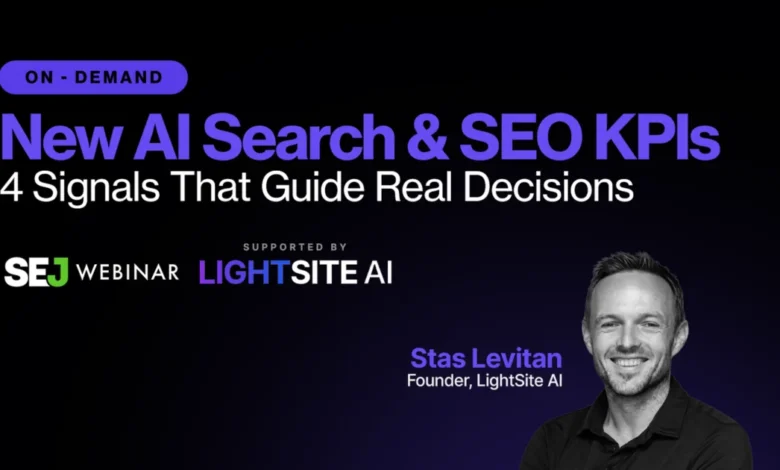
Stas Levitan, founder of LightSite AI, emphasizes that these metrics often lead to the "benchmark trap." In a professional analysis of the current landscape, Levitan notes that relying on external visibility estimates can create a false sense of security. If a brand sees a high number of mentions in an AI tool but fails to see a corresponding lift in qualified traffic or conversions, the data is essentially noise. The shift required, therefore, is from monitoring "AI visibility" to analyzing "AI performance" through the lens of actual bot-crawl behavior and human referral data.
Chronology of the Shift in SEO Strategy
The transition toward more granular AI measurement began in late 2023, as search engine companies began aggressively integrating generative experiences into their core products. Throughout 2024, the industry moved through three distinct phases:
- The Panic Phase (Q4 2023 – Q1 2024): Organizations prioritized blocking AI bots or, conversely, attempting to "force" their content into AI models through aggressive keyword stuffing. The focus was entirely on visibility at any cost.
- The Benchmarking Phase (Q2 2024 – Q3 2024): The proliferation of third-party tools allowed marketers to track citations. This helped teams understand which competitors were appearing in AI responses, but provided little insight into how to optimize content for long-term discovery.
- The Performance Era (Q4 2024 – Present): Forward-thinking firms are now integrating technical crawl data with conversion analytics. This represents the current state of the industry, where marketers are asking how to optimize site architecture to satisfy both human users and the LLM crawlers that determine which information is deemed "authoritative."
Four Signals That Drive Real-World Decisions
To move past vanity metrics, the proposed measurement framework utilizes four specific signals that, when analyzed in tandem, provide a holistic view of AI performance. These signals serve as the foundation for resource allocation in content, technical, and authority-building budgets.
1. Machine Discovery: This refers to the ability of major AI bots—such as Googlebot, GPTBot, and ClaudeBot—to successfully access and crawl a website’s content. Data suggests that approximately one-third of websites unknowingly block at least one major AI bot due to legacy security settings, misconfigured CDNs, or poor internal communication between IT and marketing departments.
2. Machine Interest: This metric measures the frequency and depth of bot attention. Analysis of large-scale datasets reveals that AI attention is highly concentrated; roughly 12% of pages typically capture nearly 50% of total bot impressions. Understanding why a bot repeatedly crawls a specific page—and ignores others—is a primary indicator of how the AI views the site’s value proposition.
3. Human Demand: This is the traditional measure of high-intent traffic. The framework stresses that human referral data must be compared against machine interest. A page that captures high bot attention but generates zero human demand may indicate that the content is being "digested" by the AI but not presented in a way that leads the user to visit the source.
4. The AI-to-Human Relationship: The final signal is the conversion rate of traffic referred from AI-driven search experiences. By mapping the relationship between bot behavior and human clicks, marketers can identify which pages are effectively functioning as "authoritative sources" in the eyes of the LLM.
Implications for Content and Technical Infrastructure
The data suggests that formatting and intent-based structure play a significantly larger role in AI performance than previously thought. Contrary to the belief that simply having more content is better, evidence points to a preference for "useful assets"—templates, tools, support resources, and highly specific answers to niche queries.
For instance, research conducted by LightSite AI shows that pages categorized as "frequently crawled" often share common structural characteristics. These pages are typically direct, concise, and provide a clear, singular answer to a query. Conversely, generic blog content that rambles without clear structural hierarchy often sees minimal bot engagement over time.
The technical implications are equally significant. Infrastructure, including the choice of Content Management System (CMS) and server-side configurations, can create invisible barriers for AI agents. Even on modern platforms like WordPress or Shopify, improper security protocols can treat AI crawlers as malicious traffic, inadvertently removing the brand from the AI’s "knowledge base."
Broader Economic Impact and Future Outlook
The implications for digital marketing budgets are profound. If a company continues to invest in content production based on traditional keyword volume without considering the AI search signal, they risk spending millions on assets that never reach their intended audience. By utilizing the four-signal model, marketing leads can make data-backed decisions on which legacy pages to prune, which to update for "answerability," and where to allocate budget for new technical infrastructure.
Furthermore, the integration of AI-specific KPIs into the broader marketing mix is forcing a merger between technical SEO, data science, and content strategy. As firms like Ahrefs and others continue to develop more advanced tracking tools, the industry is trending toward a future where AI search performance is no longer a separate, abstract category, but a core component of overall search engine visibility.
The ultimate goal of this framework is to move away from the anxiety of "being cited" and toward the objective of "being useful." When a brand’s digital presence is optimized to provide specific, high-quality, and accessible information, the AI is more likely to serve that content to the user. This creates a virtuous cycle: improved machine discovery leads to better citations, which in turn drives higher-intent human traffic.
As the industry matures, the divide between companies that merely chase "AI mentions" and those that optimize their entire technical and content ecosystem for AI ingestion will become increasingly apparent in their bottom-line results. For those looking to gain a competitive advantage, the path forward is clear: audit the technical accessibility, analyze the machine-interest patterns, align the content with human search intent, and focus the budget on the pages that actually bridge the gap between artificial intelligence and human discovery.