Migrating to Blocks with Artisanal Care and Industrial Scale: Human Made’s Blueprint for Enterprise WordPress Modernization

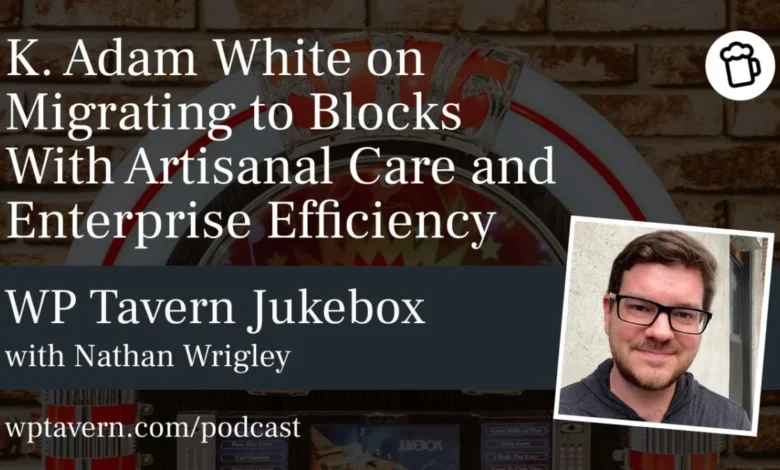
The landscape of enterprise content management is undergoing a significant transformation as large-scale organizations pivot toward the WordPress block editor, commonly known as Gutenberg. This shift, while promising enhanced editorial flexibility and future-proof architecture, presents complex technical hurdles when migrating hundreds of thousands of legacy posts from proprietary platforms like Sitecore or older WordPress page builders. At the recent WordCamp US, K. Adam White, Principal Engineer at the enterprise consultancy Human Made, detailed a sophisticated methodology for managing these large-scale migrations without sacrificing visual fidelity or brand integrity.
The Evolution of Enterprise WordPress Migrations
For nearly two decades, WordPress has evolved from a simple blogging tool into a robust enterprise-grade CMS. However, the move toward the block editor—which became the native editing experience in 2018—has created a divide between legacy content structures and the modern block-based paradigm. Organizations managing massive content repositories often face the "convert to blocks" challenge: while the native WordPress tool works efficiently for individual posts, it lacks the automation required for mass migrations involving tens of thousands of items.
Human Made, a long-standing contributor to the WordPress ecosystem, has been at the forefront of this transition. Having embraced Gutenberg during its infancy, the agency has spent years refining the process of marrying "artisanal care"—a focus on design, layout, and brand precision—with "industrial scale," the ability to automate, audit, and validate mass data imports.
Technical Methodology: From Legacy to Blocks
The core of White’s presentation focused on the technical difficulties of maintaining structural integrity during a migration. When moving from a CMS like Sitecore, which often utilizes a decoupled database structure where content trees and layout information are stored separately, a simple copy-paste approach is insufficient. If a migration is not handled correctly, the resulting content often suffers from "block validation errors" or a complete loss of the original design’s aesthetic nuances.
To overcome these issues, Human Made has pioneered a pattern-first development strategy. By utilizing WordPress theme patterns—pre-configured layouts that act as building blocks for pages—engineers can map legacy data directly into these structures. White introduced an experimental open-source tool developed by his team called "rehydrator." This utility allows developers to use existing theme patterns as templates, injecting legacy data into specific HTML structures. This ensures that when an editor opens a migrated post, it adheres perfectly to the site’s current design system without requiring manual formatting.
The Role of Artificial Intelligence in Migration Audits
One of the most significant shifts in the migration process over the past year has been the integration of AI-powered agents. Historically, auditing the content of a legacy site required thousands of hours of manual labor. Today, by utilizing Large Language Models (LLMs) such as Claude, engineers can perform comprehensive cross-site audits in a fraction of the time.
White explained that the team feeds export files—containing both content and layout metadata—into LLMs to generate Node.js scripts. These scripts create local SQLite databases, allowing developers to query for edge cases across the entire content repository. This automated auditing process helps identify irregularities—such as unique FAQ accordions or infrequent image placements—that would otherwise remain hidden until after the migration was finalized. This allows for a more proactive approach, where developers can build specific "mappers" for different types of content before the bulk migration begins.
Addressing the Enterprise "Control" Gap
A recurring theme in the enterprise adoption of WordPress is the tension between flexibility and control. Traditional enterprise CMS platforms, such as Sitecore or Adobe Experience Manager, often provide granular, node-level permissions. In contrast, WordPress typically manages permissions at the post or user level. For many large corporations, the transition to WordPress requires an adjustment in how they view editorial governance.
White noted that while WordPress is inherently more flexible, this can be perceived as a risk by stakeholders accustomed to rigid, draconian controls. Human Made addresses this by implementing publication checklists, workflow plugins, and "partially synced patterns." These tools allow for a middle ground: editors can modify specific content fields—such as text, images, and link targets—while maintaining locked styling controls that prevent brand drift. This process-based approach, rather than a purely permission-based one, has proven highly effective for clients who prioritize editorial speed and agility.
Future Implications for the WordPress Ecosystem
The broader impact of these methodologies is significant for the WordPress market share in the enterprise sector. As agencies like Human Made continue to bridge the gap between legacy proprietary systems and the modern block-based web, the barrier to entry for enterprise clients decreases. However, White emphasized that there are still areas where the WordPress roadmap could improve to better serve these high-stakes environments.
Specifically, the need for more opinionated, out-of-the-box editorial workflow tools remains a priority. While the community has developed numerous third-party solutions for editorial review and approval, a native, robust workflow system in WordPress Core would greatly benefit organizations that cannot afford errors on their public-facing sites. Additionally, as the global market continues to evolve, the need for more native support for internationalization and complex multi-lingual sites remains a key area for development.
Conclusion and Industry Outlook
The transition to a block-based architecture is no longer just a trend for small bloggers; it is a strategic necessity for global brands. By focusing on pattern-driven development and leveraging automation for content migration, firms are proving that WordPress can handle the complexity and scale required by the world’s largest organizations.
The work being done by engineers at companies like Human Made highlights a maturation of the WordPress ecosystem. The combination of established open-source principles, modern AI-driven auditing, and a disciplined approach to pattern design suggests that WordPress will continue to capture significant market share in the enterprise space. For organizations contemplating a move to the block editor, the path is increasingly clear: success depends not on finding a "one-click" migration tool, but on adopting a systematic, pattern-first approach that prioritizes both the integrity of the data and the empowerment of the editorial team.
As of the conclusion of WordCamp US, the resources, methodologies, and tools discussed by White have been made available to the public, signaling a shift toward more collaborative, transparent, and sophisticated migration practices across the entire WordPress community. This transparency is likely to accelerate the adoption of Gutenberg in enterprise environments throughout 2025 and beyond.