Factorial Energy Forges Strategic Coalition with Mitsui Kinzoku to Accelerate All-Solid-State Battery Industrialization

The race to commercialize all-solid-state battery (ASSB) technology has entered a new phase of collaborative industrialization as Factorial Energy, a Nasdaq-listed pioneer in the sector, announced a pivotal joint development agreement with Japan’s Mitsui Kinzoku. This partnership represents a calculated shift in strategy for the Massachusetts-based company, which has increasingly prioritized a modular, coalition-based approach to manufacturing. By integrating Mitsui Kinzoku’s specialized sulfide electrolyte production capabilities into its supply chain, Factorial is signaling that the era of the "lone wolf" battery startup is coming to a close in favor of global, cross-sector industrial alliances.
A Departure from Traditional Battery Manufacturing Models
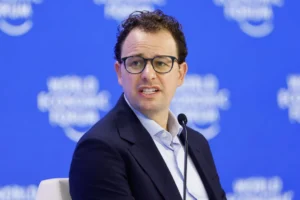
For decades, the battery industry was dominated by vertically integrated giants that controlled every aspect of production, from raw material procurement to cell assembly. Factorial Energy’s chief executive, Siyu Huang, has publicly challenged this paradigm, asserting that the sheer technical complexity of solid-state chemistry renders the "all-in-house" model obsolete.
"Battery innovation cannot be done by one single company," Huang noted following the announcement. This philosophy is not merely a corporate talking point; it is the foundational logic of the ecosystem Factorial has spent the last several years building. By partnering with Posco Future M for anode and cathode development, Phil Energy for manufacturing tooling, and SK On for scaling processes, Factorial is effectively outsourcing the logistical burdens of high-volume manufacturing while retaining control over its proprietary intellectual property.
The Technical Landscape: FEST vs. Solstice
Factorial’s technology roadmap is bifurcated into two primary platforms, each targeting different segments of the electric vehicle (EV) market. The first, the FEST (Factorial Electrolyte System Technology) cell, is a semi-solid-state solution. Rated at up to 375 watt-hours per kilogram (Wh/kg), the FEST cell has already undergone rigorous testing, most notably in a modified Mercedes-Benz EQS that successfully completed a 1,200-kilometer endurance run in September 2025. This performance milestone served as a critical proof-of-concept, demonstrating that the company’s chemistry could withstand long-duration stress without catastrophic failure.
The second, and more ambitious, pillar is the Solstice platform. As an all-solid-state cell, Solstice aims for a density of 450 Wh/kg—a figure that would essentially double the energy density of standard lithium-ion batteries currently powering most EVs. The key to this leap lies in the sulfide electrolyte, which is being produced in a dedicated facility in Saitama, Japan, by Mitsui Kinzoku. According to industry analysts, the transition to sulfide-based electrolytes is the most viable path toward high-energy-density cells that remain safe under thermal stress. Karma Automotive is currently slated to be the first commercial partner to implement these cells, with a target shipment date in 2028.
Chronology of a Nascent Industry
The progression toward solid-state adoption has been marked by a series of high-stakes investments and strategic pivots.
- 2021-2022: Initial validation phase, with major automakers including Mercedes-Benz, Hyundai, and Stellantis providing venture capital and testing sites for early prototypes.
- February 2024: ProLogium, a major competitor in the space, breaks ground on its European gigafactory in Dunkirk, France.
- June 2025: Factorial Energy successfully executes its initial public offering on the Nasdaq, signaling the transition from a research-intensive startup to a public industrial entity.
- September 2025: The Mercedes-Benz EQS prototype confirms the 1,200km range capability of the FEST platform.
- Late 2025/Early 2026: Formation of the current supply-chain coalition, culminating in the Mitsui Kinzoku agreement.
- 2028 (Projected): Expected commercial launch of the Solstice platform in vehicles produced by Karma Automotive.
The European Challenge: Dunkirk and the "Champion" Narrative
While Factorial focuses on its coalition strategy, the broader European landscape remains in flux. ProLogium’s facility in Dunkirk, France, stands as a testament to the continent’s ambition to create a homegrown battery champion. Following the struggles of Northvolt, the European automotive sector is under immense pressure to secure local supply chains for next-generation batteries.
ProLogium is currently mass-producing solid-state cells in Taiwan, with an output of approximately 6,000 packs per year at an energy density of 381 Wh/kg. The Dunkirk site, however, remains a work in progress. With significant backing from the French government and strategic proximity to the Gravelines nuclear power plant, the facility is designed to scale from an initial 0.8 GWh in 2028 to 12 GWh by 2032. Despite these figures, skeptics point out that the facility is still in the construction phase, highlighting the disparity between current laboratory success and the realities of large-scale, automated manufacturing.
The "Large Format" Hurdle: A Reality Check
Despite the optimism surrounding partnerships and gigafactories, a significant segment of the industry remains cautious. The primary obstacle to the widespread adoption of solid-state technology is not necessarily the chemistry itself, but the engineering challenge of scaling to large-format battery packs.
In a recent assessment, the North American president of LG Energy Solution provided a sobering perspective, suggesting that while small-format solid-state batteries (such as those for smartphones or wearables) may reach the market sooner, the application to large-scale electric vehicles is likely a decade away. The consensus among these skeptics is that the industry has mastered the "science" of the battery but is only beginning to understand the "manufacturing" of the battery.
Broader Implications and Strategic Analysis
The move by Factorial Energy to list on the Nasdaq and secure a diversified network of partners suggests a transition toward "de-risking" the company’s valuation. By spreading the manufacturing and material supply across multiple international firms, Factorial is positioning itself as a platform provider rather than a manufacturer of last resort.
For the automotive sector, this shift is beneficial. Automakers like Hyundai and Volkswagen’s PowerCo division prefer a model where they can integrate standardized, high-performance battery platforms without being tethered to a single, potentially fragile startup. However, the success of this strategy hinges on the ability of the coalition to maintain quality control across international borders.
Furthermore, the rise of Asian-led solid-state initiatives—whether it be Factorial’s partnership with Mitsui Kinzoku or ProLogium’s Taiwanese-backed French gigafactory—underscores a global reality: the center of gravity for battery innovation remains firmly tethered to East Asian manufacturing expertise. As the industry moves toward 2028, the critical test will not be the energy density of a single cell in a lab, but the ability of these coalitions to deliver thousands of consistent, safe, and cost-effective packs to automotive assembly lines.
In the final analysis, Factorial’s public acknowledgment that it cannot succeed alone is perhaps the most significant indicator of the industry’s maturation. The transition from the "hype cycle" to the "industrial cycle" is often defined by the realization that integration is more important than invention. As the 2028 target dates for mass adoption approach, the winners will not necessarily be those with the highest Wh/kg rating, but those who have most effectively synchronized the complex, multi-national dance of supply chain, chemistry, and mass production.