OpenAI’s introduction of "Dots" at this week’s DevDay represents a significant pivot in the architecture of generative artificial intelligence, shifting the paradigm from reactive chatbot interactions to a model of persistent, autonomous agency. While the headline feature capturing public imagination is the agent’s "always-on" capability, the technical mechanics buried within OpenAI’s updated help documentation reveal a more nuanced strategy for how these agents interact with private data and external enterprise ecosystems. Unlike standard Large Language Model (LLM) interfaces that wait for a user prompt, Dots are designed to bridge the gap between static information retrieval and continuous digital workflows.
The Chronology of Agentic AI
The trajectory toward "Dots" began in earnest with the release of GPT-4 and the subsequent integration of "tools" or plugins. For the past eighteen months, OpenAI has incrementally expanded the autonomy of its models. In early 2024, the company began testing "Scheduled Tasks," a feature allowing ChatGPT to execute recurring queries against external APIs like Gmail and Slack.
The launch of Dots serves as the logical consolidation of these features. By providing an agent with a persistent state, OpenAI is addressing a primary criticism of modern AI: the "memoryless" nature of traditional chat sessions. By moving from a session-based architecture to a persistent agentic framework, Dots can maintain context across days or weeks, effectively functioning as a digital assistant that operates in the background of a user’s professional life.
Defining Proactive Research and Autonomous Logic
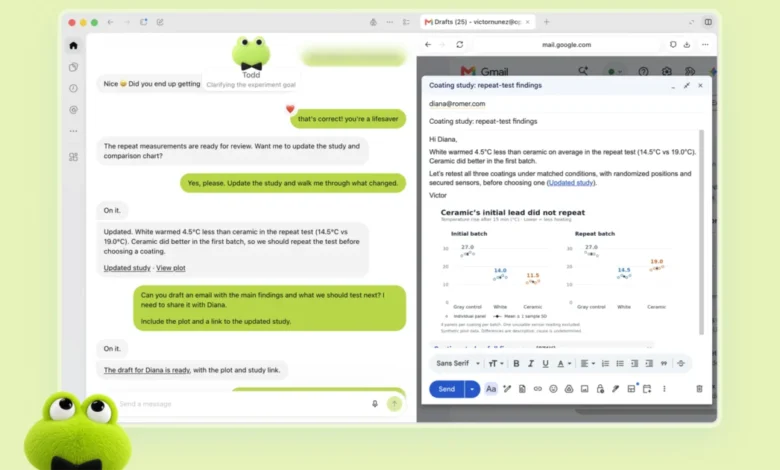
At the core of the Dots architecture is a functionality OpenAI terms "Proactive Research." This capability allows the agent to monitor connected data sources—such as calendar services, email threads, or collaborative platforms—for updates without waiting for an explicit user trigger.
From a security and safety standpoint, OpenAI has implemented a "read-only" constraint on these proactive operations. According to official help documentation, while a Dot can consume information from permitted sources and curate private notes for the user, it is strictly prohibited from executing high-stakes actions autonomously. Specifically, Dots cannot send messages to third parties, modify content within third-party plugins, or seize control of a user’s local browser or operating system outside of a specific, authorized assignment.
This delineation is critical for enterprise adoption. By walling off "proactive research" from "active task execution," OpenAI provides a safeguard against the "hallucination-to-action" loop, where an AI might mistakenly execute a command based on an incorrect interpretation of data. Any attempt to perform a task—such as drafting an email or updating a project management board—still requires adherence to the existing safety protocols and, in many cases, user oversight.
Deployment and Regional Constraints
The rollout of Dots is currently segmented by user tier and geography, reflecting the complexity of global data compliance. Pro users in most international markets now have access, though notably, the European Economic Area, Switzerland, and the UK are excluded from the initial launch phase. This exclusion is likely driven by the rigorous requirements of the General Data Protection Regulation (GDPR) and the UK’s post-Brexit data laws, which require high levels of transparency regarding how AI agents process and store user-specific data.
For the enterprise sector, the rollout is more measured. Business Premium users have immediate access, while Enterprise, Education, and Healthcare workspaces are being offered a beta version that is disabled by default. This "opt-in" structure is a standard industry practice for enterprise-grade AI, allowing IT administrators to assess the impact of autonomous agents on their network traffic and data privacy policies before authorizing them for their staff.
The Mechanics of Memory and Data Persistence
A central challenge in the implementation of Dots is the management of "memory." When a Dot is connected to a user’s suite of applications—which now includes a catalog of over 4,000 third-party apps—it inherits the authentication tokens and permissions established within those connections.
According to OpenAI’s internal privacy policy, these plugin permissions are shared across the ecosystem, including ChatGPT Work and Codex. This creates a powerful, unified environment but raises questions regarding data lifecycle management. If a user disconnects an application, the Dot ceases new data ingestion; however, the information already "learned" or saved in the agent’s memory remains. Currently, there is no granular dashboard for users to manually edit or purge individual memories captured by a Dot. The only mechanism for a complete data reset is a full wipe of the Dot, which removes all conversation history, saved notes, and scheduled task configurations. This "all-or-nothing" approach highlights that while the technology is advanced, the user-facing management tools are still in their infancy.
Integrating Cloud-Based Browsing
Beyond simple data ingestion, Dots possess the capability to utilize cloud-based browsers to perform complex tasks. This bridges the gap between simple API-driven actions and the reality of the modern web, where many services do not offer formal APIs.
In August, OpenAI initiated the WebMCP (Model Context Protocol) deployment, which allows agents to navigate websites as a human would, interacting with DOM elements to extract data or perform tasks. Dots leverage this infrastructure to operate within a sandbox. Enterprise administrators retain ultimate control over this feature, with the ability to toggle individual permissions for cloud browser use, network access, and cloud computer resources. This tiered control system is essential for preventing the unintended leakage of proprietary data during a Dot’s autonomous web-crawling activities.
Broader Implications for the Workforce
The introduction of Dots has significant implications for professional productivity, particularly in sectors that rely on consistent monitoring, such as digital marketing, supply chain management, and financial analysis.
In the search marketing industry, for instance, professionals currently spend hours manually checking search rankings, competitor changes, and campaign performance metrics. A Dot configured with access to these analytics platforms could theoretically monitor these metrics continuously, flagging anomalies or reporting changes as they occur. Because the research is read-only, the risk of an agent accidentally altering a live campaign is minimized, while the benefit of "always-on" monitoring is realized.
However, the efficacy of these agents will ultimately be determined by the depth of their integrations. As the ecosystem of plugins grows, the "Dot" becomes a hub for institutional knowledge. The ability for an agent to maintain context between conversations—recalling a project goal discussed last week while reporting on data gathered this morning—is a qualitative shift from current AI assistants that require context to be fed into the chat window every time a new query is initiated.
Future Scalability and Technical Hurdles
Looking forward, OpenAI has signaled that the current iteration of Dots is merely the baseline. The roadmap includes plans for "scaling," which implies that users will eventually be able to manage multiple agents with varying specializations and output capacities.
The primary technical hurdle remaining is the integration of high-level analytics platforms. As of September 30, the Dot ecosystem appears optimized for communication and scheduling (e.g., Slack, Gmail, Calendars) rather than deep-tier data science or SEO platforms. The utility of Dots for high-level decision-making will depend on how effectively OpenAI’s plugin partners can bridge the gap between raw data and actionable intelligence.
Furthermore, as these agents move into healthcare and education, the stakes for data integrity rise. The "beta" status of the enterprise release suggests that OpenAI is aware of these risks. The company is likely using this initial period to observe how users delegate responsibilities to Dots and where the "guardrails" might be circumvented.
For now, the Dot stands as a bridge between the AI of the past—a static tool waiting for a command—and the AI of the future—a background participant in the human workflow. The success of this transition will not be measured by the sophistication of the LLM itself, but by the reliability, transparency, and safety of the agents acting on the user’s behalf. As these agents become more embedded in the daily fabric of the workplace, the primary challenge for OpenAI will be ensuring that "proactive research" remains a helpful feature rather than an invasive, unmanaged background process.