MicroLighter revolutionizes web syntax highlighting by leveraging native CSS Custom Highlights to eliminate bloated dependencies.

The landscape of web development has long been defined by the trade-off between aesthetic functionality and page performance. For years, developers have relied on robust JavaScript-based libraries such as Prism.js to provide syntax highlighting for code blocks—a staple requirement for technical blogs and documentation sites. However, these libraries often introduce significant overhead, requiring complex markup, heavy dependency chains, and extensive JavaScript execution. A new development in the open-source community, MicroLighter, has emerged to challenge this paradigm by utilizing the browser’s native CSS Custom Highlight API, signaling a shift toward lightweight, browser-native rendering.
The Evolution of Syntax Highlighting
Syntax highlighting—the practice of coloring code snippets based on programming language rules—has historically required a client-side parser to identify tokens within a block of code. These parsers typically inject numerous HTML <span> elements, each assigned specific classes to trigger color changes. While effective, this approach creates "markup soup," where a simple code snippet is bloated by hundreds of nested elements, increasing the Document Object Model (DOM) depth and memory usage.
Early iterations of web-based code highlighting relied on server-side rendering, which was fast but lacked the flexibility of dynamic updates. As client-side frameworks matured, libraries like Prism.js, Highlight.js, and Shiki became the industry standards. These tools offered support for hundreds of languages but demanded substantial bundle sizes. For instance, a standard Prism.js implementation often exceeds 30 KB of uncompressed code, which, while manageable on desktop, contributes to the cumulative layout shift (CLS) and total blocking time (TBT) metrics that search engines now prioritize for SEO.
MicroLighter and the CSS Custom Highlight API
MicroLighter, created by Dave Rupert, represents a departure from the "JavaScript-first" philosophy. The core innovation lies in its reliance on the CSS Custom Highlight API. This API, which achieved Baseline status in 2024, allows developers to style arbitrary ranges of text via CSS without modifying the underlying DOM structure. By applying highlights through CSS rather than HTML injections, MicroLighter maintains semantic, clean markup.
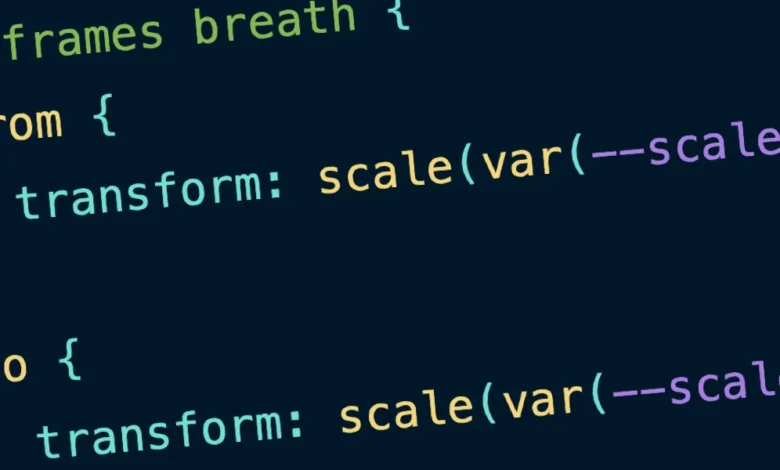
The technical implementation is straightforward. Instead of wrapping individual keywords in <span> tags, the library uses JavaScript to perform a lightweight pass on the text content to define "ranges." These ranges are then styled using the ::highlight() pseudo-element. Because the styling is defined in CSS, developers can leverage modern CSS features such as light-dark() color functions and custom properties to create dynamic, system-aware themes that respect the user’s operating system preferences for dark or light mode automatically.
Comparative Performance Metrics
The shift from traditional libraries to native browser APIs yields quantifiable performance improvements. An analysis of the transition from Prism.js to MicroLighter on high-traffic technical sites reveals significant reductions in resource consumption.
- Prism.js: Typical bundle size is approximately 35 KB (raw) and 9.3 KB (gzipped).
- MicroLighter: The base library weighs in at 13.9 KB (raw) and 5.2 KB (gzipped).
This reduction represents a roughly 60% decrease in raw file size and a 44% decrease in gzipped footprint. While these numbers may seem marginal for high-speed fiber connections, they are critical for users on mobile networks or under-powered devices. By reducing the number of DOM nodes created, the browser’s "paint" and "composite" cycles are shortened, resulting in a more responsive user experience. Furthermore, because MicroLighter is modular, developers can adopt an "à la carte" approach—importing only the specific language definitions or features (such as line numbers or copy buttons) that are necessary for their specific use case.
Chronology of Adoption
The development and integration of MicroLighter follow a pattern common in modern web infrastructure transitions:
- Late 2023: Early exploration of the CSS Custom Highlight API begins as browser support stabilizes across Chromium, WebKit, and Gecko engines.
- Early 2024: Baseline status is achieved for the
::highlight()pseudo-element, providing the necessary cross-browser compatibility to make native highlighting viable. - August 2026: Systematic implementation begins on major development-focused platforms, including CSS-Tricks, which transitions away from its legacy Prism.js custom WordPress block.
- Late 2026: MicroLighter is released as an open-source project, featuring a web component interface that allows for easy integration into modern stacks, including React, Vue, and vanilla HTML.
Technical Implications and Design Flexibility
The move toward CSS-driven highlighting provides developers with unprecedented control over visual presentation. With traditional libraries, overriding theme colors often required "fighting" the library’s internal CSS, leading to high-specificity selectors that are difficult to maintain. With MicroLighter, the styling is abstracted into CSS variables.
The use of light-dark() is particularly notable. By defining a single set of CSS custom properties, developers can ensure that code blocks transition seamlessly between modes without requiring secondary JavaScript event listeners or class toggles on the <body> element. This approach aligns with the industry trend of reducing JavaScript complexity in favor of declarative, CSS-based solutions.
Broader Industry Impact
The rise of MicroLighter underscores a broader movement within the web development community: the "return to the platform." For years, the JavaScript ecosystem evolved by filling gaps in browser functionality. As browsers have matured, many of these "polyfill" libraries have become redundant. By utilizing native browser APIs, developers can reduce their "JavaScript debt"—the long-term maintenance cost associated with keeping third-party dependencies updated, audited for security, and optimized for performance.
Industry analysts suggest that this trend is likely to continue as browser vendors prioritize the implementation of APIs that replace heavy JavaScript libraries. Web components, such as those used by MicroLighter to encapsulate the highlighting logic, further support this modularity. By wrapping the logic in a standard <micro-lighter> tag, the implementation remains framework-agnostic, ensuring that the code remains functional even as the underlying JavaScript framework ecosystem evolves.
Future Outlook
While legacy libraries like Prism.js remain battle-tested and hold vast libraries of language support, the incentive to migrate to native-API solutions is growing. The primary challenge for MicroLighter in the coming years will be achieving parity in language support; while it handles common languages like JavaScript, HTML, and CSS with ease, supporting the long tail of niche programming languages will require community-driven contributions to its definition files.
For the average developer, the implications are clear: the era of including massive script bundles for simple UI features is coming to an end. As native browser features continue to expand, the focus is shifting toward "minimalist architecture," where performance is treated as a core feature rather than an afterthought. The successful adoption of MicroLighter by influential technical platforms serves as a roadmap for other developers looking to optimize their sites, reduce technical bloat, and embrace the modern capabilities of the CSS specification. As the web platform continues to consolidate, the reliance on lightweight, native-first tools will likely become the gold standard for high-performance web publishing.