Jumplinks Flow Revolutionizes WordPress Collaboration by Bringing Editorial Workflows to Client Review Processes

The traditional feedback loop between web developers and their clients has long been plagued by inefficiency. Whether it is a vague email referencing a "second bit" on a page, a screenshot marked up with imprecise red circles, or a fragmented conversation spread across multiple communication platforms, the process of finalizing website designs is frequently an exercise in frustration. By the third round of revisions, the lack of centralized documentation often leads to confusion regarding which version of a page is currently being discussed. Jumplinks Flow, a WordPress plugin developed by Jumplinks Systems, aims to solve this systemic issue by embedding the review process directly into the rendered website, effectively bringing a Git-style merge-request workflow to the WordPress ecosystem.
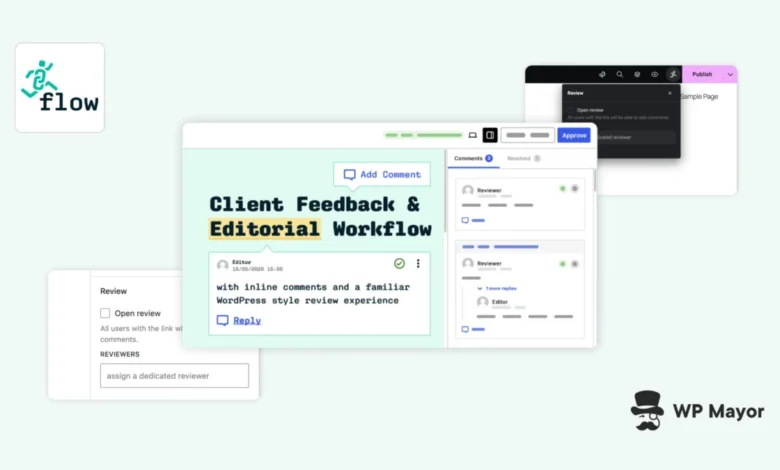
The core functionality of Jumplinks Flow allows reviewers to interact with a live website, highlighting specific sentences, images, or layout elements to anchor comments to exact locations. This precision ensures that developers know exactly which component requires adjustment, while the plugin’s status tracking system monitors the page until final approval is reached. By keeping the feedback loop localized within the WordPress environment, Jumplinks Flow eliminates the need for external project management tools that often disconnect the feedback from the actual design implementation.
The Evolution of Editorial Workflows in WordPress
Jumplinks Flow originated as an internal editorial workflow solution for agencies, heavily inspired by the methodologies used in software development for version control and peer review. In the context of software engineering, code changes are rarely merged into a master branch without prior review. Jumplinks Systems recognized that website development, particularly when managed through platforms like WordPress, shares a similar need for rigorous oversight.

Initially, the tool was designed to facilitate internal content reviews within large editorial teams. However, the developers quickly identified that the same structure—where a draft is submitted, feedback is provided via inline comments, and revisions are finalized—was perfectly suited for client-facing projects. By leveraging the WordPress Abilities API and Model Context Protocol (MCP), the plugin has evolved into a sophisticated gateway for modern web development, including the integration of autonomous AI agents.
Architectural Integration and Technical Compatibility
A critical component of Jumplinks Flow’s value proposition is its seamless integration across a wide variety of WordPress site-building tools. Unlike external feedback platforms such as BugHerd, Marker.io, or Atarim—which often require external scripts and database connections—Flow is architected to operate natively within the WordPress database. This architecture ensures that all comments, review histories, and status changes are stored locally, with the only external data call being a request to Gravatar for user identification.
The plugin provides dedicated support for major site builders, including Elementor, Bricks, Beaver Builder, Divi, Avada, Breakdance, and Oxygen, as well as the standard block editor and Classic Editor. Because reviewers interact exclusively with the front-end rendered version of the page, they are spared the complexity of the back-end builder interface. This preserves the integrity of the design, ensuring that the spacing, headers, and footers the client sees are identical to what the end-user will experience upon publication.
AI Agents and the Future of Automated Development
Perhaps the most significant advancement for the platform is its support for the WordPress Agent Connector and MCP, which exposes review data to AI agents. In the current landscape of AI-driven web development, one of the greatest challenges is providing an agent with actionable, precise feedback. Previously, an AI agent might struggle to interpret a generic request to "tighten the header." With Jumplinks Flow, that request is anchored directly to the element in question.

When an AI agent is tasked with building or editing a page, it can now ingest the comment queue, analyze the feedback attached to specific elements, and implement the necessary changes. The agent is then instructed to provide a note detailing the modifications made before it can resolve the comment thread. Crucially, the system is designed with a "human-in-the-loop" requirement: while an agent can perform the technical labor of executing revisions, it lacks the administrative privilege to grant final approval. This ensures that the final sign-off remains a human-led decision, maintaining quality control and accountability.
Impact on Agency Operations and Freelance Productivity
For agencies managing high-volume client portfolios, the financial and operational implications of Flow are significant. Most competitive feedback tools operate on a per-user pricing model, which can become prohibitively expensive as a team scales. Jumplinks Flow, however, utilizes a per-site licensing structure that does not count individual reviewers. This allows agencies to invite an unlimited number of stakeholders to a project without incurring additional costs.
For freelance developers, the tool provides a structured way to handle feedback that mirrors the professionalism of enterprise-grade software development. The ability to lock the "Publish" button until a mandatory review process is satisfied serves as an effective safeguard, particularly for complex sites where accidental publication could result in significant business disruption. By enforcing these constraints at the server level via the REST API, Jumplinks Flow ensures that even if an unauthorized user attempts to bypass the workflow, the site remains protected.
Chronology of Implementation and Adoption
The deployment of Jumplinks Flow follows a logical progression:

- Assignment: A site administrator assigns a reviewer to a specific page or set of pages within the WordPress dashboard.
- Access: The reviewer, who does not need a WordPress account, receives a "magic link" providing secure, private access to the review page.
- Collaboration: The reviewer leaves comments anchored to specific visual elements. These threads allow for back-and-forth dialogue between the developer and the stakeholder.
- Resolution: The developer addresses the feedback and marks the threads as resolved.
- Sign-off: Once all mandatory comments are resolved, the reviewer provides approval, which triggers the unlocking of the publication status.
This structured approach effectively replaces the erratic nature of email threads and disparate document comments with a linear, historical record of the project’s development.
Strategic Implications for the WordPress Ecosystem
The broader impact of this tool on the WordPress ecosystem is twofold. First, it addresses the "last mile" problem of web design: the transition from development to client acceptance. By streamlining this, developers can significantly reduce the billable hours spent on unproductive communication and project management. Second, by embracing the AI-readiness of the WordPress ecosystem, Jumplinks Flow is positioning itself as a vital piece of infrastructure for the next generation of web development.
As AI agents become more prevalent in web design, the need for precise, context-aware communication between humans and machines will only grow. Jumplinks Flow’s ability to act as a bridge—translating human visual feedback into machine-readable data—is a critical development. It moves the industry away from vague, open-ended requests and toward a data-driven, iterative development process that prioritizes accuracy and accountability.
For those interested in adopting this technology, the platform offers a 15-day money-back guarantee, allowing agencies and developers to stress-test the workflow against their current project requirements. The existence of a robust free version suggests a commitment to democratizing this level of project management, potentially setting a new standard for how WordPress projects are reviewed and deployed. As the demand for more sophisticated, automated, and collaborative web building increases, tools that can manage the human-AI intersection with this level of clarity will likely become essential components of the modern professional web development stack.
Related posts: