Bridging Code and Community: MIT Students and Tribal Nations Partner Through Code.Tulsa to Redefine the Human Element of Technology

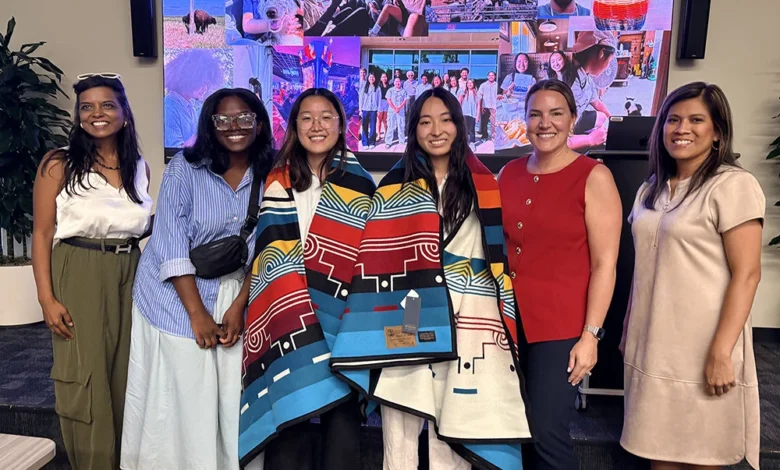
The intersection of cutting-edge computer science and deep-rooted indigenous heritage is rarely mapped out within standard university engineering syllabi. However, for a cohort of undergraduate students from the Massachusetts Institute of Technology (MIT), a summer spent in Tulsa, Oklahoma, fundamentally altered their understanding of technical innovation. Participating in the Public Service Center (PKG) Center for Social Impact’s Code.Tulsa program, these students discovered that developing software, algorithms, and data systems cannot happen in a vacuum. By collaborating directly with the Muscogee (Creek) Nation and the Cherokee Nation, the program challenges future engineers to look beyond lines of code and examine the historical, cultural, and human dimensions of the technology they build.
The Evolution of Code.Tulsa: Main Facts and Background Context
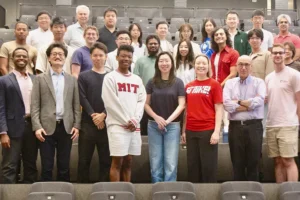
Now in its second successful year, Code.Tulsa was established to address a persistent gap in modern technological education: the disconnect between high-level technical problem-solving and community-based empathy. Sponsored significantly by the Patrick J. McGovern Foundation and the George Kaiser Family Foundation, the initiative brings a select group of MIT undergraduates to Tulsa for an immersive summer fellowship.
Participants live at the University of Tulsa while completing rigorous technical internships alongside tribal health departments, local governments, and community organizations such as Black Tech Street and the Urban Coders Guild. Rather than focusing solely on commercial output or theoretical optimization, the program requires students to grapple with real-world issues such as data sovereignty, governance structures, historical marginalization, and equitable resource distribution.
The initiative is structured to blend professional engineering work with intensive cultural education. Vippy Yee, the PKG Center’s assistant dean for community-based programs, curates educational sessions where local leaders, historians, and community members brief the students on the socio-economic and political landscape of the Tulsa region. This foundational context serves as a deliberate counterweight to the fast-paced, often insular problem-solving culture typical of elite research universities.
A Paradigm Shift in Engineering: Chronology and Student Experiences
The structural transformation experienced by the student interns is perhaps best illustrated by the journey of Daphne Wang, a mechanical engineering major at MIT. When Wang arrived for her summer placement at the Muscogee Creek Nation Department of Health, she anticipated a traditional engineering internship centered primarily on writing code and processing technical datasets. Instead, she found herself deep-diving into tribal history, legal frameworks, and the complex ethical implications of public health data collection.
Alongside fellow intern Lucy Sun, an artificial intelligence and decision-making major, Wang spent the summer months assisting in the development of the Muscogee Nation’s inaugural Pregnancy Risk Assessment Monitoring System (PRAMS) survey. The project required a multidisciplinary approach, combining literature reviews, dataset analysis, and the careful drafting of survey questions tailored to capture accurate maternal health data specific to Muscogee women. Crucially, the work demanded a nuanced understanding of data sovereignty—ensuring that the information gathered remained under the stewardship and governance of the tribe.
"It was this change of pace—180 degrees from MIT, completely," Wang reflected. She noted that while MIT course instructors routinely prepare students for massive technical hurdles, traditional coursework rarely offers structured opportunities to collaborate directly with marginalized communities, evaluate the long-term cultural impacts of technology, or consider the human populations most affected by systemic interventions.
Supervisory assessments confirmed the immense value of this academic-community partnership. Breanna McNaughton-Long, an epidemiologist with the Muscogee Creek Nation Department of Health and Wang’s direct supervisor, praised the interns for their intellectual rigor and dedication. According to McNaughton-Long, the students were instrumental in accelerating project timelines while infusing the workplace with a profound sense of purpose and urgency.
Similarly, Chenise Harper, an electrical engineering and computing major who completed her internship with the Urban Coders Guild, noted how the program reshaped her perspective on social responsibility. Harper admitted an initial aversion to history courses, but her time in Tulsa illuminated why historical literacy is vital for engineering sustainable social change. The experience restored her confidence in her ability to yield measurable, positive impacts through her technical training.
The Genesis of TASC: Cultivating Native STEM Leadership
While Code.Tulsa focuses on collegiate interns, the program’s long-term vision extends downward into K-12 education, catalyzed by student-led innovation. Code.Tulsa was originally conceptualized by Jack Carson, an MIT sophomore majoring in electrical engineering and computer science (EECS). As an incoming first-year student from Tulsa and an enrolled member of the Cherokee Nation, Carson recognized a persistent disparity: rural Native students possessed immense aptitude for STEM subjects but frequently lacked access to advanced educational pathways and institutional resources.
Carson approached the PKG Center with a proposal to create a dedicated, weeklong STEM camp hosted at the University of Tulsa specifically for high school students belonging to federally recognized tribes. To bring this vision to life, Carson established a competitive nomination process. Out of 160 applications representing 25 distinct Native nations, 25 promising high schoolers from 10 different tribes were selected to participate.
To build a rigorous academic curriculum, Carson partnered with Harvard University student Allie Zong. The resulting Tulsa Advanced Sciences Camp (TASC) offers intensive, hands-on instructional tracks in artificial intelligence engineering, DNA technology, physics, and chemistry and energy. To ensure holistic development, the technical tracks are paired with philosophical workshops designed to encourage students to think expansively about their academic and professional futures.
The impact of TASC on its young participants has been immediate and profound. Alyssa Theofanidis, a Cherokee Nation citizen and rising high school senior from Houston, attended the camp’s inaugural session and subsequently returned as a teaching assistant. The experience motivated her to independently self-study advanced calculus, mirroring the trajectory of many TASC alumni who channel their newly inspired STEM confidence back into their home communities.
Guest speakers and mentors further elevated the camp’s profile. Physicist Alexandra LeViness of Commonwealth Fusion Systems—an MIT spinout company dedicated to developing commercial nuclear fusion energy—helped design the chemistry and energy track. For many campers, interacting with leading scientists who also embraced indigenous or diverse worldviews dismantled psychological barriers to entering elite academic institutions. Several participants expressed a renewed ambition to apply to MIT and other top-tier universities, viewing elite technical education not as an unreachable summit, but as a viable tool for community empowerment.
Official Responses and Institutional Perspectives
The collaborative framework established by Code.Tulsa and TASC has garnered strong backing from tribal leadership and university administrators alike. During the camp’s proceedings, Cherokee Nation Principal Chief Chuck Hoskin Jr. addressed the students, emphasizing the moral imperative guiding modern technological development.
"Technology can be used for good, or it can be used for harm," Chief Hoskin told the assembled students. "Your generation has the opportunity to bend that arc toward something good. It’s a very special relationship that the Cherokee Nation has with MIT. As we reach out a hand in friendship, we have a hand reaching back. We are thankful for Cherokee citizen Jack Carson… for his leadership role in organizing this effort."
Institutional leaders at MIT echoed these sentiments, stressing that technical proficiency must be paired with civic consciousness. Alison Badgett, director of the PKG Center, articulated the core educational philosophy driving the program: "As with all PKG Center programming, our aim is to help students integrate an engineer’s approach to problem-solving with a humanist lens on the nature of social challenges, and by extension interventions."
Broader Impact, Fact-Based Analysis, and Future Implications
The long-term implications of programs like Code.Tulsa point toward a shifting paradigm in engineering education. Historically, elite technological institutions have prioritized technical optimization, scalability, and commercial market viability over civic engagement or cultural preservation. However, as artificial intelligence, automated governance systems, and public health databases increasingly dictate the daily lives of vulnerable populations, the demand for ethically grounded technologists has reached a critical juncture.
Data from educational and workforce development studies consistently indicate that STEM professionals who engage in community-based participatory research exhibit higher retention rates, stronger cross-cultural communication skills, and greater sensitivity to ethical vulnerabilities in software design. By embedding MIT students within tribal health agencies and non-profits, Code.Tulsa bridges the gap between theoretical computer science and applied social justice.
The psychological and professional turnaround experienced by the student participants underscores this transformation. Elvis Chipiro, a junior in computer science and engineering who interned with the Cherokee Nation, encapsulated the overarching lesson of the fellowship: "Social impact is not separate from mainstream technology; rather, it is embedded in the choices engineers make every day… Ultimately, meaningful social change is not driven by technology alone, but by people willing to design systems with empathy, responsibility, and inclusion at the center."
For students like Chenise Harper, the immersive summer in Oklahoma served as a necessary reminder of their initial motivations for entering the field. The academic pressures and competitive environment of institutions like MIT can often obscure the broader human purpose behind rigorous scientific study. Code.Tulsa provides a corrective lens, ensuring that the next generation of engineers, data scientists, and innovators view their technical expertise not merely as a career vehicle, but as a profound responsibility to the communities they serve.