AI-Powered Multilingualism: How WordPress is Revolutionizing Global Content Strategy

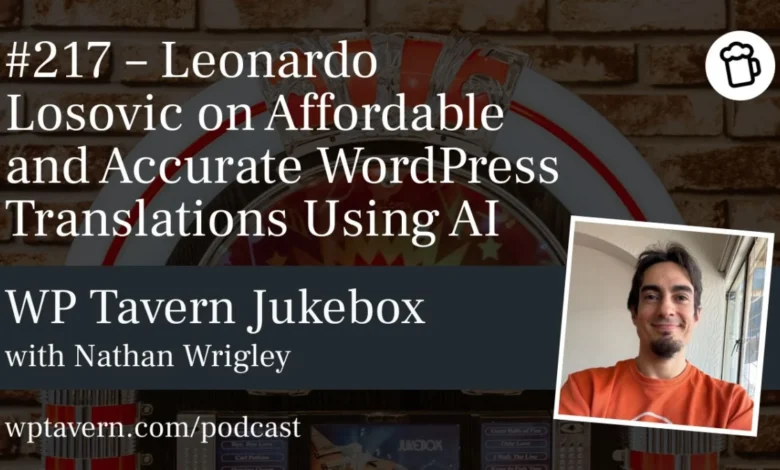
The landscape of digital content creation is undergoing a profound transformation, driven largely by advancements in artificial intelligence. This shift is particularly evident in the realm of website translation, where the once arduous and costly process of making content accessible to a global audience is becoming remarkably efficient and affordable. A recent discussion on the Jukebox podcast from WP Tavern, featuring Nathan Wrigley and Leonardo Losoviz, a prominent WordPress plugin developer, shed light on these revolutionary changes, particularly concerning WordPress websites. Losoviz, known for plugins like Gato GraphQL and, more recently, Gato AI Translations for Polylang, provided a comprehensive overview of how AI is democratizing multilingual web presence.
The Evolving Case for Multilingual Websites
For years, the decision to translate a website was often a complex calculation involving significant financial outlay and logistical challenges. However, the arguments for a multilingual web presence have always been compelling, ranging from legal mandates to strategic market expansion. In certain regions, legal frameworks necessitate content in multiple official languages, making translation a non-negotiable business requirement. Beyond compliance, the commercial and moral imperatives are equally strong. As Losoviz highlighted, if a website has potential visitors speaking different languages, there is little reason not to engage them, particularly when the barriers to entry are significantly lowered.
The internet’s global reach means that a substantial portion of online users do not primarily speak English. According to various studies, English speakers constitute less than 25% of the world’s internet population. This vast majority represents an untapped audience for businesses and content creators operating solely in English. Offering content in local languages not only expands market reach but also enhances user experience, builds trust, and can significantly improve conversion rates. A report by Common Sense Advisory found that 75% of internet users prefer to buy products from websites in their native language, and 60% rarely or never buy from English-only sites. This data underscores the immense opportunity that multilingual websites present for global engagement and commercial success.
A Decade of Transformation: From Human Endeavor to AI Efficiency
The evolution of website translation over the past decade has been nothing short of dramatic. Ten years ago, translating a WordPress site was typically a lengthy and expensive endeavor. The process often involved:
- Content Identification: Manually identifying all strings, posts, pages, and media requiring translation.
- Human Translation Services: Engaging professional human translators, often costing upwards of $0.10 to $0.25 per word, or even more for specialized content.
- Workflow Management: Coordinating with translators, managing multiple versions of content, and ensuring consistency.
- Integration: Manually copying and pasting translated text into the WordPress backend, often through complex plugin interfaces or custom solutions.
This workflow was time-consuming, prone to errors, and prohibitively expensive for many small to medium-sized businesses or individual bloggers. The advent of neural machine translation (NMT) and, more recently, advanced generative AI models, has fundamentally altered this landscape. AI-powered tools can now translate vast amounts of content with remarkable speed and accuracy, often for a fraction of the cost. Losoviz emphasized that the quality of AI translation is now "just excellent," achieving approximately 99% accuracy for general content. While specialized or highly technical content might still benefit from human oversight for nuanced terms or industry-specific acronyms, the need for full human translation has drastically diminished. The cost, once measured in hundreds or thousands of dollars, is now often just "cents on the dollar" due to the token-based pricing of AI services like OpenAI, Anthropic, or Gemini. This drastic reduction in cost and effort has made multilingual web presence accessible to virtually anyone.
Gato AI Translations: Streamlining the Workflow
Leonardo Losoviz’s Gato AI Translations for Polylang exemplifies this new era of efficient translation. Built upon the popular Polylang plugin, Gato AI Translations integrates directly into the WordPress dashboard, offering a streamlined workflow. Polylang, a free and open-source solution with an optional Pro version, operates by creating separate, parallel post entries for each language. This contrasts with other popular plugins like WPML, which often translate strings on runtime from a single post entry. Losoviz prefers Polylang’s approach for its performance benefits and compatibility with standard WordPress caching and export functionalities, as it avoids the potential overhead of real-time string translation.
The user experience with Gato AI Translations is designed for simplicity. From the WordPress post list, users can select a post and initiate a bulk "translate" action. This triggers the plugin to duplicate the original post into the chosen target languages, automatically translating all content—including post titles, body text, categories, tags, and featured image metadata (like captions and alt text). This "from nothing to everything" approach means that a single click can transform a website from a monolingual to a multi-language platform in seconds.
A crucial piece of advice from Losoviz, however, is to finalize the original content before initiating translation. Any subsequent edits to the source content would necessitate re-translation, leading to wasted AI tokens and potentially inconsistent translations across languages. He advocates for a pre-translation checklist, ensuring content is typo-free, headers are correctly structured, images are optimized (preferably language-agnostic without embedded text), and any embedded media (like YouTube videos) are suitable for the target audience. For instance, a Spanish YouTube video might not be useful on a French translated page.
The Future of WordPress: AI, Collaboration, and Gutenberg
The integration of AI into WordPress is set to deepen significantly with upcoming core developments. WordPress 7.0, a major release anticipated to bring substantial changes, is expected to introduce an "AI Connector." This foundational capability will allow for more seamless and robust interaction with AI services directly within the WordPress environment.
Perhaps even more transformative for translation workflows is the progression of Gutenberg’s Phase 3, which focuses on collaborative editing—a "Google Docs-style" experience within the WordPress editor. While initially conceived for human-to-human collaboration, Losoviz keenly observes its potential for human-AI interaction. Imagine a scenario where, after an AI-powered translation, the AI itself could use the collaborative editing interface to highlight ambiguous phrases or technical terms, adding "sticky posts" or comments directly within the editor. A human editor could then review these specific points, refining the translation without needing to scrutinize the entire text. This would drastically reduce the time and cost of human oversight, making the "last mile" of translation even more efficient.
Beyond Phase 3, Gutenberg’s roadmap includes a Phase 4 explicitly dedicated to "multilingual" capabilities. While details remain sparse and its implementation is likely years away, the very inclusion of translation as a core phase signals WordPress’s long-term commitment to a globally accessible platform. This strategic alignment suggests that future WordPress versions could incorporate native AI translation features, further embedding multilingualism into the core user experience.
SEO and Practicalities of Multilingual Content
Effective multilingual strategy extends beyond mere translation; it encompasses critical SEO considerations. Polylang, and by extension Gato AI Translations, addresses these by creating distinct URLs for each language version of a post. This can manifest as subdirectories (e.g., mysite.com/fr/the-slug) or subdomains (e.g., fr.mysite.com/the-slug), a configurable option within Polylang.
Crucially, Polylang also manages the implementation of hreflang meta tags. These tags are vital for informing search engines like Google about the relationships between different language versions of the same content. The hreflang attribute tells search engines that a page is a translated version of another, preventing duplicate content penalties and ensuring that users are served the correct language version based on their location and language preferences. This is paramount for discoverability and delivering a localized user experience.
Regarding media, the approach is also optimized for efficiency. When an image is associated with a translated post, its metadata (title, alt text, caption) can be translated into the target language. However, the underlying image file (JPEG, PNG) is not duplicated. Instead, a new entry is created in the media library database, linked to the same physical file but with language-specific metadata. This "lean" approach avoids unnecessary storage bloat while still providing a fully localized experience for image descriptions.
The "Arms Race" of Digital Globalisation
Losoviz presented a compelling, if somewhat sobering, analysis of the broader implications of AI-driven translation: the "arms race" mentality. When a powerful technology becomes readily accessible and affordable, its adoption ceases to be a competitive advantage and instead becomes a baseline requirement. If translating a website into dozens of languages costs mere cents and takes minutes, then every competitor will likely do the same.
In this scenario, a business that fails to adopt multilingual capabilities risks falling behind. What was once a strategic differentiator—the ability to reach global audiences—is rapidly becoming an expectation. The calculus has shifted: instead of asking "Is the ROI worth the investment in translation?", businesses are now compelled to ask, "Can we afford not to translate, given that our competitors are doing so?" This competitive pressure means that AI-powered translation is not just about expanding reach; it’s about maintaining relevance and staying competitive in an increasingly globalized digital marketplace.
This phenomenon extends beyond translation to other areas of AI application, such as content generation and code development. As Losoviz noted, he uses AI to code his plugins, boosting his productivity. But his competitors are likely doing the same, creating a continuous cycle of innovation and adaptation where the primary goal is often to keep pace rather than simply surge ahead.
Conclusion: A New Era for Global Content
The conversation with Leonardo Losoviz paints a vivid picture of a future where multilingual websites are the norm, not the exception. Driven by the confluence of powerful AI models and evolving WordPress core capabilities, the ability to create, manage, and optimize content for a global audience has never been easier or more cost-effective. From the practicalities of plugin integration to the strategic imperatives of global competition, AI is reshaping how content creators and businesses approach internationalization. As WordPress continues to integrate AI and enhance collaborative features, the path to a truly global web presence for its millions of users will only become more accessible, efficient, and transformative.