Federal Safety Regulators Open Investigation into Comma.ai Following Crashes Linked to Aftermarket Driver Assistance Technology

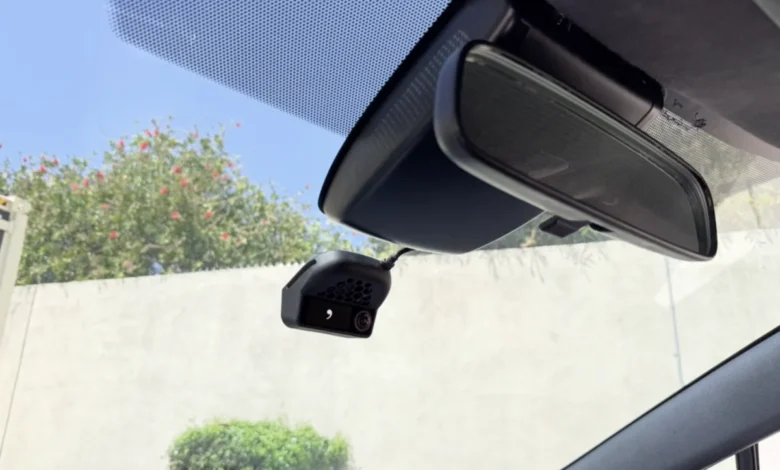
The National Highway Traffic Safety Administration (NHTSA) has launched a formal federal investigation into Comma.ai, an autonomous driving technology startup founded by renowned hacker George Hotz. The regulatory scrutiny comes in the wake of five reported traffic accidents involving the company’s aftermarket, hands-off driver assistance hardware and software. Tragically, these incidents include two crashes that resulted in a total of three deaths, alongside multiple injuries ranging from moderate to severe.
According to documents released by NHTSA’s Office of Defects Investigation (ODI), the agency is examining how Comma.ai’s products manage dynamic driving environments, specifically pointing to failures in detecting and responding to stationary or slow-moving vehicles occupying the same lane of travel. Across four of the documented collisions, up to 11 individuals sustained injuries. Furthermore, preliminary findings from the ODI suggest that at least some of the incidents—including one of the fatal crashes—may have involved the use of modified or "forked" iterations of Comma.ai’s open-source software rather than the standard, factory-released code.
The unfolding federal inquiry places a harsh spotlight on the burgeoning market for aftermarket driver-assistance systems. While automotive giants like Tesla and General Motors integrate complex Advanced Driver Assistance Systems (ADAS) directly into factory-new vehicles under strict regulatory observation, aftermarket companies like Comma.ai offer universal hardware retrofits that transform ordinary cars into semi-autonomous vehicles. This regulatory collision between rapid open-source software development and federal motor vehicle safety standards could reshape the future of consumer-installed driving technology.
Anatomy of the Investigation and Safety Concerns
The core of NHTSA’s investigation centers on the reliability of Comma.ai’s perception systems. Modern autonomous and semi-autonomous driving systems rely on a complex fusion of cameras, radar, and machine-learning algorithms to map the road ahead, calculate closing speeds, and execute steering, braking, and acceleration commands.
Federal regulators are specifically interrogating why the Comma devices failed to identify stationary hazards. In standard driving scenarios, moving targets are easier for computer vision models to track due to relative motion vectors. However, stationary objects—such as disabled vehicles, road debris, or emergency responder vehicles parked on highways—present a notoriously difficult challenge for vision-based ADAS technology, as the system must distinguish a stopped obstacle from stationary roadside infrastructure like guardrails and signs.
Compounding these technical concerns is the open-source nature of Comma.ai’s platform. Because the company distributes its software code publicly under the name "openpilot," software developers and enthusiasts frequently modify, alter, or "fork" the code to add custom features or remove safety restrictions. The ODI’s note that modified software was present during at least one fatal incident raises complex questions regarding liability, software integrity, and the safety risks of decentralized, user-modified vehicle automation.
Chronology of Events: The Louisiana Crash and Federal Scrutiny
While NHTSA’s database details a series of five distinct incidents, specific regional reports align closely with the federal timeline. One of the primary fatal crashes under review occurred in February in Ascension Parish, Louisiana.
According to details published by the Louisiana State Police, the single-vehicle accident took place on Interstate 10. A 2022 Toyota RAV4 equipped with a Comma device running "FrogPilot"—a widely used third-party fork of the openpilot software—collided at high speed with a stationary first responder vehicle assisting at a prior incident scene. The impact caused catastrophic damage to the SUV, resulting in the deaths of two rear-seat passengers. Local law enforcement accident reconstruction teams documented the environmental and vehicular conditions at the scene, data that has since been integrated into the broader federal safety database managed by NHTSA.
The sequence of events leading up to the current investigation illustrates a growing tension between consumer adoption of advanced driver tech and the slow, methodical pace of federal safety oversight. As complaints mounted regarding unexpected disengagements, phantom braking, and failure to stop for traffic hazards, NHTSA’s Office of Defects Investigation initiated a preliminary evaluation to determine the scope, frequency, and safety consequences of the reported failures.
Origins and Evolution of Comma.ai
Founded in 2015 by George Hotz—internationally famous for being the first person to unlock the Apple iPhone and jailbreak the Sony PlayStation as a teenager—Comma.ai positioned itself as an industry disruptor. Hotz envisioned a world where advanced driver assistance was not locked behind the luxury price tags of high-end electric vehicles, but rather accessible as an aftermarket kit compatible with a wide array of everyday commuter cars.
The company’s flagship hardware products, paired with the openpilot operating system, interface directly with a vehicle’s existing electronic control units (ECUs) to manage Adaptive Cruise Control (ACC) and Automated Lane Centering (ALC). On its official website, Comma.ai explicitly compares the functional capabilities of its technology to established systems like Tesla’s Autopilot and General Motors’ Super Cruise, summarizing its corporate mission with the slogan "make driving chill."
Despite marketing the technology as capable of steering, accelerating, and braking automatically within a designated lane, Comma.ai has historically maintained a strict disclaimer policy. Similar to major automakers, the startup warns vehicle operators that openpilot is a Level 2 automation system requiring constant human supervision. The company’s hardware incorporates an internal, camera-based driver monitoring system explicitly designed to track eye movement and head position, issuing alerts if the driver appears drowsy or distracted. Furthermore, official documentation stresses that drivers must remain prepared to resume manual control instantly by applying pressure to the pedals or hitting the system cancellation switch.
Despite his foundational role in shaping the company’s technology and public persona, George Hotz stepped back from the startup’s day-to-day operations in late 2022 to pursue other artificial intelligence projects. Neither Hotz nor representatives from Comma.ai provided immediate statements or comments to media inquiries following the announcement of the NHTSA investigation.
Industry Implications and Regulatory Future
The federal probe into Comma.ai carries profound implications for both the startup community and the broader automotive industry. For years, the intersection of consumer electronics and automotive engineering has been dominated by a "deploy fast and update later" philosophy borrowed from Silicon Valley software development. However, automotive safety advocates and federal regulators have long argued that public roadways are not appropriate testing grounds for unverified beta software.
If NHTSA concludes that Comma.ai’s hardware or software contains a safety-related defect, the agency possesses the authority to demand a formal safety recall. In the context of aftermarket hardware, executing a recall presents logistical nightmares—ranging from issuing mandatory over-the-air (OTA) software patches to physically disabling or recalling thousands of modular devices installed by consumers across various vehicle makes and models.
Moreover, the specific involvement of "forked" software highlights a unique regulatory gray area. Traditional automakers maintain tight, closed-ecosystem control over their vehicle software, preventing end-users from modifying vehicle dynamics code. Comma.ai’s embrace of open-source transparency fostered a vibrant developer community, but it also created an environment where safety boundaries can be easily bypassed by end-users seeking unconstrained automation capabilities.
As the investigation progresses, NHTSA will collect additional data, review telemetric logs from the involved vehicles, and demand engineering explanations from Comma.ai leadership. The findings are expected to establish vital legal and regulatory precedents regarding liability, software modification, and the deployment of unsupervised or semi-supervised driving automation systems outside of traditional original equipment manufacturer (OEM) channels. Until the investigation concludes, the safety of aftermarket autonomous driving kits remains under intense national scrutiny.