The Death of the Button: Why the Web is Shifting Toward Intent-Driven AI Experiences

The global digital landscape is undergoing a profound paradigm shift, moving rapidly away from the rigid frameworks of menus, forms, and endless point-and-click interactions toward dynamic experiences shaped entirely around human intent. For decades, software has relied on Graphical User Interfaces (GUIs) commercialized by systems like the Xerox Star and popularized by the Apple Macintosh. Users have long accepted the friction of navigating elaborate web directories, filling out multi-step forms, and managing countless browser tabs just to complete basic daily tasks. However, accelerated by breakthroughs in artificial intelligence and large language models, the underlying contract of digital design is officially changing. The ultimate goal of modern web architecture is no longer to build flashier buttons or more intricate sales funnels, but to eliminate interface friction altogether.

The Evolution of Interaction: From the 10-Click Paradigm to Ambient Computing
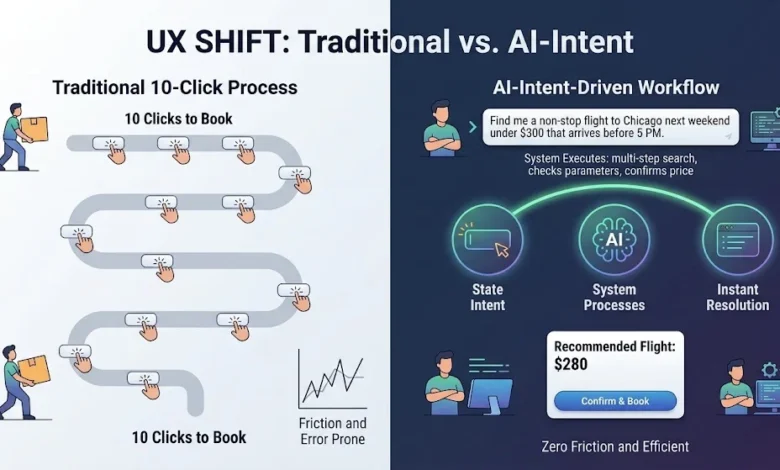
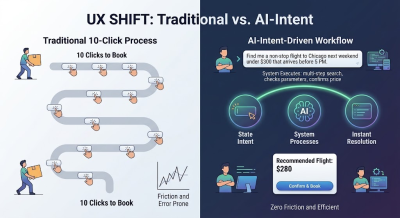
Since the advent of personal computing in the late 20th century, software has operated as a passive container of data. The human user has historically acted as the system orchestrator—manually inputting parameters, interpreting raw outputs, and executing each micro-step required to reach a goal. For example, booking a flight online traditionally demands a hyper-interactive, multi-stage workflow: navigating to an aggregator, typing origin and destination codes, adjusting date pickers, filtering by layovers, sorting by price tiers, dismissing promotional overlays, inputting passenger details, and finally submitting payment information across multiple screens.
Intent-driven design completely reverses this dynamic. Instead of forcing users to understand the mechanical steps of how a system works, modern generative platforms ask a fundamental question: What are you trying to accomplish? By expressing a high-level goal—such as requesting a non-stop weekend flight under a specific budget that arrives before a designated hour—the software captures the raw intent, executes the complex multi-step search query in the background, and presents a single, actionable resolution. This transition mirrors pioneering Human-Computer Interaction (HCI) philosophies, including Golden Krishna’s premise that "the best interface is no interface" and Don Norman’s principles of human-centered design.
Real-World Adoption: Platforms Replacing Buttons With Intent
This transformation is not a distant theoretical prediction; it is actively reshaping how millions of people interact with the internet daily. Several prominent web platforms have already established market precedents by replacing traditional navigation tools with intent-capturing systems.
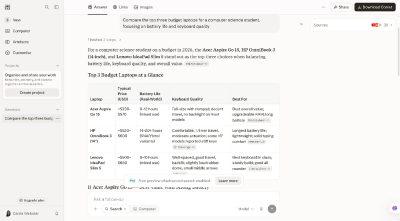
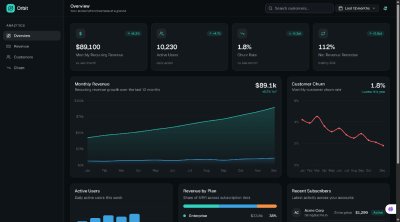
Perplexity AI has fundamentally altered digital research by replacing the traditional search engine model of presenting ten blue links. Instead of forcing users to open multiple tabs, skim long articles, and manually synthesize information, the platform generates a unified, context-aware answer instantly. Similarly, Vercel’s v0 has revolutionized web development and design. Rather than requiring creators to manually draw wireframes in software like Figma, select hex codes, and write cascading style sheets, v0 allows users to generate fully functional user interface components and SaaS dashboard layouts simply through natural language prompts.
In the productivity sector, tools like Goblin.tools provide single-page, AI-driven suites that break down overwhelming human tasks into manageable checklists. Users no longer need to manually construct Kanban boards or assign granular sub-deadlines; the system ingests a chaotic, broad objective and autonomously structures an actionable path forward.
Core Pillars of Intent-Driven Web Architecture
When traditional sidebars, drop-down menus, and static layouts are removed, digital architects must rely on a new set of foundational pillars to maintain usability and trust. Industry analyses from organizations like the Nielsen Norman Group identify three primary shifts defining this new era:
- High-Level Goals Replacing Micro-Actions: Systems increasingly leverage ambient context—such as device state, location, and historical patterns—to anticipate needs rather than waiting for explicit commands. Guided by frameworks like Apple’s Human Interface Guidelines on Contextual and Ambient Design, modern software infers user intent from environmental metadata.
- Generative UI: Unlike traditional web design where every visitor encounters the exact same static layout, generative interfaces render components dynamically on the fly. If a user expresses a need for complex financial calculations, the platform generates an interactive calculator widget on demand, which then recedes once the task is completed.
- Autonomous Execution by AI Agents: Traditional interfaces rely heavily on preventive confirmation modals, frequently interrupting workflows with warnings. Intent-driven systems adapt Jakob Nielsen’s usability heuristics by shifting safety nets from prevention to frictionless reversibility. Prominent undo mechanisms, simple revision prompts, and transparent audit logs replace intrusive warning dialogs.
Navigating Risks: The Illusion of Control and the Black Box Problem
While the removal of interface friction offers significant efficiency gains, stripping away visual controls introduces complex ethical and technical challenges. When software acts on inferred intent rather than direct commands, users risk losing a sense of agency. Research groups at institutions like Stanford University emphasize that automation must maintain strict operational boundaries to prevent user frustration and avoid manipulative defaults.
Furthermore, the "black box problem" remains a critical hurdle. In a traditional graphical interface, an unexpected result can usually be troubleshot by checking filter parameters or input dates. With intent-driven systems, diagnosis is more obscure. To combat this, guidelines from initiatives like the Google PAIR (People + AI Research)book advocate for transparent feedback loops. Systems must explicitly state their interpretation of a user prompt—such as displaying "Searching for non-stop flights to Chicago under $300"—allowing individuals to calibrate trust and correct misinterpretations instantly.
Industry Implications and the Future of UX Design
For user experience designers, this evolutionary leap requires a fundamental re-evaluation of professional skills. Industry professionals must shift their focus from designing static buttons and rigid form fields to mapping dynamic, generative UI components that adapt fluidly to user intent. Mastering ambient feedback, inline prompts, and transparent status indicators has become essential for ensuring that screenless, agent-driven tools remain intuitive, ethical, and deeply human-centered.
For decades, the digital economy has measured success through engagement metrics such as time spent in-app, click-through rates, and page views per session. Websites were intentionally engineered to maximize interaction volume. However, the alignment of intent-driven design with movements like the Center for Humane Technology’s "Time Well Spent" initiative turns these traditional metrics upside down. The ultimate test of a modern digital product is no longer how visually captivating its interface is, but how effectively the software solves a problem and gets completely out of the user’s way. The future of the web belongs to seamless, invisible completion.