The Fed Raised Interest Rates for the First Time Since 2023: Here is What It Means for You

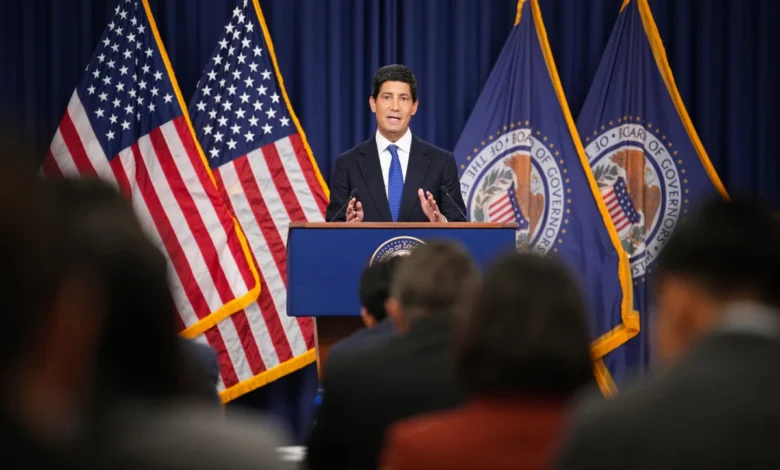
In a definitive pivot toward tighter monetary policy, the Federal Reserve announced a quarter-percentage-point interest rate hike, marking the central bank’s first increase since July 2023. Approved unanimously by all 12 members of the Federal Open Market Committee (FOMC), the policy shift elevates the federal funds benchmark rate to a target range of 3.75% to 4%.
The decision underscores a growing consensus among central bank policymakers that persistent inflationary pressures require aggressive corrective action. Newly confirmed Federal Reserve Chair Kevin Warsh, addressing the press following the announcement, emphasized that the central bank’s hand was forced by stubbornly high consumer costs.
"The plain fact is that inflation is too high and has been for too long," Warsh stated, highlighting the FOMC’s unified resolve to restore economic stability and bring inflation down to its targeted 2% threshold.
The policy shift sends immediate ripples across consumer borrowing and savings vehicles, fundamentally altering the financial calculus for American households, prospective homebuyers, automotive consumers, and everyday savers.
A Look Back: The Chronology of Federal Reserve Policy
To understand the weight of this September 2026 rate hike, it is crucial to examine the economic landscape that preceded it. Following the unprecedented economic disruptions of the COVID-19 pandemic and subsequent supply chain bottlenecks, inflation surged to a 40-year high in mid-2022. In response, the Federal Reserve embarked on one of the most aggressive tightening cycles in its history, raising rates rapidly from near-zero levels.
By July 2023, the federal funds rate had climbed to a range of 5.25% to 5.50%, where it remained parked for over three years. As inflation gradually cooled throughout 2024 and 2025, markets anticipated a prolonged period of rate cuts. However, a resilient labor market, stubborn services inflation, and persistent consumer demand prevented prices from settling at the Fed’s target.
The decision under Chair Warsh marks a psychological and practical turning point: the era of expected monetary easing has officially paused, replaced by a defensive posture aimed at heading off a resurgence of runaway price growth.
The Impact on Mortgages and Real Estate
For the housing market, the Fed’s rate hike arrives at a uniquely delicate time. While the federal funds rate does not directly dictate mortgage rates, it heavily influences broader macroeconomic sentiment and short-term debt benchmarks.
Homebuyers who secured a fixed-rate mortgage prior to this hike will remain entirely unaffected. Their interest rates are contractually locked in for the life of the loan, shielding them from the central bank’s policy adjustments.
However, prospective buyers and those holding adjustable-rate mortgages (ARMs) or home equity lines of credit (HELOCs) face immediate exposure. Mortgage rates are traditionally tethered to the yield on 10-year U.S. Treasury bonds. Ahead of the Fed’s announcement, Treasury yields breached the 5% threshold for the first time since late 2023, driving the average 30-year fixed mortgage rate up to 6.76%, according to housing market trackers.
This environment has heightened the cost of homeownership, sidelining many first-time buyers and chilling inventory turnover as current homeowners choose to stay put rather than trade their existing low-rate mortgages for newly issued, higher-rate loans.
Auto Loans and Consumer Borrowing Pressures
Automotive financing is also absorbing the shock of tighter monetary policy. As wholesale borrowing costs rise for financial institutions, those expenses are systematically passed down to consumers purchasing vehicles.
According to projections from Cox Automotive, the quarter-point rate increase is expected to add roughly $6 to the average monthly car payment for new loans. While a nominal figure on paper, it compounds existing affordability challenges in the automotive sector, where vehicle prices and interest rates remain near historic highs.
Simultaneously, credit card holders face renewed financial strain. Unlike mortgages, credit card annual percentage rates (APRs) are directly indexed to the prime rate, which moves in lockstep with the federal funds rate. As card issuers adjust their APRs upward, revolving debt becomes markedly more expensive to service.
This development carries severe implications for household balance sheets, given that national credit card debt has hovered near all-time highs. Financial analysts warn that minimum payments will creep upward, increasing the risk of delinquency for vulnerable borrowers who rely on revolving credit to manage everyday living expenses.
A Welcome Break for Savers
While borrowers face mounting headwinds, the shift in monetary policy brings a long-awaited silver lining for savers. For years, low-yield environments meant that cash sitting in traditional bank accounts earned virtually nothing.
With the federal funds rate now resting at 3.75% to 4%, banks and financial institutions are competing aggressively for deposits. Consumers can expect to see slightly better returns on high-yield savings accounts, money market funds, and certificates of deposit (CDs).
Financial planners note that while these returns still lag behind historical peaks, they offer a meaningful opportunity for conservative investors and households building emergency funds to generate a modest, risk-free return on liquid cash.
Expert Analysis and Economic Implications
Financial analysts view the latest rate hike as a calculated, albeit painful, strategy to prevent inflationary expectations from becoming entrenched in the broader economy.
"I know a rate hike may feel like bitter medicine, but we need it because we can’t just keep having this runaway price growth," explained Ted Rossman, principal consumer finance analyst at Money Management International.
Economists emphasize that the Fed’s primary mandate is balancing maximum employment with price stability. By cooling consumer demand through higher borrowing costs, the central bank aims to slow economic momentum just enough to curb inflation without tipping the broader economy into a severe recession.
However, walking this monetary tightrope carries inherent risks. If borrowing costs remain elevated for too long, consumer spending—which drives a significant portion of economic growth—could contract sharply. Conversely, failing to act decisively against inflation risks eroding consumer purchasing power over the long term.
As the Federal Reserve monitors economic data in the coming months, consumers, businesses, and investors alike will be watching closely to see whether this quarter-point adjustment represents a singular corrective step or the beginning of a prolonged tightening cycle.
Related posts: