Unlocking the Power of Endorsement: LinkedIn Issues Fresh Guidance to Help Marketers Optimize Thought Leader Ads for Maximum Impact

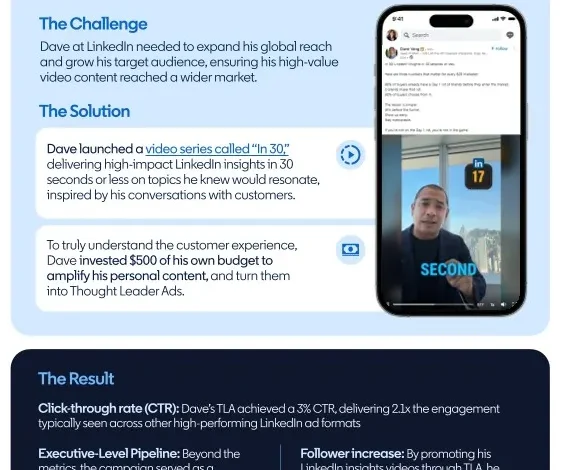
In the rapidly evolving landscape of digital marketing, professional networking platform LinkedIn has released a comprehensive new set of strategic recommendations designed to help brands maximize the effectiveness of its popular Thought Leader Ads format. As organizations increasingly pivot away from traditional, corporate-centric advertising toward authentic, peer-driven engagement, these insights aim to help marketers reinforce core brand messaging, foster deeper audience connections, and drive significantly higher response rates across campaigns.
The initiative comes at a critical juncture for business-to-business (B2B) marketers. Modern consumers and corporate decision-makers are increasingly skeptical of overtly promotional corporate content, preferring instead to place their trust in human-centric insights, authentic user experiences, and individual endorsements. By offering structured guidance on how to harness the full potential of Thought Leader Ads, LinkedIn is equipping organizations with the playbook needed to navigate this paradigm shift successfully.
Evolution and Chronology of LinkedIn Thought Leader Ads
To understand the current significance of LinkedIn’s guidance, it is essential to examine the strategic evolution of the Thought Leader Ads product itself. Launched initially as a way for brands to amplify organic content posted by their own employees, the format quickly proved to be a potent tool for humanizing corporate identities. Recognizing the immense value of broader community advocacy, LinkedIn dramatically expanded the utility of the feature in March 2025.
Under the expanded framework, brands were granted the capability to sponsor organic posts generated by any user on the platform, provided proper authorization was secured. This pivotal update broke down the traditional walls of corporate communication, allowing organizations to tap into a vast ecosystem of industry experts, satisfied customers, external stakeholders, and independent thought leaders. By leveraging content created outside the formal corporate hierarchy, brands could instantly inject a high degree of authenticity and relatability into their paid media strategies.
The momentum continued later that year. In August 2025, LinkedIn rolled out a specialized extension of the feature, introducing Thought Leader Ads specifically tailored for live and virtual events. This enhancement enabled brands to sponsor member posts that linked directly to upcoming or ongoing webinars, conferences, and networking sessions. By amplifying organic discussions surrounding live events, organizers and participating brands could dramatically expand their reach, stimulate real-time audience participation, and drive higher registration conversion rates.
The Psychology of Peer Endorsement and Supporting Data
The strategic push behind Thought Leader Ads is deeply rooted in shifting consumer psychology. In the professional sphere, decision-makers are inundated with promotional messaging daily. Consequently, they have developed a high tolerance for traditional advertising, often tuning out standard banner ads and corporate product announcements.
Data compiled by LinkedIn underscores this behavioral shift. Previous research conducted in partnership with analytics and marketing firms reveals that an overwhelming 71% of corporate decision-makers find thought leadership content to be significantly more impactful and effective than conventional advertising approaches when evaluating potential vendors and solutions. When buyers see respected peers, industry analysts, or independent practitioners discussing a product, service, or concept organically, the friction of initial skepticism is substantially reduced.
Performance metrics from B2B marketers actively utilizing the platform further validate this trend. Industry reports indicate that campaigns utilizing LinkedIn’s Thought Leader Ads consistently generate approximately 1.6 times higher engagement rates compared to traditional single-image promotions. This uplift in engagement is not merely a vanity metric; it translates directly into more meaningful interactions, higher click-through rates, and ultimately, a more efficient return on advertising spend.
Strategic Best Practices for Marketers
To help brands capitalize on these impressive engagement figures, LinkedIn’s latest guidance outlines several foundational principles for executing successful Thought Leader Ad campaigns.
First and foremost, authenticity remains the cornerstone of the format. Marketers are advised to select organic posts that reflect genuine user sentiment rather than heavily scripted or overly polished endorsements. The power of a Thought Leader Ad lies in its human voice; if a post feels manufactured or overly manipulated by a corporate marketing team, it loses the very essence that makes peer endorsement effective.
Second, strategic alignment is critical. Brands must ensure that the content they choose to sponsor directly reinforces their broader messaging pillars and campaign objectives. While an organic post might be overwhelmingly positive, it must also bridge the gap to the sponsoring brand’s value proposition in a natural, cohesive manner.
Third, the integration of clear calls to action (CTAs) and seamless user journeys is emphasized. Whether a campaign is designed to drive traffic to a whitepaper, encourage registration for a live event, or simply build brand awareness, the transition from the endorsed post to the brand’s landing page must be frictionless.
Industry Analysis and Implications for the Future of B2B Marketing
The growing reliance on formats like Thought Leader Ads signals a broader, permanent transformation in how B2B marketing strategies are conceived and executed. For decades, the dominant paradigm relied on top-down communication, where the brand acted as the sole author and narrator of its own story. Today, that model is obsolete.
Industry analysts note that modern B2B buyers conduct the vast majority of their purchasing research independently, relying heavily on peer recommendations, social proof, and expert commentary long before they ever speak to a sales representative. By enabling brands to legally and seamlessly amplify organic advocacy, LinkedIn has bridged the gap between earned media and paid media.
This convergence offers profound implications for marketing departments. Content marketing and influencer marketing can no longer operate in isolated silos. Instead, successful organizations must cultivate robust advocacy programs, foster genuine relationships with industry thought leaders, and maintain active listening strategies to identify high-performing organic mentions instantly.
Furthermore, the expansion of ad formats into live events and cross-user content highlights LinkedIn’s commitment to building a dynamic ecosystem where community voices drive platform utility. As algorithms continue to favor authentic, conversational, and value-driven content, tools that democratize storytelling will likely remain at the forefront of digital advertising innovation.
Looking ahead, as privacy regulations tighten and traditional third-party data tracking becomes increasingly restricted, first-party trust and organic advocacy will serve as the primary currency for brand differentiation. LinkedIn’s latest tips and ongoing feature enhancements provide a timely roadmap for organizations striving to cut through the digital noise. By placing trust at the center of their advertising strategies, brands can foster enduring connections, elevate their market presence, and achieve sustainable growth in an increasingly competitive global economy.
Related posts: