Facebook Ads Benchmark Report 2026: Cheaper Clicks and Stronger Engagement Bring New Opportunities for Marketers

The landscape of paid social media advertising is undergoing a notable shift, offering a welcome reprieve for digital marketers grappling with rising operational costs across other channels. According to the latest benchmark data released by WordStream by LocaliQ, Facebook advertisers are benefiting from significantly cheaper clicks and enhanced user engagement, while lead generation costs have remained remarkably stable.
The comprehensive report, which analyzed nearly 1,800 distinct Facebook advertising campaigns spanning multiple sectors, offers a granular look at key performance indicators (KPIs), including click-through rates (CTRs), cost per click (CPC), conversion rates (CVRs), and cost per lead (CPL). The findings provide critical insights for businesses trying to optimize their advertising expenditure in an increasingly competitive digital marketplace.
A Detailed Look at Traffic Campaign Improvements
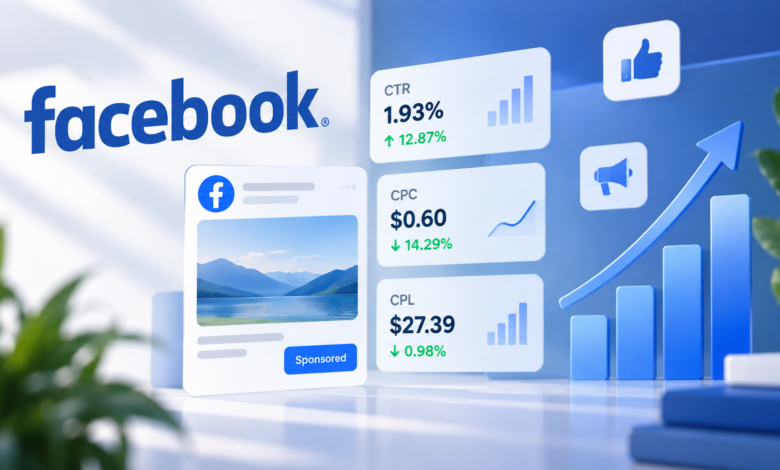
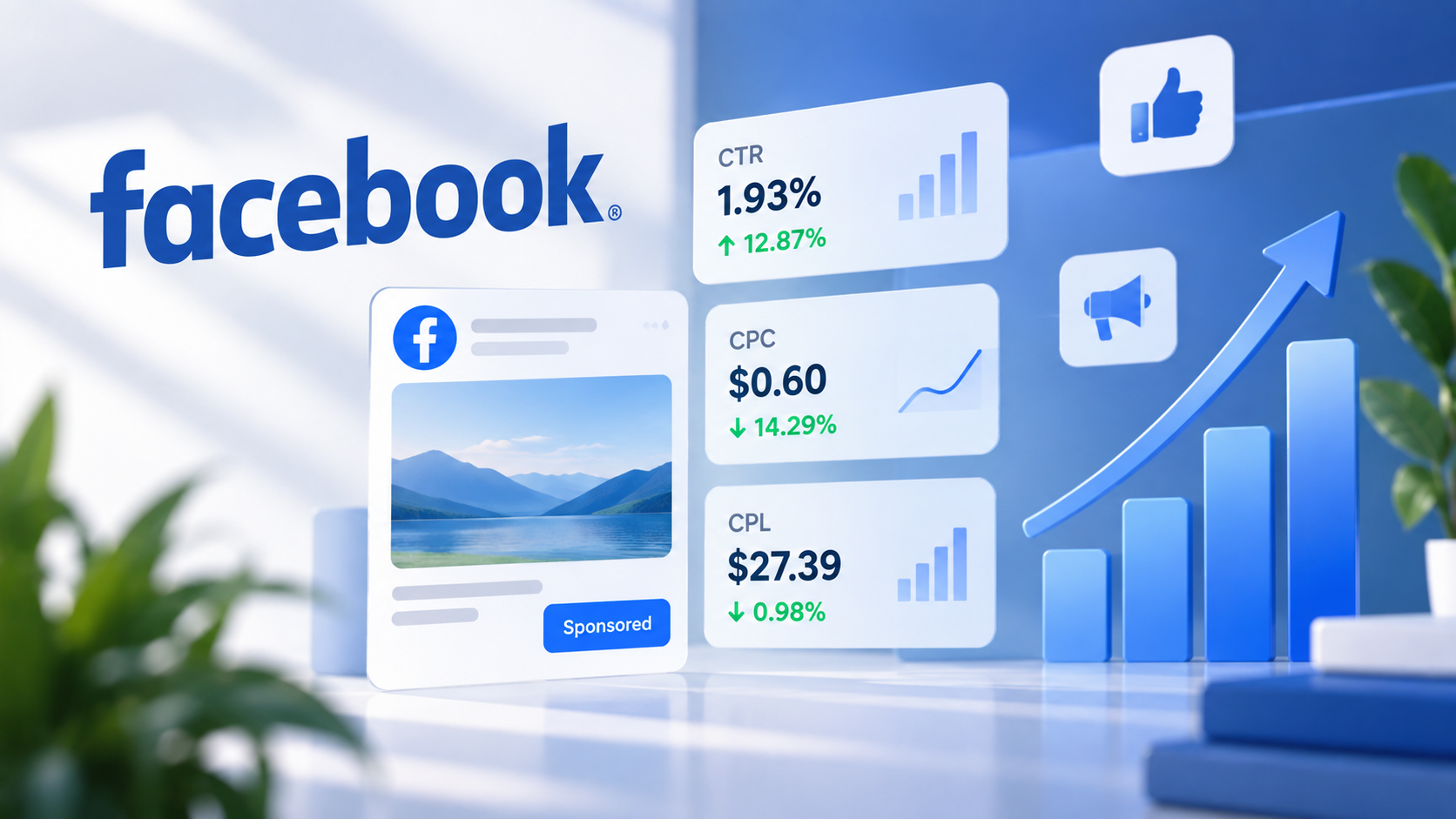
Traffic-focused campaigns on Meta’s flagship platform recorded a particularly robust performance cycle. Advertisers experienced a dual benefit: user engagement saw a marked upward trajectory, while the cost to drive traffic plummeted. Overall data indicates that traffic clicks became roughly 14% cheaper year-over-year, accompanied by a nearly 13% improvement in click-through rates.
This macro-trend, however, varied considerably across individual industries. The data highlights a sharp divergence between sectors experiencing digital saturation and those benefiting from optimized ad inventory. Only two sectors registered an increase in traffic cost per click: Shopping, Collectibles, and Gifts, which saw CPC surge by 73.53%, and Sports and Recreation, where CPC rose by 43.90%.
Conversely, several industries reaped the rewards of drastically reduced advertising costs. Real Estate claimed the title of the biggest CPC improvement, recording a dramatic 39.56% decline. It was closely followed by Restaurants and Food, which saw a 37.50% drop in CPC, and the Industrial and Commercial sector, registering a 37.21% decrease. These shifts suggest that consumer browsing habits and lower advertiser competition in specific niches are creating high-value opportunities for brands willing to invest in targeted social media traffic.
Lead Generation Stability and Cost-Per-Click Winners
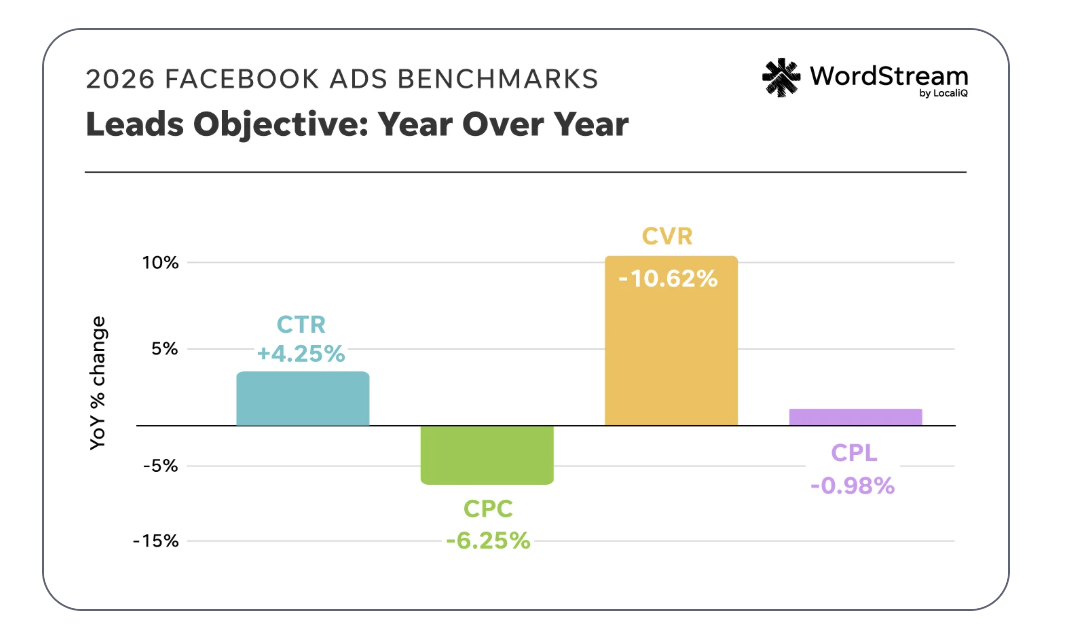
For businesses focused on acquiring customer data and driving conversions rather than just site traffic, the 2026 benchmark data presents an equally encouraging picture. While overall cost per lead (CPL) remained largely flat across the board, the underlying mechanics of lead campaigns showed substantial cost efficiencies.
Most industries reported cheaper clicks on their lead generation campaigns. The automotive sector led the charge for cost-per-click reductions, with "Automotive – For Sale" campaigns seeing CPC drop by an impressive 44.17%. Dentists and Dental Services followed closely with a 41.72% decline in CPC, while Health and Fitness brands enjoyed a 30.30% reduction.

In contrast, upward pressure on lead campaign CPCs was isolated to very few sectors. Education and Instruction saw a modest 4.24% increase, while Sports and Recreation experienced a nominal 0.93% rise.
Despite the stability of average CPL metrics on a macro level, the actual cost to acquire a lead varied wildly depending on the industry. Certain sectors enjoyed exceptionally low acquisition costs, while others faced steep financial barriers to entry. This disparity underscores the importance of vertical-specific benchmarking when marketing teams allocate their quarterly budgets.
Broader Industry Implications: Paid Social Versus Paid Search
The implications of the 2026 WordStream data extend far beyond Meta’s ecosystem, forcing marketing directors to re-evaluate how they split budgets between paid social and paid search initiatives.
For years, digital marketers have weighed the immediate, high-intent capture of Google Search against the broad, discovery-driven nature of Meta properties. The latest data adds a compelling financial dimension to this debate. According to WordStream’s findings, average cost-per-click rates on Google Ads are now more than double the average CPC found across Meta platforms.

While Google Search traditionally captures users who are actively searching with a definitive purchase intent, the sheer cost efficiency of Facebook advertising—combined with improving conversion rates and cheaper traffic—presents a strong counter-argument. Advertisers are effectively securing more engagement for less capital expenditure. The data suggests that marketers no longer have to choose exclusively between economical traffic and high-performing campaigns; in many cases, Meta’s ecosystem is delivering both simultaneously.
Technological Efficiency and Meta’s Algorithmic Evolution
Industry analysts attribute these favorable metrics to structural improvements within Meta’s advertising technology. Over the past year, Meta has heavily emphasized automated bidding strategies, machine learning-driven campaign optimizations, and enhanced creative delivery systems (such as Advantage+ campaigns).
These technological refinements appear to be yielding tangible results. By optimizing ad delivery to users most likely to engage or convert, the platform is driving down wasted ad spend and improving overall return on ad spend (ROAS) for brands. WordStream’s analysis indicates that these algorithmic enhancements are a primary driver behind the stronger conversion performance and suppressed costs observed throughout the year.
Strategic Takeaways for Digital Marketers
As marketing departments finalize their channel strategies, the 2026 benchmarks offer clear guidance. The combination of cheaper clicks, rising engagement, and steady lead costs provides brands with vital breathing room to stretch their digital marketing budgets further.
However, experts caution that these averages should serve as a baseline rather than a universal rule. Because performance fluctuates dramatically based on creative quality, audience segmentation, and industry dynamics, individual results will vary. Brands operating in high-CPC niches like retail and collectibles must rely heavily on precision targeting and compelling ad creative to offset rising costs, while those in real estate and automotive can leverage current cost efficiencies to scale their digital presence aggressively.
Ultimately, the 2026 data paints a picture of a maturing, increasingly efficient paid social ecosystem. For businesses navigating an uncertain economic climate, the ability to generate reliable traffic and stable lead flows without inflating ad budgets represents a critical competitive advantage.