Breaking the Mold: MIT Researchers Develop PottsMPNN to Revolutionize AI-Driven Protein Design and Overcome Evolutionary Blind Spots

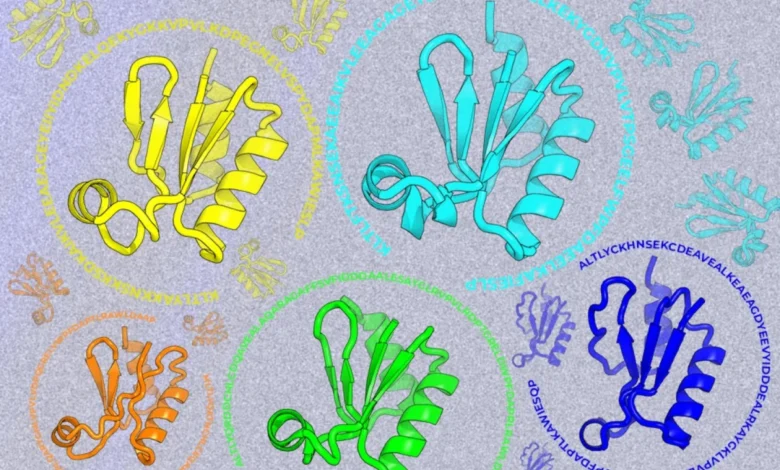
In the rapidly evolving landscape of computational biology, artificial intelligence has continuously shattered previous benchmarks, transforming how scientists approach the fundamental building blocks of life. Proteins, the intricate macromolecular workhorses underlying nearly every cellular process, derive their biological functions directly from their three-dimensional structures. For decades, deciphering the code of how a linear chain of amino acids folds into a functional, complex architecture has been one of science’s grand challenges. Recently, researchers at the Massachusetts Institute of Technology (MIT) unveiled a breakthrough machine-learning framework known as PottsMPNN, designed to fundamentally alter how scientists engineer novel proteins from scratch. Published in the Proceedings of the National Academy of Sciences (PNAS), this new computational tool bypasses traditional evolutionary limitations, offering a more physics-grounded approach to designing custom proteins that could one day neutralize disease-causing molecules, manufacture advanced therapeutics, and reshape biotechnology.
The Mechanics of Protein Folding and the Limits of Evolution
To understand the significance of PottsMPNN, one must first grasp the foundational dogma of protein engineering. A protein’s function is strictly determined by its structure, and that structure—the precise way a protein folds—is dictated by its sequence of amino acids. For years, the standard paradigm for designing synthetic proteins has relied on a two-step hierarchical process. First, scientists computationally model a desired novel 3D structure that can perform a specific task, such as binding tightly to a viral surface protein or a mutated cancer marker. Second, a machine-learning framework generates a repertoire of amino acid sequences that theoretically have the highest statistical probability of folding into that pre-defined structure.
However, artificial intelligence models have historically suffered from a major bias: they have been trained to mimic nature too closely. In natural biology, evolution has settled on specific amino acid sequences over billions of years. Consequently, previous generations of AI models measured their own success based on their ability to reproduce the exact protein sequences that evolution happened to select.
According to Amy E. Keating, head of MIT’s Department of Biology, Jay A. Stein (1968) Professor of Biology, professor of biological engineering, and senior author of the PNAS study, this benchmark has been fundamentally flawed. "For years, the field has measured success by asking whether a model can reproduce the protein sequence that evolution happened to select—our work shows that this isn’t the best metric for protein design," Keating explains.
In nature, redundancy is rampant. Many entirely different amino acid sequences can successfully fold into the exact same structural conformation. Conversely, a single amino acid sequence can occasionally adopt multiple distinct structures depending on environmental triggers or intrinsic molecular flexibility. When artificial intelligence is constrained by the narrow paths of natural evolution, it struggles to see the broader landscape of possibilities. It fails to recognize that there are myriad alternative, highly functional sequences that nature never explored, but which could prove immensely valuable for synthetic biology.
Chronology of a Breakthrough: From 2022 to PottsMPNN
The timeline of computational protein design has accelerated at a breathtaking pace over the last several years. For decades, researchers relied on laborious laboratory-directed evolution and physics-based thermodynamic modeling to tweak existing proteins. It was not until the early 2020s that deep learning models became robust enough to reliably generate custom structures and sequences.
In September 2022, the scientific community celebrated the release of ProteinMPNN, a machine-learning model developed by the Baker Lab at the University of Washington. ProteinMPNN quickly became the gold standard across laboratories worldwide, setting unprecedented benchmarks for speed and accuracy in generating sequences for designed protein backbones. For a field moving at lightning speed, the dominance of the 2022 model posed a lingering question: Why had it remained unsurpassed for so long, and what underlying mechanisms made it so remarkably effective?
Foster Birnbaum, an MIT graduate student and lead author of the new PNAS study, dedicated his research to untangling this mystery. Birnbaum and his colleagues began by examining the strategic applications of "noise"—the intentional introduction of stochastic variations into a protein structure during the training phase. They discovered that incorporating noise effectively reduces a model’s tendency to overly mimic native, evolutionary sequences. By dampening this natural bias, the model unlocked a much broader diversity of structures for which it could successfully generate viable sequences.
Building upon these insights, the MIT team developed PottsMPNN. Unlike its predecessors, PottsMPNN integrates fundamental physical principles governing protein structure and thermodynamic stability directly into its architecture. Furthermore, the model utilizes a pairwise distribution matrix to precisely capture physical interactions between all 20 possible amino acid options at every pair of positions within the protein chain. This advanced capability allows PottsMPNN to map the sequence-energy landscape—the complex mathematical relationship between amino acid identities and structural stability—with unprecedented fidelity.
By carefully introducing sets of evolutionarily related sequences during training, the researchers taught PottsMPNN a crucial lesson: how multiple distinct sequences can converge upon the same folded structure. While incorporating evolutionary data might seem like a continued reliance on nature, the team demonstrated that as the model learns to decouple itself from strict native sequence adherence, its ability to predict structural compatibility and mutational stability for entirely novel proteins improves dramatically.
Navigating the Sequence-Energy Landscape
The core advantage of PottsMPNN lies in its superior navigation of the sequence-energy landscape. When designing a completely novel protein—one that has no counterpart or ancestor in the natural world—scientists face a distinct challenge.
"If we’re thinking about a completely novel, designed structure, there would be no native sequence to compare it to," Foster Birnbaum points out. "What we actually care about is how likely the generated sequences are to fold into the desired structures, how well the model understands the sequence-energy landscape, and how well it can predict the effect of mutations on the stability of the protein."
By weaving thermodynamic principles into the machine-learning pipeline, PottsMPNN does not merely guess which amino acids look aesthetically pleasing based on past data; it calculates whether the physical forces between atoms will hold the protein securely in its required shape. This ensures that the generated sequences are structurally feasible in reality, reducing the rate of failure when these proteins are synthesized and tested in a physical laboratory.
Furthermore, because the model excels at predicting how single or multiple mutations will impact a protein’s stability, researchers can fine-tune synthetic proteins to resist degradation, bind more selectively to therapeutic targets, or function efficiently under extreme industrial conditions.
Implications and the Horizon of Biological Engineering
The introduction of PottsMPNN arrives at a pivotal juncture in human history, where the lines between computer science and molecular biology are increasingly blurred. The ability to computationally design custom proteins with atomic precision opens the door to revolutionary applications across medicine, materials science, and environmental sustainability.
In healthcare, engineered proteins can be tailored to neutralize elusive pathogens, act as targeted drug delivery vehicles, or serve as precision enzymes that break down toxic compounds in the human body. In industrial biotechnology, custom enzymes can be optimized to catalyze chemical reactions with zero toxic byproducts, synthesize sustainable biofuels, or break down stubborn plastic waste clogging global ecosystems.
However, such immense technological power is not without its ethical complexities and safety considerations. The democratization of high-level protein design tools means that the scientific community must remain vigilant regarding biosecurity.
Reflecting on the dual-use nature of this technology, Birnbaum acknowledges the gravity of the work. "Once we can design any protein we want, that enables us to do a potentially scary amount of biological engineering," he notes. "It’s a difficult task, but I’m really optimistic about this century’s progress in biology."
Looking ahead, the MIT research team aims to further refine and fine-tune PottsMPNN for specialized, task-specific applications. Past precedent in machine learning suggests that tailoring models to solve narrow, high-stakes biochemical problems yields even sharper predictive accuracy, particularly regarding complex mutational outcomes that dictate drug resistance or enzymatic efficiency.
Ultimately, the work spearheaded by Keating, Birnbaum, and their collaborators represents a paradigm shift. By moving away from the confines of evolutionary mimicry and toward a physics-based, expansive view of protein architecture, PottsMPNN provides the global scientific community with a robust foundation for the future.
"Our methods move the field toward designing useful new-to-nature proteins for diverse applications while providing a stronger foundation for future advances," Keating concludes. As laboratories around the world begin integrating PottsMPNN into their design pipelines, the boundary between what nature has provided and what human ingenuity can engineer blurs further, heralding a new era of computational biology.