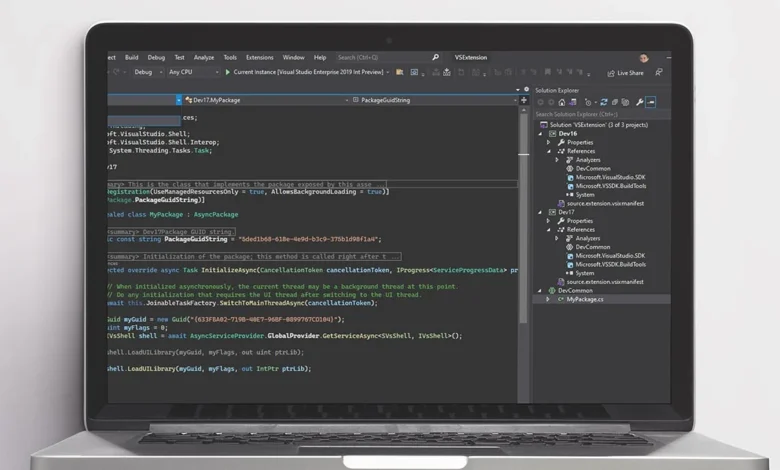
The landscape of software engineering is undergoing a transformative shift, driven by the integration of artificial intelligence and the increasing necessity for cross-platform compatibility. In a significant move that targets independent developers and small-to-medium enterprises, a limited-time offer has surfaced for Microsoft Visual Studio Professional 2026. For a window closing on July 26, the comprehensive integrated development environment (IDE) is being made available for $29.97, representing a substantial reduction from its standard retail price of $499.99. This 94% price drop highlights a strategic push to broaden the user base of Microsoft’s flagship development suite as the industry pivots toward AI-augmented coding workflows.
The Evolution of the Integrated Development Environment
The release and subsequent discounting of Visual Studio Professional 2026 mark a pivotal moment in the timeline of Microsoft’s developer tools. Historically, Visual Studio has served as the backbone of the Windows development ecosystem. Since its inception in 1997, the IDE has evolved from a collection of separate programming tools into a unified environment capable of handling nearly every aspect of the software development lifecycle (SDLC).
The 2026 iteration builds upon the architectural foundations laid by Visual Studio 2022, which was the first version to transition to a 64-bit process. This architectural shift allowed the IDE to handle massive, complex solutions without running into memory limitations. The Professional 2026 edition continues this trajectory, focusing on performance optimizations and deep-tier integration with cloud-native technologies. By offering a lifetime license at a fraction of the cost, Microsoft and its distribution partners are effectively lowering the barrier to entry for professional-grade tools that were previously reserved for corporate budgets.
Deep Dive into AI Integration and IntelliCode
One of the most significant enhancements in Visual Studio Professional 2026 is the expansion of IntelliCode. While previous versions introduced basic code completion, the 2026 version utilizes advanced machine learning models trained on billions of lines of open-source code to provide context-aware suggestions.
Unlike standard "autocomplete" features that suggest words based on alphabetical order or basic syntax, IntelliCode analyzes the developer’s current coding patterns and the surrounding logic. It can predict the next several lines of code, suggest appropriate variable names, and identify potential logic errors before the code is even compiled. This AI-assisted refactoring capability is designed to reduce the cognitive load on developers, allowing them to focus on high-level architecture rather than repetitive syntax.
Industry analysts suggest that the integration of AI within the IDE is no longer a luxury but a necessity. According to recent developer surveys, nearly 70% of professional coders are already utilizing some form of AI assistance in their daily work. By embedding these tools directly into the Professional edition, Microsoft is positioning Visual Studio as a central hub for the modern, AI-enhanced developer.
Cross-Platform Development and Modern Frameworks
The 2026 edition emphasizes versatility, moving far beyond its "Windows-only" roots. The IDE provides robust support for .NET MAUI (Multi-platform App UI), a framework that allows developers to create native mobile and desktop apps with a single C# codebase. This is particularly relevant in a market where businesses demand presence across iOS, Android, macOS, and Windows.
Furthermore, the suite includes comprehensive tools for Blazor, enabling developers to build interactive web UIs using C# instead of JavaScript. This "C# everywhere" philosophy is a cornerstone of the .NET ecosystem, and Visual Studio Professional 2026 is optimized to handle these multi-layered projects. The IDE also provides native support for C++ development, specifically targeting high-performance applications and game development, with improved debugging tools for Linux environments and containerized applications.
Collaboration in the Era of Remote Work
The shift toward remote and hybrid work models has necessitated better collaborative tools within the development environment. Visual Studio Professional 2026 addresses this through its Live Share feature. Live Share allows multiple developers to share a project in real-time, enabling collaborative editing and debugging regardless of the physical location of the team members.
Unlike traditional screen-sharing tools, Live Share allows participants to retain their own editor preferences and navigate through the codebase independently while remaining synchronized for debugging sessions. This feature is complemented by CodeLens, a powerful productivity tool that surfaces critical information directly within the code editor. CodeLens provides a "heads-up display" for the code, showing who last modified a method, which unit tests are passing or failing, and how many times a specific function is referenced across the entire solution.
Market Context and Strategic Pricing Analysis
The decision to offer a $499.99 software package for under $30 is a tactical move that reflects the current competitive landscape of developer tools. Microsoft faces stiff competition from lightweight editors like Visual Studio Code (VS Code) and premium IDEs from competitors like JetBrains.
While VS Code is free and highly extensible, Visual Studio Professional offers a "batteries-included" experience with deeper integration into the Microsoft stack, including Azure and GitHub. By offering a lifetime license at a price point similar to a few months of a subscription service, Microsoft is likely aiming to capture the "Prosumer" market—freelancers, students, and independent contractors who want professional features without the recurring overhead of a Visual Studio Subscription (formerly MSDN).
Data from Stack Overflow’s annual developer surveys consistently show that Visual Studio remains one of the most popular IDEs globally. However, the rise of subscription-based software-as-a-service (SaaS) models has created "subscription fatigue" among individual users. A lifetime license at a nominal cost serves as an effective "on-ramp" to the broader Microsoft ecosystem, potentially leading to increased adoption of Azure cloud services and GitHub Enterprise.
Chronology of Recent Updates and Offer Duration
The timeline for this specific offer is remarkably brief, emphasizing the urgency for developers looking to upgrade their toolkit.
- Early 2026: Initial rollout of the Visual Studio 2026 suite, focusing on AI-first development.
- July 20, 2026: Announcement of the mid-summer promotional window through authorized third-party retailers.
- July 24, 2026: Peak interest as the deal gains traction in tech news outlets and developer forums.
- July 26, 2026: Scheduled expiration of the $29.97 pricing, after which the license is expected to return to its standard MSRP.
Implications for the Developer Community
The availability of high-end professional tools at consumer-level pricing has broader implications for the democratization of software development. As the complexity of modern applications grows—incorporating cloud microservices, containerization, and AI—the tools required to build them have become increasingly expensive.
By making Visual Studio Professional 2026 accessible to a wider audience, Microsoft is facilitating a more level playing field. Small startups can now leverage the same debugging, profiling, and testing tools used by Fortune 500 companies. This accessibility is expected to foster innovation in the independent software vendor (ISV) space, particularly in the development of AI-driven applications and cross-platform utility software.
Technical Specifications and System Requirements
To fully utilize the features of Visual Studio Professional 2026, developers must adhere to updated hardware requirements. The IDE is optimized for Windows 11 but maintains compatibility with Windows 10 (version 1909 or higher). Key requirements include:
- Processor: 1.8 GHz or faster 64-bit processor; Quad-core or better recommended.
- Memory: Minimum 8 GB of RAM, though 16 GB is recommended for large-scale solution handling.
- Hard Disk Space: Minimum 800 MB up to 210 GB of available space, depending on installed features; typical installations require 20-50 GB of free space.
- Display: Minimum resolution of 720p (1280 by 720); Visual Studio works best at a resolution of WXGA (1366 by 768) or higher.
Looking Ahead: The Future of Microsoft’s Developer Ecosystem
As the July 26 deadline approaches, the tech community is watching closely to see if this pricing strategy will become a recurring trend. The move suggests that Microsoft is prioritizing user acquisition and ecosystem loyalty over immediate license revenue from the individual developer segment.
In the long term, the success of Visual Studio Professional 2026 will be measured by its ability to keep pace with the rapid evolution of the .NET framework and the increasing reliance on GitHub Copilot and other AI extensions. For now, the $29.97 offer represents a rare opportunity for developers to secure a perpetual license to a cornerstone of the industry, ensuring they have the tools necessary to navigate the increasingly complex world of modern software engineering.
The integration of Azure DevOps, GitHub, and Microsoft’s cloud infrastructure within Visual Studio 2026 ensures that developers are not just buying a text editor, but a gateway to a complete development pipeline. As the industry moves toward "DevSecOps" and automated deployment, having a centralized, high-performance IDE remains a critical asset for any professional in the field. This limited-time price drop is a clear signal that the tools of the future are being made available to the developers of today, regardless of their budget constraints.