India’s Open Network for Digital Commerce: A Game-Changer for Small Merchants and Global Brands

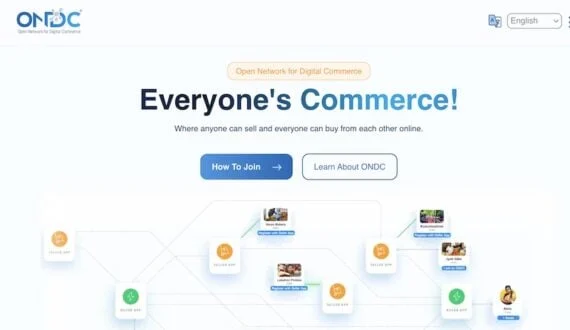
India’s burgeoning e-commerce landscape is undergoing a significant transformation, driven by government initiatives aimed at fostering digital inclusion while navigating the complexities of a vast and diverse retail sector. At the forefront of this evolution is the Open Network for Digital Commerce (ONDC), a groundbreaking government-backed initiative designed to democratize online selling and empower millions of small businesses. This ambitious project is poised to reshape how consumers shop and how businesses, both local and international, access the Indian market, even as regulatory frameworks continue to evolve.
The sheer scale of India’s consumer base presents an unparalleled opportunity. With a population now surpassing China’s and a median age under 25, the nation is a demographic powerhouse. The widespread adoption of smartphones, with 840 million users already connected, serves as a critical enabler for digital commerce. However, India’s online retail penetration remains significantly lower compared to established e-commerce giants like China and the United States, indicating substantial untapped potential. Projections suggest a significant e-commerce boom is imminent, fueled by a young, digitally-native population eager for convenient and accessible online shopping experiences.
This burgeoning digital economy, however, exists in parallel with a deeply entrenched traditional retail sector. The backbone of India’s consumer goods sales, accounting for an impressive 75% of the national total, is comprised of millions of small, physical "mom-and-pop" stores, known locally as kiranas. These local establishments are not merely retail outlets; they are integral to the social and economic fabric of communities across the country. Policymakers face the delicate challenge of encouraging widespread digital transformation without disrupting or disadvantaging these vital small businesses.
To address this, the Indian government has pursued a dual strategy. Firstly, the successful implementation of the Unified Payments Interface (UPI), a government-backed, open-source peer-to-peer digital payment infrastructure, has revolutionized cashless transactions in India. UPI’s seamless and ubiquitous nature has laid a robust foundation for digital commerce, enabling swift and secure transactions. Conversely, to protect domestic businesses and manage the influx of foreign competition, specific regulations have been introduced that govern the access and operations of foreign sellers in the Indian e-commerce market.
It is within this complex ecosystem that ONDC emerges as a pivotal initiative. Launched in 2021, ONDC is not a marketplace but an open-source framework that aims to connect various entities within the digital commerce value chain – including e-commerce platforms, payment gateways, and logistics providers – through a common set of open standards and protocols. The core objective of ONDC is to enable kirana owners and independent merchants to establish an online presence and participate in digital commerce without being confined to the ecosystems of dominant e-commerce giants like Amazon India and Flipkart.
The ONDC Model: Democratizing Digital Commerce
The fundamental distinction of ONDC lies in its decentralized and interoperable architecture. Unlike traditional marketplaces that operate as closed systems, ONDC functions as a network where any registered seller can list their products, and any buyer can browse and purchase from a multitude of sellers across different platforms. This open approach fosters competition and innovation, theoretically leading to better prices and more choices for consumers.
The initiative has gained considerable traction across India, though its adoption rate, while significant, has not yet reached the ubiquitously widespread levels of UPI. The primary beneficiaries envisioned by ONDC are the Small and Medium-sized Businesses (SMBs) and the kirana stores. For these entities, ONDC offers a more equitable playing field, allowing them to expand their reach beyond their immediate geographical vicinity and tap into a national customer base.
Beyond supporting small businesses, ONDC also serves as a valuable additional distribution channel for established local brands. Rather than viewing it as a replacement for their existing sales channels, these brands leverage ONDC to diversify their market access and reach a broader audience. Crucially, foreign companies that comply with India’s regulatory framework can also access the ONDC seller app ecosystem, providing them with a new avenue to engage with Indian consumers.
The ONDC network operates through distinct seller and buyer applications. Seller applications, such as Mystore, CostBo, and GoFrugal, provide merchants with the tools to list their products, manage inventory levels, and process orders efficiently. On the consumer side, popular buyer applications like Paytm, Bajaj Finserve, and Magicpin allow shoppers to discover and purchase goods from ONDC-integrated sellers. This modular approach ensures flexibility and choice for both businesses and consumers.
One of the most attractive aspects of ONDC for sellers is its significantly lower fee structure compared to established marketplaces. Selling fees on ONDC typically range from 3% to 10%, a stark contrast to the 18% to 40% commissions often charged by major e-commerce platforms. This reduction in costs can substantially improve the profit margins for small businesses. Furthermore, ONDC emphasizes transparency and fairness in its operations. Its open algorithms, non-discriminatory sorting mechanisms, and portable customer ratings empower sellers to control their online presence and customer relationships, fostering greater autonomy.
The interoperability of ONDC is a key feature. Once a brand registers with a seller app, its products become visible across the entire ONDC network. This means a shopper using one buyer app can seamlessly purchase goods from a seller listed on a different seller app, creating a unified and fluid shopping experience.
Expanding Categories and Global Reach
The ONDC network is rapidly expanding its reach across various product and service categories. It currently encompasses retailers, logistics service providers, restaurants, and hotels. Categories like groceries, food delivery, and home and kitchen items have seen particularly rapid growth due to their higher order frequency. Fashion, pharmaceuticals, and hospitality are also gaining momentum on the platform.
The presence of major global brands on ONDC underscores its growing significance. Companies such as Red Bull, Unilever, Nestle, PepsiCo, Procter & Gamble, L’Oréal, and Johnson & Johnson are actively participating. Many of these global food brands, already established on quick commerce platforms like Blinkit, Swiggy Instamart, and Zepto, can now access the ONDC network at minimal additional cost, further enhancing their distribution capabilities in India.
For foreign brands contemplating entry into the Indian e-commerce market, understanding the regulatory landscape is paramount. As previously detailed, various selling options exist, including marketplaces, working with local distributors, establishing direct-to-consumer (D2C) websites, and cross-border e-commerce. ONDC offers a compelling new pathway within this existing matrix of options, particularly for those seeking a more integrated and cost-effective approach to reaching the Indian consumer.
Background and Chronology of ONDC
The genesis of ONDC can be traced back to the Indian government’s broader digital India initiative, which aims to transform the country into a digitally empowered society and knowledge economy. Recognizing the potential of e-commerce to drive economic growth and financial inclusion, the Department for Promotion of Industry and Internal Trade (DPIIT) conceptualized ONDC as a key component to democratize online retail.
- 2019-2020: Conceptualization and initial planning phases for a decentralized e-commerce network. Discussions involve various government departments, industry experts, and technology stakeholders.
- July 2021: ONDC is officially launched as a Section 8 company (a non-profit organization) under the Companies Act, 2013, with initial funding and support from the government.
- Late 2021 – Early 2022: Pilot programs are initiated in select cities, testing the network’s infrastructure, seller onboarding processes, and buyer application integrations. Early participants include select merchants and early adopter consumers.
- April 2022: ONDC expands its pilot phase to more cities and begins onboarding a wider range of sellers and buyer applications. The focus remains on refining the technical aspects and user experience.
- 2023: ONDC begins to gain significant momentum. More established brands and a larger number of small businesses join the network. Media coverage increases, highlighting its potential to disrupt the e-commerce market. The network starts to see substantial transaction volumes in key categories.
- 2024 Onwards: ONDC continues its expansion, aiming for pan-India coverage and further diversification of categories and services. The focus shifts towards enhancing user experience, improving logistics integration, and attracting a wider base of both sellers and buyers. The regulatory environment continues to be a key factor influencing its growth trajectory.
Supporting Data and Growth Metrics
While specific, real-time transaction data for ONDC is not always publicly disseminated in granular detail, available reports and projections indicate substantial growth. The network’s ability to onboard millions of products and thousands of sellers within a relatively short period is a testament to its scalable architecture.
- Seller Onboarding: Reports suggest that ONDC has onboarded millions of products from hundreds of thousands of sellers, with a significant portion being small businesses and kirana stores.
- Transaction Growth: While starting from a low base, the number of daily transactions has seen a steady upward trend, particularly in urban and semi-urban centers.
- Category Penetration: Grocery and food delivery have emerged as high-volume categories, reflecting the convenience and demand for these services. Home and kitchen goods also show strong performance.
- Cost Savings for Sellers: The significant difference in commission rates (3-10% on ONDC vs. 18-40% on marketplaces) represents a direct economic benefit for participating businesses, potentially increasing their profitability and competitiveness.
- User Adoption: The integration with popular payment and super apps like Paytm has been crucial in driving buyer adoption, leveraging existing user bases for rapid onboarding.
Official Responses and Industry Reactions
Government officials have consistently expressed optimism about ONDC’s potential. Piyush Goyal, the Union Minister for Commerce and Industry, has frequently lauded ONDC as a revolutionary step towards democratizing digital commerce and empowering local businesses. The stated objective is to create a level playing field and ensure that the benefits of e-commerce reach every corner of India.
Industry analysts and e-commerce experts view ONDC with a mixture of excitement and cautious optimism. While acknowledging its disruptive potential and the advantages it offers to small businesses, some point to the challenges of widespread adoption, consumer trust-building, and the need for robust logistics integration.
"ONDC represents a paradigm shift in how e-commerce can be structured," commented a technology analyst specializing in emerging markets. "Its open architecture and focus on interoperability are its key strengths. However, for it to truly rival established marketplaces, it needs to continuously improve the customer experience, ensure seamless delivery, and build strong network effects."
Representatives from kirana store associations have largely welcomed ONDC, viewing it as a vital tool to compete in the digital age without compromising their local presence and customer relationships. "We have always served our communities," stated a spokesperson for a prominent merchant association. "ONDC gives us the opportunity to reach more people online, bringing our traditional strengths into the digital world. The lower costs are also a significant advantage."
Broader Impact and Implications
The success of ONDC has far-reaching implications for India’s digital economy and its traditional retail sector.
- Economic Inclusion: By lowering the barrier to entry for online selling, ONDC can empower millions of small entrepreneurs and businesses, fostering economic growth and creating new employment opportunities.
- Increased Competition: The proliferation of sellers and the transparent nature of ONDC are expected to drive greater competition, potentially leading to more competitive pricing and better quality products and services for consumers.
- Reduced Reliance on Dominant Platforms: ONDC aims to break the monopolistic hold of a few large e-commerce marketplaces, fostering a more diverse and resilient e-commerce ecosystem.
- Innovation in Logistics and Payments: The open network model encourages innovation across the entire e-commerce value chain, including last-mile delivery solutions and integrated payment services.
- Global Brand Strategy: For international brands, ONDC offers a regulated and potentially more cost-effective entry point into the complex Indian market, complementing existing strategies.
- Digital Transformation of Traditional Retail: ONDC is a catalyst for the digital transformation of traditional retail, enabling kirana stores and other small businesses to adopt digital tools and reach a wider customer base.
However, challenges remain. Ensuring consistent quality of service, building consumer trust in a decentralized network, and integrating sophisticated logistics solutions across a vast and geographically diverse country are significant undertakings. The regulatory framework, while evolving, will continue to play a crucial role in shaping the competitive landscape and ensuring fair practices.
In conclusion, India’s Open Network for Digital Commerce is more than just a digital platform; it is a strategic initiative to redefine the future of retail in the world’s most populous nation. By championing an open, interoperable, and inclusive model, ONDC is paving the way for an e-commerce boom that benefits small businesses, consumers, and global brands alike, while simultaneously navigating the delicate balance between digital advancement and the preservation of traditional economic structures. Its ongoing evolution will be closely watched as a bellwether for digital commerce innovation in emerging markets worldwide.