AI Overviews Now Answer Most Local Searches – How To Get Your Business Cited


A significant shift in the landscape of local search results has been observed, with AI Overviews now appearing in a commanding 68% of local searches, eclipsing the traditional Local Packs, which appear in only 39% of these queries. This development underscores a critical evolution in how Google processes and presents information for location-specific queries, demanding a strategic recalibration from businesses aiming to maintain visibility. The imperative for businesses is clear: to rebuild and optimize their location pages in a manner that allows AI systems to accurately identify, understand, and cite their operations, services, and products.
The Rise of AI Overviews in Local Search
The data, which highlights the dramatic ascendancy of AI Overviews, signifies a profound transformation in Google’s search engine results pages (SERPs). For years, the Local Pack, typically displaying a map and three business listings, has been the coveted top-tier placement for local businesses. It served as a direct conduit for users seeking nearby services, stores, or restaurants, providing essential information like addresses, phone numbers, and reviews at a glance. However, the integration of generative artificial intelligence (AI) into Google Search, initially introduced through the Search Generative Experience (SGE) and now broadly as AI Overviews, has rapidly redefined this hierarchy.
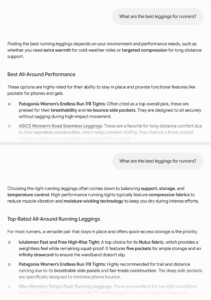
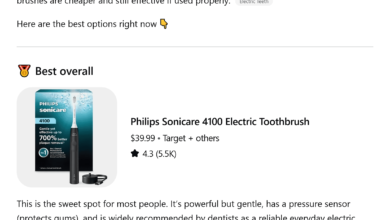
AI Overviews are concise, AI-generated summaries that appear at the top of the SERP, designed to answer user queries directly without requiring them to click through to individual websites. These overviews synthesize information from various sources across the web, presenting a consolidated answer. While their presence has been growing across general search queries, their increasing dominance in local searches — now appearing nearly twice as often as Local Packs — indicates a deliberate strategic pivot by Google to provide immediate, contextually rich answers for users with local intent. This shift is particularly impactful for industries heavily reliant on local foot traffic and online discovery, such as retail, hospitality, healthcare, and professional services.
Background and Chronology of Google’s AI Integration
Google’s journey towards integrating generative AI into its core search product has been a multi-stage process, driven by advancements in large language models (LLMs) and a desire to enhance user experience.
- 2022: Google introduced LaMDA and PaLM 2, powerful LLMs, signaling its intent to bring conversational AI capabilities into its products.
- May 2023: At its I/O developer conference, Google unveiled the Search Generative Experience (SGE), an experimental AI-powered search experience. This marked the initial public testing phase for what would become AI Overviews, allowing users to opt-in and experience generative AI summaries at the top of their search results. The focus was on summarizing complex topics, brainstorming ideas, and comparing products.
- Late 2023 – Early 2024: SGE continued its experimental rollout, with Google gradually expanding its availability and refining its algorithms based on user feedback. During this period, early indicators suggested AI Overviews were starting to appear for an increasing range of queries, including transactional and local searches.
- May 2024: Google officially launched "AI Overviews" to all users in the United States, moving it out of the experimental SGE phase. This full-scale rollout signified Google’s confidence in the technology and its commitment to integrating generative AI as a foundational element of search. It was at this point that the significant impact on local search results began to become widely apparent, leading to the reported 68% prevalence.
- Ongoing: Google continues to expand AI Overviews globally and refine their accuracy, relevance, and source attribution, with a particular emphasis on ensuring factual correctness and preventing misinformation.
This timeline illustrates a rapid and deliberate evolution, moving from experimental features to a mainstream component of the world’s most dominant search engine. The implications for businesses, particularly those operating locally, are profound and necessitate an immediate strategic response.
The Strategic Imperative: Rebuilding Location Pages for AI Citation
The core challenge for businesses now is to ensure their information is not just present on the web but is structured and presented in a way that AI Overviews can readily consume, understand, and cite. Adam Heitzman, Managing Partner at HigherVisibility and a recognized SEO expert, highlights the urgency of "rebuilding location pages so AI systems actually cite your business." This is no longer merely about ranking high for keywords but about providing comprehensive, verifiable, and easily digestible information that AI can integrate into its summaries.
Here are key strategies for optimizing location pages for AI Overviews:
-
Enhanced Structured Data (Schema Markup): This is paramount. Schema markup (e.g., LocalBusiness, Product, Service, Event, Review schemas) provides explicit signals to search engines about the meaning of content on a page. For local businesses, implementing detailed
LocalBusinessschema is crucial, including name, address, phone number (NAP), opening hours, geo-coordinates, services offered, departments, and aggregated ratings. AI systems rely heavily on structured data to quickly extract factual information. Businesses should audit their existing schema for accuracy and completeness, ensuring it reflects all pertinent local details. -
Comprehensive and Unique Location-Specific Content: Generic "contact us" pages are no longer sufficient. Each location page must feature rich, unique content that elaborates on the specific services, products, and unique selling propositions of that particular branch or outlet.
- Detailed Service/Product Descriptions: Go beyond listing services; describe what they entail, who benefits, and any unique features specific to that location.
- Local Testimonials and Case Studies: Integrate customer reviews and success stories that highlight the local experience.
- Staff Bios: Humanize the local presence by featuring profiles of local managers or key staff.
- Local Events and Promotions: Keep content fresh and relevant by detailing any community involvement, local events, or promotions specific to that location.
- FAQs: Address common questions related to the location, services, and policies.
-
Demonstrating E-E-A-T (Experience, Expertise, Authoritativeness, Trustworthiness): Google’s emphasis on E-E-A-T is amplified in the age of AI Overviews. AI systems are designed to pull information from authoritative and trustworthy sources.

- Expert Authorship: If applicable, feature content written by local experts or professionals within the business.
- Awards and Certifications: Highlight any local awards, industry certifications, or accreditations that bolster credibility.
- Strong Online Reputation: Maintain excellent reviews on Google Business Profile, Yelp, and other relevant platforms. AI Overviews often incorporate review snippets.
- Secure Website (HTTPS): A foundational trust signal.
-
Optimized Google Business Profile (GBP): While AI Overviews are distinct from Local Packs, a meticulously optimized GBP remains foundational. AI systems will undoubtedly cross-reference information from a business’s website with its GBP.
- Consistency is Key: Ensure NAP information is identical across the website, GBP, and all other online directories.
- Complete Profile: Fill out every section of the GBP: services, products, photos, hours, attributes, Q&A.
- Regular Updates: Post updates, offers, and events regularly.
- Respond to Reviews: Actively engage with customer feedback.
-
High-Quality Local Citations and Backlinks: AI Overviews, like traditional search algorithms, leverage signals of online presence and authority.
- Directory Listings: Ensure accurate and consistent listings across industry-specific directories, local chambers of commerce, and major aggregators.
- Local Media Mentions: Seek opportunities for features or mentions in local news outlets, blogs, or community websites. These serve as strong local backlinks and authority signals.
-
User Experience and Accessibility: A well-designed, fast-loading, and mobile-friendly website is crucial. AI systems prioritize sources that offer a good user experience, as this indirectly signals quality and trustworthiness. Slow-loading or poorly navigable pages are less likely to be prioritized for citation.
Expert Perspectives and Industry Reactions
The shift towards AI Overviews has generated considerable discussion among SEO professionals and digital marketing agencies. Leading SEO strategists generally concur that this represents a fundamental change, rather than a fleeting trend.
"The days of simply having a basic ‘contact us’ page for each location are over," states Sarah Chen, a digital marketing analyst specializing in local SEO. "Businesses need to think of their location pages as dynamic, information-rich hubs that anticipate every possible user query. If an AI can’t easily find and verify details about your services, hours, or unique selling points, it simply won’t cite you."
Many experts emphasize that the underlying principles of good SEO – creating high-quality, relevant, and trustworthy content – remain paramount, but the method of presentation and structuring of data has become more critical. The explicit instruction to AI systems via structured data is now as important as implicit signals from natural language content.
From Google’s perspective (inferred from public statements and product development), the move to AI Overviews is about providing more efficient and comprehensive answers. Google aims to reduce the "friction" of searching, allowing users to get answers faster, especially for complex or multi-faceted queries. While the company maintains that it prioritizes quality and accuracy, the rapid deployment and high prevalence of AI Overviews suggest a strong commitment to this new paradigm of search.
Broader Impact and Implications
The rise of AI Overviews in local search has far-reaching implications across several domains:
- For the SEO Industry: This shift necessitates a retooling of strategies. SEO professionals must become adept at structured data implementation, advanced content strategy for AI consumption, and robust Google Business Profile management. The focus moves from purely keyword-driven content to intent-driven, comprehensive answers. New tools and analytics might emerge to track AI Overview citations and performance.
- For Small and Medium-sized Businesses (SMBs): While challenging, this also presents an opportunity. SMBs that proactively adapt their digital presence can gain a competitive edge. Those who lag risk becoming invisible in an increasingly AI-dominated search landscape. The investment in robust location pages and structured data is no longer optional but essential.
- For Users: Users benefit from faster, more direct answers to their local queries, potentially reducing the time spent navigating multiple websites. However, there are also concerns about the potential for AI Overviews to sometimes misinterpret information or present less diverse results, leading to a need for users to remain discerning. The user journey might also shift, with fewer clicks directly to business websites if the AI provides sufficient information.
- Competitive Landscape: This development could intensify competition among local businesses for AI citation. It might also influence the strategies of other local discovery platforms and directories, prompting them to enhance their own data structuring and AI readiness.
- Data Accuracy and Verification: The reliance on AI to synthesize information places an even greater premium on the accuracy and consistency of business data across the web. Discrepancies can lead to AI Overviews presenting incorrect information, harming a business’s reputation.
Looking Ahead: The Future of Local Search
The 68% prevalence of AI Overviews in local searches is likely just the beginning. As AI models become more sophisticated, their ability to understand nuance, infer intent, and synthesize complex information will only grow. This suggests a future where:
- Personalized AI Overviews: AI Overviews could become even more tailored to individual user preferences, past behaviors, and real-time context (e.g., current location, time of day).
- Multimodal Search: The integration of voice search, image search, and augmented reality will likely converge with AI Overviews, allowing users to ask questions in more natural ways and receive visually or audibly rich AI-generated summaries.
- Proactive AI Assistance: AI systems might proactively suggest local businesses or services based on anticipated needs, moving beyond reactive query responses.
- Enhanced Attribution: Google will likely continue to refine how AI Overviews attribute sources, potentially offering more prominent links back to cited businesses, alleviating concerns about reduced website traffic.
In conclusion, the era of AI-driven local search is firmly upon us. The data unequivocally demonstrates that AI Overviews are now the primary gateway for a majority of local queries. For businesses, particularly those with physical locations, the mandate is clear: adapt or risk obsolescence. A proactive, strategic overhaul of digital assets, centered on meticulous data structuring, comprehensive content creation, and unwavering attention to E-E-A-T signals, is not merely an advantage but a necessity for securing visibility and ensuring future success in the evolving digital landscape. The time to rebuild location pages for AI citation is now.