Enhancing Digital Security: The Secure Hosting Alliance and Internet Infrastructure Forum Drive Industry Collaboration

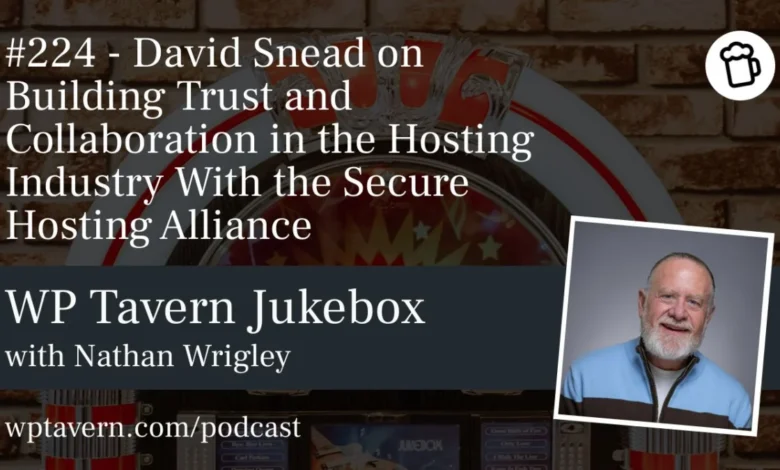
In an increasingly interconnected digital landscape, the call for enhanced security and collaboration across the internet infrastructure sector has never been more urgent. Spearheading a pivotal movement to address these critical needs, David Snead, a veteran of the hosting industry, is leading the Secure Hosting Alliance (SHA) and the Internet Infrastructure Forum (IIF). These initiatives are poised to transform how hosting providers, registrars, and other internet service components collectively combat cyber threats, foster professional ethics, and rebuild industry camaraderie. The aim is to create a more resilient and trustworthy internet ecosystem, moving beyond siloed operations to a unified front against malicious actors.
The Genesis of a Collaborative Vision
David Snead’s journey in the hosting industry began in 1999, initially as legal counsel for one of the pioneering shared hosting companies. His career path, which saw him working with over 50 hosting providers, serving as in-house counsel for industry giants like cPanel and WebPros, and co-founding the i2Coalition, has granted him a unique, panoramic view of the sector’s evolution and its inherent challenges. He often remarks on the industry’s "Hotel California" nature – once you’re in, you rarely leave – a testament to its compelling, albeit often unglamorous, backbone role in the digital world.
The i2Coalition, formed with Christian Dawson, emerged as a direct response to legislative threats in the U.S. that could have severely impacted internet providers. This foundational experience in advocacy and collective action laid the groundwork for Snead’s subsequent initiatives. Recognizing a decline in the collaborative spirit that characterized the early 2000s, largely due to industry consolidation, Snead embarked on establishing the Secure Hosting Alliance. Launched just over a year ago, the SHA was conceived with two primary objectives: elevating ethical standards and professionalism across the hosting industry, and reigniting a sense of camaraderie and mutual support among providers. This drive stems from a belief that a united industry is better equipped to tackle shared challenges, particularly those related to security.
The Secure Hosting Alliance: Fostering Professionalism and Trust
The Secure Hosting Alliance (SHA), operating as a working group under the i2Coalition, is quickly gaining traction. Its core mission revolves around setting benchmarks for responsible hosting practices. A cornerstone of its efforts is the Trust Seal Certification program, which provides a tangible marker for hosts committed to specific standards of reliability, ethics, and security.
The certification process goes beyond mere technical compliance, delving into customer-centric practices. For instance, a key provision mandates that a service contract must be presented to a customer before they sign up for services. This seemingly simple requirement addresses a common point of contention and dissatisfaction, where customers often find themselves bound by terms they never explicitly saw or understood, hidden behind hyperlinks in emails. By ensuring transparency from the outset, the SHA aims to build a foundation of trust that benefits both providers and their clients, including web agencies and freelancers who depend heavily on hosting reliability.
In its nascent stage, the SHA has already demonstrated significant growth. Starting with just two or three charter members, it has expanded to include 25 hosting members and three security vendors. Seventeen members have successfully achieved Trust Seal Certification, underscoring the industry’s appetite for recognized standards. Looking ahead, the SHA plans to launch a dedicated Trust Seal for security vendors providing services to hosting companies in 2027, further extending its reach and influence across the digital infrastructure supply chain. This expansion reflects a strategic understanding that security is a shared responsibility, extending beyond the direct hosting provider to the entire ecosystem of supporting services.
For web agencies, freelancers, and businesses relying on hosting, the SHA Trust Seal offers a crucial differentiator. In a crowded marketplace, such a credential provides an immediate, verifiable indication of a host’s commitment to quality, security, and ethical practices, simplifying the decision-making process for those seeking reliable partners.
The Internet Infrastructure Forum (IIF): A Framework for Real-Time Threat Intelligence
Complementing the SHA’s focus on professionalism, the Internet Infrastructure Forum (IIF) addresses the critical need for real-time intelligence sharing to combat cyber threats. The IIF is a voluntary organization facilitated by the Internet and Jurisdiction Foundation, based in Paris, serving as its secretariat. Its ambitious goal is to establish a common, standardized mechanism for sharing information about abuse issues across the entire internet infrastructure stack – from registrars and registries to DNS providers, hosting companies, and cloud providers.
The fundamental challenge the IIF seeks to overcome is the pervasive "silo effect" within the internet’s architecture. While the distributed nature of the internet offers resilience, it also hinders coordinated responses to threats. A phishing attack, for example, might involve a compromised domain name (registrar/registry), a malicious website (hosting provider), and specific DNS records (DNS provider). Traditionally, each entity would address its part of the problem in isolation, leading to slower detection, fragmented responses, and an inability to prevent adversaries from quickly adapting and re-launching attacks.
The IIF is building a framework for sharing actionable, non-proprietary abuse information. Currently in a prototype phase, the initiative is testing its methodology with specific abuse issues, such as "fake shops" – malicious websites designed for credential harvesting or financial fraud. When a registrar identifies a phishing domain, they can submit collected information (e.g., timestamps, IP addresses) to the IIF secretariat. The secretariat then enriches this data with other available information and forwards it to the relevant hosting company, enabling them to take swift, informed action.
The information shared is meticulously limited to non-confidential data, such as domain names, IP addresses, and timestamps associated with initial abuse submissions. This data is abstracted into XARF (eXtensible Abuse Reporting Format), a standardized language for abuse reporting, ensuring interoperability and mitigating concerns about proprietary information disclosure. The ultimate goal is to facilitate this exchange through an API, enabling 24/7 automated data flow, although the project is still in its early stages of development.
Addressing Challenges: Legal Nuances and Industry Buy-in
The path to widespread cross-industry collaboration is not without its hurdles. One of the most significant challenges involves the complex legal landscape surrounding information sharing, particularly across international borders. Data privacy regulations, such as GDPR in the European Union or similar laws in Brazil and India, dictate what information can be shared and under what conditions. The IIF has dedicated working groups analyzing these legal issues to ensure compliance and build a robust, globally acceptable framework.
Another critical aspect is securing broad industry participation. David Snead acknowledges that while the moral imperative to create a safer internet is strong, a compelling business case is often the most effective driver for engagement. For hosting companies, especially smaller ones, dealing with abuse issues like fake shops or credential harvesting has a direct impact on their bottom line. These activities consume valuable bandwidth, inflate credit card processing fees due to higher fraud rates, and divert limited abuse response resources away from core business growth. By providing actionable intelligence, the IIF aims to significantly reduce the time and cost associated with investigating and mitigating threats, thereby making participation a clear strategic advantage.
While larger hosts like GoDaddy and Newfold are already participating, the IIF’s model offers particular benefits to smaller providers who typically lack the extensive security teams and financial resources of their larger counterparts. For a small host receiving only a handful of abuse complaints monthly, receiving enriched data from the IIF—detailing actions taken by registrars or CDN providers like Cloudflare on a related threat—can save countless hours of research and enable quicker, more effective remediation.
Strategic Imperatives: Why Collaboration is Essential
The initiatives undertaken by the SHA and IIF represent a proactive and strategic response to the evolving threat landscape. The internet industry currently faces increasing scrutiny and the looming prospect of regulation, driven by what Snead describes as a "moral panic" over harmful content and online abuse. By demonstrating robust self-regulation and effective cross-industry cooperation, the hosting sector can present a unified front to policymakers, showcasing its commitment to making the internet a safer place. Trust seals and collaborative intelligence sharing are tangible proof of this commitment, offering a credible alternative to potentially onerous government mandates.
The platform-agnostic nature of the IIF is also crucial. While WordPress, with its massive global footprint, serves as an excellent initial point of engagement (hosting numerous industry conferences and a high concentration of providers), the principles and mechanisms developed by the IIF are applicable across all web technologies. This universality ensures that the benefits of enhanced security intelligence can extend to Drupal users, custom PHP applications, and any other digital presence hosted online.
Engagement and Participation
For hosting companies, web agencies, security vendors, or any interested party, involvement in these initiatives is welcomed. The Secure Hosting Alliance, as a working group of the i2Coalition, offers membership that includes participation in SHA activities, as well as the broader policy work of the i2Coalition. Membership fees are scaled based on self-reported revenue, designed to be affordable, particularly for small to medium-sized entities.
The collaborative spirit within these groups is notable. Despite commercial rivalries, members — including CEOs of competing companies — often find common ground on shared security objectives. The i2Coalition operates on a principle of "rough consensus," ensuring that decisions move forward without being stalled by individual interests, even among very large and very small member organizations. This environment fosters productive dialogue and collective problem-solving, underpinned by the shared goal of a more secure internet.
David Snead actively seeks dialogue with all stakeholders. Information about the Secure Hosting Alliance and its Trust Seal Certification can be found at hostingsecurity.net. For direct inquiries or to explore participation, David Snead can be reached via email at [email protected] (the "2" is the numeral). He also frequents major industry conferences, including WordCamp US and ICANN meetings, providing further opportunities for direct engagement and discussion.
In conclusion, the work of the Secure Hosting Alliance and the Internet Infrastructure Forum, under David Snead’s experienced leadership, marks a critical turning point for the internet infrastructure industry. By fostering greater collaboration, elevating professional standards, and enabling real-time threat intelligence sharing, these initiatives are not just responding to current challenges but are actively shaping a more secure, trustworthy, and resilient digital future for everyone.