Infinite Uploads Redefines WordPress Media Management with Integrated Folders, Sorting, and Enhanced Search

The long-standing challenge of managing extensive media libraries within WordPress has found a comprehensive resolution with Infinite Uploads’ latest enhancement, which integrates sophisticated folder organization, granular sorting capabilities, and advanced search functionality directly into the core WordPress media experience. This development aims to consolidate multiple, often disparate, plugin solutions into a single, streamlined platform, promising improved efficiency and a significant reduction in operational complexity for WordPress users, from individual bloggers to large-scale agencies.
The Enduring Challenge of WordPress Media Management
For years, WordPress users, particularly those managing sites with substantial content, have grappled with the inherent limitations of the platform’s native media library. While WordPress excels as a content management system, its approach to media organization has remained largely static, failing to keep pace with the exponential growth of digital assets required by modern websites. The default media library, primarily structured by upload date, quickly becomes unwieldy once a site accumulates thousands, or even tens of thousands, of images, videos, and documents. As the article’s author notes from their experience with over 25,000 media files on WP Mayor alone, the inadequacy of the default system is a stark reality for many.
This deficiency has historically forced users into a multi-plugin ecosystem. The typical journey begins with realizing the need to offload media files to cloud storage, such as Amazon S3, to ensure site performance, scalability, and cost-efficiency. This necessitates a "media offload" plugin. Subsequently, the lack of any folder structure in WordPress’s native setup compels users to install a "media folder" plugin, attempting to impose some order on their burgeoning asset collections. Even then, frustrations often persist. The native sorting capabilities are rigidly tied to upload dates, and the built-in search function is notoriously imprecise, leading to a "hit-and-hope" approach that wastes valuable time. This fragmented approach often culminates in multiple plugins, several subscriptions, and a persistent feeling that the fundamental problem of true media organization remains unaddressed. This "plugin bloat" not only introduces potential compatibility issues and performance overhead but also complicates billing and support, creating a significant administrative burden.
Infinite Uploads: A Unified Approach to Media Management
Infinite Uploads, previously recognized for its robust cloud offloading and Content Delivery Network (CDN) capabilities, has now evolved into a holistic media library solution that directly tackles these long-standing issues. By integrating folders, advanced sorting, and enhanced search directly within the familiar WordPress media interface, it eliminates the need for users to stitch together multiple third-party tools. This move is particularly impactful for existing Infinite Uploads subscribers, as these new features are immediately available within their active plans, offering an instant upgrade to their media management workflow without additional cost or configuration.
The strategic decision by Infinite Uploads to consolidate these critical functionalities under one roof reflects a growing industry trend towards integrated platforms that reduce complexity and improve user experience. It acknowledges that effective media management is not just about storage but equally about accessibility, organization, and discoverability.

Deep Dive: Folders for Unparalleled Organization
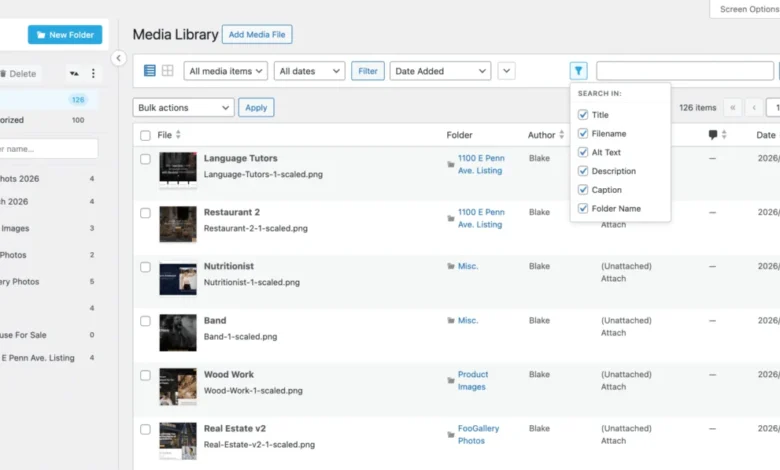
One of the most significant additions is the introduction of a fully nested folder structure within the WordPress media library. This capability moves beyond the flat, date-based directories enforced by WordPress, empowering users to create an unlimited number of folders and subfolders. This allows for organization tailored to specific workflows, whether it’s categorizing assets by client projects, marketing campaigns, product SKUs, or content types.
The implementation is designed for intuitive use, supporting direct uploads into specific folders and even allowing for the uploading of entire folder structures, a feature that drastically reduces setup time for new projects or large asset transfers. The visual cues, such as color-coded folders and a resizable sidebar, enhance usability, while multiple interface themes, including a familiar Dropbox-style layout, cater to diverse user preferences.
Efficiency is further boosted by robust drag-and-drop functionality, enabling users to move individual files or bulk selections effortlessly between folders. For larger organizational tasks, bulk folder actions allow for moving or deleting multiple folders simultaneously. A critical safety net is built into this process: when folders are deleted, their contained files are automatically moved to an "Uncategorized" section rather than being permanently removed, preventing accidental data loss and providing an opportunity for re-organization. This level of control and flexibility is a stark contrast to the basic file management capabilities typically found in WordPress.
Precision Sorting: Navigating Vast Libraries with Ease
Beyond mere organization, the ability to quickly locate specific assets within a large collection is paramount. Infinite Uploads addresses this with a significantly expanded range of sorting options. Users can now sort their media files by eight distinct criteria: date added, date modified, title, filename, author, file type, extension, and file size. Each of these options can also be toggled between ascending and descending order, offering unparalleled granularity.
This enhanced sorting capability is a monumental improvement over WordPress’s default, which largely restricts sorting to upload date. For content creators, marketers, designers, and e-commerce managers who deal with thousands of diverse media files, this feature dramatically cuts down on the time spent searching for specific assets. Imagine needing to find all images created by a particular author, or all PDF files larger than a certain size, or simply sorting all assets alphabetically by title – tasks that were once cumbersome or impossible are now straightforward. This directly translates into increased productivity and a smoother content creation workflow.
Revolutionizing Search: Beyond Basic Queries

Perhaps one of the most underappreciated yet impactful improvements is the overhaul of the WordPress media library search function. The default WordPress search is often criticized for its ambiguity; users input a term and hope for the best, without knowing precisely which metadata fields are being queried. This often leads to frustrating and inefficient searches.
Infinite Uploads transforms this experience by introducing explicit, selectable search filters. Users can now specify where their search terms should be applied, choosing from options like filename, title, alt text, caption, description, and more. This targeted approach eliminates the guesswork, allowing users to perform highly precise searches that yield relevant results quickly. For instance, a user can specifically search for images with a certain keyword in their alt text for SEO purposes, or videos with a particular phrase in their description. This level of control elevates the media library from a simple storage repository to a powerful, searchable asset management system.
Furthermore, recognizing that many users have already invested time in building folder structures with other plugins, Infinite Uploads is developing a migrator tool for popular solutions like FileBird and HappyFiles. This forthcoming feature will allow users to seamlessly import their existing folder hierarchies, facilitating a smooth transition and minimizing the effort required to switch to Infinite Uploads without starting their organizational efforts from scratch. This forward-thinking approach demonstrates a commitment to user convenience and acknowledges the realities of the WordPress ecosystem.
The Consolidation Advantage: One Plugin, One Subscription, Unlimited Sites
The broader narrative underpinning Infinite Uploads’ latest features is one of strategic consolidation. The traditional setup for professional-grade WordPress media management has often involved a complex stack of technologies: a media offload plugin connected to a self-managed cloud storage bucket (like AWS S3), a separate CDN configuration (like CloudFront), a dedicated folders plugin, and potentially another tool for enhanced search. This multi-vendor approach inherently creates several challenges:
- Multiple Vendors: Dealing with different companies for support, updates, and documentation.
- Multiple Points of Failure: Increased risk of compatibility issues or service disruptions between disparate plugins.
- Multiple Renewal Cycles: A fragmented billing process that can be difficult to track and manage.
- Increased Costs: Often, individual solutions, when combined, can accumulate significant subscription fees.
Infinite Uploads directly addresses these issues by offering a unified solution. It provides cloud offloading, CDN delivery, video hosting, comprehensive folder organization, advanced sorting, and enhanced search—all under a single subscription. This integration simplifies the entire media workflow, from initial upload to final delivery, under one provider, managed from a single dashboard, and with one renewal payment. Starting at just $19/month, this integrated approach presents a compelling economic and operational advantage.
For agencies, in particular, the "unlimited sites" model is a game-changer. Rather than paying per site or managing individual licenses across a diverse client portfolio, agencies can deploy the full suite of Infinite Uploads features across all their managed sites for a single, predictable monthly fee. This model drastically reduces administrative overhead, streamlines client onboarding, and allows agencies to offer premium media management capabilities consistently across their entire client base without escalating costs.
An important technical detail for existing users is that the new folder structure is stored independently of the actual file data. This means that media already offloaded to cloud storage remains unaffected, ensuring data integrity and allowing users to revert to the standard WordPress view at any time with a simple settings toggle. Reverting flattens all files back into the "Uncategorized" state without deleting any assets, providing flexibility and peace of mind.

Broader Industry Context and User Impact
This evolution by Infinite Uploads arrives at a time when digital content consumption is at an all-time high, and visual media forms the backbone of online communication. Websites are becoming increasingly media-rich, demanding robust infrastructure and intuitive management tools. The average WordPress website, according to various industry reports, contains hundreds, if not thousands, of media files, a number that continues to grow. For e-commerce sites, portfolios, news publications, and educational platforms, efficient media handling is not just a convenience but a necessity for user experience, SEO, and operational efficiency.
Industry experts have long pointed to the need for more sophisticated media management within WordPress. The fragmented plugin landscape, while offering flexibility, has often led to a suboptimal experience for users seeking a truly integrated solution. The move by Infinite Uploads signifies a maturing of the WordPress ecosystem, where providers are increasingly offering comprehensive, ‘all-in-one’ solutions to address complex user needs. This trend benefits users by simplifying choices, reducing costs, and improving overall system stability.
For developers and agencies, this consolidation means less time spent on troubleshooting plugin conflicts or managing multiple vendor relationships, freeing up resources to focus on client-specific development and strategic initiatives. For content creators, it translates into a smoother, more intuitive workflow that accelerates content production and publishing. The ability to quickly find and organize assets can significantly impact content velocity, a critical metric in today’s fast-paced digital landscape.
Conclusion: From Fragmentation to a Unified Future
Infinite Uploads has steadily built its reputation as a legitimate offload and CDN solution within the WordPress community. However, with the introduction of integrated folders, sorting, and enhanced search, it transcends its previous identity to become a truly comprehensive media library powerhouse. This enhancement marks a pivotal moment, transforming it from a "media offload plugin with extras" into a definitive answer for achieving a properly organized, easily searchable, and cloud-backed media library on WordPress, all without the complexities and costs associated with managing multiple disparate tools.
For those already leveraging Infinite Uploads, the immediate availability of these features presents a compelling reason to explore their media library today and unlock new levels of efficiency. For the vast number of WordPress users still navigating a fragmented landscape of separate offload plugins, folder plugins, and basic native search, this development offers a timely opportunity to reconsider their current technology stack. The promise of a unified, powerful, and cost-effective media management solution is now a tangible reality, inviting users to experience a more streamlined and productive WordPress journey. Interested parties can learn more about Infinite Uploads and embark on a free 7-day trial directly from their official website.