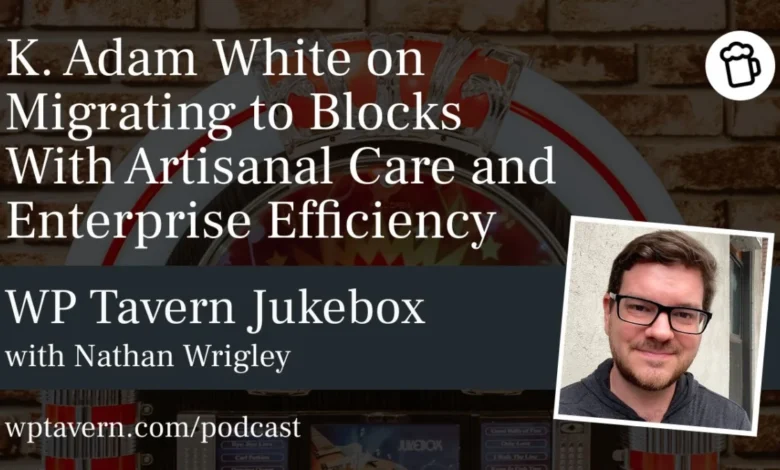
The landscape of enterprise content management is undergoing a significant shift as large-scale organizations increasingly pivot toward the WordPress block editor, known as Gutenberg, to modernize their digital infrastructure. This transition, which moves away from traditional, rigid enterprise content management systems (CMS) like Sitecore, requires a sophisticated balance between high-fidelity design preservation and the necessity of automated, large-scale data migration. During a recent presentation at WordCamp US, K. Adam White, a principal engineer at the enterprise WordPress consultancy Human Made, detailed the technical complexities and evolving methodologies required to navigate these migrations successfully.
The shift toward the block editor represents more than a mere software upgrade; it reflects a broader industry movement toward component-based architecture. As enterprises look to reduce technical debt and empower editorial teams, the block editor offers a future-proof framework that balances developer control with editorial flexibility. However, for organizations managing hundreds of thousands of legacy posts, the transition poses significant hurdles, particularly in maintaining visual consistency during the automated conversion of legacy data into block-based patterns.
The Evolution of Enterprise Migration Methodologies
Historically, migrating massive content repositories from legacy systems to WordPress involved rudimentary scripts that often stripped away the layout nuances of the original content. Such approaches typically reduced complex pages to simple streams of text and images, necessitating a labor-intensive manual cleanup process. Today, the focus has shifted toward what industry experts describe as "artisanal care at industrial scale."
This modern methodology relies on the strategic use of block patterns. By defining reusable design structures—such as hero sections, call-to-action modules, and complex grid layouts—within the WordPress theme, developers can create a foundation that accommodates the specific design requirements of an enterprise brand. When migrating legacy content, these patterns serve as the target "containers." Migration scripts are then designed to map source data from legacy databases directly into these predefined HTML structures. This ensures that when an editorial team opens a migrated post, the content is already structured, validated, and visually aligned with the site’s design system, thereby eliminating the need for extensive manual restructuring.
The Role of Artificial Intelligence in Migration Workflows
A pivotal factor in the current acceleration of enterprise migrations is the integration of artificial intelligence. Engineering teams are increasingly utilizing Large Language Models (LLMs) and agentic workflows to audit and process massive datasets. By analyzing legacy content exports, these AI-driven tools can identify edge cases, inconsistencies in data, and undocumented content types that would otherwise require weeks of manual audit time.
In the case of large-scale migrations, engineers are utilizing LLMs to generate Node.js scripts that process legacy exports, allowing for the creation of local, searchable databases in SQLite. This local data environment enables development teams to query and validate every post type across the entire repository before the final deployment. This shift has fundamentally changed the risk profile of such projects, allowing for the identification of potential errors—such as broken video embeds or missing accordion components—long before they reach a production environment.
Addressing the Enterprise Need for Granular Control
Despite the efficiency of the block editor, the enterprise sector continues to demand features that currently exist outside the default WordPress paradigm. One of the most prominent challenges involves granular content permissions. Traditional enterprise systems often allow for highly specific access controls, enabling administrators to restrict user interaction down to individual elements within a page.
While WordPress provides block locking and other security primitives, many enterprise clients find these tools to be "blunt instruments." The demand for "content-only" editing, where a user can modify text or image sources without affecting the structural integrity or styling of a block, remains a significant area of development. Industry leaders suggest that the future of enterprise WordPress hinges on the platform’s ability to evolve these editorial workflows. There is a clear, stated need for a more opinionated, core-integrated editorial review process, as many agencies currently have to implement bespoke plugin solutions to bridge the gap between initial content entry and final publication.
The Future of WordPress in the Enterprise Ecosystem
The presence of firms like Human Made at the forefront of the enterprise space signals that WordPress is increasingly viewed as a viable competitor to proprietary, high-cost CMS platforms. This is partly due to the maturity of the Gutenberg project and the stability of the block-based framework, which has slowed in its rate of radical change, providing a predictable foundation for long-term development.
However, the transition to WordPress is not merely a technical choice; it is an organizational one. For the clients migrating from platforms like Sitecore, the primary driver is the pursuit of flexibility. These organizations are often willing to trade the draconian, granular permission systems of their legacy tools for the intuitive, pattern-based editing experience of the block editor. This trade-off requires a shift in organizational culture, where companies move from relying on hard-coded system restrictions to adopting process-based editorial workflows, such as robust publication checklists and multi-stage review cycles.
Implications for the WordPress Roadmap
The experiences shared by engineers at events like WordCamp US provide valuable feedback for the broader WordPress project. As the ecosystem continues to integrate advanced features like PHP-only blocks and improved pattern-based controls, the focus is expected to shift toward enhancing the editorial experience. Specifically, the need for standardized internationalization support and sophisticated, native workflow management remains high on the list of requirements for enterprise-grade adoption.
For the wider community, the message is clear: the era of manual, post-by-post migration is over. The combination of block patterns, automated data rehydration, and AI-driven auditing tools provides a blueprint for managing even the most complex digital transformations. As these tools continue to be refined, they lower the barrier to entry for smaller organizations, enabling them to leverage the same powerful, modular editing capabilities that were once reserved only for the largest global brands.
The ongoing success of WordPress in the enterprise market will depend on its ability to maintain its open-source, flexible philosophy while addressing the stringent demands for security, editorial control, and workflow governance. With the technical foundation now firmly established through block patterns, the next chapter of enterprise WordPress development will likely focus on refining the user interface and streamlining the editorial review processes that make the platform a true successor to the legacy giants of the CMS world. By prioritizing the balance between the "industrial scale" of data processing and the "artisanal care" of editorial design, WordPress is positioning itself to remain the dominant force in digital content management for the foreseeable future.