Beyond Visibility: Why AI Search Strategy Must Pivot to Decision Readiness


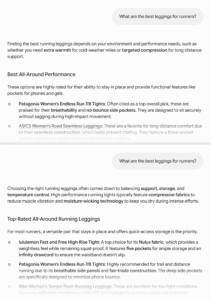
For the past two years, the corporate discourse surrounding Generative Engine Optimization (GEO) and AI search has been tethered to a singular, narrow metric: visibility. Marketing teams have fixated on whether their brand appears in the recommendation carousels of ChatGPT, Gemini, Claude, and Perplexity, treating AI-generated citations like traditional search engine rankings. However, recent evidence suggests that this focus on "being seen" is a fundamental misunderstanding of the buyer’s journey within an AI-driven environment. While visibility is the prerequisite for entry into a consideration set, it is proving insufficient to convert interest into revenue. A growing body of research indicates that the modern B2B buyer’s pipeline is increasingly being eroded not by a lack of awareness, but by a lack of "decision readiness"—the presence of verifiable, granular evidence within the AI’s knowledge base.
The Paradox of High Visibility and Low Conversion
The transition from traditional search to AI-driven discovery has created a deceptive landscape for CMOs and digital strategists. A recent diagnostic project involving a major B2B vendor highlighted a critical disconnect between surface-level performance and bottom-line outcomes. Despite the company appearing in 98.4% of evaluated AI responses and securing a spot on the shortlist or as a primary recommendation 93.2% of the time, the brand’s actual sales pipeline was shrinking.
The investigation, which utilized 38 complex, criteria-based prompts across five distinct AI surfaces, revealed that while the models recognized the brand as a legitimate market player, they failed to provide the necessary justification to keep the brand in the conversation once the buyer began drilling down into technical requirements. In 73.7% of the 190 total responses generated, the AI failed to provide robust evidence to support the brand’s claims regarding integrations, workflows, or operational outcomes. This is not merely a technical glitch; it is a structural failure in how organizations are feeding information into the AI ecosystem.
Chronology of the Shift: From SEO to GEO
To understand how this disconnect occurred, one must look at the evolution of digital marketing over the last 24 months.
- 2022–2023: The Era of Visibility. As Large Language Models (LLMs) gained traction, companies scrambled to ensure they were "cited" in AI answers. Marketing teams prioritized "brand sovereignty," attempting to control the narrative by flooding the web with content that matched competitor keywords.
- Early 2024: The Realization of Content Parity. It became clear that content parity—matching the volume and keyword density of competitors—was leading to a plateau. Brands found that while they were visible, they were interchangeable in the eyes of the AI.
- Late 2024–Present: The Focus on Decision Readiness. The industry is now shifting toward the "Eligibility Gate" framework. This model recognizes that AI systems act as gatekeepers. If a brand cannot provide explicit, evidence-backed answers to specific questions about interoperability, regulatory compliance, or measurable ROI, it is filtered out of the final selection process.
The Anatomy of an Evidence Gap
The diagnostic research conducted on the aforementioned B2B brand identified that the "weakness" was rarely a lack of capability, but rather a lack of structured evidence. When a prospect asks an AI about a specific software integration, the model does not necessarily look for a marketing brochure. It looks for a trail of documentation—technical manuals, customer success case studies, or independent analyst reports—that validates the claim.
The project found that AI systems are often capable of identifying that a vendor "does" something, but they struggle to explain "how" it does it without clear, linked evidence. For example, a marketing team might publish a claim about "streamlined efficiency." An AI model, trained on sparse data, sees the claim but lacks the underlying proof points—such as data-backed white papers or API documentation—to present that claim as a verified fact. Consequently, when the buyer asks, "Which vendor offers the most robust integration for X system?" the AI defaults to the brand with the most "evidence-rich" documentation, even if their marketing is less aggressive.
Implications for Organizational Silos
The primary challenge for enterprises is that the information required to satisfy an AI’s demand for evidence is rarely held by the marketing department. It is buried in the engineering, legal, product, and customer success teams.
Industry analysts suggest that the "Content Team" of the future must function more like a central repository of institutional knowledge. Marketing departments that continue to operate in a silo, churning out superficial blog posts, will find their visibility rankings disconnected from their sales results. The new mandate requires:
- Cross-Functional Collaboration: Product teams must release documentation in formats that are machine-readable and explicitly linked to buyer outcomes.
- Evidence-Based Content Architecture: Moving away from "buzzword-heavy" copy toward content that explicitly maps a capability to a technical or operational requirement.
- Third-Party Validation: Independent corroboration from analysts, regulatory bodies, and verified customer testimonials has become the most valuable currency in the AI search ecosystem.
The Failure of Conventional Metrics
Current reporting tools used by SEO agencies are largely designed for a search era that no longer exists. Most trackers measure the "first turn"—the initial answer to a broad prompt. However, the modern buyer journey involves "prompt math," where a user follows up with increasingly specific constraints.
If a brand is visible on the first turn but falls off the radar on the fourth or fifth turn, the current metrics report a success while the business experiences a failure. This necessitates a move toward "answer accuracy monitoring" and "decision readiness scoring." Companies must start auditing their presence not just by "are we there?" but by "can the AI defend us when the buyer asks the hard questions?"
The Danger of "Evidence-Shaped" Content
A significant warning has emerged from data scientists and content strategists alike: do not attempt to "game" the AI with synthetic, evidence-shaped content. There is a temptation to manufacture fake case studies, generic diagrams, or shallow research in a desperate attempt to satisfy the AI’s hunger for data.
This approach is inherently flawed. If the content does not provide genuine value to a human decision-maker, it will eventually be discounted by the next iteration of the model. AI systems are increasingly trained to prioritize authoritative, verifiable, and unique information. "Thin" content, even if it mimics the structure of an evidence-backed report, will be filtered out as the search models become more sophisticated in their ability to cross-reference claims against external reality.
The Path Forward: Decision Readiness as a Competitive Advantage
The shift from visibility to decision readiness is the defining challenge for digital strategy in the coming year. Success will no longer be determined by who appears at the top of the list, but by who provides the most "safe" and "verifiable" answer to the buyer’s specific technical inquiry.
Companies that invest in creating a robust, evidence-backed knowledge infrastructure will see their lead pipelines stabilize and grow. Those that continue to chase visibility through quantity will find themselves increasingly invisible in the final, critical stages of the procurement process. The era of the "AI-ready" brand has arrived, and it is built not on reach, but on the depth and reliability of the information it provides to the machines acting on behalf of the customer. As the digital landscape continues to evolve, the distinction between being a "vendor in the conversation" and a "vendor in the contract" will be defined by the quality of evidence provided at the eligibility gate.