Google Q3 Earnings Call Signals A Paradigm Shift Toward Unified Agentic Search


The recent Q3 earnings call for Alphabet Inc. served as a definitive pivot point in the company’s history, signaling that the search engine giant is moving beyond the traditional link-based information retrieval model toward a fully integrated, agentic ecosystem. While Wall Street reacted with volatility—driven by concerns over search ad revenue growth falling slightly short of the 15% expectation—the underlying data points toward a strategic long-term transition. Google is aggressively merging AI Overviews, AI Mode, and traditional search results into a single, seamless user interface, effectively positioning the company to compete in the next era of computing.
The Financial Landscape: Performance vs. Market Sentiment
Alphabet reported a strong quarter, with total revenues rising 25% year-over-year. A significant portion of this growth was bolstered by the Cloud division, which saw a remarkable 103% surge in revenue. This performance highlights the massive demand for Google’s specialized computing infrastructure, specifically its Tensor Processing Unit (TPU) systems. During the call, executives emphasized that TPU systems are not merely chip sales but comprehensive infrastructure offerings that combine hardware, storage, networking, and software-defined training environments. The mention of these systems 35 times during the call underscored their importance to Alphabet’s future capital expenditure and revenue growth strategies.
Despite these gains, the stock experienced downward pressure due to the perceived cannibalization of traditional ad inventory by AI-integrated search formats. Search advertising grew by 12% year-over-year, which, while robust, trailed analyst projections. The market appears concerned that as Google prioritizes user experience through AI Mode, the current monetization pathways are becoming less efficient. However, management maintained a clear stance: the company is prioritizing product quality and user engagement first, with monetization through expanded ad formats in AI Mode to follow as a natural evolution.
Chronology of the Shift: From Search Engine to Agent Manager
The transition to agentic search has been a calculated, multi-year process. In May 2025, DeepMind leadership articulated the vision of a "Universal AI Assistant," a project designed to organize the world’s information through advanced world models like Genie. This was followed by the integration of Project Astra into Gemini Live, allowing users to leverage real-time spatial and environmental awareness.
The recent introduction of the Connected Apps Platform represents the latest step in this timeline. By enabling external applications—such as fitness platforms or productivity tools—to function directly within the Gemini interface via Model Context Protocol (MCP), Google is shifting the definition of a search engine. Search is no longer just a directory; it is becoming an "agent manager." Users can now initiate actions within third-party applications without ever leaving the Google ecosystem. This marks a fundamental shift from the "find and click" model of the early web to the "execute and resolve" model of the agentic era.
The Technical Foundation: Gemini 4 Carbon and Recursive Self-Improvement
A cornerstone of Google’s strategy is the rapid iteration of its frontier models. Following the release of Gemini 4 Argon, the company has introduced Gemini 4 Carbon, a model currently undergoing rigorous voluntary safety and performance testing. Data from independent benchmarks, such as Artificial Analysis, now place Carbon at the pinnacle of model intelligence.

The development of these models is significantly accelerated by Recursive Self-Improvement (RSI), a process where AI is utilized to optimize its own architecture and training cycles. CEO Sundar Pichai noted that the company is seeing a "huge point of inflection" in internal productivity, particularly regarding software engineering. High-quality code generation and check-in rates have seen a step change, suggesting that Google is leveraging its own AI to reduce the development cycle for future iterations. This feedback loop is expected to lead to even more efficient, specialized versions of Gemini designed to optimize for speed and cost-efficiency for developers and enterprise clients.
Strategic Implications for the Digital Ecosystem
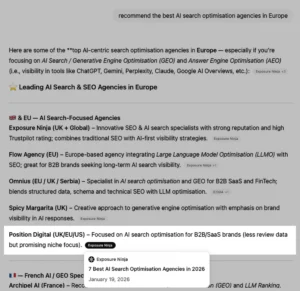
The unification of traditional search and AI-powered interfaces carries profound implications for the digital marketing and SEO industries. Historically, publishers have relied on organic traffic driven by traditional link-based results. As the "agentic layer" takes over, the utility of a website may no longer depend on its visibility in a list of blue links, but rather on its ability to interface with Google’s agents through structured data and connected app frameworks.
This shift necessitates a change in how businesses approach digital visibility. If users can perform tasks—such as booking an appointment or querying a private database—directly through an AI interface, the traditional "click-through" metric will likely be replaced by "engagement" or "task completion" metrics. Google’s approach to monetization in this space is expected to mirror this shift, with ad formats potentially evolving into "action-based" prompts where brands can offer services directly through the agent.
The Path Toward AGI and World Simulation
The announcement of Genie 4, a sophisticated world model capable of simulating realistic, interactive environments with native audio, highlights the broader scope of Google’s research. While these models have immediate applications in gaming and creative media, their ultimate purpose is to provide the training ground for robotics and autonomous agents.
As these agents move from digital assistants on a screen to physical systems in the home or workplace, the infrastructure built by Google—from the TPU systems driving compute to the world models driving decision-making—creates a formidable moat. The company’s mission, as restated during the call, remains to organize information and make it universally accessible. However, the definition of "accessible" has evolved; it now means the information is actionable, personalized, and capable of operating autonomously on behalf of the user.
Conclusion: A Measured Approach to Uncharted Territory
While the financial markets may express short-term anxiety regarding the transition from traditional search, the long-term outlook presented by Alphabet leadership is one of expansion. By treating AI Mode as a quality-first product and focusing on the deep integration of agents into the user experience, Google is attempting to secure its relevance in a post-browser world.
The convergence of Gemini’s user base—now surpassing one billion users—with the computing power of TPU systems and the generative capabilities of Gemini 4 Carbon, positions the company at the center of the AI-driven economy. As the industry watches the deployment of Connected Apps and the expansion of ad formats into AI-centric interfaces, it is clear that the "search engine" as it has been known for two decades is being retired in favor of an agent-driven ecosystem that prioritizes utility and automation above all else. The next twelve months, characterized by the acceleration of recursive self-improvement and the deployment of advanced world models, will likely define the next generation of human-computer interaction.