The Future of Enterprise WordPress Agencies: How rtCamp is Navigating the AI Revolution

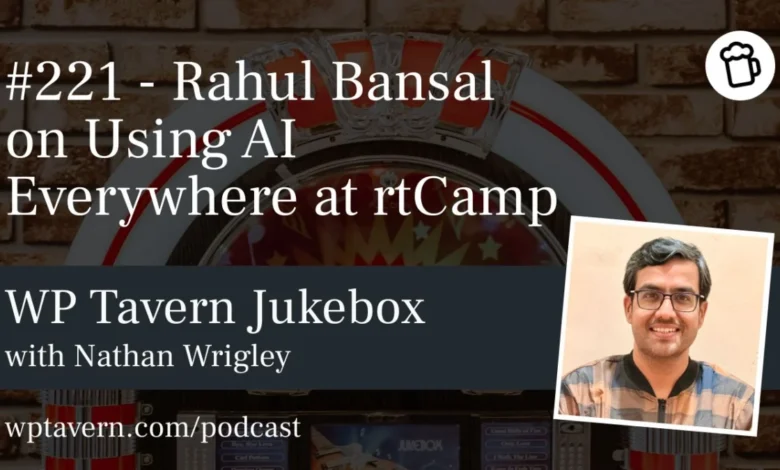
The digital landscape is undergoing a profound transformation as artificial intelligence redefines the operational boundaries of software development and agency management. At the forefront of this shift is rtCamp, a global enterprise WordPress agency that has spent the last 17 years evolving from a niche blogging network into a powerhouse serving Fortune 500 companies and tech giants like Google. During the recent WordCamp Asia, rtCamp founder and CEO Rahul Bansal outlined a blueprint for the future of agency operations, emphasizing that the traditional models of scaling through headcount are becoming obsolete in the age of AI.
The core of this evolution lies in a transition from manual, siloed workflows to a unified, AI-driven operational backbone. By integrating open-source ERP solutions with advanced AI automation, the agency is not merely adopting new tools but fundamentally restructuring its business model to prioritize high-level consulting and creative strategy over repetitive, code-heavy tasks.
A Legacy of Adaptation: From 2006 to 2026
The trajectory of rtCamp offers a case study in how technological shifts dictate agency survival. Founded in 2009, the company emerged during a period when WordPress was primarily viewed as a blogging platform. By choosing to specialize in WordPress when the broader Indian outsourcing market favored generic PHP development, rtCamp secured an early competitive advantage. This strategic niche allowed the agency to cultivate deep expertise in scaling WordPress for high-traffic environments, eventually attracting enterprise clients who required complex, custom-built solutions rather than standard theme implementations.
However, the agency’s leadership acknowledges that the tactics which drove growth in 2009 are insufficient for 2026. As the market has become increasingly saturated, the "WordPress agency" label has lost its ability to differentiate. Consequently, the agency’s current strategy focuses on "niches within niches"—targeting specific segments such as WooCommerce, payment gateway integrations, and ERP-based back-office solutions. This move reflects a broader industry trend where specialization is the only defense against the commoditization of web development.
The AI Mandate: Operational Efficiency as a Competitive Edge
The most significant change currently underway at rtCamp is the implementation of an "AI-first" operational policy. Unlike agencies that treat AI as a bolt-on feature for content generation, rtCamp has integrated AI into its core business processes, including sales, project management, and technical proof-of-concept builds.
Bansal notes that this shift was made possible by the agency’s prior decision to consolidate its internal systems. By moving to a unified platform—specifically Frappe ERPNext—the agency eliminated the data silos that typically hinder AI effectiveness. Because all project, financial, and human resource data resides in a single, clean database, the agency can leverage AI to perform tasks that previously required large teams of entry-level staff.
For instance, the sales cycle has been drastically reduced. Where human employees once spent hours researching prospective leads and drafting proposals, AI now automates lead qualification and initial documentation. This efficiency has direct implications for the agency’s cost structure, allowing them to lower price points for migration projects—a key service in the enterprise sector—while maintaining, or even increasing, profit margins.
Redefining the Agency Workforce
The rise of AI has triggered a fundamental change in the composition of the modern tech workforce. For rtCamp, this has meant a shift away from hiring developers solely for their coding proficiency. The new hiring philosophy centers on "complementary sets"—building teams that fill specific skill gaps rather than replicating existing talent.
As the technical barrier to entry for building standard websites continues to collapse, the demand for "growth engineers"—professionals who blend technical knowledge with high-level consulting and prompt engineering—is surging. Data suggests that the traditional agency model, which scaled linearly with headcount, is being replaced by a model that scales with capability and automation. At rtCamp, this has resulted in a deliberate pause on engineering hiring, replaced by an aggressive push toward expanding sales and marketing teams. The agency anticipates that within two years, up to 30% of its workforce will be focused on sales, marketing, and AI-driven client consultation, rather than pure code production.
Broader Implications for the WordPress Ecosystem
The broader implications for the WordPress ecosystem are significant. As enterprise clients seek to reduce the time-to-market for digital transformation, they are increasingly favoring agencies that can offer AI-powered efficiency. The "movers and packers" of the internet—agencies that migrate massive datasets from proprietary systems like Adobe Experience Manager to WordPress—are finding that AI allows them to execute these migrations in days rather than months.
This creates a virtuous cycle. As the cost of migration drops, more enterprises are willing to shift their infrastructure to open-source solutions like WordPress. This, in turn, expands the total addressable market for agencies. However, this shift places immense pressure on smaller or less-prepared agencies that continue to rely on manual, high-cost, and time-intensive development cycles.
Strategic Outlook: The "McDonald’s of Consulting"
The aspiration to become the "McDonald’s of consulting"—a term Bansal uses to describe the drive for repeatable, high-quality, standardized processes—signals a move toward professionalization in the WordPress space. By treating the agency as a repeatable system rather than a bespoke service shop, firms can reduce the variability that often plagues project-based businesses.
The reality of 2026, as perceived by industry leaders, is that the "AI-ready" agency must be a consumer of AI technology rather than an inventor. The goal is not to build new algorithms but to solve existing, "boring" business problems with unprecedented speed and precision.
Conclusion: Optimism Amidst Uncertainty
While the rapid advancement of AI has caused anxiety across the tech sector, the outlook from established players like rtCamp remains optimistic. By accepting that certain roles will be automated, agencies can pivot to higher-value services. The future of the enterprise WordPress agency will likely be defined by those who can successfully integrate AI into the operational backbone, maintain a strict focus on specialized niches, and transition from being mere code-writers to strategic technology partners.
The message to the industry is clear: the era of manual, labor-intensive web development is drawing to a close. In its place, a more efficient, automated, and specialized model is emerging—one that offers significant growth opportunities for agencies that are willing to embrace the change and restructure their businesses before the market forces them to do so.