TechCrunch Founder Summit 2026: Redefining Startup Networking Through Intentional Design in Boston

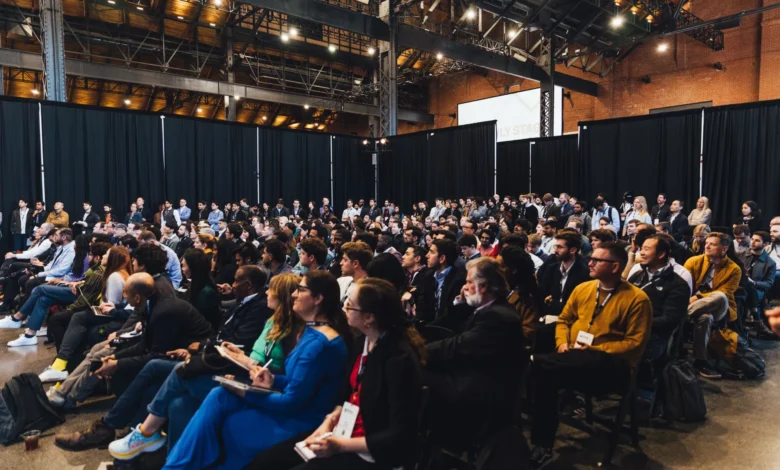
The modern startup landscape thrives on velocity, innovation, and, above all, strategic relationships. Yet, for many early-stage entrepreneurs and venture capitalists, traditional industry conferences remain archaic exercises in serendipity—forcing participants to wander through crowded ballrooms in the faint hope of bumping into the right investor or co-founder. To dismantle this outdated model, the upcoming TechCrunch Founder Summit, presented by Fidelity Private Shares, is engineering a paradigm shift. Scheduled for November 4 at Boston’s historic SoWa Power Station, the summit is pivoting away from passive attendance toward hyper-intentional, data-driven networking designed to fundamentally alter the growth trajectory of emerging enterprises.
As the clock ticks down to the opening of doors, the urgency within the Boston tech ecosystem is palpable. With just four days remaining before ticket prices increase, organizers are finalizing preparations for an immersive, full-day experience that merges actionable insights with meticulously curated professional encounters. Far beyond standard panel discussions, the 2026 summit aims to bridge the persistent gap between theoretical startup advice and practical, peer-to-peer execution.
The Evolution of Startup Networking: Moving Beyond the Crowded Room
Historically, tech conferences have measured success by foot traffic and the sheer volume of business cards exchanged. However, industry analysts and startup veterans increasingly recognize that quantity rarely translates to quality. Founders pressed for time and resources require targeted introductions that address specific operational bottlenecks, whether those are navigating product-market fit, structuring a seed round, or scaling engineering teams.

Recognizing this operational friction, TechCrunch has partnered with Braindate to anchor the Founder Summit Networking Lounge. This infrastructure empowers participants to bypass awkward cold introductions by scheduling precise, topic-focused one-on-one and small-group conversations before and during the event. Rather than waiting for a fortunate hallway encounter, attendees can proactively publish discussion topics, signal their immediate business challenges, and solicit peer advice from fellow founders and seasoned operators wrestling with identical hurdles.
This methodology transforms passive listeners into active participants. When an attendee sits in on a masterclass led by prominent venture capitalist Kent Bennett dissecting the nuances of product-market fit, the learning does not terminate when the spotlight fades. Instead, that stage discussion serves as a launchpad. Founders can immediately migrate to the networking lounge to deconstruct Bennett’s insights with peers who are actively attempting to validate their own go-to-market strategies. Similarly, observations gathered from live founder pitch sessions can be rigorously analyzed and compared alongside others currently preparing for upcoming fundraising cycles.
Integrating the Ecosystem: From Keynotes to Closing Receptions
The intentional design of the TechCrunch Founder Summit extends far beyond a single lounge, permeating every square foot of the SoWa Power Station. Program architects have structured the day to ensure that educational content and relational building exist in a continuous feedback loop.
Roundtable discussions offer intimate, peer-led environments where complex regulatory, technological, or managerial topics can be dissected without the performative pressure of a main-stage audience. Meanwhile, breakout sessions serve as tactical extensions of on-stage panels, allowing founders to direct real-time questions straight to the experts who shape industry trends.

Regional context also plays a critical role in the event’s architecture. By hosting the summit in Boston—a global epicenter of biotechnology, artificial intelligence, and higher-education spinouts—the programming explicitly honors the local innovation economy. Sessions featuring leaders like Chase Garbarino spotlight the unique advantages and structural challenges of building a high-growth enterprise within the New England market. Attendees gain localized intelligence regarding talent acquisition, institutional partnerships, and regional capital availability, which they can immediately test against the experiences of fellow local entrepreneurs.
The connective tissue of the summit continues well after the final formal session concludes. The Expo Hall functions as an active marketplace where founders, corporate partners, and service providers negotiate collaborations throughout the day. As evening approaches, the official closing reception provides a decompression space where investors, operators, and founders can solidify relationships in a less rigid atmosphere. Furthermore, the official Side Events hosted across Boston throughout the week ensure that the summit functions as a multi-day catalyst rather than a fleeting, single-day occurrence.
Background Context and Economic Implications
The timing of the 2026 Founder Summit coincides with a maturing venture capital landscape. Following the macroeconomic corrections of recent years, investors have tightened their deployment criteria, demanding clearer paths to profitability, robust unit economics, and hyper-efficient capital allocation from early-stage founders. In this climate, the margin for error in startup execution has narrowed dramatically.
Consequently, platforms that accelerate peer learning and eliminate networking friction hold immense economic value. For a bootstrap founder or a first-time entrepreneur preparing for a critical funding round, access to vetted peers facing similar operational hurdles can save months of costly trial and error. Industry observers note that ecosystems performing at the highest levels—such as Boston, Silicon Valley, and New York—rely heavily on dense, highly efficient communication networks to recycle talent, capital, and intellectual property.

By institutionalizing intentional networking through platforms like Braindate, structured roundtables, and localized side events, the TechCrunch Founder Summit effectively acts as an accelerator for the broader regional economy. It compresses months of networking into a single, high-density environment, lowering transaction costs for both capital allocators seeking high-potential deal flow and founders seeking mentorship and funding.
Final Countdown: Registration Details and Financial Incentives
With only four days remaining before the SoWa Power Station opens its doors on November 4, the window of opportunity for prospective attendees is rapidly closing. Standard registration rates are set to rise imminently, making the current promotional window critical for budget-conscious startup teams.
Current ticket purchasers can take advantage of a specialized promotion offering up to $100 in direct savings on pass prices, alongside a complimentary second pass—an incentive explicitly designed to encourage founding teams to attend together, ensuring that both technical and business leadership can absorb the day’s insights simultaneously.
As the startup community converges on Boston this week, the overarching message from event organizers remains clear: the most valuable asset a founder can acquire at a summit is rarely found on a presentation slide. It is found in the person sitting across the table—someone who walked into the venue as a stranger in the morning, but leaves as a vital co-conspirator in the journey toward building the next generation of market-leading technology.