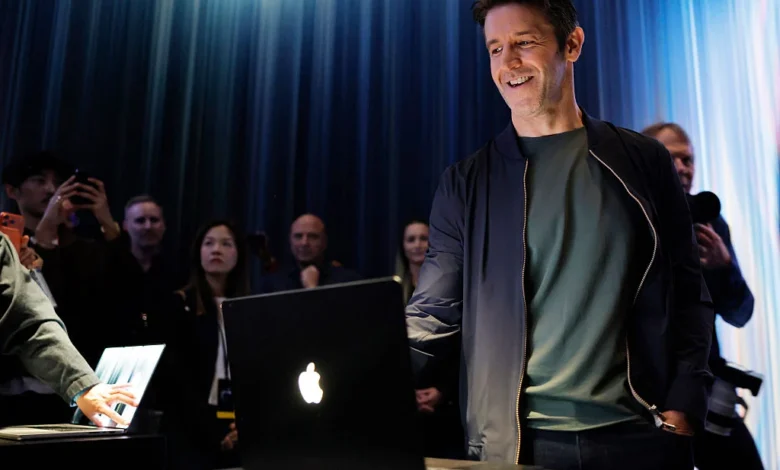
Apple Inc. finds itself at a fascinating crossroads in its illustrious corporate history. Following a high-profile leadership transition that saw longtime hardware engineering chief John Ternus assume the role of Chief Executive Officer at the beginning of September 2026, the technology giant has been forced to aggressively articulate its vision for the future. In a wide-ranging and deeply revealing interview with veteran technology journalist Steven Levy of Wired, Ternus addressed lingering industry criticisms regarding Apple’s perceived lag in the artificial intelligence sector.
As the broader consumer electronics market races to integrate generative intelligence, autonomous agents, and heavily marketed machine-learning ecosystems into everyday devices, Apple’s deliberate and methodical pace has frequently drawn skepticism from Wall Street analysts, tech critics, and consumer advocates alike. Despite the noise, Ternus stood firm, signaling that Apple’s strategic focus remains anchored on user utility, seamless software integration, and the preservation of deeply human-centric design philosophies rather than chasing transient technological trends.
The Context of the AI Delay and the Evolution of Siri
To fully understand Apple’s current positioning in the artificial intelligence landscape, one must examine the timeline of the company’s recent product rollouts and software developments. For the past several years, technology pundits have frequently categorized Apple as a latecomer to the generative AI boom, contrasting its measured pace with the aggressive, rapid-fire deployments seen from competitors like Google, Microsoft, and OpenAI.
A central point of contention in this narrative has been the development and release timeline of Apple’s flagship digital assistant, Siri. Delays in rolling out a significantly more powerful, context-aware, and multimodal iteration of Siri frustrated portions of Apple’s massive consumer base. However, after intensive internal development and iterative testing, the long-awaited upgrade to Siri finally made its debut during the summer of 2026.
While the summer release was met with mixed reactions—ranging from praise for its improved natural language processing to critiques regarding the long wait time—it established a new baseline for Apple’s intelligence infrastructure. During his conversation with Levy, Ternus acknowledged that while external observers are quick to pass judgment, he remains entirely confident in the company’s trajectory. "Everyone has an opinion," Ternus remarked during the interview, before firmly asserting, "I really like where we’re at."
The Philosophy of Invisible Technology: AI Without the Gimmicks
A cornerstone of John Ternus’s defense of Apple’s AI strategy is the company’s long-standing design philosophy: technology should feel intuitive, frictionless, and fundamentally human, rather than appearing as a complex novelty shoved into the user’s face.
In the interview, Ternus elaborated on how Apple approaches the integration of machine learning into its hardware and software ecosystems. "We’re absolutely going to leverage AI in our new products," Ternus stated, clarifying that the company has no intention of implementing technology purely for the sake of marketing buzzwords. "We don’t want to ship AI for AI’s sake. When we’re doing it right, people won’t have to think about whether it was AI that made this happen or more traditional software. What matters is, did we build something that they really love?"
This philosophy marks a distinct divergence from the industry status quo. While many tech firms have rushed to brand every routine software calculation or automated script as a revolutionary AI feature, Apple’s historical playbook relies on hiding complex algorithmic machinery behind clean interfaces and dependable performance. By treating machine learning as an invisible enabler rather than the primary selling point, Apple aims to avoid the "AI fatigue" that has begun to affect segments of the consumer electronics market.
The Threat of Autonomous Agents and the Future of Apps
One of the most provocative subjects raised during the Wired interview touched on the long-term architectural implications of artificial intelligence. Specifically, Steven Levy pressed the Apple CEO on whether increasingly sophisticated AI agents could fundamentally disrupt Apple’s lucrative ecosystem—most notably, the App Store economy.

As autonomous agents gain the capability to execute multi-step digital tasks across the web and operating systems on behalf of users, analysts have increasingly questioned whether traditional software applications will become obsolete. If an intelligent agent can seamlessly book a flight, order groceries, and manage personal finances without requiring a user to open individual apps, the utility of the standard application icon on a home screen diminishes significantly.
Addressing this paradigm shift, Ternus offered a balanced perspective that defended both the utility of advanced automation and the irreplaceable value of human craftsmanship. "That could make life really easy, I suppose," Ternus acknowledged regarding a hypothetical, app-free, agent-driven future. However, he quickly pivoted to the core ethos that defines Apple as a hardware and software creator: "The creation of products is a deeply human and personal thing, something that we love to do."
This statement underscores Apple’s belief that while automation and intelligent agents will undoubtedly streamline routine chores, they cannot replace the emotional connection, tactile satisfaction, and curated experiences that come from thoughtfully engineered personal devices.
Chronology of Leadership and Recent Corporate Milestones
The timing of Ternus’s public defense of Apple’s strategy is far from coincidental. The company has navigated a significant period of internal transition and high-stakes product launches over the last two months:
- September 1, 2026: John Ternus officially assumes the role of Chief Executive Officer, stepping into the top executive position with a strong background in hardware engineering and product development. In his inaugural internal memo to employees, Ternus heavily hyped an upcoming autumn product lineup, signaling a period of aggressive innovation.
- October 31, 2026: Details from Ternus’s comprehensive interview with Wired are published, providing the tech industry with its clearest look yet at the new CEO’s vision for artificial intelligence, software ecosystems, and hardware integration.
- Late October 2026: Apple hosts high-profile product showcases, including an event in Los Angeles where the company debuts its latest hardware iterations, heavily incorporating Ternus’s vision of practical, user-focused technology.
Industry Implications: Can Apple’s Measured Approach Win the Long Game?
As the technology sector absorbs John Ternus’s remarks, financial analysts and industry experts are divided on whether Apple’s patient, unhurried strategy will secure its dominance in the next era of computing, or if it risks ceding critical ground to nimbler, more aggressive competitors.
Proponents of Apple’s methodology argue that the company has historically mastered the "fast follower" approach. Rather than rushing experimental, error-prone technology to market—as evidenced by early missteps in generative AI chatbots across the industry—Apple typically waits for the underlying infrastructure to mature, refines the user experience, and then deploys a polished, privacy-focused alternative that resonates deeply with mainstream consumers. Furthermore, Apple’s ironclad commitment to on-device processing and user privacy gives it a distinct trust advantage over competitors whose business models rely heavily on cloud-based data harvesting.
Conversely, critics contend that the speed of artificial intelligence development differs fundamentally from previous technological shifts, such as the transition from desktop computing to mobile smartphones. In the realm of machine learning, data scale, compute power, and feedback loops dictate that early movers accumulate insurmountable advantages in capability and talent acquisition. If autonomous AI agents do indeed begin to displace traditional app ecosystems, Apple’s traditional reliance on App Store commissions and hardware-locked software loops could face unprecedented structural pressure.
Conclusion: A Definitive Vision for the Post-Mobile Era
As John Ternus settles into his tenure as Chief Executive Officer, his public statements make one thing abundantly clear: Apple will not be rushed into abandoning its core identity for the sake of satisfying Wall Street’s immediate appetite for buzzword-compliant feature lists.
By prioritizing human-centric design, insisting that AI function as an invisible helper rather than a superficial gimmick, and defending the irreplaceable artistry of product creation, Ternus is positioning Apple to weather the current technological turbulence on its own terms. Whether this philosophy will successfully neutralize the threat of autonomous agents and cement Apple’s leadership in the post-mobile era remains one of the defining questions of modern technology. For now, Apple is betting that when consumers buy its products, they are paying for an experience they genuinely love—an outcome that, in Ternus’s view, transcends the transient hype of any single software trend.