The recent security breach involving DebugBear, a prominent Real User Monitoring (RUM) and website performance tool, has sent shockwaves through the SEO and web development communities. By compromising the Domain Name System (DNS) records of the service provider, attackers successfully injected malicious JavaScript into websites that utilized the DebugBear monitoring script. This incident serves as a stark reminder of the inherent vulnerabilities associated with third-party supply chain dependencies, particularly when those services are granted the authority to execute code directly within a user’s browser.
The Anatomy of the Attack
The breach, which came to light on October 29, 2026, was not a result of a direct infiltration into DebugBear’s internal application servers, but rather a sophisticated redirection of traffic at the domain registrar level. By gaining unauthorized access to the company’s DNS configuration, the attackers were able to point the domain cdn.debugbear.com—which hosts the monitoring scripts used by thousands of websites—to a malicious server controlled by the threat actors.
When a visitor loaded a website that included the legitimate DebugBear snippet, the browser instead pulled a modified, malicious payload from the attacker’s server. Because this script was being served from a domain that the website owner had explicitly trusted and white-listed, most Content Security Policies (CSP) were bypassed, allowing the code to execute with the full privileges of the website’s origin.
Chronology of the Incident
The timeline of the event highlights the rapid nature of modern supply chain attacks and the challenges of incident response.
- October 29, 2026: DebugBear publicly reports a security incident, advising all customers to immediately strip the RUM monitoring script from their websites.
- October 29, 2026 (Concurrent): Cybersecurity analysts at Hudson Rock identify malicious JavaScript being served via DebugBear’s CDN infrastructure. The payload is specifically linked to an active attack against the prediction market platform Polymarket.
- October 30, 2026: Polymarket issues a formal incident report, confirming that the malicious script had successfully interacted with the platform’s trading interface, enabling unauthorized fund transfers and position liquidations.
- Late October 30 – Present: DebugBear continues to work on securing its infrastructure. The company confirms that email services associated with their domain were also impacted, limiting communication channels and necessitating the use of social media platforms like X (formerly Twitter) for real-time status updates.
The Impact on Polymarket
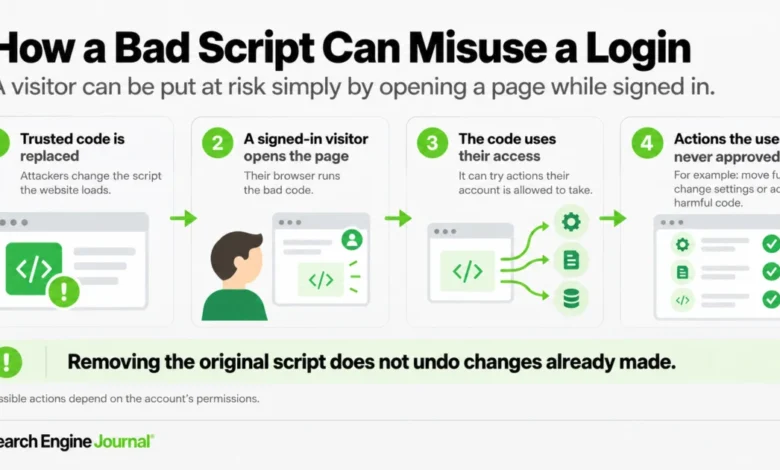
The most high-profile casualty of this breach was the decentralized prediction market Polymarket. According to technical analysis, the malicious script was designed to perform "wallet draining" by leveraging the existing session permissions of logged-in users.
Unlike traditional phishing, which requires a user to enter credentials, this attack operated entirely in the background. If a user had an active, authenticated session with the trading platform, the injected script gained the ability to execute transactions on the user’s behalf. By piggybacking on the user’s authenticated state, the script bypassed the need for a password or two-factor authentication (2FA) for specific in-app actions, resulting in direct financial loss for some users.
Supply Chain Security: A Growing Threat
This incident underscores the fragility of the "trust model" in modern web development. Websites frequently load dozens of third-party scripts, ranging from analytics and RUM tools to marketing pixels and chat widgets. Each of these scripts represents a potential vector for compromise. If a vendor’s infrastructure is breached, every website loading that vendor’s code becomes a victim.

According to data from the 2026 Web Security Trends Report, over 70% of enterprise websites rely on more than 50 third-party JavaScript dependencies. The "DebugBear scenario" illustrates that even tools used specifically for performance optimization—which are usually considered low-risk—can be transformed into high-impact delivery vehicles for malware.
Recommended Mitigation Steps for Site Owners
For organizations that utilize third-party monitoring or analytics scripts, the following security posture is now considered best practice:
- Immediate Removal: If a vendor reports a compromise, the script must be removed immediately, regardless of the perceived impact on performance data.
- Audit Content Security Policies (CSP): Organizations should implement or tighten CSP headers to restrict the domains from which scripts can be loaded. By utilizing subresource integrity (SRI) hashes, developers can ensure that a script has not been modified; however, SRI is difficult to implement with dynamically updating third-party services.
- Review Access Logs: Security teams should conduct a thorough audit of user activity and access logs for the period during which the script was active to identify any anomalous behavior or unauthorized transactions.
- Vendor Risk Management: Beyond simple functionality, procurement teams must evaluate the security practices of vendors, including their DNS management, MFA implementation for administrative accounts, and incident response preparedness.
- Use Sandboxing: Where possible, non-critical scripts should be executed within a sandboxed environment or an iframe to limit their access to the primary document object model (DOM) and local storage of the site.
Broader Implications for the Digital Ecosystem
The DebugBear incident is part of a larger, worrying trend of "Client-Side Attacks." As server-side security improves, attackers are increasingly focusing on the client side—the browser—where they can manipulate the user experience directly.
For the SEO industry, this creates a conflict between performance and security. SEO professionals advocate for using RUM tools like DebugBear to monitor Core Web Vitals, which are critical ranking signals for Google. However, the requirement to embed these scripts directly into the site header creates a persistent security risk. The industry may see a shift toward more restrictive script-loading policies, where third-party scripts are loaded only after explicit user interaction, or served via privacy-preserving proxies that strip potentially malicious content before it reaches the end user’s browser.
The Road Ahead
DebugBear has maintained transparency regarding the attack, though the full extent of the potential impact on other customers remains under investigation. While there is no current evidence that the compromise spread beyond a limited number of target organizations, the nature of DNS-based attacks makes it impossible to rule out wider, latent infections.
As the investigation continues, the tech community is watching closely to see how DNS providers and registrar services will enhance their security protocols to prevent similar unauthorized hijacks. The vulnerability of the domain management layer remains a critical failure point in the modern internet infrastructure.
For now, the priority for site owners remains clear: audit all third-party dependencies, rotate API keys and credentials that may have been exposed through compromised browser sessions, and maintain a vigilant monitoring posture for any unusual traffic patterns. In an era where a single script can compromise an entire platform, the "trust" model of third-party integration is effectively dead, replaced by the necessity of "zero-trust" web architecture.
Related posts: