Meta Urges Advertisers to Trust Algorithmic Systems and Avoid Premature Tweaks in New Holiday Campaign Best Practices Guide

As the holiday shopping season approaches, digital marketers face heightened competition, shifting consumer behaviors, and increased pressure to deliver immediate return on ad spend (ROAS). In response to these perennial challenges, Meta has released a comprehensive new best practices guide designed to help brands optimize their advertising campaigns across Facebook and Instagram. The core message of the tech giant’s latest directive is deceptively simple: marketers must clearly define their campaign parameters from the outset and exercise restraint, resisting the urge to constantly tinker with live ad sets. According to Meta, the most successful holiday campaigns belong not to those who micromanage their dashboards on a minute-by-minute basis, but to those who provide precise instructions to the platform’s automated auction system and allow adequate time for machine learning to work effectively.
The release of this guidance comes at a critical juncture for retail and e-commerce brands preparing for the fourth-quarter sales surge, historically the most lucrative and competitive period of the year. Meta’s insights are grounded in behavioral data from previous holiday seasons, offering a strategic framework that challenges common marketing impulses. By emphasizing patience, clear objective-setting, and robust statistical volume, Meta aims to help advertisers navigate the complexities of automated ad auctions more efficiently.
Understanding the Meta Auction: Treating Every Campaign as a Detailed Brief
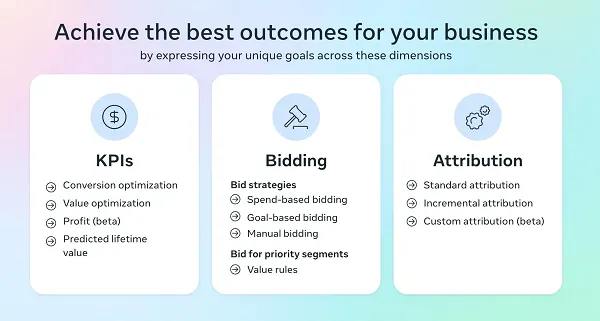
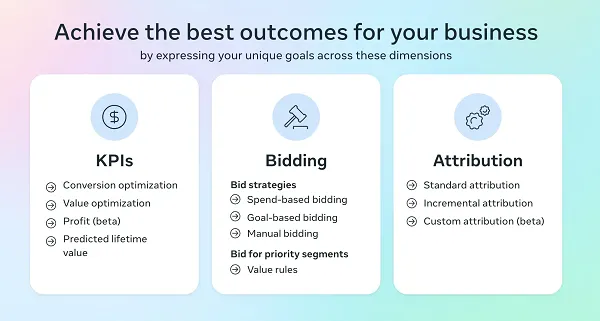
To demystify how its advertising system operates, Meta’s new guide draws a direct analogy between human management and algorithmic execution. The company stresses that setting up a digital ad campaign is functionally identical to briefing a human employee or an external creative agency. Every component of the campaign setup serves a specific linguistic and structural purpose within the automated auction ecosystem.
In the guide, Meta breaks down this framework: "Every campaign you set up is a brief. The optimization event is the ask. The budget is the constraint. The bid strategy is the definition of success. The attribution setting is how you agree to be judged. If you were briefing a person, you would want to be very specific. Do the same with our auction."
This philosophical shift encourages marketers to view the ad platform not as a slot machine where inputs can be frantically adjusted to force a win, but as a sophisticated bidding partner that requires unambiguous instructions. When an advertiser sets an ambiguous objective, splits budgets too thinly, or changes optimization goals midway through a learning cycle, the algorithm receives mixed signals. This friction often results in erratic delivery, suboptimal audience targeting, and inflated acquisition costs.
Meta highlights that many advertisers fall into the trap of reacting emotionally to short-term performance fluctuations. A sudden spike in cost-per-click (CPC) or a temporary dip in conversions often triggers panic, leading marketers to pause ad sets, alter creative assets, or reallocate budgets prematurely. However, Meta argues that these knee-jerk reactions disrupt the machine learning phase, resetting the system’s optimization clock and depriving the algorithm of the data it needs to identify high-value consumers.
The Power of Patience and the Myth of the Micro-Manager
Peak season advertising historically rewards speed and agility, but Meta’s latest analysis suggests that a hyper-reactive management style can actually be counterproductive. The platform explicitly cautions against the anxiety-driven monitoring that plagues many marketing war rooms during Black Friday, Cyber Monday, and the broader December holiday rush.
"Peak season doesn’t reward the advertiser who watches the dashboard most closely," Meta states in the guide. "It rewards the one who wrote the clearest instruction and then had the nerve to leave it alone."
This psychological hurdle is often the hardest for marketing teams to overcome. Agencies and in-house brand managers alike face intense scrutiny from executive leadership when daily metrics dip. Stakeholders accustomed to traditional media or legacy digital formats often demand immediate corrective action when performance fluctuates over a 24-to-48-hour window. Meta’s guidance serves as an authoritative counter-argument to this pressure, providing marketers with the institutional backing needed to defend a hands-off, data-driven strategy to their superiors.
The underlying mechanism supporting this approach is Meta’s machine learning infrastructure. Modern digital advertising relies heavily on automated delivery systems that ingest vast amounts of behavioral signals to locate prospective buyers. These systems require a stabilization period to analyze patterns, test audience segments, and optimize delivery based on real-time feedback loops. When marketers constantly alter variables—such as changing creative elements, adjusting daily spending caps, or shifting geographic targets every few days—the underlying algorithms are forced to restart their learning processes. The result is a perpetual state of flux that prevents the campaign from ever reaching peak efficiency.
Behind the Data: Consumer Spending Shifts and the Need for Precision
To contextualize the importance of campaign discipline, Meta’s report highlights fascinating consumer behavior trends observed during the previous holiday shopping season. These statistics underscore the unpredictable nature of modern retail and reinforce why structured, deliberate campaign planning is more essential than ever.
According to Meta’s aggregated platform data, 42% of surveyed shoppers indicated that they planned to spend less during the previous holiday shopping season compared to prior years, citing economic pressures, inflationary concerns, and cautious household budgeting. However, actual consumer behavior defied these gloomy projections. When the dust settled, year-over-year spending actually increased by 4.2%.
This disconnect between consumer intent and actual spending highlights the impulsive and digitally influenced nature of modern holiday shopping. Consumers may enter the season with conservative intentions, but targeted digital advertising, promotional urgency, and seamless e-commerce checkout experiences frequently convert hesitant browsers into active buyers. For advertisers, capturing this latent demand requires highly targeted campaigns that can scale efficiently when consumer intent materializes.
If brands react to early-season sluggishness by slashing budgets or panicking, they risk missing the crucial windows when consumer spending surges unexpectedly. By establishing clear campaign foundations and maintaining steady delivery, advertisers position themselves to capture this unpredictable holiday demand without incurring unnecessary cost penalties.
The Conversion Threshold: Why Volume Matters for Algorithmic Learning
One of the most actionable and mathematically specific recommendations in Meta’s new guide revolves around ad set volume and statistical significance. Advertisers often make the mistake of spreading their total budget across numerous micro-campaigns and fragmented ad sets, believing that hyper-segmentation is always the best path to relevance. Meta’s data firmly pushes back against this practice.
"Give each ad set enough volume to learn from," the guide advises. "Roughly fifty conversions a week. Below that the system is guessing. In our analysis, ad sets under that threshold ran about 28% more expensive per purchase."
This finding is of paramount importance for medium and small businesses operating with tighter marketing budgets. Achieving fifty conversions per week per ad set requires careful consolidation of target audiences and allocation of financial resources. When an advertiser creates too many ad sets—perhaps splitting an already modest budget across five different demographic groups and four distinct geographic regions—none of those individual ad sets receive enough conversion data to feed the algorithm adequately.
Without this baseline volume, the ad delivery system is forced to rely on generalized assumptions and probabilistic guesses rather than deterministic patterns. Consequently, the cost-per-acquisition (CPA) rises significantly, eroding profit margins during a season where every percentage point of efficiency counts. Meta’s data shows a stark 28% premium for under-optimized ad sets, serving as a powerful financial incentive for brands to consolidate their campaigns, pool their resources, and empower the platform’s machine learning models with sufficient data density.
Establishing Clarity Through A/B Testing and Conversion Lift Studies
While Meta strongly advocates for leaving campaigns alone once they are properly configured, the company does not suggest that marketers should operate in the dark or abandon analytical rigor altogether. Instead, the guide distinguishes between reactive micromanagement and methodical experimentation.

To evaluate whether a campaign is truly underperforming or simply navigating its learning phase, Meta recommends utilizing structured measurement tools such as A/B testing and Conversion Lift studies. These methodologies provide objective, statistically sound insights into ad performance, allowing marketers to test variables like different creative hooks, distinct value propositions, or varied audience structures in a controlled environment.
Unlike daily dashboard staring—which often leads to false conclusions drawn from random statistical noise—proper A/B testing isolates variables over a predetermined timeframe with split audiences. This approach gives marketers the clarity they need to make informed structural changes when a campaign concludes or reaches a natural milestone, rather than making impulsive adjustments based on hourly fluctuations.
Furthermore, Conversion Lift studies help brands measure the true incremental value of their Meta advertising by comparing the behavior of an audience exposed to ads against a control group that was not. This moves the evaluation framework beyond simple last-click attribution models, offering a holistic view of how upper- and mid-funnel campaigns contribute to actual business outcomes.
Industry Implications and Broader Marketing Strategy
The release of Meta’s best practices guide reflects a broader, industry-wide evolution toward automation across major digital advertising ecosystems, including Google, TikTok, and Amazon. As privacy regulations, browser restrictions, and signal loss (such as the impact of Apple’s App Tracking Transparency) have made traditional deterministic tracking more challenging, platforms have leaned heavily into machine learning, predictive modeling, and aggregated data attribution.
For digital marketing professionals, this technological shift requires a fundamental change in skill sets. The era of the media buyer as a tactical micro-manager—constantly adjusting bids, shuffling keywords, and tweaking targeting parameters on a daily basis—is rapidly fading. In its place is the role of the strategic architect: a professional whose primary value lies in framing the business problem correctly, establishing precise creative assets, defining clear audience parameters, and trusting the underlying platform architecture to execute the delivery.
This transition can be uncomfortable for brands that prefer absolute control over every impression. However, the data provided by Meta and other ad tech leaders consistently demonstrates that human intervention often introduces inefficiencies into systems designed to process millions of real-time auction signals simultaneously.
Summary of Key Recommendations for Holiday Marketers
For marketing teams finalizing their fourth-quarter strategies, Meta’s guide outlines a clear checklist for success:
- Define Clear Objectives: Treat every campaign setup like a detailed brief. Ensure optimization events, budget constraints, bid strategies, and attribution settings explicitly reflect genuine business goals.
- Consolidate for Volume: Avoid over-segmentation. Aim for approximately 50 conversions per week per ad set to feed the machine learning algorithm and avoid the 28% cost penalty associated with under-volume ad sets.
- Resist Premature Adjustments: Allow campaigns sufficient time to run through their learning phases. Do not alter budgets, creatives, or targeting based on short-term performance fluctuations within the first few days.
- Utilize Rigorous Testing: Rely on structured A/B testing and Conversion Lift studies rather than emotional dashboard monitoring to evaluate performance and test new creative concepts.
- Trust the System: Maintain the discipline to let optimized instructions run their course, recognizing that peak-season success favors strategic clarity and patience over frantic micro-management.
As retail brands gear up for the most critical revenue period of the year, Meta’s advisory serves as a timely reminder that technological sophistication requires operational discipline. By aligning campaign briefs with real-world business objectives and resisting the temptation of premature interference, marketers can harness the full power of automated ad auctions to navigate holiday retail complexities and drive sustainable growth.