Navigating EU VAT Compliance for WooCommerce Stores: The Rise of Automated Solutions

For businesses operating within the European Union, Value Added Tax (VAT) is far from a static percentage applied to every transaction. The complexity of cross-border commerce dictates that tax obligations are fundamentally linked to the geographic location of the customer, the business status of the buyer, and the cumulative volume of sales generated across borders within a single calendar year. Failure to accurately manage these variables often results in either the erosion of profit margins through accidental overcharging or severe financial penalties levied by tax authorities for under-reporting.
While WooCommerce serves as a robust platform for digital retail, its native architecture is not designed to handle the nuanced, real-time decision-making required for international tax compliance. By default, WooCommerce provides a static tax table that requires manual oversight, lacking the sophisticated logic necessary to validate VAT identification numbers, process reverse-charge mechanisms for B2B transactions, or automatically toggle between domestic and destination-based tax rates once a business crosses the €10,000 threshold established by the EU’s e-commerce VAT package.
The Evolution of the EU VAT Framework
The current regulatory environment for e-commerce in the EU is the result of a multi-year effort to modernize tax collection in a digital-first economy. Historically, businesses were required to register for VAT in every single member state where they sold goods or services once they exceeded local distance-selling thresholds. This administrative burden was a significant barrier to entry for small and medium-sized enterprises (SMEs).

In 2021, the EU implemented the One Stop Shop (OSS) scheme. This reform allowed businesses to register, declare, and pay VAT for all their B2C cross-border sales across the entire EU through a single electronic portal in their home country. While this streamlined the filing process, it created a new technical requirement: merchants now need to accurately track sales per country and apply the correct destination-based VAT rate at the moment of checkout. If a merchant fails to distinguish between a consumer and a business buyer, or if they rely on outdated tax data, they risk non-compliance. Consequently, many store owners have traditionally resorted to expensive third-party SaaS platforms, manual spreadsheet calculations, or limited paid extensions to bridge the gap in their WooCommerce tax settings.
Introducing Automated Compliance: The VAT Right Plugin
Addressing the technical gap left by default platform settings, the VAT Right plugin has emerged as a specialized tool for the WordPress ecosystem. Unlike many commercial alternatives that operate on a "freemium" model, VAT Right is distributed as a free, open-source solution. The plugin is designed to automate the lifecycle of EU VAT compliance, from real-time verification of customer data to the generation of quarterly reporting documentation.
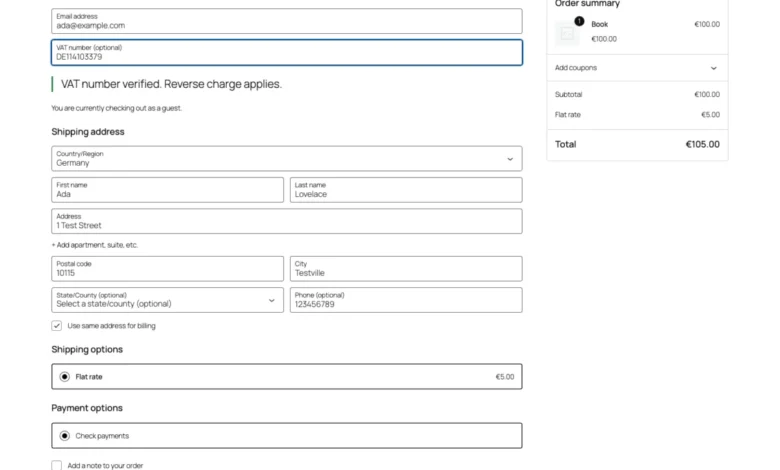
The core functionality of the plugin centers on its ability to integrate with the VIES (VAT Information Exchange System) database. When a customer inputs a VAT number at the WooCommerce checkout, the plugin performs an immediate, automated check. If the number is validated, the system automatically applies the reverse-charge mechanism, removing VAT from the total and ensuring the transaction is compliant with B2B regulations. If the validation fails or is unavailable, the plugin provides fallback mechanisms that protect the merchant from tax liability.
Why Native WooCommerce Settings Fall Short
The primary challenge for WooCommerce users is that the platform lacks "tax intelligence." To remain compliant, a merchant must prove the intent and validity of every transaction during a potential tax audit. Standard WooCommerce installations do not record the "why" behind a tax calculation; they simply apply a rate based on an address.

In contrast, an automated solution like VAT Right records the logic behind every transaction. Each order is annotated with a specific EU VAT log, detailing the validation status of the customer’s VAT number, the date of the check, and the rationale for the applied tax rate. For business owners, this creates an audit trail that is essential for tax inspectors. Furthermore, the plugin bridges the gap between digital storefronts and regulatory requirements by automating the calculation of cross-border thresholds. By monitoring sales data, the plugin provides automated alerts when a business approaches the €10,000 threshold, allowing the store to seamlessly transition to destination-based VAT without manual intervention.
Technical Implementation and Regulatory Alignment
The deployment of automated tax tools requires a structured approach to ensure full integration with existing store workflows. The installation process generally follows a multi-step verification protocol:
- HMRC and VIES Integration: For businesses selling to UK-based entities, the plugin facilitates connection to the HMRC Developer Hub. By utilizing official APIs, the plugin ensures that UK business customers are treated correctly, preventing them from being erroneously charged as consumers.
- Tax Rate Mapping: The plugin fetches current standard and reduced rates directly from the European Commission’s TEDB (Taxation and Customs Union) database. This ensures that a merchant’s tax tables are always aligned with the latest legislative changes in all 27 EU member states.
- Digital Goods and Geolocation: For merchants selling software or digital downloads, the plugin leverages WooCommerce’s geolocation settings to provide a secondary layer of evidence. This is crucial under EU law, which requires "two pieces of non-conflicting evidence" to confirm a customer’s location for digital services.
- Reporting and Documentation: The plugin consolidates data for the quarterly OSS return and the EC Sales List. By automating these reports, businesses can export CSV files directly for their accounting teams, ensuring that currency conversions—calculated at the European Central Bank’s daily reference rate—are accurate.
Broad Economic Implications for SMEs
The reliance on manual tax management or fragmented software solutions has historically stifled the growth of small e-commerce businesses. According to recent data from the European Commission, the cost of tax compliance remains one of the largest operational burdens for cross-border merchants. Automated plugins that provide enterprise-level compliance features for free represent a significant shift in the competitive landscape.
By lowering the barrier to entry, these tools enable smaller merchants to expand into new EU markets with less financial risk. The ability to automatically handle complex scenarios—such as verifying VAT numbers while simultaneously managing INTRASTAT reports for physical goods—allows business owners to focus on product development rather than tax administration.

Limitations and Risk Management
While automation significantly reduces human error, it does not absolve the merchant of ultimate responsibility. Technical solutions, regardless of their sophistication, cannot provide legal or tax advice. For instance, VAT Right and similar tools currently have specific limitations regarding complex tax scenarios, such as triangular trade arrangements or specific exemptions that fall outside standard VAT logic.
Experts emphasize that merchants should view automation as a tool for efficiency rather than a substitute for professional accounting advice. It is recommended that businesses perform a full audit of their tax setup on a staging site before going live and that they involve an accountant in the review of the first quarterly OSS filing.
Future Outlook for WooCommerce Tax Compliance
As the EU continues to refine its digital tax policies—including potential future expansions of the OSS scheme to cover a wider range of goods and services—the need for integrated, intelligent tax software will likely grow. The shift toward open-source solutions like VAT Right suggests a trend toward democratizing compliance, where the technical infrastructure for global trade is made accessible to merchants of all sizes.
For store owners, the directive is clear: relying on basic tax settings is no longer a viable long-term strategy for international trade. Whether through specialized plugins or integrated SaaS services, the move toward automated tax compliance is a necessary evolution for any business aiming to scale across borders within the European Union. By ensuring that every transaction is validated, recorded, and reported with precision, merchants can secure their operations against the volatility of international tax law and foster a more stable, growth-oriented digital enterprise.
Related posts: