In the fast-evolving digital landscape of 2026, maintaining a robust visual identity across social media requires absolute precision. As platforms continuously update their user interfaces, algorithms, and display requirements, digital marketers and brand strategists face the ongoing challenge of keeping their visual content sharp, uncropped, and professional. Failing to meet the exact pixel dimensions and aspect ratios mandated by networks such as Instagram, Facebook, LinkedIn, TikTok, and emerging platforms like Bluesky can result in automatic cropping, severe compression, and an unprofessional brand presentation.
The High Stakes of Visual Consistency in Modern Digital Marketing
A brand’s visual identity is frequently the primary point of contact for potential customers. According to recent content benchmark data, static images continue to serve as a foundational workhorse of brand marketing, accounting for nearly half of all brand-generated content on major networking sites. When digital assets are published with incorrect dimensions, platforms intervene by resizing, letterboxing, or aggressively cropping the media. This often results in critical brand elements—such as logomarks, product highlights, and call-to-action text—being abruptly cut off by interface overlays or circular avatar masks.
Furthermore, automated scheduling and enterprise publishing tools introduce additional layers of technical constraint. Application Programming Interfaces (APIs) enforced by platforms like Instagram and Facebook maintain strict parameters regarding acceptable aspect ratios—often restricting feed posts to ranges between 4:5 and 1.91:1. Exceeding these technical boundaries can lead to publishing failures or distorted image rendering, forcing creative teams to manually adjust assets repeatedly or risk alienating audiences with substandard visuals.
Universal Baseline Dimensions and Cross-Platform Strategies
Navigating the fragmented specs of a dozen different networks can drain valuable resources from creative teams. To mitigate this, digital strategists often rely on universal baseline dimensions that minimize the need for complete asset redesigns.
For standard feed posts across major text-and-image platforms including Instagram, Facebook, LinkedIn, Bluesky, and Threads, a square dimension of 1080 x 1080 pixels (a 1:1 aspect ratio) remains the safest universal baseline. This configuration displays cleanly without triggering automatic platform-level cropping. For vertical placements, such as Stories, Reels, and short-form video covers, a dimension of 1080 x 1920 pixels (9:16 aspect ratio) has become the undisputed industry standard.
When preparing files for deployment, industry best practices dictate using the JPEG format for complex photographs to maintain manageable file sizes, while reserving PNG for graphics featuring sharp text, vector logos, or crisp edge lines. Creators are advised to upload the highest-resolution file permitted by the platform’s individual thresholds, allowing the host network’s native compression algorithms to process the media rather than pre-compressing assets to a point of degradation.
Comprehensive Platform-by-Platform Specifications for 2026
To assist marketing professionals in maintaining precise compliance, the following reference outlines the exact profile, cover, and primary post dimensions for major social networks.
- Profile Picture: 110 x 110 pixels (displayed as a circle; keep subjects centered).
- Feed and Carousel Posts: 1080 x 1080 pixels (1:1 square) or 1080 x 1350 pixels (4:5 portrait ratio). The 4:5 portrait ratio is widely recommended for mobile viewing as it maximizes vertical screen estate.
- Stories and Reels: 1080 x 1920 pixels (9:16 aspect ratio). Creators must maintain a "safe zone" by keeping critical text and logos away from the top 14% (250 pixels) and bottom 20% (340 pixels) to avoid UI element overlaps.
- Profile Picture: 320 x 320 pixels.
- Cover Photo: 851 x 315 pixels for Business Pages; 820 x 312 pixels for personal profiles.
- Timeline and Feed Posts: 1080 x 1350 pixels for optimal vertical engagement.
- Stories: 1080 x 1920 pixels.
- Personal Profile Image: 400 x 400 pixels.
- Personal Cover Image: 1584 x 396 pixels.
- Company Logo: 300 x 300 pixels.
- Company Cover Image: 1128 x 191 pixels.
- Shared Image or Link Posts: 1200 x 627 pixels (1.91:1 ratio).
X (Formerly Twitter)
- Profile Photo: 400 x 400 pixels.
- Header Photo: 1500 x 500 pixels (3:1 aspect ratio).
- In-Stream Photos: 1600 x 900 pixels (16:9 ratio). Square (1:1) formats are also heavily favored for sponsored posts to maximize mobile feed visibility.
TikTok
- Profile Image: 200 x 200 pixels.
- Photo Mode / Carousels: 1080 x 1920 pixels, mirroring vertical video dimensions for unified grid storytelling.
YouTube
- Channel Profile Image: 800 x 800 pixels.
- Channel Banner: 2560 x 1440 pixels, with a designated safe area of 1235 x 338 pixels centered for cross-device visibility.
- Video Thumbnails: 1280 x 720 pixels (16:9 ratio), crucial for driving click-through rates in search and recommended feeds.
- Profile Picture: 165 x 165 pixels.
- Standard Pin Size: 1000 x 1500 pixels (2:3 aspect ratio). Pins exceeding this ratio risk being truncated in vertical feeds.
Emerging Networks: Threads and Bluesky
- Threads: Utilizes shared Instagram avatar configurations; single and carousel feed images perform best at 1080 x 1080 pixels or 1080 x 1350 pixels.
- Bluesky: Profile pictures render at 400 x 400 pixels inside a circular mask, while banner images deploy at a wide 3:1 ratio (typically 1500 x 500 pixels). Following recent software updates, Bluesky supports multi-image swipeable carousels rendering at high resolutions up to 4000 pixels.
Streamlining Creative Workflows and Mitigating Operational Friction
The administrative burden of maintaining distinct image sizes across a fractured social media ecosystem can introduce significant inefficiencies into marketing operations. Industry analysts note that teams frequently lose cumulative hours each week manually resizing assets, troubleshooting platform rejections, and correcting poorly rendered graphics post-publication.
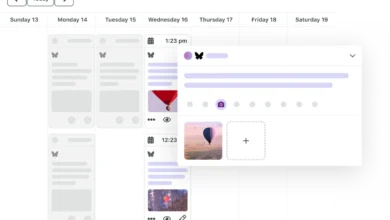
To combat this, modern marketing infrastructure increasingly relies on centralized asset management platforms and automated resizing utilities. Tools such as Sprout Social’s free image resizer, Landscape, allow creative directors to process a single core visual asset and automatically generate properly scaled dimensions for multiple networks simultaneously. Furthermore, integrated design platforms and unified publishing suites enable marketing departments to preview exact rendering outcomes within native compose windows before content goes live, effectively eliminating emergency editorial revisions.
Broader Implications for Brand Integrity and Strategy
As social media algorithms continue to prioritize visual engagement, the technical execution of content design is directly tied to business performance. Clean, uncropped, and professionally formatted imagery signals organizational competence and attention to detail to discerning consumers. Conversely, distorted visuals or misplaced branding elements can erode consumer trust before a user even engages with the accompanying text.
By standardizing image specifications, investing in centralized asset libraries, and adopting automated multi-platform formatting workflows, modern enterprises can safeguard their brand identity. Keeping pace with these technical standards ensures that marketing teams transition their focus away from administrative corrections and toward high-impact creative storytelling.