Xero vs FreshBooks: A Comprehensive Analysis of Modern Accounting Software for Growing Businesses

The landscape of financial management software has undergone a significant transformation over the past decade, narrowing the once-distinct gap between platforms designed for solo practitioners and those built for complex corporate entities. While Xero and FreshBooks remain the two most prominent contenders in the cloud accounting space, their strategic positioning has evolved to meet the demands of a modern, digitized economy. Today, both platforms offer a robust suite of double-entry accounting tools, automation, and real-time reporting, yet they serve fundamentally different segments of the business market. Understanding these differences is no longer just about selecting a tool; it is about choosing an infrastructure that aligns with the specific scalability requirements, team structures, and operational complexities of a business.
The Evolution of Cloud Accounting Infrastructure
FreshBooks, which began as a dedicated invoicing platform in 2003, was built to solve a specific pain point: helping freelancers and small agencies get paid faster without the headache of traditional accounting. Over the years, it has integrated more sophisticated accounting features, yet its core philosophy remains centered on the user experience of service-based professionals.
Conversely, Xero, founded in New Zealand in 2006, was architected from the outset as a full-featured, cloud-native ledger system. Its design philosophy leans into the requirements of small-to-medium enterprises (SMEs) that demand granular control over inventory, multi-currency transactions, and collaborative access. As of the most recent quarterly reports, Xero has emphasized its role as a "business platform" rather than just a bookkeeping tool, particularly through the introduction of AI-driven assistants like JAX.
Comparative Pricing Models and Operational Costs
The financial commitment required for these platforms is structured around vastly different business models. Xero utilizes a tiered feature-based pricing structure, whereas FreshBooks employs a usage-based model centered on the number of billable clients.
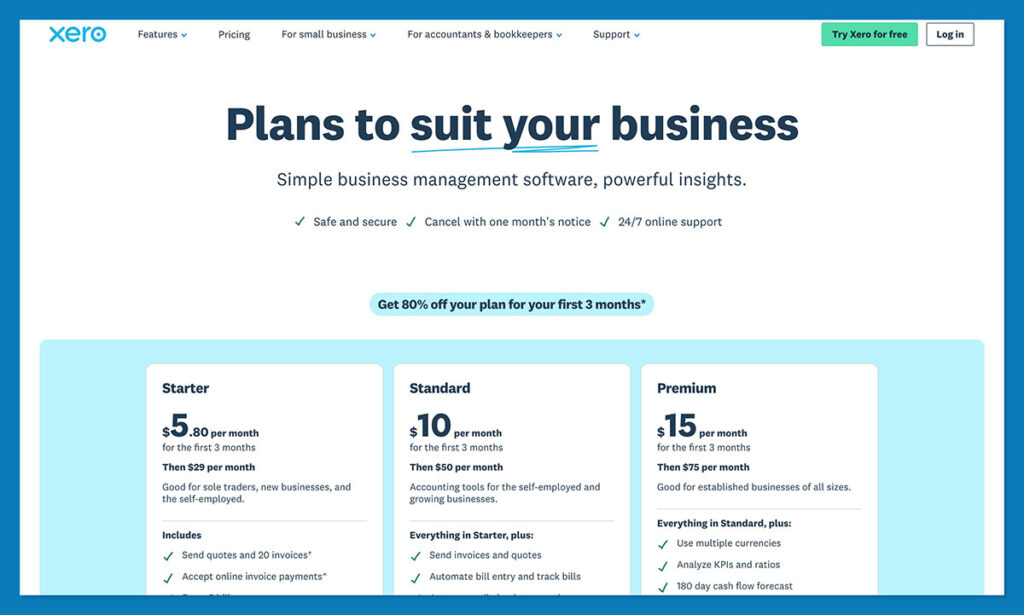
As of the current market cycle, Xero’s "Early" plan is priced at $25 per month, with "Growing" at $59 and "Established" at $97. A critical differentiator for Xero is its unlimited user policy. Regardless of the plan chosen, businesses can grant access to employees, bookkeepers, and external accountants without incurring additional per-seat charges. This structure effectively incentivizes collaboration and allows businesses to scale their finance teams without sudden spikes in operational overhead.
FreshBooks operates on a more restrictive model. The "Lite" plan starts at $23 per month for up to five billable clients, followed by "Plus" at $43 for 50 clients, and "Premium" for unlimited clients at $70. While the entry-level price point appears lower, the hidden costs often emerge as a business grows. Because each plan covers only one user, any expansion of the internal finance team requires additional fees. For growing companies, this can lead to a total cost of ownership that exceeds Xero’s pricing within a short timeframe.
Functional Specialization: Service vs. Inventory
The primary functional divide between the two platforms lies in their treatment of commerce. FreshBooks excels in environments where service delivery and time-based billing are the primary revenue drivers. It provides a highly intuitive workflow for creating professional invoices, setting up recurring billing cycles, and managing client retainers. Features such as the ability to break invoices into 12-month payment plans or automatically track late fees reflect its focus on the freelance service model.
In contrast, Xero is built for the complexity of product-based businesses. Its inventory management system is comprehensive, offering tracking for individual product categories, automated Cost of Goods Sold (COGS) monitoring, and integration with major e-commerce platforms like Shopify and Amazon FBA. While FreshBooks supports basic product tracking, it lacks the depth required for multi-channel retail. Xero’s ability to handle complex bank reconciliations across diverse asset classes—including loans, investments, and foreign currency accounts—positions it as the superior choice for companies with intricate supply chains and diverse sales channels.
The Role of AI and Automation in Financial Reporting
The integration of artificial intelligence represents the latest frontier in the accounting software wars. Xero has taken an aggressive lead here with its JAX AI assistant. JAX does more than just categorize transactions; it acts as a diagnostic tool that can explain financial data in plain language, benchmark performance against industry peers, and generate cash-flow projections. This represents a significant shift from reactive bookkeeping to proactive financial planning.
FreshBooks maintains a more traditional approach, relying on robust, rules-based automation for invoicing and expense categorization. While highly efficient for standard operations, it lacks the predictive analytics and advanced visualization tools that Xero provides on its higher-tier plans. For a business owner looking to scale, Xero’s reporting suite—which includes financial health scorecards, KPI monitoring, and budget management—provides a level of oversight that is generally absent from the FreshBooks interface.
Technical Accessibility and Learning Curves
A recurring theme in user sentiment analysis is the difference in accessibility. FreshBooks is frequently cited as the most "user-friendly" platform for those without a formal accounting background. Its interface is designed to demystify complex concepts, making it ideal for the creative professional or consultant who wants to minimize the time spent on administrative tasks.

Xero presents a steeper learning curve, primarily because it adheres to the standards of professional double-entry accounting. It expects the user to understand fundamental accounting principles. However, Xero mitigates this complexity through an extensive support ecosystem, including the mandatory 90-day onboarding program for new users and a vast library of certification courses. While the initial setup time for Xero is significantly higher, the "ceiling" of its functionality is considerably elevated, allowing the software to grow alongside the business rather than being outgrown by it.
Market Implications and Strategic Verdict
The decision between Xero and FreshBooks is ultimately a decision about the intended trajectory of a company.
For the freelancer, the solo consultant, or the small service agency, FreshBooks is the clear winner. Its ability to simplify the invoicing process, coupled with its dedicated phone support and intuitive client-facing portals, allows the business owner to focus on billable work rather than ledger maintenance. The lack of inventory complexity or multi-currency requirements makes the platform’s limitations irrelevant to this specific user base.
For the SME that is actively hiring, expanding into new markets, or managing inventory, Xero is the industry standard. Its structural advantages—specifically the unlimited user policy, multi-currency reporting, and superior integration with third-party logistics and e-commerce platforms—make it an essential piece of infrastructure for scaling operations. The transition to the "Established" plan, while more costly, provides the necessary tools for international growth and deep financial analysis.
As both companies continue to integrate advanced AI and automation, the gap in their "basic" features may continue to shrink. However, the fundamental difference in their architecture remains: FreshBooks is a tool for managing the billing of a business, while Xero is a tool for managing the enterprise itself. Businesses must assess their immediate needs against their long-term growth objectives to determine which platform provides the necessary foundation for their future success.