Bol growth slows as partner marketplace dynamics shift amid broader economic headwinds

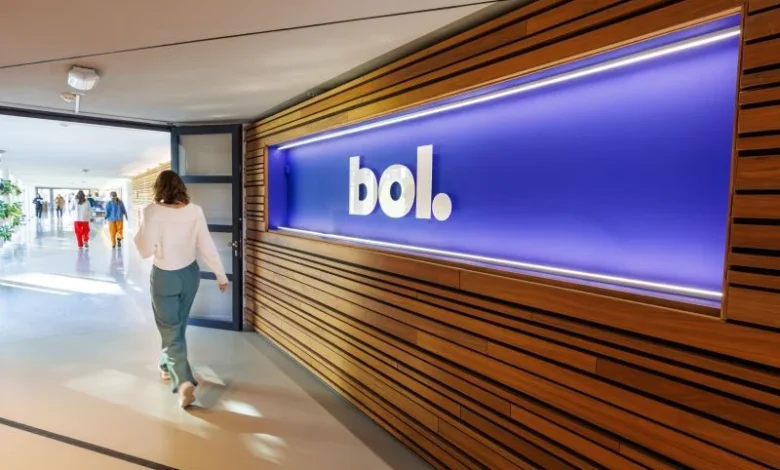
The Dutch e-commerce landscape is undergoing a structural transformation as Bol, the dominant online marketplace in the Netherlands and Belgium, navigates a period of decelerated growth. Parent company Ahold Delhaize’s recent financial disclosures reveal a significant divergence between the performance of Bol’s direct retail operations and its third-party marketplace, the latter of which has become the primary engine of revenue expansion despite a dwindling number of active sellers.
The Macroeconomic Pressure on Consumer Spending
For three consecutive quarters, Ahold Delhaize has signaled that Dutch consumers are operating under acute financial pressure. High inflation and the lingering effects of cost-of-living adjustments have prompted a shift in purchasing behavior across Bol’s extensive product catalog. Data suggests that shoppers are increasingly prioritizing value-oriented items and essential goods, often opting for lower-priced alternatives. This "trade-down" effect has hit Bol’s own direct retail sales, which typically rely on a mix of high-margin electronics, home goods, and media products.
While the company has not released granular, standalone financial results for Bol this year, the consolidation of data within Ahold Delhaize’s quarterly reports paints a clear picture. The marketplace model, which allows external merchants to shoulder the inventory risk and fulfillment costs, is currently outperforming the traditional retail model in terms of growth velocity.
Logistics Disruptions and Operational Challenges
Beyond shifting consumer sentiment, Bol has faced tangible operational hurdles that have constrained its performance throughout the 2026 fiscal year. In the third quarter, the company contended with significant logistics bottlenecks, most notably the cyberattack targeting Ceva Logistics in August. This incident severely disrupted operations at a key distribution center in Waalwijk, causing delays that rippled through the supply chain during a sensitive period for retail volume.
These logistical setbacks, combined with a demanding year-over-year comparison from 2025, have created a "perfect storm" that has halved the growth rate of Bol’s non-supermarket online operations. Whereas the company reported a robust growth rate of 8.7 percent in the first nine months of the previous year, that figure has plummeted to 4.4 percent for the same period in 2026.
The Rise of the Marketplace Ecosystem
The most striking revelation in the recent financial data is the inversion of the revenue hierarchy between Bol’s direct retail and its partner ecosystem. From July through September 2026, third-party online sales generated 787 million euros—a 7.9 percent increase compared to the third quarter of 2025.
In contrast, the "other online sales" category—which encompasses Bol’s direct retail revenue, commissions, and online sales from sister brands like Etos and Gall & Gall—stagnated, recording a meager growth of just 0.7 percent. This category, which once served as the bedrock of Bol’s revenue, totaled 773 million euros, officially falling behind the revenue generated by third-party partners. This milestone marks a definitive turning point: for the first time in the platform’s history, the ecosystem created by third-party sellers has eclipsed the company’s direct retail arm in total quarterly revenue.

The Paradox of Fewer Sellers
A counterintuitive trend has emerged regarding the composition of Bol’s seller base. While partner sales are growing, the number of active partners on the platform has experienced a consistent decline. At its peak in mid-2023, Bol boasted approximately 52,000 sellers. As of June 30, 2026, that number has fallen to 43,095—a contraction of nearly 17 percent, or one-sixth of the total partner base.
Analysts point to several factors for this exodus:
- Platform Consolidation: Increased competition and more stringent requirements for sellers have likely squeezed out smaller, less efficient merchants.
- Operational Costs: The rising cost of advertising on the platform and logistics fees has made the marketplace less attractive for low-margin sellers.
- Strategic Pivot: Bol has begun actively recruiting international sellers from outside the Benelux region, suggesting a strategy to replace high-volume, low-margin local sellers with larger, more robust international entities that can offer more competitive pricing and better stock availability.
Chronology of a Shifting Business Model
The current state of affairs is the result of an evolution that began in mid-2025.
- 2023: Bol reaches a record high of 52,000 active partner sellers. The platform maintains a clear lead over competitors like Amazon in the Benelux market.
- Early 2025: Market saturation and inflationary pressures begin to impact discretionary consumer spending, hitting direct retail harder than the marketplace model.
- Mid-2025: The "turnaround" begins; partner sales growth begins to consistently outpace direct retail growth.
- August 2026: A cyberattack on Ceva Logistics severely hampers fulfillment, creating a temporary but significant bottleneck in the distribution network.
- Q3 2026: Partner sales (787 million euros) officially surpass direct retail sales (773 million euros), signaling a permanent shift in Bol’s business model.
Strategic Implications and Market Outlook
The shift toward a partner-centric revenue model is not merely a consequence of the current economic environment; it is a strategic necessity for high-volume marketplaces. By prioritizing third-party growth, Bol effectively reduces its own capital expenditure related to inventory holding and warehousing. However, this shift introduces new risks, particularly regarding quality control, customer service consistency, and the reliability of international supply chains.
For Ahold Delhaize, the primary challenge remains maintaining the premium customer experience that Bol is known for, even as the platform becomes increasingly dependent on external merchants. The expansion into international markets is a clear attempt to offset the loss of domestic partners and re-accelerate growth. However, international sellers face a different set of regulatory and logistical hurdles, which could impact the platform’s overall margin structure in the coming fiscal years.
Furthermore, the stagnant growth in the "other online sales" category—which includes the retail operations of Etos and Gall & Gall—suggests that the slowdown is not isolated to Bol’s electronics or general merchandise segments, but is a broader reflection of the digital retail sector in the Netherlands.
Competitive Positioning
Despite these headwinds, Bol remains the market leader. Data from ECDB indicates that Bol has continued to widen its lead over Amazon in its home market throughout 2026. While the growth rate has slowed, the platform’s stickiness—bolstered by its integration with Albert Heijn’s loyalty programs and its massive existing customer base—continues to provide a defensive moat that rivals have struggled to penetrate.
The path forward for Bol likely involves a deeper integration of AI-driven supply chain management to mitigate future logistical disruptions and a more aggressive onboarding of high-quality international merchants. Whether this pivot can return the company to its former growth levels of 8 percent and above remains to be seen. For now, the transition from a "retailer with a marketplace" to a "pure-play platform" appears to be the defining characteristic of Bol’s strategy for the remainder of the decade. The coming quarters will be critical in determining whether the growth in third-party revenue is sustainable enough to compensate for the stagnation of direct retail and the ongoing volatility of the European retail market.
Related posts: