Why Modern Marketing Metrics Are Failing the Bottom Line: A Strategic Audit of Cost Per Session and Profitability

The contemporary corporate landscape is increasingly driven by vanity metrics that obscure actual business performance, leading to a disconnect between marketing expenditures and real financial accountability. During a strategic consulting engagement for a multinational enterprise operating across 75 global markets, a fundamental flaw in modern performance evaluation was brought to light. Tasked with developing a next-generation marketing strategy, the consulting team encountered a core performance indicator utilized by a regional sub-team: Cost Per Session (CPS).
For executives with decades of analytics experience—including authorship of foundational texts on digital measurement and the development of core analytics frameworks—the existence of Cost Per Session as a primary success metric was unprecedented. Traditionally, performance metrics in digital acquisition revolved around Cost Per Acquisition (CPA) or Cost Per Sale. The elevation of traffic generation to a primary departmental goal, without regard for downstream monetization, highlights a dangerous institutional misalignment between marketing activity and actual corporate value creation.
The Shift from Activity to Outcomes
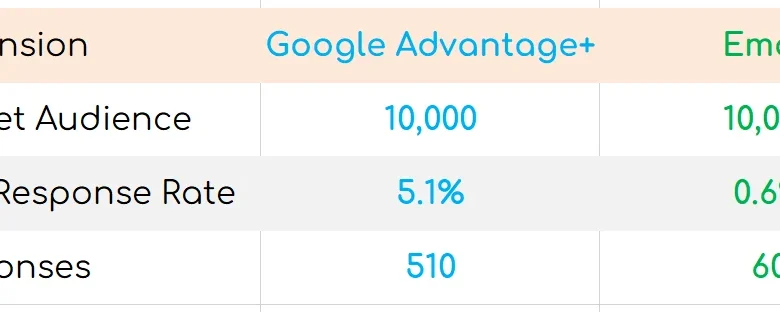
Corporate governance in multinational enterprises typically requires marketing divisions to justify expenditures against rigorous financial frameworks enforced by the Chief Financial Officer (CFO). However, standard marketing reporting frequently focuses strictly on top-of-funnel activity metrics. Dashboards commonly display indicators such as impressions, views, clicks, and session volumes. While these metrics illustrate user engagement or platform responsiveness—such as high response rates from automated tools like Google Advantage+—they fail to demonstrate whether the generated traffic translates into tangible commercial outcomes.
To bridge this gap, organizations must transition from measuring pure activity to evaluating concrete outcomes, such as conversion rates and gross revenue. Even in complex industry sectors where direct online sales are absent—such as business-to-business (B2B) environments with extended sales cycles or pharmaceutical enterprises where the primary outcome is a clinical prescription—organizations can establish functional proxy metrics. By calculating micro-conversions and multiplying them by average lead-to-offline conversion rates and average outcome values, businesses can construct reliable econometric models that provide a substantially more accurate representation of performance than raw traffic data alone.
Financial Accountability and the Limitations of ROAS
True corporate alignment requires moving beyond basic outcomes to establish genuine accountability. Marketing campaigns incur direct expenses, including campaign media costs and the Cost of Goods Sold (COGS) associated with fulfilling generated orders. When these inputs are integrated into performance evaluations, the financial realities of different acquisition channels become apparent.
Traditional performance metrics often rely on Return on Ad Spend (ROAS), a calculation that measures gross revenue generated against ad spend without incorporating the underlying cost of the products sold or the broader operational expenses of the campaign. Consequently, ROAS tends to inflate the perceived impact of paid media channels. For example, a paid digital acquisition channel might exhibit a high ROAS of 2.4, appearing effective on a surface-level dashboard.
However, when organizations apply comprehensive accounting models—transitioning from ROAS to Return on Investment (ROI), Profit on Ad Spend (POAS), and ultimately Profit on Investment (POI)—the financial picture changes dramatically. In comparative organizational audits, channels generating massive revenue volume through automated paid search can yield a negative net profit return when fully accounting for ad spend and COGS. Conversely, lower-volume, highly targeted channels such as email marketing frequently demonstrate vastly superior profit efficiency, returning multiple dollars in profit for every dollar expended, compared to negative returns on scaled programmatic platforms.
Strategic Interventions and Budget Realignment
The discovery of negative Profit on Investment from major ad platforms necessitates immediate structural intervention. Industry analysts recommend a systematic, phased restructuring of digital media investments:
- Immediate Spending Pause: Organizations experiencing negative net profitability on major ad networks should temporarily suspend campaigns to halt the erosion of operating profit. While traffic and short-term revenue metrics will initially decline, overall enterprise profitability will stabilize and recover.
- Stakeholder Engagement: Bring internal paid media teams, external agency partners, and platform representatives together to evaluate performance deficits and realign strategic objectives.
- Intent-Driven Restructuring: Develop a modernized three-part strategy focusing on available consumer intent, tactical matching of audience and creative assets, and the strategic utilization of artificial intelligence features to optimize engagement.
- Iterative Reinvestment: Gradually restore capital allocation to digital platforms only when campaigns consistently demonstrate high, positive Profit on Investment.
The Obsolescence of Cost Per Session in an AI-Driven Ecosystem
The persistence of inefficient metrics like Cost Per Session is further exacerbated by shifts in search technology and consumer behavior. As search engines increasingly incorporate generative artificial intelligence—transitioning toward conversational AI interfaces and structured knowledge overviews—the nature of digital traffic is fundamentally changing.
Recent guidance issued by major search platforms indicates that traffic originating from AI-driven discovery channels possesses significantly higher engagement quality. Users arriving via AI-synthesized search overviews exhibit lower bounce rates and spend more time evaluating content because they receive more relevant contextual information prior to reaching a destination site. Consequently, optimizing campaigns around raw session volume or minimizing Cost Per Session directly undermines long-term digital visibility and audience quality.
To adapt to these structural shifts, organizations must abandon outdated Key Performance Indicators that incentivize shallow engagement. Transitioning to metrics such as Cost Per Non-Bounced Session provides a realistic baseline for evaluating digital acquisition costs by filtering out unproductive traffic that fails to interact with site content.
Broader Implications for Corporate Governance
The ongoing evolution of digital marketing requires a permanent departure from vanity metrics. By prioritizing financial accountability, organizations insulate marketing leadership from superficial budget cuts and foster a culture of transparent performance measurement. Aligning marketing execution with the rigorous scrutiny of the CFO ensures that every dollar invested contributes measurably to enterprise profitability, securing sustainable growth resilient to technological and market disruptions.