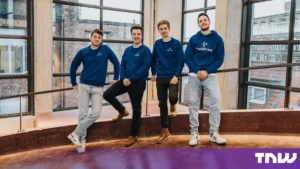
The race to achieve commercial nuclear fusion has attracted some of technology’s most prominent billionaires and artificial intelligence pioneers, and it has now drawn the financial backing of Spotify co-founder and CEO Daniel Ek. Ek has quietly thrown his weight behind Europa Fusion, a stealth-mode United Kingdom-based startup pursuing an unconventional, software-centric approach to developing a clean energy power plant.
Founded in February of this year, Europa Fusion operates under a veil of secrecy, though industry sources indicate that its founder has spent considerably longer conceptualizing the venture. The involvement of Sweden’s most famous tech entrepreneur marks a significant vote of confidence in a startup that diverges sharply from the prevailing physical hardware-heavy strategies that dominate the contemporary nuclear fusion industry. While Ek’s investment was first brought to light by financial media outlets, the company itself has largely remained tight-lipped regarding its roadmap, capitalization table, and technological milestones.
At the helm of Europa Fusion is Nantas Nardelli, an artificial intelligence researcher and engineer whose career spans some of the most prestigious labs in the technology sector. Nardelli’s professional background includes high-profile stints at Google DeepMind, Facebook AI Research (FAIR), and Microsoft Research Cambridge. Prior to launching Europa Fusion, Nardelli served as the head of machine learning at Pacific Fusion, a heavily funded nuclear fusion startup headquartered in Fremont, California.
The Genesis of a Divergent Philosophy
To understand the strategic rationale behind Europa Fusion, one must examine the operational blueprint of its contemporaries. Pacific Fusion, where Nardelli previously honed his expertise, recently made headlines by breaking ground on a major demonstration facility in New Mexico. The company, like the vast majority of well-capitalized fusion startups operating in the current market, relies heavily on physical hardware to test hypotheses, iterate on reactor designs, and validate its simulations. This empirical approach—building physical machinery, running energetic tests, analyzing the destruction or retention of components, and tweaking physical assets—has long been the gold standard of the aerospace, defense, and energy sectors.
However, sources familiar with Nardelli’s professional trajectory suggest that a philosophical schism developed regarding this hardware-first ethos. While traditional nuclear engineering relies on physical experimentation, Nardelli’s extensive background in machine learning and complex systems led him to champion a drastically different paradigm. Rather than pouring hundreds of millions of dollars into constructing massive physical testbeds early in the research and development cycle, Nardelli reportedly believes that modern fusion startups should pivot toward a simulation- and data-heavy architecture. By leveraging advanced artificial intelligence, deep learning models, and high-performance computing, Europa Fusion aims to solve the intractable physics problems of plasma confinement and energy release primarily through silicon before ever committing massive resources to steel and concrete.
Despite this software-first orientation, Europa Fusion shares a foundational technological lineage with startups like Pacific Fusion regarding how it intends to generate energy. The company is pursuing a pulsed-power approach to nuclear fusion. Pulsed-power reactors operate by delivering massive, meticulously timed surges of electrical current into fuel targets. These electrical pulses compress the fuel with extreme force until the atoms inside overcome their natural electrostatic repulsion, fuse together, and release an immense quantity of clean energy.
From Artificial Intelligence to Climate Action
Nardelli’s transition from the cutting edge of artificial intelligence research to the hyper-complex realm of nuclear physics is indicative of a broader cultural and professional migration currently underway within the tech sector. For years, elite AI researchers focused their intellect on large language models, computer vision, and algorithmic optimization. However, the escalating global climate crisis, combined with the staggering electricity demands of modern data centers and generative AI models, has prompted a reevaluation of priorities among tech’s premier minds.
On his personal website, Nardelli articulated the personal motivations driving his career pivot. Writing about his foundational roots in electronics and control engineering, the researcher noted that he spent a significant portion of his early career building robots. While he expressed an affection for robotics, signaling a potential return to the field in the distant future, his immediate focus has shifted decisively toward planetary-scale challenges. "It’s time to fix climate change for good," Nardelli wrote, encapsulating the urgency felt by a growing cohort of technologists who view nuclear fusion as the ultimate technological equalizer.
The Stakes of the Commercial Fusion Race
The pursuit of commercial nuclear fusion is widely considered the holy grail of modern energy research. Unlike traditional nuclear fission, which splits heavy atomic nuclei such as uranium and produces long-lived radioactive waste, fusion mimics the process that powers the sun by fusing light elements, typically isotopes of hydrogen like deuterium and tritium. The theoretical advantages are profound: fusion produces zero greenhouse gas emissions, generates no high-level radioactive waste requiring centuries of secure storage, and utilizes fuel supplies derived from water and lithium that are virtually inexhaustible.
Despite decades of academic and government-funded research—exemplified by massive international undertakings like the ITER project in France and the National Ignition Facility in the United States—no commercial fusion power plant has ever been successfully connected to an electrical grid. The primary impediment has always been physics and engineering: sustaining a controlled, self-heating plasma reaction that outputs more energy than was required to initiate and maintain it requires overcoming monumental thermodynamic and material hurdles.
In recent years, however, the commercial landscape has shifted dramatically. Venture capital firms, sovereign wealth funds, and billionaire tech magnates have injected billions of dollars into private fusion startups, hoping that agile corporate structures and advanced engineering can bypass the sluggish timelines of public research institutions. Companies like Commonwealth Fusion Systems, TAE Technologies, Helion Energy, and Zap Energy have all pursued distinct paths—utilizing magnetic confinement, magneto-inertial confinement, or laser-driven approaches—to reach the elusive milestone of net energy gain.
The Energy-AI Nexus
The timing of Daniel Ek’s investment in Europa Fusion also highlights a critical irony in the modern technology landscape: the very technology sector driving the artificial intelligence boom is facing an existential bottleneck over electrical power. The exponential scaling of data centers required to train and deploy advanced AI models has placed unprecedented strain on regional electrical grids, forcing tech companies to search frantically for reliable, baseload, carbon-free electricity.
Nuclear fusion, if commercialized, represents the ideal intersection of these competing demands. It offers a nearly limitless supply of clean baseload power that can run continuously, independent of weather conditions, unlike wind or solar power. By backing a company that applies advanced machine learning to accelerate the timeline of fusion development, investors like Ek are not merely funding a clean energy enterprise; they are potentially investing in the very power source that will sustain the future expansion of artificial intelligence infrastructure.
The Road Ahead for Europa Fusion
As Europa Fusion moves out of its initial incorporation phase and deeper into stealth development, the startup faces a skeptical yet deeply hopeful energy market. The fusion sector is notorious for grandiose claims and delayed timelines, earning it a historical reputation as an industry perpetually thirty years away from reality.
However, the infusion of private capital from high-profile figures like Daniel Ek, combined with the pedigree of a founder steeped in deep learning and complex data systems, provides Europa Fusion with the runway necessary to test its thesis. If Nardelli and his team can successfully demonstrate that an AI-driven, simulation-heavy approach can circumvent the costly and protracted hardware bottlenecks plaguing traditional fusion developers, it could fundamentally rewrite the playbook for how humanity harnesses the power of the stars.
For now, Europa Fusion remains operating quietly in the background, a testament to the quiet convergence of software engineering, artificial intelligence, and heavy physics. As the global race for clean energy accelerates, the world will be watching to see whether silicon simulations can finally crack the code that has confounded physicists for generations.