Unlocking Growth Through Strategic Partnerships: The Intersection of WordPress Product Developers and Web Hosting Providers

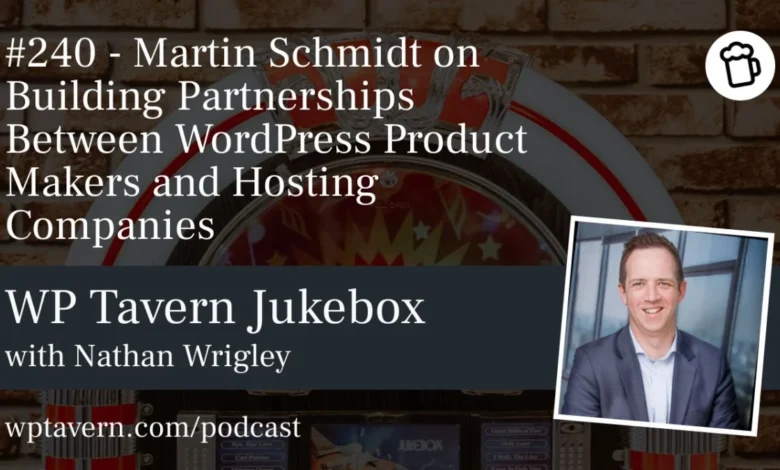
The digital landscape of WordPress has evolved from a simple blogging platform into a complex ecosystem powering over 40% of the internet. As this ecosystem matures, the relationship between independent product developers and infrastructure providers has become a critical pivot point for business scalability. While developers often excel at creating innovative plugins and themes, many face significant barriers when attempting to transition from product creation to market dominance. A growing movement within the industry, spearheaded by experts like Martin Schmidt, emphasizes that the key to sustainable growth lies in forging strategic partnerships with hosting companies—the entities that serve as the foundation for the vast majority of WordPress sites.
The fundamental challenge for many plugin developers is the "build-first, market-later" mentality. Historical data from the WordPress repository suggests that over 1,000 new plugins are published weekly. In such a saturated market, technical excellence is no longer a guarantee of financial success. Developers who lack a robust marketing infrastructure often find themselves struggling to reach their target audience, despite their products solving genuine technical pain points. This disconnect has created a niche for consultancy services that bridge the gap between niche software creators and large-scale hosting infrastructure providers.
A Chronology of Ecosystem Maturation
The history of the WordPress ecosystem can be viewed through several distinct phases. In the early to mid-2000s, exemplified by the experiences of developers who manually installed WordPress via FTP, the community was largely comprised of hobbyists and early adopters. By the 2010s, the platform saw the rise of the commercial plugin industry, with companies like Yoast and Gravity Forms setting the standard for sustainable business models.
In the current era, the focus has shifted toward institutional partnerships. For example, the professional trajectory of industry veterans shows a clear transition from internal product management at major hosts like IONOS or Wix to independent advisory roles. This shift reflects a broader trend: the realization that individual developers cannot compete with the massive marketing reach and customer data silos held by hosting companies. Hosting providers are increasingly looking for ways to increase average revenue per user (ARPU) and reduce churn, while plugin developers are seeking access to millions of potential users. This mutual need has set the stage for a new wave of B2B integration.
The Economics of the Hosting-Plugin Nexus
Hosting companies possess a unique advantage in the digital ecosystem: they are the first point of contact for the end-user. Whether a user is a small business owner or an enterprise client, they must secure hosting before they can install a single line of code. This positioning allows hosting providers to act as trusted advisors. According to industry analysis, hosting providers that bundle or offer curated recommendations for plugins—such as performance optimization tools or security suites—often report higher levels of customer retention.
For a plugin developer, the incentive to partner is clear: direct access to a curated user base. However, the barrier to entry remains high. Hosting companies operate on massive scales, often managing millions of accounts. A partnership is not merely a marketing arrangement; it requires technical integration, such as automated provisioning, license management, and robust support systems that can handle the volume of a host’s customer base. The expectation from a host is that a partner will not only provide a high-quality product but will also assist in the education of their customer base, effectively reducing the host’s internal support burden.
Strategic Preparedness and the Art of the Pitch
A critical analysis of failed partnership attempts reveals a pattern of inadequate preparation. Many developers approach hosting providers with a product-centric pitch rather than a solution-centric one. They fail to address the specific business goals of the hosting provider—namely, churn reduction and revenue growth.
Experts in the field argue that a successful pitch must be highly tailored. This involves:
- Market Alignment: Demonstrating how the product directly addresses a known pain point for the host’s specific customer segment (e.g., enterprise users versus hobbyists).
- Technical Readiness: Having an established API or provisioning system that allows for seamless integration into the host’s billing and management dashboard.
- Marketing Collateral: Providing the host with pre-packaged marketing assets, such as landing page mockups or email templates, that require minimal modification.
- Operational Empathy: Understanding the constraints of product managers at large hosts, who are often inundated with partnership requests and have limited bandwidth to shepherd a new product from concept to launch.
The role of empathy in business development cannot be overstated. By "stepping into the shoes" of a busy product manager, a developer can transform their proposal from an unsolicited cold call into a viable business case. Mockups that illustrate how a product would appear within the host’s actual interface serve as a powerful signal of commitment and professional foresight.
The Human Element: Beyond Digital Correspondence
Despite the ubiquity of digital communication tools, the WordPress industry remains heavily reliant on personal relationships. Industry events, such as Cloudfest or various WordCamps, serve as the primary arenas where these partnerships are finalized. The "hallway track"—the informal networking that occurs outside of scheduled sessions—is often where the most significant deals are struck.
There is a consensus among those who facilitate these partnerships that in-person interactions, whether over a coffee or at a networking event, are essential for building the trust required for long-term collaboration. Business development is, at its core, a human activity. While a well-crafted email can secure an initial meeting, the long-term viability of a partnership is often determined by the ability of stakeholders to align their visions and demonstrate a shared commitment to the end-user experience.
Broader Implications for the WordPress Ecosystem
The movement toward formal partnerships between hosting companies and product developers has profound implications for the future of the WordPress economy. We are likely to see a consolidation of the market, where "plug-and-play" integrations become the industry standard. This shift favors established, well-resourced developers who can afford the time and capital required to build these complex partnerships.
Conversely, this trend poses a challenge for smaller, independent developers who may find themselves excluded from these primary distribution channels. To survive and thrive, these smaller entities will likely need to focus on hyper-niche markets or develop highly specialized technical solutions that larger hosts cannot replicate internally.
Furthermore, the influence of these partnerships on the end-user experience cannot be ignored. While curated partnerships can lead to a more stable and secure web environment, there is a risk of a "walled garden" effect, where only a handful of chosen plugins are visible to the average user. The industry must balance the benefits of streamlined, integrated solutions with the need to maintain the open-source spirit that allowed WordPress to flourish in the first place.
Conclusion
The transition from a solitary builder to a strategic partner is the most significant hurdle for modern WordPress businesses. As the market continues to mature, the ability to navigate the complex, often opaque world of corporate partnerships will define the next generation of successful digital products. By focusing on mutual value creation, technical readiness, and the cultivation of professional relationships, developers can bridge the gap between their technical vision and widespread market success. The path forward is clear: success is rarely found in isolation; it is built through the strategic, empathetic, and persistent alignment of interests between those who provide the infrastructure and those who provide the innovation.