How Sprout Social’s Inaugural Summit Proved Social Intelligence Is No Longer Just a Marketing Tool


The modern corporate landscape demands that business decisions rely on continuous, actionable intelligence rather than static annual reports or historical data guesses. Addressing this imperative, Sprout Social hosted its inaugural Social Intelligence Summit, a premier gathering that convened industry executives, brand strategists, and digital analysts to explore how real-time social data can radically transform operational workflows far beyond traditional marketing silos. Rather than treating social media merely as an outward-facing broadcast channel for brand awareness, the conference underscored a critical paradigm shift: organizations must integrate customer sentiment and behavioral cues into product development, executive planning, and cross-departmental strategy.
Throughout the multi-session event, speakers from leading global enterprises—including The Hershey Company, Zalando, Gap Inc., and Ogilvy—shared proprietary frameworks, tactical blueprints, and quantitative insights demonstrating how modern social intelligence bridges the gap between raw consumer feedback and decisive corporate action.
The Evolution of Social Data from Vanity Metrics to Strategic Asset
For over a decade, corporate social media strategies were predominantly evaluated through the lens of vanity metrics: follower counts, direct post impressions, and high-level engagement rates. However, recent industry shifts, accelerated by the fragmentation of digital channels and the rise of algorithmic discovery engines, have rendered traditional reporting methods inadequate. Executives now face immense pressure to justify digital expenditures by proving tangible returns on investment across mid-funnel and lower-funnel initiatives.
According to Sprout Social’s comprehensive research, including data highlighted from their latest market reports, a striking 86% of organizations report missing significant business opportunities due to delayed or siloed data streams. Conversely, a mere 10% of modern brands possess the agility required to extract, validate, and act upon a social insight within a matter of hours. This operational friction often stems from rigid corporate hierarchies, protracted internal approval cycles, and a fundamental disconnect between marketing teams and C-suite stakeholders. The summit served as a strategic blueprint designed to dismantle these internal barriers, advocating for a holistic approach where real-time digital signals drive enterprise-wide agility.
Keynote Insights: Abandoning Speculation for Real-Time Signals
Kicking off the conference with a pragmatic and uncompromising keynote address, Jay Schwedelson, founder of SubjectLine.com and CEO of Guru Media Hub, urged marketing professionals to abandon intuition-based guesswork in favor of data-driven certainty. Drawing from his agency’s annual oversight of roughly 40,000 digital campaigns, Schwedelson emphasized that consumer bases and competitor audiences continuously broadcast explicit operational intentions. The core challenge for contemporary enterprises does not lie in discovering these signals, but in acting upon them with unmatched velocity.

Schwedelson outlined a tactical methodology centered on competitor analysis. By systematically auditing the preceding 90 days of consumer commentary across three direct competitors, brands can categorize grievances into distinct verticals such as pricing flaws, persistent product failures, or missing feature sets. Armed with this intelligence, marketing teams can deploy comparison-driven campaigns that directly address market gaps without explicitly naming rival entities. When consumers recognize their frustrations validated in public messaging, they naturally align the negative associations with competitor offerings. Because the genesis of this data resides within active digital communities, these campaigns efficiently target high-intent prospects residing in the mid-to-lower tiers of the sales funnel. Furthermore, repurposing these comparative frameworks onto official corporate websites enhances optimization for modern AI-driven search engines, amplifying long-term organic reach.
Addressing the dimension of temporal execution, Schwedelson highlighted the distinct visibility advantages granted to early adopters of platform features and cultural phenomena. Brands that integrate themselves into viral moments within an initial 48-hour window project modern relevance, whereas delayed participation risks painting an enterprise as stagnant or out of touch. To mitigate internal bottlenecks, he advocated for the implementation of pre-approved trend-to-campaign playbooks featuring explicit operational guardrails and designated decision-makers.
Navigating Cultural Shifts Versus Fleeting Viral Moments
Moving from high-level timing strategies to practical execution, the summit’s opening panel—moderated by Cat Anderson, Director of International Marketing at Sprout Social, alongside Josh Rangel, Senior Director of Social Strategy at Ogilvy, and Tulani André, VP of Social Content and Creator at Zalando—confronted a perennial dilemma for digital teams: distinguishing sustainable cultural movements from ephemeral viral trends.
André advised organizations to measure potential opportunities not by arbitrary temporal constraints, but by authentic brand alignment. If a viral trend persists for 24 hours without presenting a natural, organic integration point for the brand’s core voice and strategic goals, organizations should consciously decline participation. Rangel reinforced this perspective by advocating for the universal adoption of pre-established governance frameworks. By utilizing an evaluation checklist that explicitly measures topic relevance, execution speed, and unique value proposition, marketing departments can bypass analysis paralysis. Rangel noted that missing a transient trend carries minimal risk, given the perpetual cycle of digital culture.
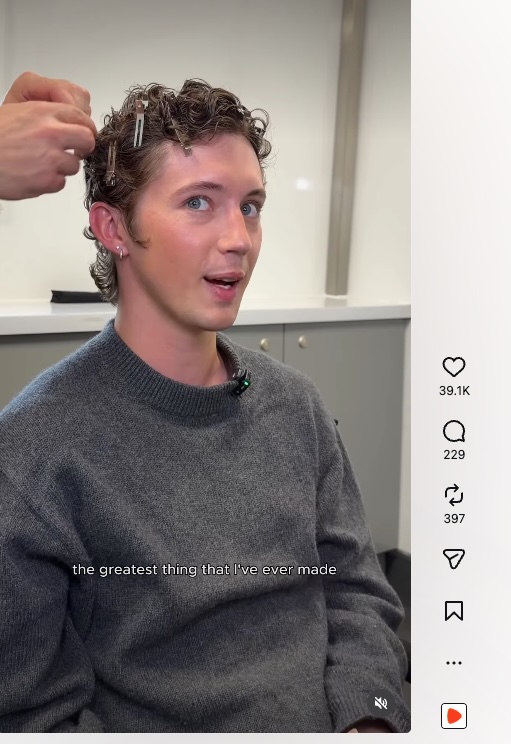
Operational readiness remains the primary catalyst for speed. As an illustrative case study, André detailed how her team at Zalando dispatched social managers to Scotland on a mere 48-hour notice to capture behind-the-scenes content on the set of Troye Sivan’s music video. This rapid mobilization was made possible by pre-existing content franchises and a foundation of absolute trust between leadership and creative personnel.
Beyond marketing campaigns, Rangel demonstrated how sophisticated social listening directly influences foundational product development and corporate strategy. He cited historical examples of consumer-driven product pivots, such as the reinstatement of all-day breakfast menus across fast-food chains and the collaborative development of specialized consumer packaging—like a joint venture between Ziploc and General Mills—born directly from aggregated social complaints regarding stale product storage.
Bridging the Gap: Transforming Social Signals into Enterprise Action
The second panel of the event tackled the intricate mechanics of translating digital signals into compelling narratives recognized by cross-functional stakeholders. Moderated by Ben Nicholson, Content Manager at Sprout Social, the panel featured Curtis Midkiff, Director of Social Media Marketing at Sprout Social; Paige Walker, Manager of Foresight, Consumer and Market Signals at The Hershey Company; and Bianca Shaw, a digital and social strategy advisor specializing in the hospitality sector.
A central theme of the discussion involved the validation of data integrity. Walker explained that enterprise-grade trends typically manifest across multiple distinct demographic cohorts and digital platforms, noting that mainstream market penetration is often validated when older demographics begin engaging with emerging online behaviors. Conversely, Shaw emphasized the importance of synthesizing raw volume with velocity and qualitative sentiment, while monitoring influential industry critics whose individual critiques may outweigh broad quantitative metrics.
Overcoming internal skepticism requires a deliberate translation of digital metrics into the vernacular of business stakeholders. Walker and Shaw cautioned practitioners against relying on insular industry jargon such as "net sentiment," urging them instead to frame data around core business objectives, risk management, and quantifiable growth opportunities. Furthermore, Walker advocated for the construction of a "data sandwich," wherein social insights are contextualized alongside primary market research, traditional sales data, and search query trends. This rigorous, multi-layered evidentiary approach empowered Hershey to successfully capitalize on the viral "Dubai chocolate" trend in December 2025 by deploying a targeted, limited-edition run of 10,000 specialty bars.
Midkiff characterized social data as an exclusive, real-time feedback loop unavailable to traditional business intelligence units. To maximize organizational impact, he recommended that social media professionals proactively embed themselves within daily operational workflows—such as participating in the dedicated Slack channels utilized by product development teams—to answer broader corporate inquiries using accessible social data. For leaner teams lacking extensive resources, Walker recommended leveraging human-supervised artificial intelligence to expedite qualitative text analysis, complemented by proactive, inter-departmental networking initiatives.
The Ascendancy of Borrowed Trust: Creators and Employee Advocacy
Addressing the diminishing efficacy of traditional corporate broadcasting, the summit’s final panel explored the supremacy of influencer partnerships and employee-generated content. Moderated by Lia Haberman, founder of the ICYMI newsletter, the session featured Ari Berkowitz, Head of Creator Solutions at PMG; Brandon Smithwrick, founder of Content to Commas and Creator in Residence at Sprout Social; and Cory Weaver, Head of Creator Marketing at Gap Inc.
Haberman opened the discussion by citing Sprout Social’s 2026 Influencer Marketing Report, which revealed that raw follower counts influence merely 17% of modern consumers. More than 80% of audiences express an explicit preference for creators who demonstrate authentic, pre-existing usage of the products they endorse, while 40% of consumers discover new products through employee-generated content on a monthly basis.
Industry practices are actively pivoting away from isolated, transactional influencer agreements toward sustained, long-term partnerships that establish authentic brand alignment. Berkowitz identified a structural shift toward a "K-shaped" creator economy, characterized by surging corporate investment in both hyper-niche micro-creators and top-tier influencers, coupled with a contraction in mid-tier spending. Weaver noted that Gap Inc. manages this ecosystem through a formalized nine-tier framework, allowing talent fluid movement across engagement categories based on performance metrics.

Employee advocacy emerged as an equally vital, highly trusted communication channel. Smithwrick advised organizations to lower the barrier to entry for internal staff by supplying ready-made digital assets, clear copywriting templates, and structured incentive programs, while ensuring formal creator partnerships are established prior to launching employee initiatives to prevent staff from feeling exploited as unpaid labor. Weaver emphasized the necessity of early legal and tax collaboration when deploying employee incentive structures, underscoring that corporate compliance must coexist with empowering employees to speak authentically within established brand safety guidelines.
Implications and the Future of Enterprise Social Intelligence
As the inaugural Social Intelligence Summit concluded, the overarching consensus among participating industry leaders remained clear: the primary bottleneck facing modern social teams is not a scarcity of data, but the structural difficulty of translating complex digital signals into unified corporate action.
To institutionalize social intelligence as a foundational pillar of modern enterprise governance, organizations must adopt a disciplined, three-step operational framework. First, teams must isolate the core digital signal by recognizing recurring behavioral patterns—such as sentiment spikes, localized customer grievances, or emerging cultural trends—utilizing AI tools to synthesize vast datasets into usable insights. Second, practitioners must substantiate these observations with rigorous corroborating evidence, including historical benchmarks, share-of-voice shifts, and multi-channel market research. Finally, organizations must execute strategic, cross-departmental interventions that transform raw reporting into true business intelligence.
By aligning social listening workflows with executive priorities, establishing transparent governance frameworks with legal and leadership teams, and harnessing the authentic trust of creators and employees, forward-thinking enterprises can successfully bridge the historical divide between marketing operations and executive decision-making.
Related posts: