The Sunset of Universal Analytics: A Necessary Evolution
The digital advertising industry has relied on Universal Analytics for years, but the technology was built for an era defined by desktop traffic and third-party cookie tracking. With the rise of cross-device consumer journeys—where a user might discover a product on a mobile app, research it on a tablet, and finalize the purchase on a desktop—UA’s session-based model often failed to capture a unified view.
In response to this, Google introduced GA4, which utilizes event-based tracking and machine learning to fill data gaps. To facilitate this massive industry migration, Google has set a definitive timeline for the retirement of its legacy tools. Initially, the company announced the sunset of standard Universal Analytics properties for July 1, 2023. Recognizing the logistical complexity of this shift for large-scale enterprise users, Google extended the grace period for Universal Analytics 360 properties to July 1, 2024. This extension acknowledges that transitioning complex, high-volume data pipelines is a resource-intensive endeavor that requires careful architectural planning.
Chronology of the Transition
The migration path for marketers is structured to ensure continuity in reporting. Throughout 2023, Google began shifting technical support and feature development exclusively toward GA4. By mid-2023, standard UA properties ceased processing new hits. For enterprise-level clients, the window remains open until mid-2024, though performance degradation is expected as internal resources are fully reallocated to the new infrastructure.
To accelerate adoption, Google has implemented an automated "Setup Assistant." Starting in early 2023, the platform began automatically generating GA4 properties for existing accounts that had not yet migrated, effectively mirroring the configuration of their legacy counterparts to ensure that tracking goals, audience lists, and Google Ads integrations remained functional.
The Role of Machine Learning in Modern Measurement
One of the most profound changes in GA4 is the integration of behavioral modeling. As users exercise their right to opt out of tracking, gaps in data collection inevitably occur. Behavioral modeling addresses this by using machine learning to interpret available data patterns and estimate the activity of non-consenting users.

Industry leaders have already begun to document the efficacy of this approach. For example, Nestlé reported a 23% increase in observable traffic within their analytics reporting after implementing behavioral modeling through Consent Mode in GA4. This represents a fundamental shift: instead of relying solely on raw, potentially incomplete data, marketers are now utilizing probabilistic models to maintain a holistic view of the consumer journey. This change is essential for maintaining accurate Return on Ad Spend (ROAS) calculations in an increasingly fragmented data environment.
Strategic Implications for Enterprises
The transition is not merely a software update; it is a fundamental shift in how businesses treat consumer data. Organizations that prioritize early adoption have a distinct competitive advantage. By establishing a GA4 property well before the sunset date, companies can accumulate historical data, allowing for year-over-year comparisons once the legacy platforms are offline.
Suncorp Group, a major Australian financial services firm, serves as a primary example of this proactive strategy. By migrating early, the firm ensured it would have over two years of historical insights in GA4 by the time Universal Analytics stopped collecting data. Chief Marketing Officer Mim Haysom noted that this robust foundation is critical for informed decision-making, emphasizing that data continuity is a non-negotiable asset for modern enterprises.
Enhancing ROI through Actionable Reporting
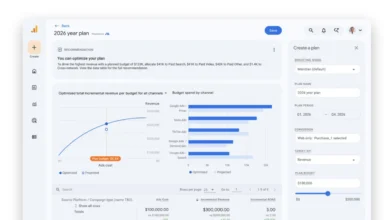
Google is augmenting GA4 with features specifically designed to improve the link between data and revenue. One such enhancement is the introduction of custom channel grouping. This feature allows marketers to aggregate performance data across various touchpoints—such as distinguishing between paid search brand campaigns and non-brand efforts—and apply these groupings retroactively across all advertising and exploration workspaces.
Furthermore, the integration ecosystem is expanding. In addition to existing connections with Google Ads, Display & Video 360, and Search Ads 360, Google is rolling out an integration with Campaign Manager 360 via Floodlight. This allows marketers to leverage GA4 conversion data directly within automated bidding strategies. By feeding high-quality, modeled data into AI-driven bidding algorithms, businesses can optimize their ad spend with greater precision, effectively turning raw insights into measurable ROI.
Challenges and Future-Proofing
Despite the benefits, the migration poses significant challenges. Data architecture in GA4 is fundamentally different from UA, requiring teams to retrain staff and rethink their key performance indicators (KPIs). The "event-based" nature of GA4 is more flexible than the "session-based" model of its predecessor, but this flexibility demands a higher degree of technical literacy.

To support this, Google has released comprehensive educational resources, including a refreshed GA4 certification program via Skillshop. The shift also requires a cultural adjustment within marketing departments: moving from a focus on vanity metrics—like page views—toward a focus on user engagement and conversion events that hold actual business value.
Analysis of the Privacy-Centric Landscape
The mandate to switch to GA4 is inextricably linked to the broader regulatory push for user privacy, exemplified by the General Data Protection Regulation (GDPR) in Europe and the California Consumer Privacy Act (CCPA). By moving away from persistent, cross-site third-party tracking, GA4 aligns better with modern privacy expectations.
While some critics argue that reliance on machine learning creates a "black box" effect, the consensus among data scientists is that it is a superior alternative to the current state of "missing data." Without these modeling solutions, marketers would be forced to make strategic decisions based on significantly incomplete information, leading to sub-optimal budget allocation. The shift toward GA4, therefore, represents a pragmatic compromise: maintaining the utility of digital analytics while respecting the boundaries of modern consumer privacy.
Conclusion: Preparing for a New Standard
The sunsetting of Universal Analytics marks the end of a long-standing measurement standard, but it also opens the door to a more sophisticated, cross-platform future. For businesses, the focus must now be on mastering the nuances of GA4—from configuring custom dimensions and events to leveraging predictive audiences and machine learning-driven insights.
As the industry moves toward 2024, the companies that will thrive are those that view this transition not as a burdensome compliance task, but as an opportunity to clean up their data, modernize their measurement infrastructure, and gain a deeper understanding of the customer journey. By utilizing the available setup tools, participating in ongoing training, and integrating GA4 into their broader advertising tech stack, marketers can ensure that they remain equipped to turn data into a tangible driver of business growth in an increasingly complex digital world. The transition is inevitable, but with proper planning and execution, it remains the most reliable path to achieving sustained, data-backed ROI.