The Evolution of WordPress Translation: Leveraging Artificial Intelligence for Global Digital Reach

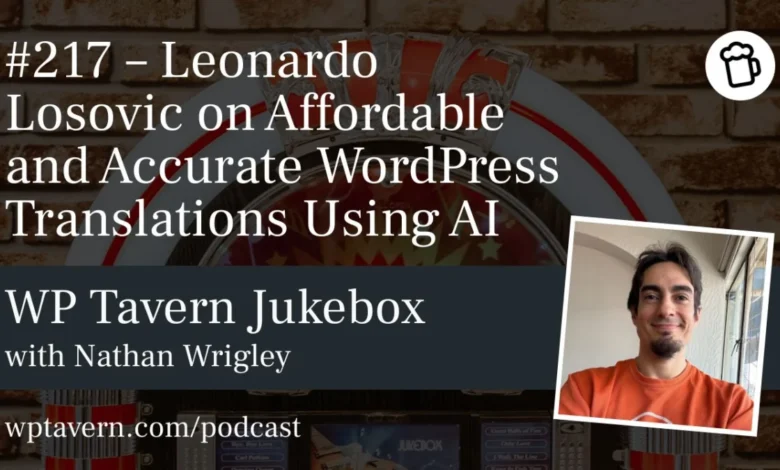
The landscape of digital accessibility is undergoing a fundamental shift as the WordPress ecosystem moves toward a future defined by high-speed, cost-effective, and AI-driven translation. Historically, the process of localizing a WordPress website for a global audience was a prohibitively expensive and logistically complex undertaking. Businesses and content creators often faced significant hurdles: identifying translatable strings, securing professional human translators, negotiating per-word costs, and navigating the technical fragmentation of multilingual plugins. However, as of 2026, the convergence of advanced Large Language Models (LLMs) and integrated WordPress infrastructure has transformed translation from a specialized luxury into a standard operational requirement for competitive web presence.
The Technological Shift in Localization
The traditional model of web localization, dominant throughout the 2010s, relied heavily on manual intervention. Site administrators would typically engage professional translation agencies or freelance linguists, incurring costs that could reach hundreds of dollars for a single high-traffic blog post or landing page. Furthermore, the technical implementation often required complex plugin configurations that could degrade site performance or create significant database bloat.
In contrast, contemporary AI-powered solutions, such as Leonardo Losoviz’s Gato AI Translations for Polylang, utilize direct API integrations with leading LLMs—including OpenAI, Anthropic, and Google Gemini—to automate the localization process. This transition has reduced the financial barrier to entry from hundreds of dollars to mere cents per request, based on token consumption. By automating the bulk translation of content, these plugins allow developers to focus human capital on high-stakes linguistic quality assurance rather than rote transcription.
WordCamp Asia and the Call for Practical Planning
The discussion surrounding modern translation strategies was highlighted at WordCamp Asia, where industry experts examined the "invisible gotchas" of WordPress localization. The conference served as a platform for professionals to address the transition from the theoretical desire for a multilingual site to a granular, execution-ready plan.
The central thesis presented during these sessions emphasized that while AI handles the bulk of the heavy lifting with high accuracy—often reaching 99% proficiency in standard linguistic contexts—manual oversight remains essential for specialized industries. In fields such as biochemistry, engineering, or legal compliance, where precision is paramount, AI serves as an efficient draft-generator that requires human review to ensure technical accuracy and terminology consistency. The consensus among attendees was that the "we should translate" mentality must be replaced by a structured workflow that accounts for SEO, user experience, and cultural nuance.
Integrating AI with WordPress Core Infrastructure
The technical roadmap for WordPress is currently moving through its third phase, which focuses on collaborative editing. This development is not merely an improvement in user interface; it is a fundamental shift in how content is managed. By mirroring the collaborative features found in enterprise document editors like Google Docs, WordPress 7.0 and subsequent updates are laying the groundwork for real-time interaction between human editors and AI systems.
This integration suggests a future where AI does not simply output a static translation and vanish; instead, it remains embedded in the editing environment, ready to provide context, flag ambiguities, or offer alternative phrasing in real-time. This "agentic" approach to content management allows for a dynamic feedback loop where the AI can communicate with human editors via sticky notes or comment threads within the block editor, significantly reducing the friction traditionally associated with updating translated content.
The Economic and Strategic Implications of the Translation Arms Race
The rapid accessibility of AI translation tools has initiated what some analysts call a "translation arms race." When translation was costly and time-consuming, it was a competitive advantage for firms that could afford to localize. Today, the ubiquity of these tools has rendered multilingual support a baseline expectation.
This creates a paradox of productivity: businesses are now required to maintain multilingual versions of their sites not necessarily to achieve a unique competitive edge, but to avoid falling behind in search engine rankings and user acquisition. Data from the digital marketing sector indicates that multilingual sites often see a significant increase in organic traffic and engagement. However, because the barrier to entry has lowered, the marginal benefit of being "just" multilingual has decreased. Consequently, the value proposition has shifted toward high-quality, culturally tailored localization that leverages AI for efficiency while reserving human intelligence for strategic brand voice and technical precision.
Best Practices for Multilingual Implementation
To avoid the common pitfalls of rapid translation, developers and site owners are encouraged to adopt a rigorous pre-translation checklist:
- Content Finalization: Do not initiate translation until the source content is completely finalized. Re-running translations due to late-stage edits in the source language results in wasted API tokens and increased management overhead.
- Media and Asset Optimization: Ensure that images, infographics, and charts are language-agnostic. Rather than embedding text into images—which requires recreating the image for every language—utilize overlays or CSS-based text blocks that can be translated as standard text strings.
- SEO Architecture: Utilize established plugins like Polylang or WPML that correctly implement
hreflangmeta tags. These tags signal to search engines that the translated page is a localized version of the original, preventing duplicate content penalties and ensuring that search engines serve the correct language based on user location. - Strategic Deployment: While it is technically possible to translate a site into dozens of languages, focus resources on markets where there is a demonstrated business need or legal compliance requirement.
Future Horizons: Phases Three and Four
As the WordPress community continues to iterate on the Gutenberg project, the focus remains firmly on enhancing the user experience of collaborative and multilingual editing. While Phase 3 is currently the primary focus, the community is already looking toward Phase 4, which is explicitly tasked with bringing native, robust support for multilingual sites into the WordPress core.
Although specific details regarding Phase 4 remain speculative, the current trends in the plugin ecosystem provide a strong indicator of the expected direction. The integration of AI as a first-class citizen within the WordPress editor will likely continue, with future iterations potentially allowing for automated image caption translation, context-aware terminology management, and even localized SEO metadata generation.
Conclusion
The evolution of WordPress translation from a manual, high-cost service to an automated, AI-driven standard represents a significant maturation of the web. By leveraging modern LLMs, site owners can now reach global audiences with unprecedented speed and precision. However, this ease of use necessitates a more disciplined approach to content management. As the digital landscape becomes increasingly crowded, the most successful organizations will be those that view AI not as a complete replacement for human effort, but as a force multiplier—using technology to handle the volume, while relying on human expertise to ensure that the message remains authentic, accurate, and culturally resonant.
The "translation arms race" is no longer about who has the budget to translate, but who has the strategy to leverage these tools to build deeper, more meaningful connections with a global audience. For the modern WordPress user, the technology is no longer the obstacle; the challenge now lies in the strategic execution of content that speaks, quite literally, to everyone.