Trump Administration Rebrands Artificial Intelligence as Super Intelligence in Executive Order Following High-Profile Silicon Valley Summit

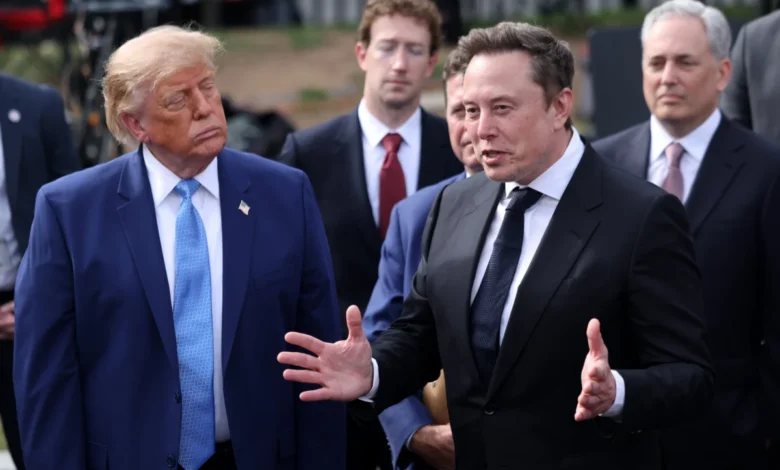
The federal government has officially retired the term artificial intelligence, replacing it with the designation "super intelligence" via a presidential executive order signed this week. The sweeping terminological shift accompanied a high-stakes gathering at the White House, where President Donald Trump hosted chief executive officers and industry titans from across the American technology sector. The summit culminated in the signing of a document titled the Joint Commitment on Frontier Responsibilities, a voluntary pact designed to address the rapid scaling and governance of advanced computing systems.
The policy pivot arrives on the heels of dramatic shifts in the administration’s rhetoric regarding technology regulation. Just weeks prior to the summit, the executive branch maintained a staunchly anti-regulatory posture, publicly dismissing concerns over safety constraints as politically motivated opposition. Yet, the sudden orchestration of this week’s presidential luncheon and the rapid drafting of the frontier commitment indicate an abrupt pivot toward structured engagement with major artificial intelligence laboratories and platform giants.
A Chronology of the Summit and Preceding Diplomatic Shifts
The path toward the White House summit unfolded through a series of accelerated, behind-the-scenes negotiations and public posture adjustments by both administration officials and corporate leaders.
Two weeks prior to the agreement, President Trump publicly downplayed the necessity of regulatory safeguards, asserting that the United States must prioritize undisputed technological dominance without legislative or administrative constraints.
The diplomatic thaw began in earnest following a late-night private dinner between the president and Dario Amodei, the chief executive officer of Anthropic. The clandestine meeting served as a crucial bridge, mitigating prior hostilities between the administration and the AI research firm—tensions that had previously played out across public forums and defense procurement channels.
Earlier this week, the White House hosted a formal luncheon attended by a formidable delegation of technology executives, including Meta CEO Mark Zuckerberg, Amazon founder Jeff Bezos, Tesla and xAI head Elon Musk, and Anthropic’s Amodei. Following the private sessions, the executives joined the president for a press conference that immediately drew widespread media attention for the visible dynamics and interactions among the industry leaders.
Concluding the week’s sequence of events, the administration announced the formation of the "Super Intelligence Force," continuing the linguistic and structural rebranding campaign initiated by the executive order.
The Joint Commitment on Frontier Responsibilities: Analysis and Discrepancies
The primary tangible artifact of the presidential summit is the Joint Commitment on Frontier Responsibilities, a document intended to establish cooperative safety protocols between leading developers and the federal government. However, the agreement has already drawn significant scrutiny from legal analysts, policy observers, and technology journalists due to its structural limitations and notable drafting errors.
Chief among the criticisms is the document’s legal status. Industry insiders have noted that the agreement is deeply non-binding, carrying no statutory enforcement mechanisms or financial penalties for non-compliance. When pressed on the voluntary nature of the framework during subsequent media engagements, President Trump described the pact as "morally binding," introducing a novel framework of accountability into federal technology policy.
Furthermore, public records and photographic evidence revealed a glaring administrative oversight: the official document signed by the president and top industry executives misspelled "United States." Analysts and commentators have pointed to this typographical error as evidence that the agreement was drafted hastily to capitalize on the momentum of the summit, raising questions regarding the thoroughness of the policy formulation process.
Fractured Inter-Agency Dynamics and Corporate Relations
Despite the outward display of unity at the presidential luncheon, internal divisions within the federal government regarding specific technology firms—particularly Anthropic—remain pronounced.
While certain factions within the administration, most notably the Treasury Department, have fostered a constructive and collaborative relationship with Anthropic, other executive branches maintain adversarial stances. The Department of Defense, in particular, has repeatedly expressed reservations regarding Anthropic’s corporate policies, deployment conditions, and safety guardrails, with administration-affiliated figures publicly labeling the company’s governance model a national security risk.
These intra-governmental friction points suggest that while executive-level photo opportunities and voluntary pacts project an image of consolidated consensus, substantive alignment across all federal agencies is far from assured. The divergence in posture between defense officials and economic advisors highlights the complex, fragmented nature of federal oversight concerning frontier technology development.
Strategic Implications of the Rebranding Campaign
Industry analysts monitoring the summit have identified the primary significance of the event not within its legal mechanisms, but as an extensive executive rebranding exercise. By systematically phasing out the terminology of "artificial intelligence" in favor of "super intelligence," the administration has introduced a distinct rhetorical framing.
Historically, public discourse surrounding artificial intelligence has frequently invoked existential anxieties regarding workforce displacement, systemic risk, and catastrophic outcomes. The deliberate pivot toward "super intelligence" functions as a strategic counter-narrative, separating the everyday anxieties of conventional software automation from the monumental, nation-state ambitions associated with advanced frontier models.
By framing the pinnacle of domestic technological achievement as an instrument of national strength and civilizational advancement rather than a domestic hazard, the administration seeks to rally public and corporate support around a unified banner. Whether this linguistic realignment translates into enforceable federal policy or remains a symbolic exercise in political communication will depend heavily on the evolution of legislative initiatives and the practical implementation of the newly formed Super Intelligence Force in the months ahead.
Related posts: