The landscape of modern web development is currently undergoing a fundamental shift, driven by the rapid maturation of generative artificial intelligence and the widespread adoption of block-based site building. As agencies and enterprise organizations navigate this transformation, the role of WordPress as a centralized repository—or "source of truth"—has emerged as a critical strategy for maintaining brand consistency, technical stability, and workflow efficiency. This shift, highlighted during recent industry discourse at WordCamp US, suggests that the future of web development lies not in abandoning established content management systems, but in leveraging their architectural strengths to provide a stable foundation for AI-assisted workflows.
The Evolution of Web Development Workflows
For over two decades, WordPress has evolved from a simple blogging platform into a sophisticated, enterprise-ready content management system. However, the rise of "shiny" alternatives, including static site generators and AI-driven design tools, has caused some agencies to reconsider their reliance on traditional platforms. The central tension in the industry today is the trade-off between the speed offered by AI and the technical debt that can accumulate when automated systems operate without centralized governance.
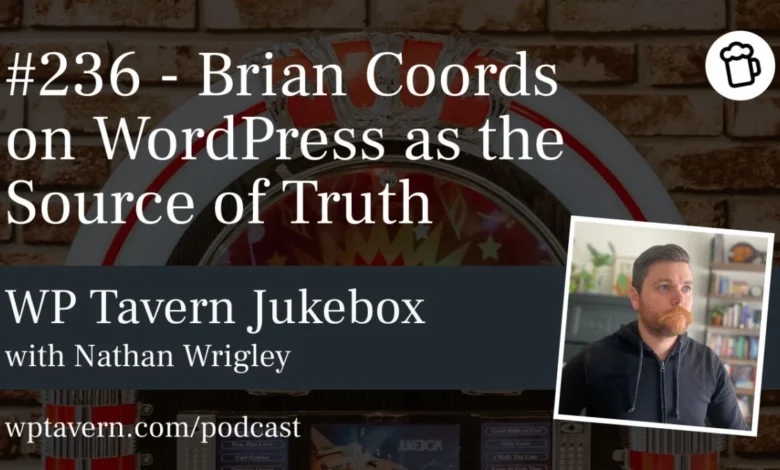
Brian Coords, a developer advocate at WooCommerce with a decade of experience in the agency and freelance sectors, argues that the unique value of WordPress persists precisely because it is battle-tested. Unlike experimental platforms that lack deep integration histories, WordPress remains the industry standard for sites that require complex, long-term maintenance, extensive content libraries, and reliable data integrations.
Centralizing Brand and Design Systems
The concept of the "site as the source of truth" posits that WordPress, particularly when utilizing block-based themes, can serve as the primary repository for design tokens, reusable patterns, and editorial guidelines. In a typical agency environment, design assets are often fragmented across multiple platforms—Figma for visuals, Google Docs for brand guidelines, and GitHub for code. By consolidating these elements into the WordPress block library, agencies can provide generative AI tools with a structured, verified set of parameters.
When AI is instructed to build new landing pages or marketing content based on pre-approved patterns and templates, the result is inherently more consistent with the brand’s identity. This approach mitigates the risk of "AI hallucinations"—the tendency of generative models to produce erratic or off-brand designs—by forcing the output to align with the constraints established within the site’s own administrative architecture.
The Role of Block Themes in Modern Development
The transition to block-based themes represents a significant technical hurdle for many agencies, yet it offers long-term benefits in terms of modularity and reduced plugin dependency. In earlier versions of WordPress development, creating a custom site often required a "plugin sprawl"—the installation of dozens of third-party tools to handle headers, product carousels, and layout adjustments.
Data from the WooCommerce development team suggests that the integration of block-based building can eliminate the need for a significant percentage of these auxiliary plugins. By moving functionality directly into the WordPress core and the site theme, developers can create more resilient websites. A site built with fewer plugins is, by definition, easier to update, less susceptible to security vulnerabilities, and more cost-effective to maintain over its lifecycle.
The Impact of AI on the Plugin Ecosystem
The proliferation of AI tools capable of generating functional code in seconds has created a potential disruption for developers who rely on "utility" plugins—small, specialized tools designed to perform single, discrete tasks. Industry observers suggest that the "floor" for plugin development is rising; basic code that can be generated by a standard LLM (Large Language Model) is rapidly losing its market value.
This shift forces plugin developers to focus on higher-order challenges: deep integrations, complex data management, and secure payment processing. While some developers fear that functionality moving into WordPress core will cannibalize their revenue, others view it as a necessary evolution. By offloading basic functionality to core, the platform becomes more stable for the end-user, while developers are encouraged to innovate at the more complex, high-value end of the spectrum.
Institutional Challenges and Adoption
Despite the clear benefits of a unified, block-based workflow, adoption among agencies remains gradual. The inertia associated with existing client sites—which are often stable and revenue-generating—means that there is little incentive to perform a complete architectural overhaul. For many, the "if it isn’t broken, don’t fix it" philosophy remains the standard for e-commerce environments.
However, the internal movement toward "human-centric" content creation is gaining traction. Organizations are increasingly recognizing that while AI can assist in the technical aspects of building a site, the quality of content and brand voice must remain the domain of human editors. There is a growing consensus that while AI is an excellent tool for efficiency, it should not replace the creative and editorial oversight that defines a brand’s authority.
Implications for the Future of E-Commerce
The e-commerce sector is perhaps the most resilient segment of the web development market. Because these sites are directly tied to revenue, the stakes for technical failure are significantly higher than for simple brochure websites. Consequently, store owners are less likely to experiment with unproven, AI-only architectures. They prefer the security of a platform that provides a familiar, reliable dashboard where they can track inventory, manage orders, and view analytics in real-time.
As we look toward the next five years, the industry is expected to move away from the "AI-everything" hype cycle toward a more nuanced, hybrid model. In this model, WordPress functions as the essential infrastructure—the stable, secure home where business owners log in to manage their core operations—while AI acts as a sophisticated assistant that automates the repetitive, low-value tasks that once required manual intervention.
Strategic Recommendations for Agencies
For agencies looking to remain competitive, the recommendation is clear: invest in building strong design systems and content guidelines within the WordPress environment. By treating the CMS as a repository of knowledge rather than just a publishing tool, agencies can ensure that their workflows remain scalable.
- Standardize Patterns: Move away from unique, one-off layouts in favor of a robust library of approved, block-based patterns.
- Document Constraints: Use the emerging "Content Guidelines" features and internal documentation to define brand standards, ensuring that any AI-assisted work adheres to established visual and textual constraints.
- Prioritize Core Functionality: When selecting plugins, favor solutions that align with core WordPress blocks to reduce technical debt and future-proof the site against compatibility issues.
- Human Oversight: Maintain a rigorous editorial process that keeps human beings at the center of the creative output, using AI only for optimization and production speed rather than strategy.
The shift toward a "source of truth" methodology is more than a technical upgrade; it is a strategic repositioning of the web developer’s role. By acting as the architects of a stable, consistent, and AI-enabled ecosystem, developers can continue to provide immense value to clients in an increasingly automated world. The future of WordPress, therefore, is not in competing with AI, but in defining the rules by which AI operates within the web’s most enduring and reliable platform.
Related posts: